Photo: Wikipedia
Political ClimatePolitical Climate in New Orleans, LA
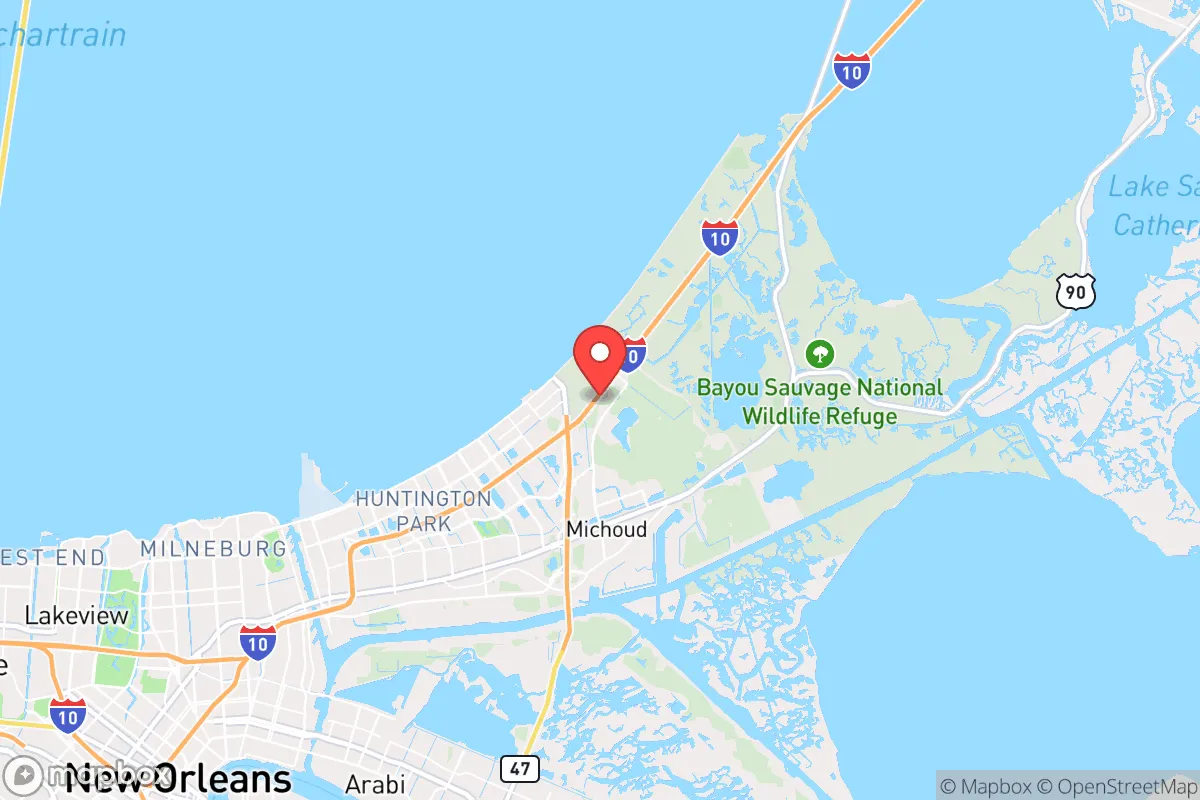
District shown is the primary district for this city’s centroid. Cities may span multiple districts.
Local Political AnalysisPolitical Analysis of New Orleans, LA
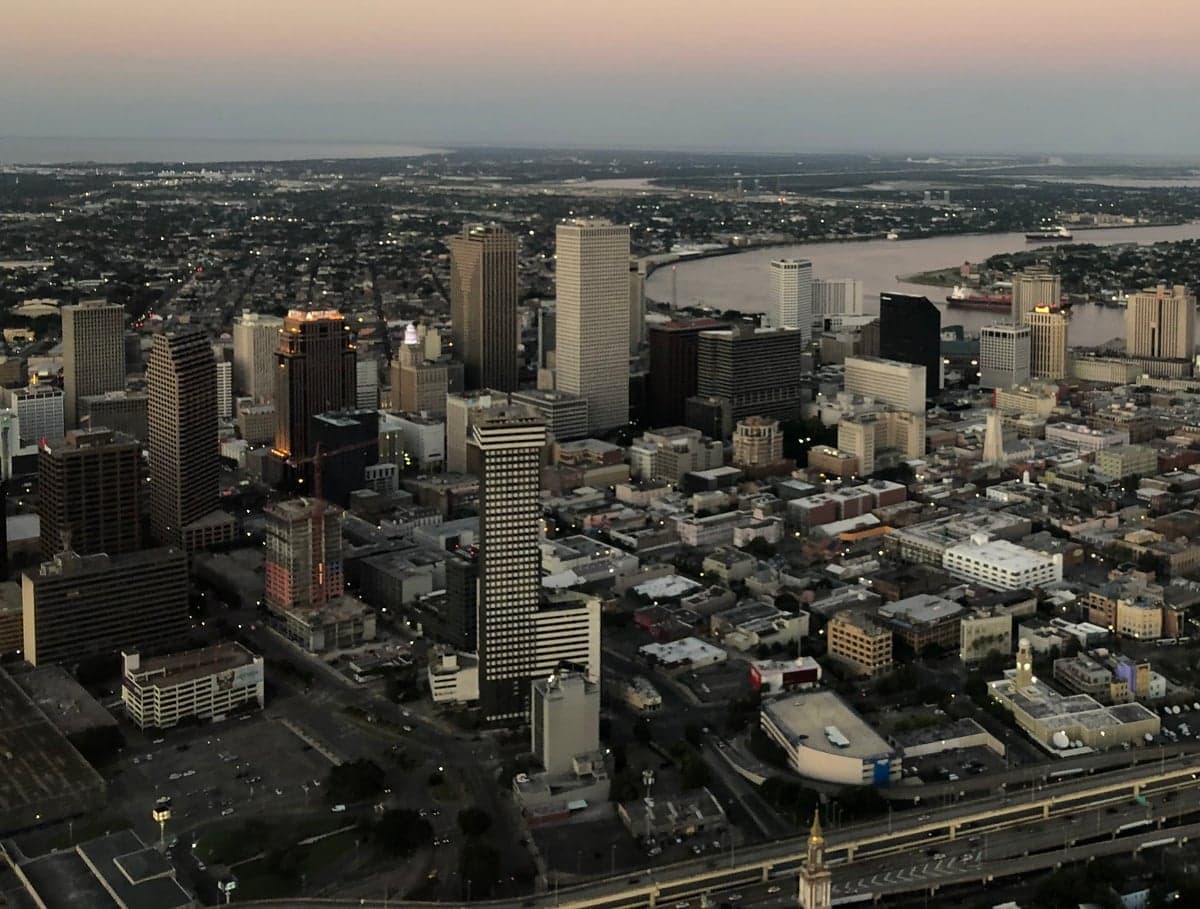
New Orleans has long been a deep blue island in a red state, and that political reality has only intensified in recent years. With a Cook Partisan Voting Index of D+17, the city is one of the most reliably Democratic urban centers in the South, and that progressive tilt has real consequences for anyone who values personal freedoms and limited government. If you’re looking at moving here, you need to understand that the local political machine—from the mayor’s office to the city council—has been steadily pushing an agenda that prioritizes government solutions over individual choice, and that trend shows no signs of slowing down.
How it compares
The contrast between New Orleans and its surrounding areas is stark. Drive just 30 minutes west to Lafayette or an hour north to Baton Rouge, and you’ll find communities that lean much more conservative, with lower taxes and a lighter regulatory touch. Even within the metro area, suburbs like Metairie and Kenner in Jefferson County vote more moderately, often splitting tickets between local Republicans and Democrats. But inside Orleans Parish, the political culture is dominated by a progressive coalition that has little patience for dissenting views. The city council has passed ordinances on everything from minimum wage hikes to paid sick leave mandates, and the public school system—now largely charterized—still operates under heavy bureaucratic oversight. If you’re used to a place where local government stays out of your business, this is not that place.
What this means for residents
For the average resident, the most immediate impact is on your wallet and your daily life. Property taxes in New Orleans are among the highest in Louisiana, and the city’s sales tax rate—currently 9.45%—is one of the steepest in the state. That money funds a growing list of social programs and city initiatives, but you’ll also see it in the form of rising insurance premiums and utility costs. More concerning is the erosion of Second Amendment rights: while Louisiana is generally a gun-friendly state, New Orleans has its own set of restrictions, including a ban on carrying firearms in certain public spaces and a push for “red flag” laws that allow authorities to seize weapons without a criminal conviction. The city’s leadership has also embraced progressive policing reforms that critics argue have contributed to a spike in violent crime—the murder rate in 2024 was nearly 10 times the national average. If you value personal safety and the right to defend yourself, these are not abstract debates; they affect how you live your life every day.
On the cultural front, New Orleans is undeniably unique—the food, the music, the festivals are world-class. But the political climate has shifted noticeably in the last decade. The old-school, live-and-let-live attitude that once defined the city is being replaced by a more activist government that regulates everything from short-term rentals to the types of signs you can put on your business. The long-term trajectory is concerning: as the city becomes more dependent on federal grants and progressive philanthropy, the pressure to conform to a single political orthodoxy will only grow. If you’re considering a move here, come for the crawfish and the jazz, but keep your eyes open about the political reality you’ll be living under.

State Political ClimatePolitical Climate in Louisiana
State Political AnalysisPolitical Environment in the State
Louisiana has long been a reliably red state in federal elections, but its political climate is far more complex than a simple partisan label suggests. The state has voted for the Republican presidential candidate in every election since 2000, with Donald Trump winning it by nearly 20 points in 2024. However, down-ballot races often feature competitive Democrats, particularly in New Orleans and Baton Rouge, and the state’s unique blend of Cajun culture, evangelical Christianity, and unionized industrial workers creates a political landscape that defies easy categorization. Over the past two decades, the shift has been unmistakably toward the right, driven by suburban growth and rural consolidation, even as the state’s population has remained relatively stagnant.
Urban vs. rural divide
The political map of Louisiana is a study in contrasts. The state’s two largest metros—New Orleans and Baton Rouge—anchor the Democratic vote. Orleans Parish consistently delivers 75-80% of its vote to Democratic candidates, while East Baton Rouge Parish, home to the state capital and Louisiana State University, is a perennial battleground that has trended blue in recent cycles. In contrast, the sprawling suburbs of Jefferson Parish, particularly around Metairie and Kenner, have become reliably Republican strongholds, flipping from Democratic control in the 1990s to solid red today. The rural parishes—like Livingston, Tangipahoa, and St. Tammany (north of Lake Pontchartrain)—are among the most conservative in the nation, often voting 70-80% Republican. The Acadiana region, centered on Lafayette, is a fascinating mix: culturally conservative and heavily Catholic, it leans Republican but still elects some moderate Democrats at the local level. The industrial corridor along the Mississippi River between Baton Rouge and New Orleans, including towns like LaPlace and Gonzales, remains a swing area where union politics and social conservatism collide.
Policy environment
Louisiana’s policy environment is a mixed bag for conservatives. On the positive side, the state has no personal property tax on vehicles or boats, and its homestead exemption shields the first $75,000 of a home’s value from property tax—a significant benefit for homeowners. The corporate income tax was slashed from 8% to 3.5% in 2021 under Governor John Bel Edwards, a Democrat, and the state has a right-to-work law that limits union power. However, the state’s sales tax is among the highest in the nation, averaging over 9.5% when local taxes are included, and the income tax brackets are still relatively high for middle-class earners. On education, Louisiana has a robust school choice program, including the Louisiana Scholarship Program and a thriving charter school sector in New Orleans, which has become a national model. But the state’s public school system ranks near the bottom nationally in outcomes, and teacher unions remain influential in Baton Rouge. On healthcare, the state expanded Medicaid under the Affordable Care Act in 2016, a move that many conservatives opposed, and the program now covers over 500,000 residents. Election laws are relatively secure: Louisiana requires a photo ID to vote, has no same-day registration, and conducts all-mail elections only in limited circumstances. The state’s unique “jungle primary” system, where all candidates regardless of party run on the same ballot, often produces runoffs that favor incumbents and moderates.
Trajectory & freedom
Over the past five years, Louisiana has taken notable steps to expand personal freedom in several key areas. In 2024, the state passed a landmark constitutional carry law, allowing any adult who can legally possess a firearm to carry it concealed without a permit—a major win for Second Amendment advocates. The same year, the legislature passed a near-total abortion ban, with exceptions only for rape, incest, and to save the mother’s life, reflecting the state’s strong pro-life stance. On parental rights, Louisiana enacted a Parents’ Bill of Rights in 2023, requiring schools to notify parents about curriculum changes and medical services. The state also passed a law banning transgender athletes from competing in girls’ sports in 2021, and in 2024, it prohibited gender-affirming care for minors. However, there are concerning trends. The state’s tax burden remains high, and the legislature has repeatedly failed to pass meaningful tax reform, leaving Louisiana with one of the highest combined state and local tax burdens in the South. Additionally, the state’s heavy reliance on oil and gas revenue has created a boom-and-bust cycle that limits fiscal freedom. On medical freedom, Louisiana was slow to lift COVID-19 mandates compared to neighboring Texas, and some local governments, particularly in New Orleans, maintained mask and vaccine requirements well into 2022.
Civil unrest & political movements
Louisiana has a history of political flashpoints, though large-scale civil unrest is less common than in other Southern states. The most visible recent protests occurred in 2020 following the death of George Floyd, with demonstrations in New Orleans, Baton Rouge, and Lafayette that occasionally turned confrontational but were largely peaceful. The state has seen a growing grassroots conservative movement, particularly in the suburbs and rural areas, focused on school board elections, library content, and local zoning decisions. In St. Tammany Parish, for example, conservative activists successfully pushed for the removal of certain books from school libraries in 2023. Immigration politics are less heated here than in border states, but Louisiana has seen a small influx of migrants through federal relocation programs, sparking local debates in towns like Alexandria and Monroe. There is a vocal secessionist movement in the Acadiana region, with some activists advocating for the creation of a separate “State of Acadiana” based on Cajun cultural identity, though this remains a fringe idea. Election integrity has been a recurring concern among conservatives, particularly after the 2020 election, when some state legislators pushed for tighter voter ID laws and restrictions on mail-in voting. The state’s election system is generally considered secure, but the issue remains a live one in local politics.
Projection
Looking ahead five to ten years, Louisiana’s political trajectory is likely to continue its rightward shift, but at a slower pace than neighboring Texas or Florida. The state’s population is aging and growing slowly, with net domestic out-migration to faster-growing states. The urban centers of New Orleans and Baton Rouge will likely remain Democratic strongholds, but their influence is waning as the suburbs and exurbs expand. The biggest wild card is the state’s economy: if Louisiana can diversify beyond oil and gas and attract new industries, it could see an influx of conservative-leaning migrants from high-tax states like California and New York. However, if the state’s tax burden remains high and its infrastructure continues to decline, it may struggle to retain young families and professionals. The ongoing consolidation of Republican power in the legislature—the GOP currently holds supermajorities in both chambers—suggests that further conservative reforms on taxes, education, and gun rights are likely. However, the state’s unique political culture, with its strong local identities and history of bipartisan deal-making, means that dramatic shifts are unlikely. A new resident moving in today should expect a state that is solidly conservative on social issues, moderately conservative on economic issues, and increasingly focused on protecting individual liberties, but still grappling with the legacy of a high-tax, high-regulation past.
For a conservative individual or family considering relocation, Louisiana offers a genuine trade-off. The state’s low housing costs, strong gun rights, and school choice options are major draws. But the high sales tax, mediocre public schools outside of the charter sector, and persistent infrastructure problems mean you’ll need to be strategic about where you settle. Suburbs like Mandeville, Covington, or Youngsville offer the best balance of conservative governance, good schools, and quality of life. The bottom line: Louisiana is a place where your personal freedoms are broadly respected, but you’ll pay for it at the checkout counter and on your car insurance. If you can navigate those trade-offs, it’s a state where you can still live affordably and raise a family without feeling like the government is constantly in your business.
* Values derived from national, state, county, city and local statistics and may differ in a specific area. Last updated: 2026-04-22T12:55:34.000Z
Narrative content on this page is AI-generated and may contain mistakes. Verify any details that matter before acting on them.
ReloMaps may earn a commission from affiliate links at no extra cost to you.

