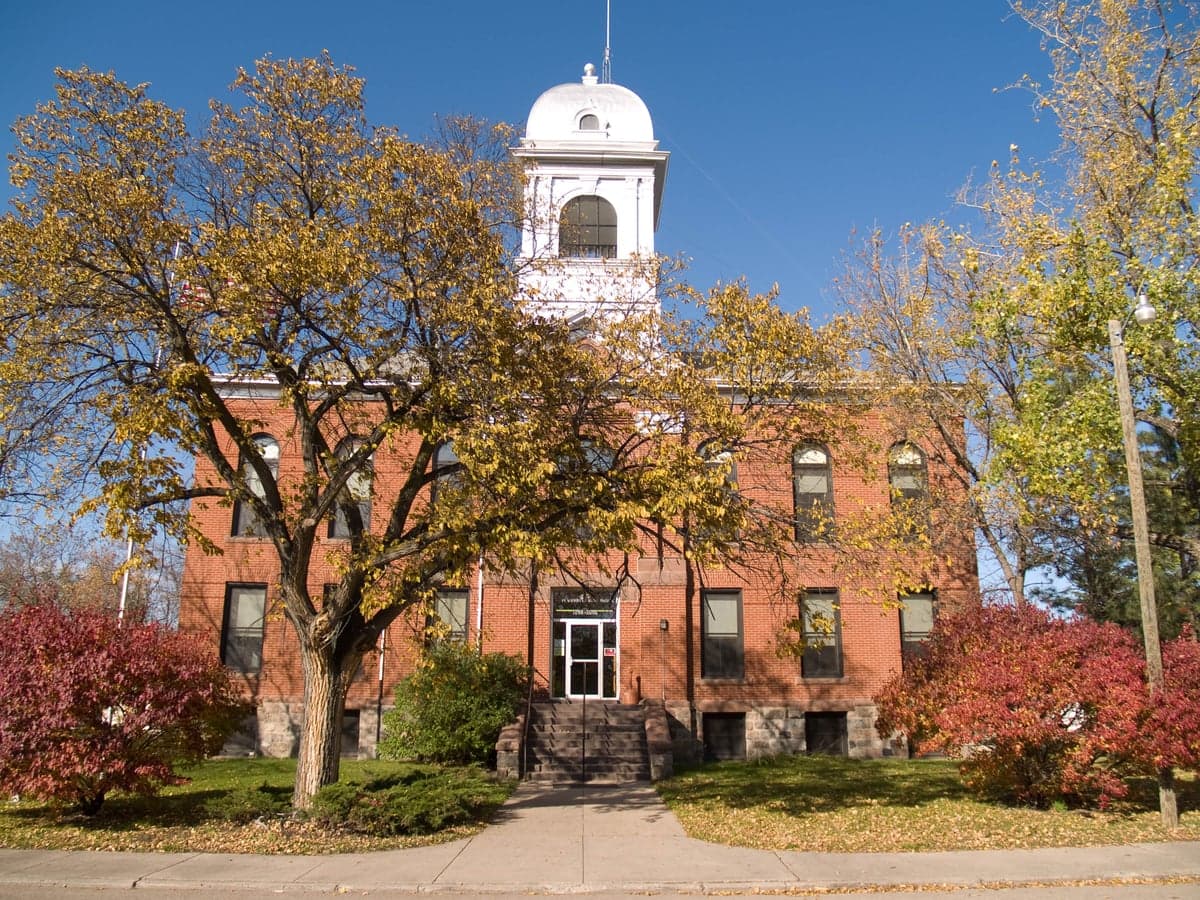
Photo: Wikipedia
Demographics of New Rockford, ND
Affluence Level in New Rockford, ND
A middle-class area roughly in line with national averages across income, home values, education, and employment.
People of New Rockford, ND
The people of New Rockford, North Dakota today number just 1,325, making it a tightly-knit, predominantly white community where 91.9% of residents share that background. The city is overwhelmingly native-born, with a foreign-born population of 0.0%, and its character remains deeply rooted in the agricultural and small-town values of the northern plains. With a college attainment rate of 29.2%, the workforce is a mix of local professionals, tradespeople, and those tied to the region’s farming and energy sectors. This is a place where generational continuity is strong, and newcomers are rare.
How the city was settled and grew
New Rockford was founded in 1883 as a railroad town on the line of the Northern Pacific Railway, which cut through the heart of the Sheyenne River valley. The original settlers were predominantly Northern European immigrants—Norwegians, Germans, and Swedes—drawn by the promise of cheap, fertile land under the Homestead Act of 1862. These families built the first homes in what is now the Original Townsite, the grid of streets around Central Avenue and the railroad depot. By 1900, the population had swelled to over 600, fueled by a second wave of German-Russian immigrants, who settled the South Side neighborhood near the grain elevators and stockyards. The city’s growth peaked in the 1910s and 1920s, when the agricultural boom and the establishment of the Eddy County seat brought merchants, bankers, and professionals to the Courthouse District along 1st Street. The Great Depression and Dust Bowl years hit hard, but the city stabilized as a regional trade hub for surrounding farms, with the West End developing as a residential area for second-generation families who had moved off the land.
Modern era (post-1965)
After the 1965 Hart-Cellar Act, New Rockford saw virtually no immigration from outside Europe or North America—the foreign-born share remains 0.0% today. The post-1965 era instead brought domestic out-migration, as younger residents left for larger cities like Fargo and Bismarck. The population, which stood at 1,800 in 1960, has declined steadily. The Hillcrest Addition, platted in the 1970s, absorbed the few new families that arrived—mostly local couples building homes on the city’s northern edge. The Hispanic population, now at 3.1%, began appearing in the 1990s, primarily as seasonal agricultural workers who later settled in the East Side rental properties near the former creamery. No Black, Asian, or Indian subcontinent populations are recorded in the data, reflecting the city’s lack of diversity beyond a small Hispanic cohort. The Downtown Core has seen commercial decline, with many storefronts vacant, but the surrounding residential neighborhoods remain stable, occupied by aging homeowners and a handful of young families.
The future
The population trajectory points toward continued slow decline, with the median age rising as younger adults leave for college and careers elsewhere. The city is not homogenizing further—it is already as homogeneous as a small plains town can be—but it is also not tribalizing into distinct enclaves. The Hispanic share, while small, may grow modestly as agricultural labor needs persist, but assimilation into the broader white community is the likely pattern, not ethnic clustering. The Original Townsite and South Side will likely see the most turnover as older residents pass away and their homes are sold to the few incoming families or rented out. No major immigrant waves are expected, given the lack of economic draw and the remote location. Over the next 10–20 years, New Rockford will likely remain a stable, aging, and overwhelmingly white community, with a population that could dip below 1,200.
For someone moving in now, New Rockford offers a quiet, safe, and deeply rooted community where neighbors know each other and the pace of life is slow. The trade-off is limited economic opportunity, a shrinking tax base, and a social fabric that is resistant to change. It is a place best suited for those seeking a low-cost, low-drama rural existence, not for those looking for diversity or rapid growth.

* Values derived from national, state, county, city and local statistics and may differ in a specific area. Last updated: 2026-04-19T08:20:33.000Z
Narrative content on this page is AI-generated and may contain mistakes. Verify any details that matter before acting on them.
ReloMaps may earn a commission from affiliate links at no extra cost to you.

