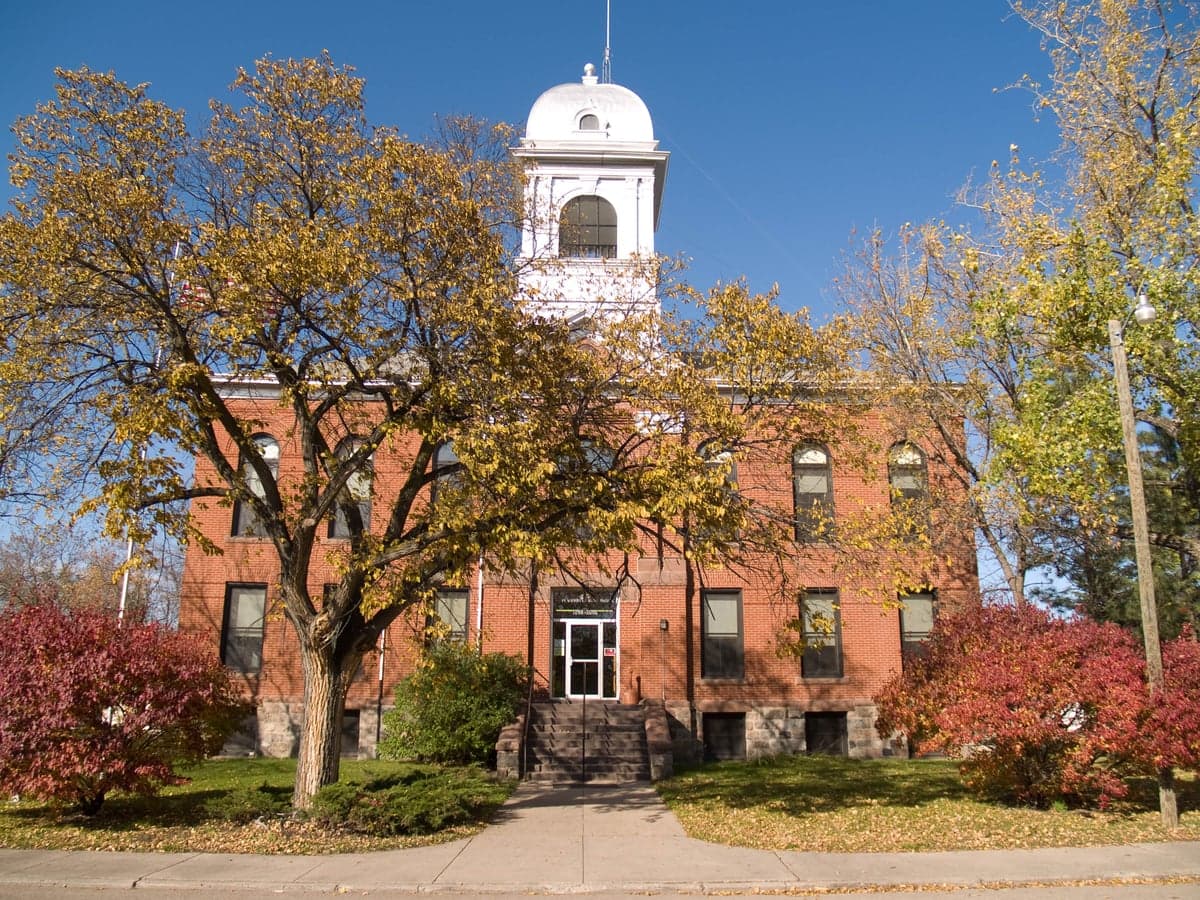
Photo: Wikipedia
Political ClimatePolitical Climate in New Rockford, ND
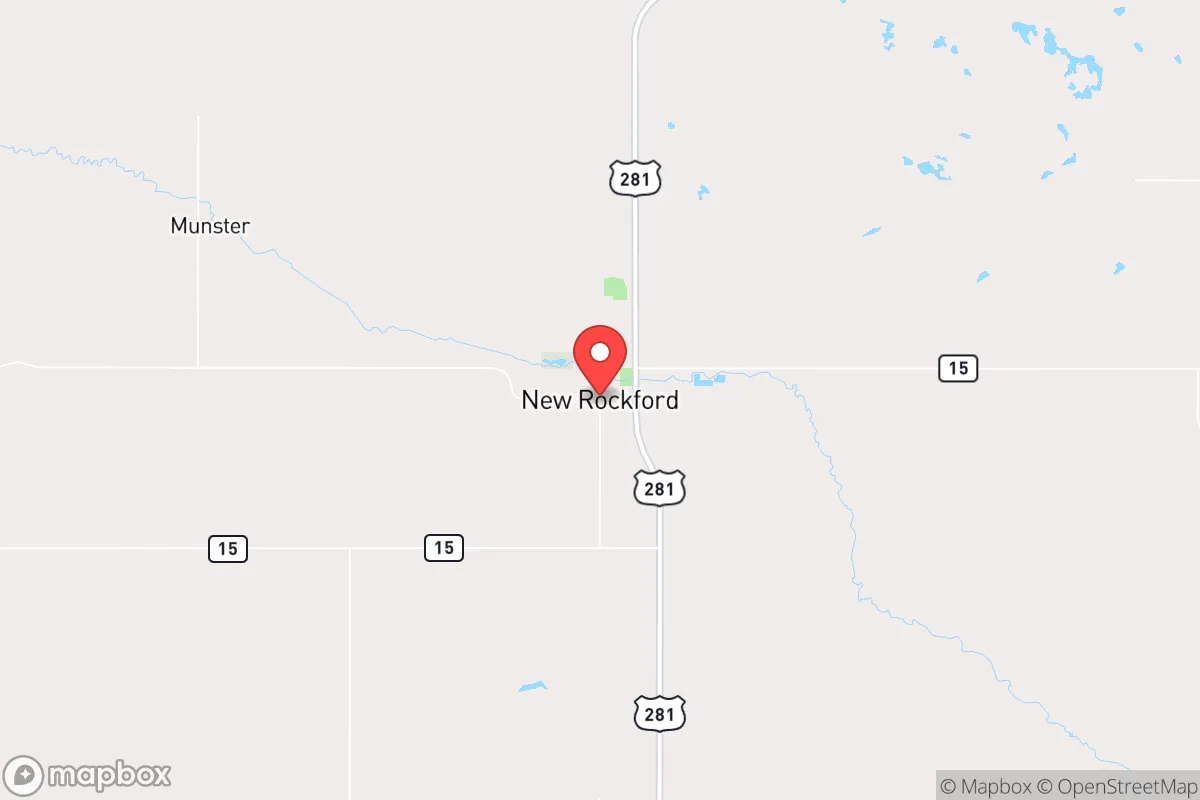
District shown is the primary district for this city’s centroid. Cities may span multiple districts.
Inherited from parent state — no local data available.
Local Political AnalysisPolitical Analysis of New Rockford, ND
New Rockford, North Dakota, is about as reliably conservative as a place gets, and that’s been the case for as long as anyone around here can remember. With a Cook PVI of R+18, the area hasn’t just leaned Republican in recent elections—it’s been a solid red anchor in a state that’s already deeply conservative. You don’t see a lot of hand-wringing over political ads here; folks know where they stand, and it’s usually on the side of limited government, personal responsibility, and keeping Washington out of our business. The trajectory hasn’t shifted much over the past decade, and if anything, the local sentiment has hardened against any whiff of progressive overreach, whether that’s from state-level pushes or national trends.
How it compares
When you look at the political map of North Dakota, New Rockford sits in a pocket of deep red that’s actually a bit more conservative than some of the surrounding areas. For instance, nearby cities like Carrington or even Jamestown—both reliably Republican—still have a slightly more moderate streak, especially in local races where you might see a few more independent or even Democratic-NPL candidates pop up. But in New Rockford, the R+18 rating isn’t just a number; it’s a reflection of a community that’s largely skeptical of government expansion, whether that’s in the form of new regulations on farming, gun control measures, or federal mandates on energy. Compared to the more liberal enclaves in the state—like Fargo or Grand Forks, where you’ll find younger, more diverse populations and a noticeable progressive tilt—New Rockford feels like a different world. The contrast is stark: while those cities have seen some movement toward green energy policies or social justice initiatives, here the conversation is still about property rights, school choice, and keeping taxes low.
What this means for residents
For someone living in New Rockford, the political climate translates into a daily life that’s largely free from the kind of ideological battles you see in bigger cities. There’s a strong sense of community self-reliance—people here don’t expect the government to solve their problems, and they’re quick to push back when they feel like their freedoms are being encroached upon. That said, it’s not all smooth sailing. The recent push for more state-level oversight on things like land use and agricultural practices has raised some eyebrows, with many residents worried that even conservative-led governments can get too big for their britches. The real concern, though, is the slow creep of progressive ideas through media and education—there’s a growing unease that younger generations might be swayed by narratives that undermine traditional values. For now, the community holds firm, but there’s a quiet vigilance about keeping outside influences at bay.
Culturally, New Rockford stands out for its no-nonsense approach to policy. You won’t find a lot of talk about diversity initiatives or climate action plans at the town hall—what you will find is a focus on practical matters like road maintenance, school funding, and supporting local businesses. The area has a strong hunting and outdoor recreation culture, and any talk of gun control is met with immediate resistance. There’s also a deep-seated belief in fiscal conservatism; the idea of running up debt for social programs is almost universally rejected. If there’s one policy distinction that defines New Rockford, it’s the commitment to keeping government small and local, with a healthy distrust of any authority that tries to tell people how to live their lives. That’s the way it’s been, and most folks here aim to keep it that way for the long haul.

State Political ClimatePolitical Climate in North Dakota
State Political AnalysisPolitical Environment in the State
North Dakota has long been a reliably conservative state, with a Republican lean that has only deepened over the past two decades. The state hasn’t voted for a Democratic presidential candidate since Lyndon B. Johnson in 1964, and in 2024, Donald Trump carried it by over 20 points. The dominant coalition is a mix of rural agricultural interests, energy sector workers from the Bakken oil fields, and a growing population of conservative-leaning transplants from blue states. Over the last 10-20 years, the state has shifted from a more pragmatic, farm-belt conservatism to a harder-edged, culturally conservative posture, driven by the oil boom and a reaction against national Democratic trends. While the eastern part of the state, anchored by Fargo and Grand Forks, still shows some purple tendencies, the western half—places like Williston, Dickinson, and Minot—is deeply red and growing in political influence.
Urban vs. rural divide
The political map of North Dakota is starkly divided between its few urban centers and the vast rural expanse. Fargo, the largest city, is the most politically competitive area in the state. Cass County, which contains Fargo, has been a swing county in recent cycles—voting for Trump by only 8 points in 2020, compared to the statewide margin of 33 points. Grand Forks, home to the University of North Dakota, leans Republican but with a noticeable libertarian streak, especially among younger voters and faculty. In contrast, the rural and small-town areas are overwhelmingly conservative. The western oil patch counties—Williams County (Williston), McKenzie County, and Dunn County—routinely deliver 80-90% Republican margins. This urban-rural split mirrors national patterns, but with a key difference: even the "liberal" cities in North Dakota are moderate by national standards. There is no progressive stronghold like Minneapolis or Portland here. The divide is more about intensity of conservatism than a true ideological battle, though Fargo’s growing diversity and younger population are slowly nudging it leftward.
Policy environment
North Dakota’s policy environment is among the most business-friendly and liberty-oriented in the nation. The state has no personal or corporate income tax, a low property tax burden, and a regulatory climate that encourages energy development and agriculture. Education policy is largely local, with school choice options expanding through charter schools and open enrollment, though private school vouchers remain limited. Healthcare is a mixed bag: the state expanded Medicaid under the Affordable Care Act in 2013, a decision that still rankles some conservatives, but it also has some of the lowest per-capita healthcare costs in the country. Election laws are solid—voter ID is required, and the state has no widespread mail-in voting system, which has kept election integrity concerns minimal. The state legislature is firmly Republican, with a supermajority in both chambers, and has passed laws restricting abortion (trigger ban after Dobbs), protecting gun rights (constitutional carry), and opposing federal overreach on land use and energy regulation. The biggest red flag for liberty-minded folks is the state’s heavy reliance on federal farm subsidies and highway funding, which creates a subtle dependency that limits how far the state can push back against Washington.
Trajectory & freedom
North Dakota is on a trajectory of increasing personal freedom, particularly in the areas of gun rights, parental rights, and economic liberty. In 2023, the legislature passed a law prohibiting any state or local enforcement of federal gun laws that infringe on the Second Amendment, effectively a nullification measure. The same session saw the passage of a Parents’ Bill of Rights, requiring school districts to notify parents about curriculum changes and medical services offered to minors. On the medical autonomy front, the state has resisted COVID-19 vaccine mandates and mask mandates more aggressively than most, with Governor Doug Burgum signing a law in 2021 banning vaccine passports. Property rights are strong, with the state having some of the weakest eminent domain laws in the country, a direct response to the Dakota Access Pipeline protests. However, there are concerning trends: the state has seen a slow creep of local zoning ordinances in places like Fargo and Bismarck that restrict housing development and property use, and there is ongoing debate about whether to adopt a state-level income tax to fund growing infrastructure needs. The overall direction is positive for freedom, but vigilance is needed at the local level.
Civil unrest & political movements
North Dakota has experienced notable civil unrest, most famously the Dakota Access Pipeline (DAPL) protests in 2016-2017 near the Standing Rock Reservation. That event drew thousands of activists from across the country, including left-wing environmentalists and indigenous rights groups, and resulted in clashes with law enforcement. The state’s response—heavy-handed at times, with mass arrests and the use of military-style tactics—left a bitter legacy and is still a flashpoint in local politics. Since then, organized left-wing activism has waned, but there are active groups pushing for environmental justice and tribal sovereignty. On the right, the state has seen a rise in grassroots conservative movements, particularly around school board elections and library content. In 2023, the city of Bismarck saw heated debates over a proposed "drag story hour" event, leading to a city council vote to restrict public library programming. Immigration politics are relatively quiet, as the state has a small foreign-born population, but there is a growing concern among conservatives about the influx of refugees resettled in Fargo through Lutheran Social Services. Election integrity controversies have been minimal, though some rural counties have debated hand-counting ballots. A new resident would notice that political activism here is less about street protests and more about school board meetings, county commission hearings, and local zoning battles—the kind of low-key, high-impact politics that fly under the national radar.
Projection
Over the next 5-10 years, North Dakota is likely to become more conservative, not less, driven by two key factors: in-migration from blue states and the continued growth of the energy sector. The state is attracting a steady stream of conservatives from California, Illinois, and Minnesota who are fleeing high taxes and progressive policies. These newcomers tend to settle in the western oil patch or in the suburbs of Fargo and Bismarck, and they are often more culturally conservative than native-born North Dakotans. The demographic shift is already visible: Williams County’s population grew by over 40% between 2010 and 2020, and the new arrivals are reliably Republican. Meanwhile, the state’s younger, college-educated population in Fargo and Grand Forks is not growing fast enough to offset the rural conservative base. The biggest wildcard is the energy transition: if federal policies under a future Democratic administration severely restrict oil and gas development, the western part of the state could face an economic downturn, which might shift political priorities. But for now, the trajectory is clear: North Dakota will remain a red-state stronghold, with the possibility of becoming even more libertarian-leaning on economic issues and more culturally conservative on social ones. Someone moving in now should expect to find a state that values personal responsibility, local control, and a healthy skepticism of federal power—but also one that is increasingly shaped by the priorities of its energy-driven economy and the newcomers who are choosing it for its freedom.
For a new resident, the bottom line is this: North Dakota offers a high degree of personal and economic freedom, with a political climate that is overwhelmingly conservative and likely to stay that way. You’ll find lower taxes, fewer regulations, and a culture that respects individual rights—especially on guns, parental authority, and property. But don’t expect a libertarian paradise; the state still has its share of local bureaucracy, federal dependencies, and the occasional progressive flashpoint in Fargo. If you’re looking for a place where your values are the norm and the government mostly stays out of your way, North Dakota is a solid bet. Just be prepared for long winters, wide-open spaces, and a political landscape that rewards showing up to your local school board meeting more than posting on social media.
* Values derived from national, state, county, city and local statistics and may differ in a specific area. Last updated: 2026-04-19T08:20:33.000Z
Narrative content on this page is AI-generated and may contain mistakes. Verify any details that matter before acting on them.
ReloMaps may earn a commission from affiliate links at no extra cost to you.

