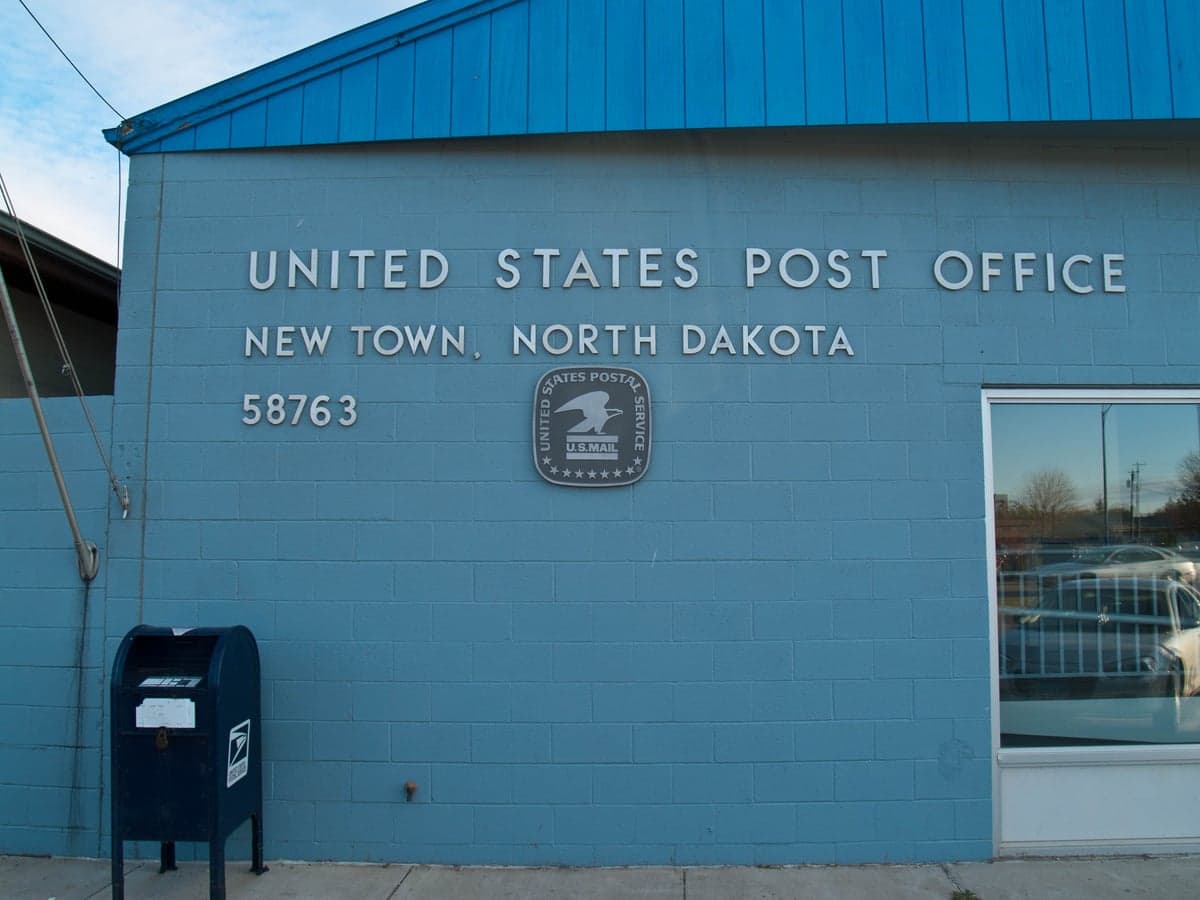
Photo: Wikipedia
Political ClimatePolitical Climate in New Town, ND
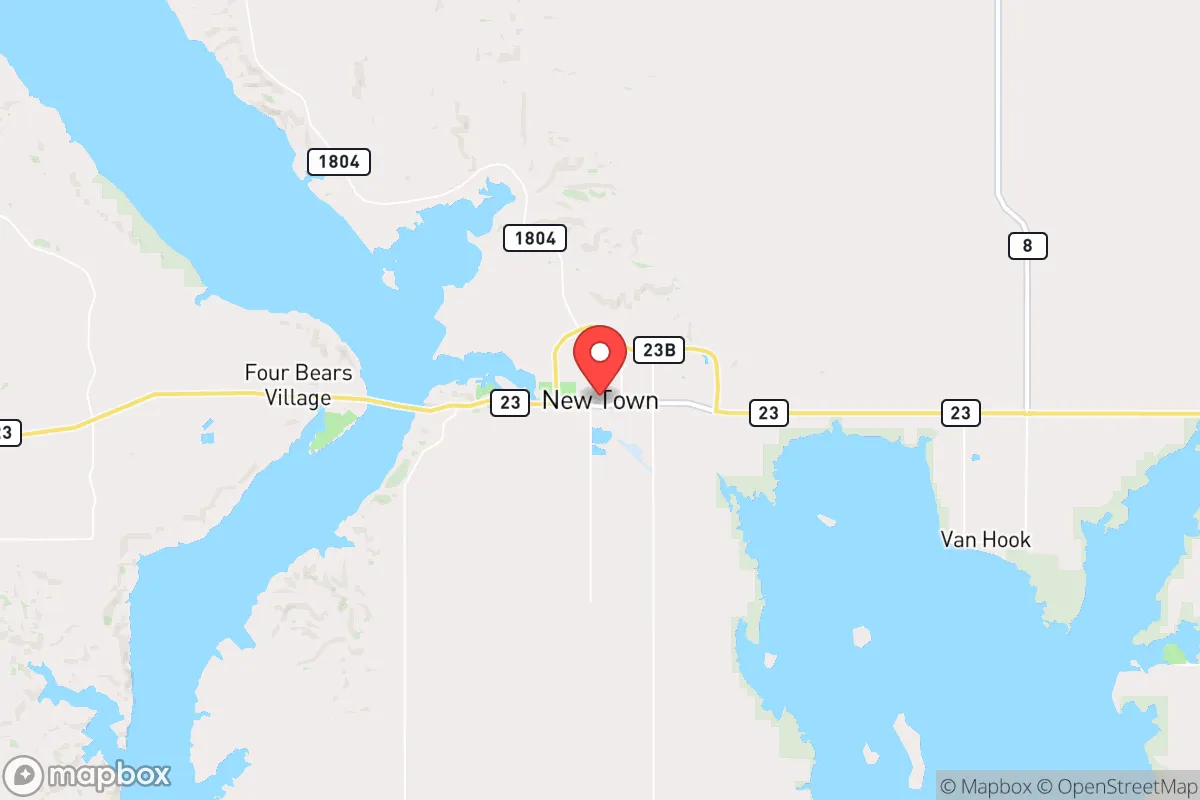
District shown is the primary district for this city’s centroid. Cities may span multiple districts.
Inherited from parent state — no local data available.
Local Political AnalysisPolitical Analysis of New Town, ND
New Town, North Dakota, sits deep in the heart of the Bakken oil patch, and politically, it’s about as red as they come. The Cook PVI of R+18 tells you the math, but the real story is the culture: this is a place where folks still believe in minding their own business and keeping the government out of their lives. For decades, the area has leaned solidly Republican, and while the oil boom brought in a lot of new faces from all over the country, the core values here haven’t budged much. If anything, the influx of workers who came for the freedom to work hard and keep what they earn has only reinforced the local distrust of big government and progressive experiments.
How it compares
Drive an hour east to Minot, and you’ll find a similar conservative vibe, though it’s a bit more polished and tied to the Air Force base. Head south to Bismarck, and you’re in the state capital, where the politics are conservative but more establishment—think Chamber of Commerce Republicans. New Town is different. It’s rougher around the edges, more libertarian-leaning, and deeply skeptical of any politician who talks about “managing” the economy or “reimagining” energy policy. The contrast is sharpest if you go west to Williston, which is even more boom-and-bust driven, but New Town has a quieter, more stubborn independence. The nearby Fort Berthold Reservation adds a layer of complexity, but even there, the dominant political sentiment among non-tribal residents is a fierce resistance to federal overreach, whether it’s on land use, gun rights, or energy regulations.
What this means for residents
For someone living here, the political climate means you’re mostly left alone to live your life the way you see fit. There’s no city council trying to ban gas stoves or push diversity quotas on local businesses. The local government focuses on roads, water, and keeping the oilfield traffic moving—not on social engineering. That said, there are real concerns about the long-term trajectory. As the state sees more outside investment and younger people move in from blue states, there’s a creeping worry that progressive ideas will follow. You see it in small ways: a school board candidate talking about “equity” or a county commissioner suggesting more “public input” on land use. Most locals see that as the first step toward losing the freedom that makes this place worth living in. The real red flag is any talk of stricter environmental regulations on the oil industry, because that’s a direct threat to the local economy and a sign that government is getting too big for its britches.
Culturally, New Town is a place where the Second Amendment isn’t debated, it’s assumed. The local churches are full, and the biggest community events are the powwows and the high school football games. There’s a strong sense of self-reliance—people here don’t expect the government to solve their problems. The policy distinction that stands out most is the hands-off approach to property rights and energy development. Unlike some parts of the country where you need a dozen permits to build a shed, here you can still get things done with a handshake and a nod. The worry for the future is that as the state grows and attracts more people from places like California or Illinois, the political winds might shift. But for now, New Town remains a place where conservative values aren’t just a voting pattern—they’re the air you breathe. If that ever changes, it won’t be because the locals wanted it to.

State Political ClimatePolitical Climate in North Dakota
State Political AnalysisPolitical Environment in the State
North Dakota has long been one of the most reliably Republican states in the nation, but don’t let the simple red-state label fool you—the political climate here is more layered than a prairie winter coat. Over the last 20 years, the state has shifted from a moderate, agrarian conservatism toward a harder, more culturally assertive brand of Republicanism, driven largely by the oil boom in the western part of the state and a steady exodus of younger, more liberal-leaning residents from the eastern cities. The dominant coalition today is a mix of energy-sector libertarians, rural traditionalists, and a growing number of out-of-state transplants who came for the low taxes and high personal freedom. The trajectory has been a slow but steady march rightward, with the GOP now holding every statewide office and supermajorities in both legislative chambers.
Urban vs. rural divide
The political map of North Dakota is a textbook case of the urban-rural split, but with a twist. The state’s two major population centers—Fargo and Bismarck—vote very differently. Fargo, in the eastern Red River Valley, is the state’s liberal-leaning outlier, with Cass County often voting within single digits of the statewide Democratic candidate. In 2024, Cass County went for Trump by only 12 points, compared to the statewide margin of 34 points. Bismarck, the capital, is more conservative but still moderate by state standards, with Burleigh County reliably Republican but not as hard-right as the rural counties. The real engine of the state’s rightward shift is the oil patch in the northwest, anchored by Williston and Watford City. These towns have seen explosive growth since the Bakken boom, attracting a workforce that is overwhelmingly male, young, and libertarian-leaning. Williams County, home to Williston, voted +47 for Trump in 2024. Meanwhile, the rural counties along the Missouri River and in the central part of the state—places like McLean County and Mercer County—are deeply conservative, often voting 70-80% Republican. The only real blue dots on the map are the Native American reservations, like the Standing Rock Sioux Reservation in the south, which voted overwhelmingly Democratic, and the Turtle Mountain Band in the north. But these populations are small and have little statewide electoral impact.
Policy environment
North Dakota’s policy environment is a dream for anyone who values limited government and personal autonomy. The state has no state income tax—a major draw for high-earners and business owners—and a relatively low sales tax rate of 5%, though local jurisdictions can add up to 2.5% more. Property taxes are moderate but have been a perennial political issue, with the legislature repeatedly passing caps and rebates. The regulatory posture is aggressively pro-business: there are no state-level occupational licensing requirements for many trades, and the state has a right-to-work law that prohibits mandatory union membership. On education, North Dakota has a robust school choice environment, including a new Education Savings Account program passed in 2025 that allows parents to use state funds for private school tuition, homeschooling materials, or tutoring. Healthcare is a mixed bag: the state expanded Medicaid under the Affordable Care Act in 2013, a decision that still rankles many conservatives, but there are no state-level mandates for health insurance beyond federal requirements. Election laws are among the most secure in the nation: the state requires a valid ID to vote, has no same-day registration, and conducts all elections with paper ballots. There is no early voting by mail except for absentee ballots, which require an excuse. The state has also passed a voter ID law that includes a provision for tribal IDs, a compromise that has held up in court.
Trajectory & freedom
If you’re looking for a state that is expanding personal freedom, North Dakota is a bright spot, but it’s not without its recent controversies. On the positive side, the state has been a leader in gun rights: in 2021, it passed a constitutional carry law, allowing any law-abiding adult to carry a concealed firearm without a permit. In 2023, the legislature passed a law prohibiting the enforcement of any federal gun control measures that violate the Second Amendment, a clear nullification-style move. On parental rights, the state passed a Parents’ Bill of Rights in 2023, giving parents the explicit right to direct their child’s education, access school records, and opt out of any curriculum they find objectionable. On medical autonomy, the state has been a mixed bag: it banned nearly all abortions in 2023 after the Dobbs decision, with exceptions only for rape, incest, and the life of the mother. But it has not passed any vaccine mandates or mask mandates since the pandemic, and the legislature has explicitly prohibited any future mandates by state or local governments. On the concerning side, the state has seen a creeping expansion of government power in the name of “public safety.” In 2024, the legislature passed a law requiring all social media platforms to verify the age of users under 18, a move that critics say infringes on free speech and privacy. There has also been a push to expand the state’s surveillance powers, including a proposal to create a statewide license plate reader database, which was narrowly defeated in 2025. Overall, the trajectory is toward more personal freedom, but the state’s small-government ethos is constantly tested by the temptations of oil revenue and federal money.
Civil unrest & political movements
North Dakota is not a hotbed of civil unrest, but it has had its share of flashpoints. The most famous is the Standing Rock protests of 2016-2017, when thousands of activists from across the country descended on the state to protest the Dakota Access Pipeline. The protests turned violent at times, with clashes between demonstrators and law enforcement, and the state government responded by passing a series of laws criminalizing protest activities, including a 2017 law that made it a felony to trespass on critical infrastructure. These laws have been criticized as an overreach, but they remain on the books. On the right, there is a growing constitutional sheriff movement in rural counties, particularly in the western part of the state. Sheriffs in counties like McKenzie County and Dunn County have publicly stated they will not enforce any state or federal laws they deem unconstitutional, including gun control measures. There is also a small but vocal secessionist movement in the northwest, where some residents have called for the creation of a new state called “Liberty” or “North Dakota West,” though this has never gained serious traction. Immigration politics are relatively quiet, as the state has a very small foreign-born population (about 4%), but there have been tensions in towns like Dickinson and Minot, where the oil boom attracted a wave of out-of-state workers, some of whom were immigrants. The state has no sanctuary policies, and local law enforcement cooperates fully with federal immigration authorities. Election integrity has been a major issue since 2020, with the state legislature passing a series of laws to tighten voting procedures, including a ban on ballot drop boxes and a requirement that all absentee ballots be notarized. These laws have been challenged in court but have so far been upheld.
Projection
Looking ahead 5-10 years, North Dakota is likely to become even more conservative, but with some important caveats. The demographic trends are working in favor of the right: the state’s population is aging, and younger, more liberal-leaning residents are leaving for places like Minneapolis or Denver. The oil patch is also maturing, with production plateauing, which could slow the influx of new workers. However, the state is seeing a steady stream of in-migration from blue states, particularly from California and Washington, driven by the low taxes and high quality of life. These newcomers tend to be more libertarian than traditional conservative, which could shift the political center of gravity toward a more “leave me alone” style of governance rather than a socially conservative one. The biggest wild card is the state’s reliance on oil revenue, which makes up about 30% of the state budget. If oil prices crash or the industry declines, the state could face a fiscal crisis that might force it to raise taxes or cut services, which could erode the current political consensus. On the cultural front, the state is likely to remain a stronghold of traditional values, with no major shifts on abortion, gun rights, or parental rights. The biggest threat to freedom in the state is the potential for government overreach in the name of “security,” whether that’s surveillance, censorship, or emergency powers. If the state can resist that temptation, it will remain one of the freest places in the country.
For someone moving to North Dakota today, the bottom line is this: you’re coming to a state that takes personal freedom seriously, but you need to be aware of the trade-offs. The winters are brutal, the social scene is sparse outside of Fargo and Bismarck, and the state’s economy is heavily dependent on a single industry. But if you value low taxes, minimal government interference in your life, and a community that respects your right to live as you see fit, North Dakota is hard to beat. Just don’t expect it to stay exactly the same—the state is changing, and the next decade will test whether it can hold onto its libertarian roots or drift toward a more authoritarian version of conservatism.
* Values derived from national, state, county, city and local statistics and may differ in a specific area. Last updated: 2026-04-19T05:38:44.000Z
Narrative content on this page is AI-generated and may contain mistakes. Verify any details that matter before acting on them.
ReloMaps may earn a commission from affiliate links at no extra cost to you.

