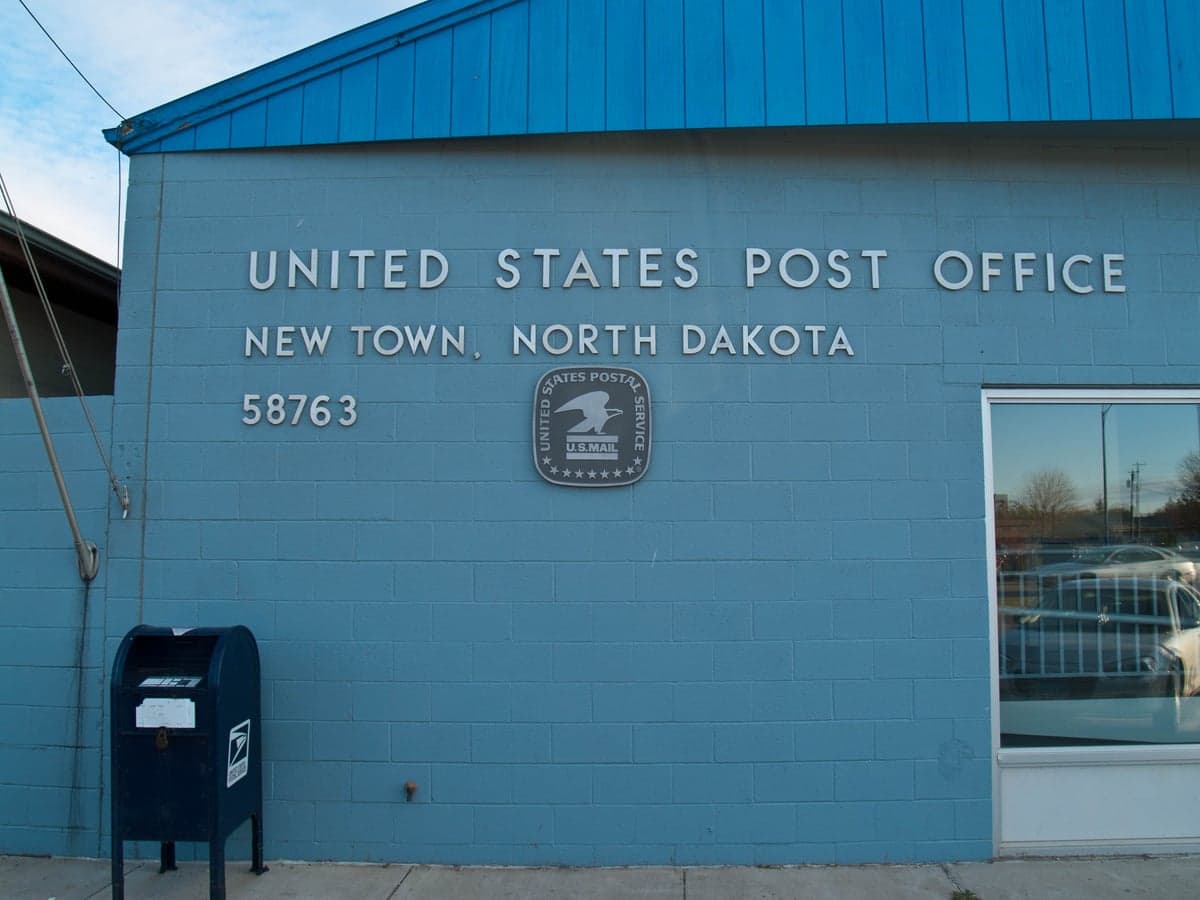
Photo: Wikipedia
Strategic Assessment of New Town, ND
Strong survivability profile. Good buffer from population centers, with manageable environmental and tactical risks.
What does the Strategic Assessment tell us?
Our Strategic Assessment grades tactical survivability of an area. Major population centers, military targets, fallout zones, natural disasters, and border exposure all drive risk — lower exposure means a more defensible position in a crisis.
This is heavily inspired by Joel Skousen's Strategic Relocation book. Highly recommended you checkout the book ($)What does this tell us?
Our Strategic Assessment grades tactical survivability of an area. Major population centers, military targets, fallout zones, natural disasters, and border exposure all drive risk — lower exposure means a more defensible position in a crisis.
This is heavily inspired by Joel Skousen's Strategic Relocation book. Highly recommended you checkout the book ($)Strategic Pillars

Key Distances
Regional Safe Places
Below is our recommended "safe zones" in North Dakota and the surrounding area based on our strategic heuristics. For most people, it's unrealistic to live in a “safe zone” full-time due to work, family or other personal reasons. They tend to be more rural. However, many of these areas are perfect for second homes and retreat properties that double as a vacation home or even a short-term rental.
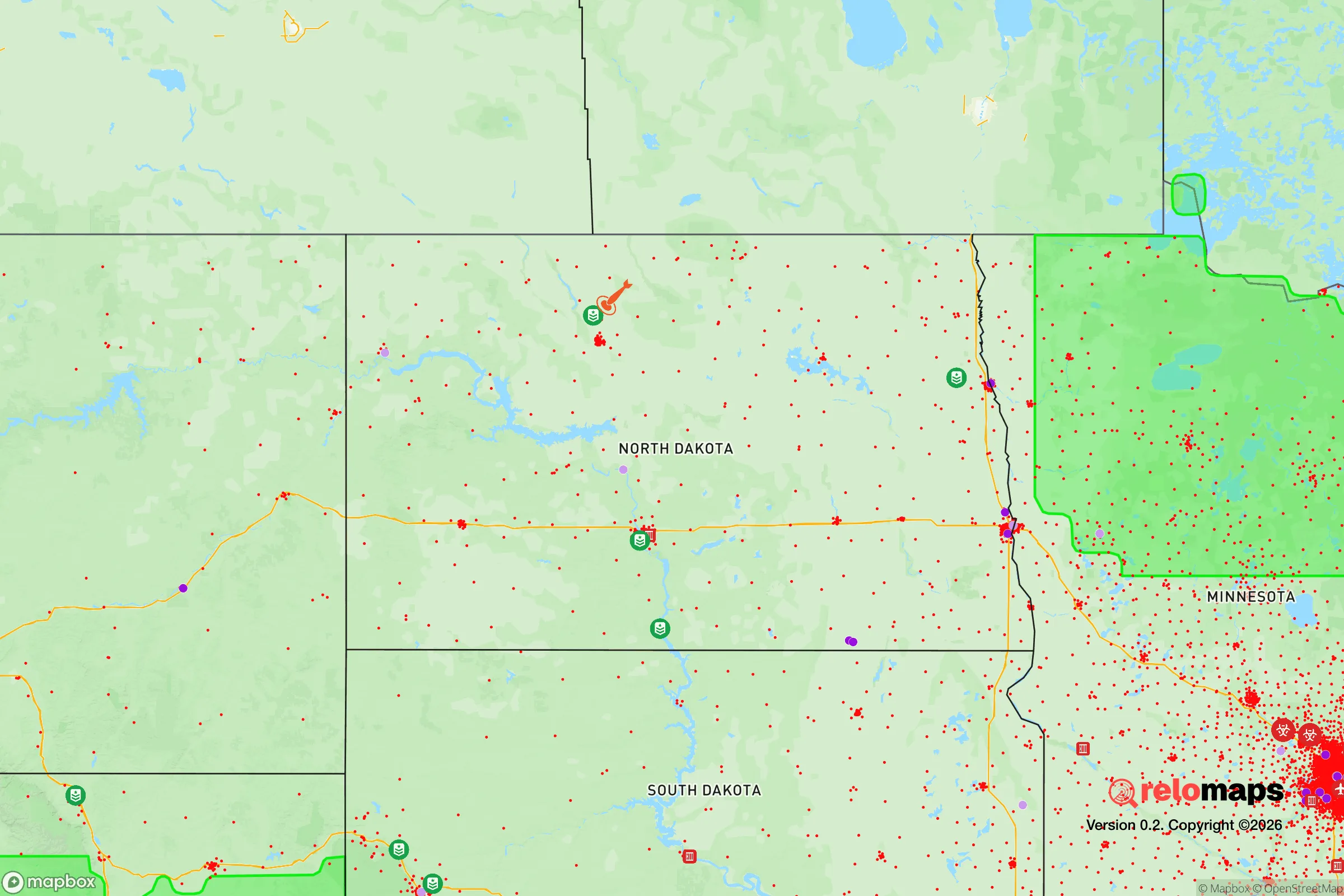
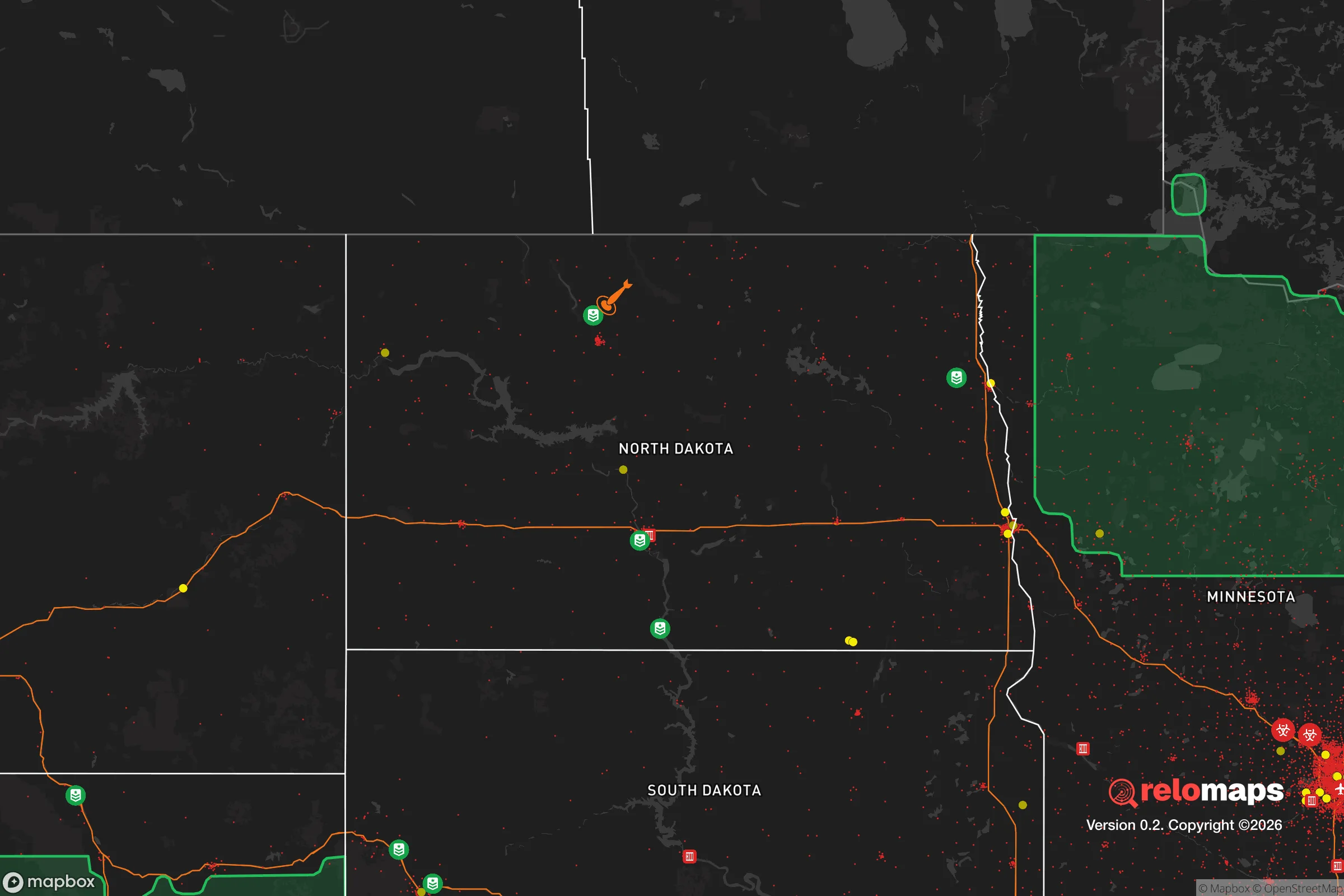


Important Note: For informational purposes only. This does not mean nothing bad ever happens in the green zones. Please use common sense. This is based on public data and modeled with AI. We tried to take a conservative approach but mistakes happen. We update this regularly as new information becomes available.
Solar Generator Recommendations
Backup power matters more here than in safer locations. We've picked three solar generators across budgets and capacity tiers — start with the budget unit if you only need a few essentials, or step up if you want to run a fridge and HVAC for days at a time.

Jackery Portable Power Station Explorer 300
Budget OptionPower on the Go: Weighing only 11 lbs, it's convenient to set up and store with book-sized foldable solar panels

BLUETTI Portable Power Station AC180
Designed for both indoor and outdoor scenarios, AC180 is highly capable as it has a robost capacity and continuous output power.

EF ECOFLOW DELTA Pro Ultra Power Station
Upgraded PickEcoFlow DELTA Pro Ultra is a whole-home energy system designed to grow with your family. Integrated with the Smart Home Panel 2, it scales to meet your evolving energy needs — keeping your home powered, intelligent, and secure through every stage of life.
We earn a commission, at no additional cost to you.
Strategic Assessment Analysis
New Town, North Dakota, sits in a position that few relocators from the coastal chaos have yet discovered, and that obscurity is its first strategic asset. Perched on the north shore of Lake Sakakawea in the heart of the Bakken oil fields, this town of roughly 3,000 people offers a combination of energy independence, water abundance, and geographic isolation that is rare in the Lower 48. For a conservative-leaning individual or family thinking about where to ride out the next decade of instability, New Town presents a serious option — but only if you understand both the hard advantages and the real vulnerabilities baked into this remote patch of the Great Plains.
Geographic isolation and natural buffer zones in the Bakken region
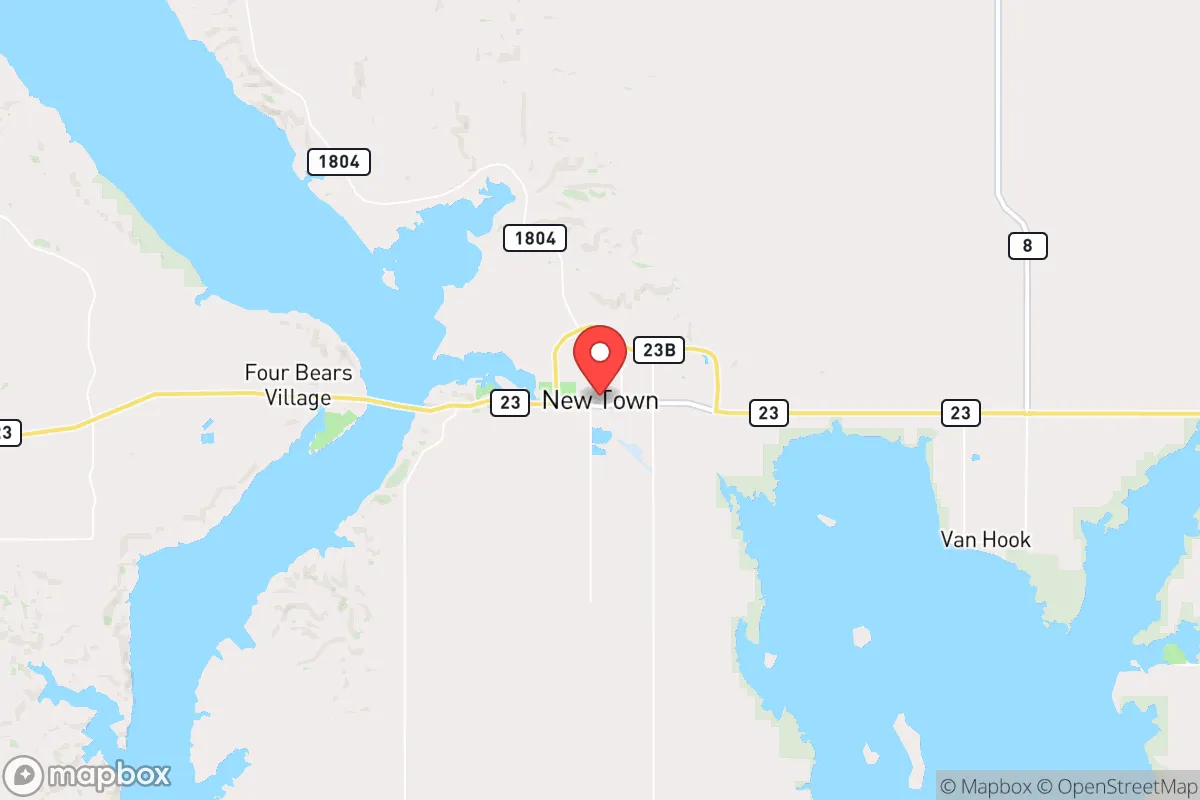
New Town's location is defined by what surrounds it: hundreds of miles of open prairie, the Fort Berthold Indian Reservation, and the sprawling waters of Lake Sakakawea. The nearest city of any real size is Minot, about 90 miles northeast, and Williston is roughly 70 miles northwest. Bismarck, the state capital, sits 120 miles south. That kind of distance from major population centers is a massive plus in a collapse scenario — you are not going to see refugee flows or supply chain disruptions from a Minneapolis or Seattle-style riot spilling into your neighborhood. The Missouri River and the lake create a natural barrier to the south and east, and the reservation's semi-autonomous governance structure adds another layer of separation from state-level bureaucratic chaos. The land itself is rolling prairie and buttes, offering decent line-of-sight defensibility if you secure a property with elevation. Winters are brutal — average January highs hover around 20°F — but that cold is itself a deterrent to unprepared transient populations. If you can handle the climate, the isolation works for you.
Fallout proximity, industrial risks, and exposure to national grid vulnerabilities
No location is without risk, and New Town has a few that demand honest assessment. The Bakken oil fields are the obvious one: you are living in the middle of active drilling, fracking, and pipeline infrastructure. A major well fire, pipeline rupture, or industrial accident could produce localized toxic exposure or a temporary evacuation zone. That said, the oil infrastructure is spread across a vast area, not concentrated in a single refinery complex like you'd see in Houston or Baton Rouge. More concerning for the prepper mindset is the proximity to Minot Air Force Base, about 90 miles northeast, which houses nuclear-capable B-52 bombers and is a high-priority target in any major conflict. A direct strike on the base would likely not affect New Town directly — prevailing winds would carry fallout eastward — but a secondary attack on the oil fields or a dirty bomb scenario could complicate things. On the plus side, New Town is far from any major nuclear power plant (the nearest is Prairie Island in Minnesota, over 400 miles away) and well outside any major metropolitan blast zone. The grid here is part of the Western Interconnection, which is less stressed than the Eastern Interconnection, but you should still plan for multi-day winter outages — the area sees ice storms and blizzards that can take down lines for a week or more.
Practical resilience: food, water, energy, and defensibility for a relocating family
This is where New Town genuinely shines for the prepared relocator. Lake Sakakawea is a massive, reliable freshwater source — over 300,000 surface acres of water that is not going to dry up in a drought the way reservoirs in the Southwest have. The Missouri River system feeds it, and the state's water rights laws are favorable to private well drilling. For food, the local growing season is short (roughly 110 frost-free days), but the soil in the river valleys is rich glacial till. You can raise cold-hardy crops like potatoes, root vegetables, and grains, and the surrounding ranchland means beef and bison are available from local producers. The Bakken oil fields mean energy is abundant and cheap — natural gas flaring is so common that some locals run generators off it for free. Solar works in the summer with long daylight hours, but winter generation is poor; a wind turbine paired with a propane or diesel backup is the smarter play. Defensibility is good if you choose your property wisely: the reservation has a strong law enforcement presence relative to its size, and the local culture is heavily armed and self-reliant. Gun ownership is the norm, not the exception, and the sheriff's department is responsive. The town itself is small enough that a neighborhood watch or mutual aid group is practical. The downsides: medical care is limited to a small clinic in New Town; serious trauma or illness means a 90-minute drive to Minot or a medevac flight. You will want to stock advanced first aid supplies and consider a telemedicine setup. Internet is available but not fiber-fast — Starlink is the best bet for reliable connectivity.
The overall strategic picture for New Town is that of a high-resilience, moderate-risk relocation target for someone who values isolation, energy security, and water abundance over proximity to urban amenities. It is not a bug-out location you can reach in an afternoon from Chicago — it is a place you move to and build a life, because the winters will test your resolve and the distance will test your supply chains. For the conservative-leaning individual or family who wants to be out of the blast radius of the coastal cities, away from the civil unrest corridors, and in a community where self-reliance is still the default, New Town offers a solid foundation. The oil industry brings some risk, but it also brings economic opportunity and a local tax base that keeps infrastructure functional. The nuclear target risk from Minot AFB is real but manageable with basic fallout planning. If you can handle the cold, secure your own power and water, and build relationships with the local ranching and oil communities, this is one of the few places in the continental US where you can genuinely step off the grid without stepping into the wilderness. It is not a paradise — it is a working, hardscrabble town in a harsh climate — but for the prepared relocator, that is exactly the point.

* Values derived from national, state, county, city and local statistics and may differ in a specific area. Last updated: 2026-04-19T05:38:44.000Z
Narrative content on this page is AI-generated and may contain mistakes. Verify any details that matter before acting on them.
ReloMaps may earn a commission from affiliate links at no extra cost to you.

