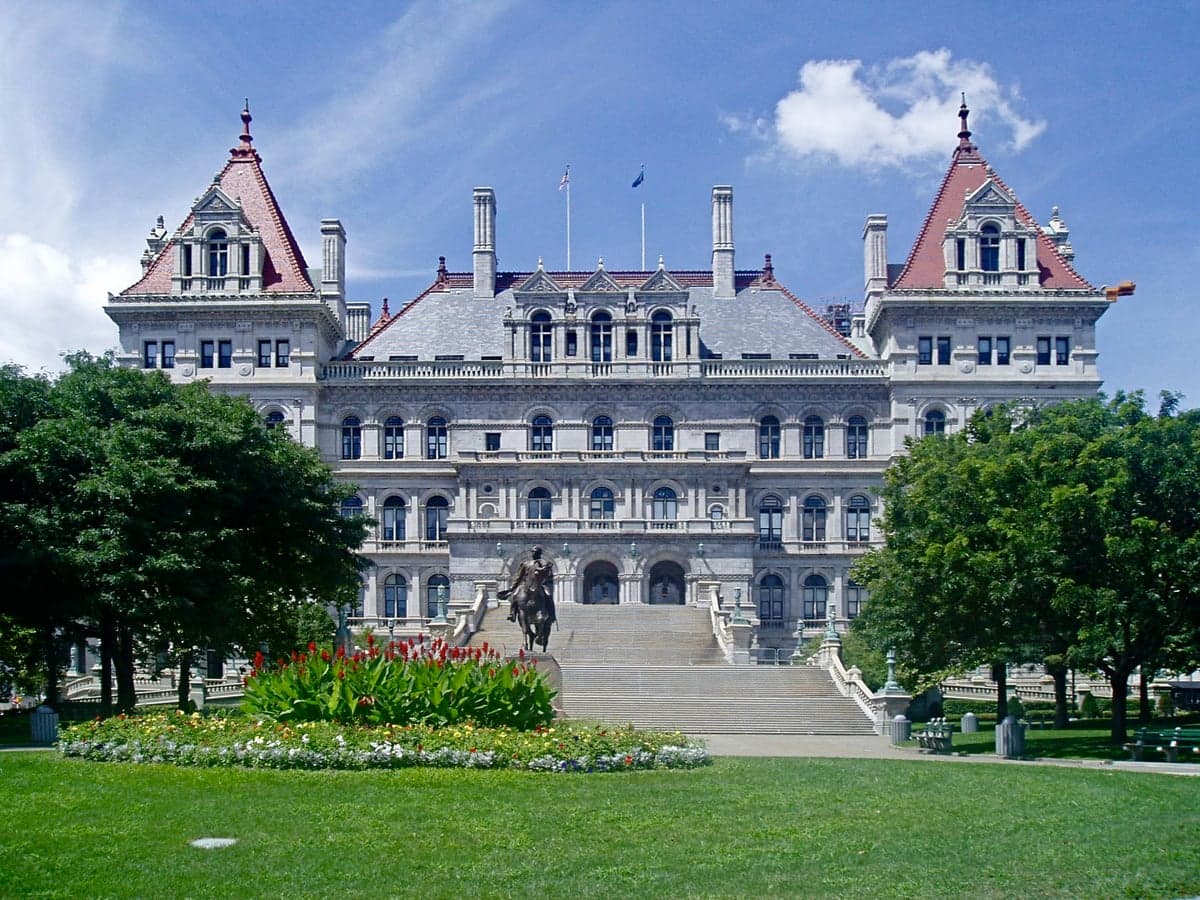
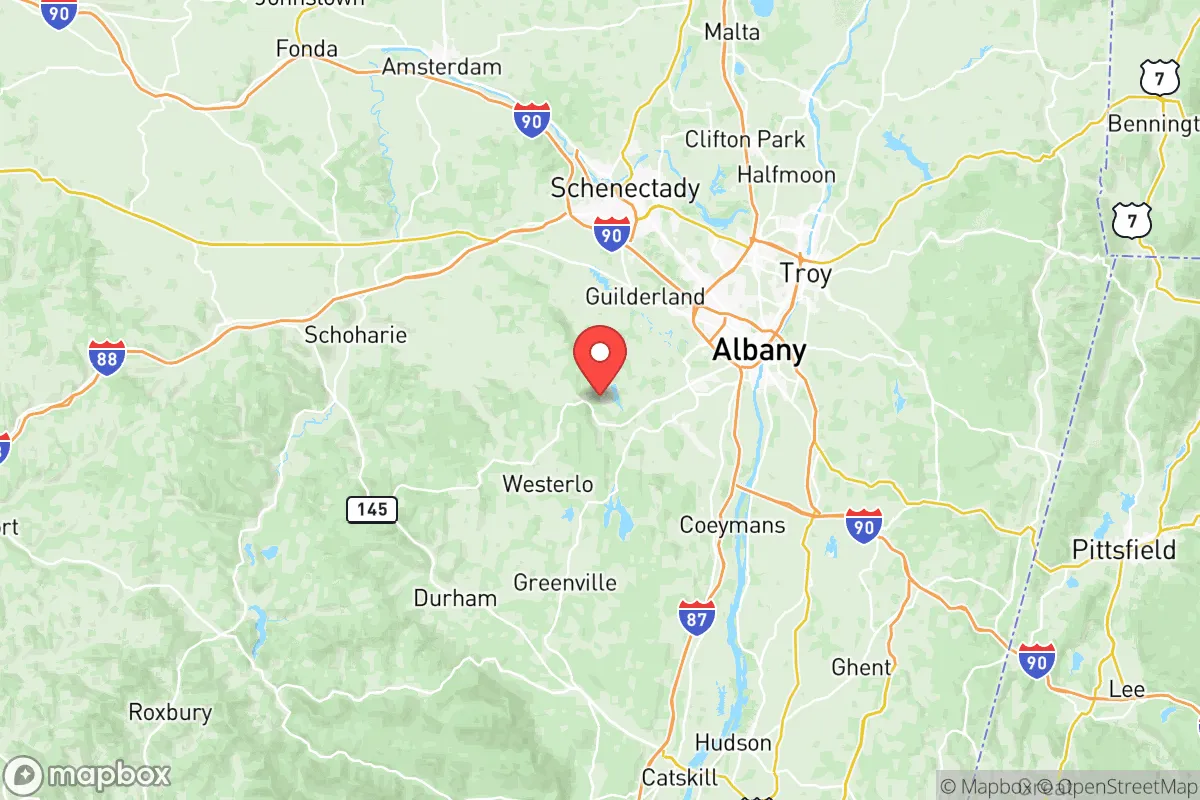
Photo: Wikipedia
Quality of Life in Albany County
A livable area that tracks near national norms for affordability, walkability, and neighborhood health.
What does Quality of Life tell us?
Quality of Life measures an area by evaluating factors like cost of living, nearby amenities, country club access, airport proximity, socioeconomic signals and neighborhood character. For large states, this is a general average — quality of life can vary dramatically between metro areas, suburbs, and rural communities within the same state.
What does this tell us?
Quality of Life measures an area by evaluating factors like cost of living, nearby amenities, country club access, airport proximity, socioeconomic signals and neighborhood character. For large states, this is a general average — quality of life can vary dramatically between metro areas, suburbs, and rural communities within the same state.
Cost of Living
4% above national average
105%
The Real Cost of Living in Albany County for 2026
| Tier | Individual | Family (4) |
|---|---|---|
| Survival | $20k | $38k |
| Comfortable | $54k | $79k |
| Luxury | $143k+ | $221k+ |
| Elite (Top 5%) | $168k+ | $261k+ |
Quality-of-Life Analysis
Albany County, New York, offers a broad quality-of-life spectrum that ranges from the dense, walkable urban core of Albany itself to the quiet, agricultural landscapes of its western and southern towns. This diversity attracts a wide mix of residents: young professionals and state government workers drawn to the city’s job market and cultural amenities, families seeking suburban school districts and larger homes, and retirees or rural enthusiasts looking for land and lower property taxes outside the metro area. The county’s character shifts noticeably within a 20-minute drive, making it a place where lifestyle choice is closely tied to specific town boundaries.
Largest town(s) & population centers
The county’s primary population anchor is the city of Albany, the state capital, with roughly 100,000 residents. Daily life here is defined by a walkable downtown core centered on the Empire State Plaza and the State Capitol, a robust public transit system (CDTA), and a dense concentration of restaurants, bars, and cultural venues like the Palace Theatre and the Albany Institute of History & Art. The city’s economy is heavily driven by state government, the College of Saint Rose, and the Albany Medical Center. Just north, the town of Colonie functions as a major suburban hub, home to the Crossgates Mall, the Albany International Airport, and a mix of mid-century neighborhoods and newer subdivisions. Guilderland, to the west, is a fast-growing suburban town with top-rated public schools and a high concentration of tech and healthcare workers commuting to the Albany NanoTech complex and St. Peter’s Health Partners. These population centers offer the county’s densest array of services, from grocery stores and medical offices to entertainment and dining, but also carry higher traffic congestion and property prices.
Smaller towns & rural pockets
Moving away from the urban-suburban core, the county’s character shifts markedly. Voorheesville, a village within the town of New Scotland, is a classic small-town enclave with a walkable main street, a historic railroad depot, and a highly regarded school district, yet it sits just 15 minutes from downtown Albany. Further south, the town of Berne and the hamlet of East Berne are deeply rural, with rolling hills, working farms, and the Helderberg Escarpment offering hiking and mountain biking at the John Boyd Thacher State Park. Rensselaerville, in the county’s far southwest corner, is a tiny, historic village with a preserved 19th-century main street and a strong sense of isolation—residents here often commute 30–40 minutes to the Capital Region for work. Knox and Westerlo are similarly rural, with large-lot zoning, limited retail, and a reliance on well water and septic systems. These areas attract buyers seeking acreage, privacy, and lower per-square-foot home prices, but they lack public water, sewer, and high-speed internet in many pockets.
Cost & lifestyle range
The cost of living across Albany County varies significantly by town. The county’s overall cost-of-living index is 104 (slightly above the U.S. average of 100), with a median home value of $277,400 and median rent of $1,252. At the high end, the village of Loudonville (within Colonie) and the town of Bethlehem (including the hamlet of Delmar) feature median home values well above $350,000, driven by top-ranked schools, large historic homes, and proximity to Albany’s jobs. At the lower end, the city of Albany itself offers more affordable entry points, with many two-bedroom homes and condos under $200,000, though property taxes remain high. The rural towns of Berne and Rensselaerville have median home values around $180,000–$220,000, but buyers must factor in longer commutes—the county average commute is 21 minutes, but residents in these far-flung towns often drive 30–40 minutes one way. Amenities also thin out: while Albany and Colonie have dozens of grocery stores, hospitals, and entertainment options, Berne has only a single small grocery and no urgent care center. The trade-off is space: a $250,000 budget buys a 1,200-square-foot condo in Albany or a 3-bedroom house on 2 acres in Westerlo.
This county works best for people who are comfortable making deliberate trade-offs between convenience and space. State workers and medical professionals who value a short commute and urban energy will gravitate toward Albany or Colonie. Families who prioritize school quality and a suburban feel often settle in Bethlehem or Guilderland. Those who want land, quiet, and lower home prices—and are willing to drive for groceries and entertainment—find a good fit in Berne, Knox, or Rensselaerville. The county’s strength is that these options all exist within a 30-mile radius, allowing residents to shift their lifestyle without leaving the region entirely.

Crime in Albany County
WARNING: The crime statistics are unreliable for this jurisdiction. Local authorities have either not reported or under reported their data to the FBI. This could be due to bad intentions, incompetence or technical issues. Regardless, we suggest skepticism.
Higher crime rates than 65% of comparable U.S. locations.
Violent CrimeViolent Crime Analysis
Property CrimeProperty Crime Analysis
Crime Analysis
Albany County reports a violent crime rate of 361.3 per 100,000 residents and a property crime rate of 1,530.2 per 100,000, figures that sit above the New York state average but just below the national violent crime benchmark. The county’s safety picture is sharply divided: the city of Albany itself drives most of the area’s crime, while suburban towns such as Colonie, Guilderland, and Bethlehem record rates that are a fraction of the county total. A progressive justice system under District Attorney David Soares has drawn criticism for prioritizing diversion programs over incarceration, a philosophy that many residents and victim-advocacy groups argue contributes to repeat offenses and undermines public safety.
Crime in context
Albany County’s violent crime rate of 361.3 per 100,000 is notably higher than New York state’s average of roughly 310 per 100,000, though slightly below the U.S. national rate of approximately 380 per 100,000. Property crime across the county stands at 1,530.2 per 100,000, exceeding the state average of about 1,200 per 100,000 but remaining well under the national figure of 2,109 per 100,000. These figures, however, mask extreme local disparities. The city of Albany accounts for the majority of the county’s violent incidents—particularly aggravated assaults and robberies concentrated in neighborhoods like Arbor Hill and West Hill—while suburban localities routinely report crime rates 50–70% lower. When compared peer-to-peer with upstate New York counties of similar size, Albany County’s numbers place it near the top for both violent and property offenses, a trend that long-term residents attribute partly to the lenient bail reforms and plea-bargaining culture encouraged by the DA’s office.
What residents experience
Residents of the city of Albany experience the highest likelihood of encountering street-level violence, property theft, and vehicle break-ins, especially in the central and southern corridors of the city. In Cohoes and Watervliet, two smaller cities within the county, property crime—including burglary and motor vehicle theft—occurs at rates that surpass the suburban norm but remain lower than downtown Albany. Suburban communities like Colonie, Guilderland, and Bethlehem report a daily reality dominated by minor thefts from cars and package thefts rather than violent encounters. Many families in these towns say they feel safe walking at night and rarely confront disorderly conduct. Yet the county’s progressive prosecution policies affect everyone: critics note that even in low-crime suburbs, repeat property offenders are given light sentences or diverted to treatment programs, a pattern that frustrates victims and emboldens criminals. The 1530.2 property crime rate means that roughly one in 65 households experiences a theft or break-in annually, a risk that climbs sharply in Albany’s inner neighborhoods.
Neighborhood-level variation within Albany County is dramatic and predictable. The city of Albany’s downtown core, Park South, and the South End see the highest concentration of violent incidents, while the outskirts—Slingerlands, Del
* Values derived from national, state, county, city and local statistics and may differ in a specific area. Last updated: 2026-06-03T00:47:32.000Z
Narrative content on this page is AI-generated and may contain mistakes. Verify any details that matter before acting on them.
ReloMaps may earn a commission from affiliate links at no extra cost to you.

