Photo: Wikipedia
Strategic Assessment of Albany County
Meaningful friction. Expect exposure to either population pressure, blast zones, or natural disaster risk. Consider buying a retreat property.
What does the Strategic Assessment tell us?
Our Strategic Assessment grades tactical survivability of an area. Major population centers, military targets, fallout zones, natural disasters, and border exposure all drive risk — lower exposure means a more defensible position in a crisis.
This is heavily inspired by Joel Skousen's Strategic Relocation book. Highly recommended you checkout the book ($)What does this tell us?
Our Strategic Assessment grades tactical survivability of an area. Major population centers, military targets, fallout zones, natural disasters, and border exposure all drive risk — lower exposure means a more defensible position in a crisis.
This is heavily inspired by Joel Skousen's Strategic Relocation book. Highly recommended you checkout the book ($)Strategic Pillars

Key Distances
Strategic Assessment Analysis
Albany County offers a mixed strategic picture for the prepper or conservative relocator looking for a resilient base of operations in a deteriorating national environment. The county benefits from its position deep in the Hudson Valley, well inland from the Atlantic coast, with state capital infrastructure that might provide early warning or logistical coordination during a crisis. At the same time, you’re parked next to a major metro region and a handful of military and industrial targets that could become hot zones during civil unrest, a mass casualty event, or a broader societal collapse. The key is understanding which parts of the county you can actually use as a fallback position and which areas you should steer clear of.
Why Albany County's geography and natural features give it a strategic edge
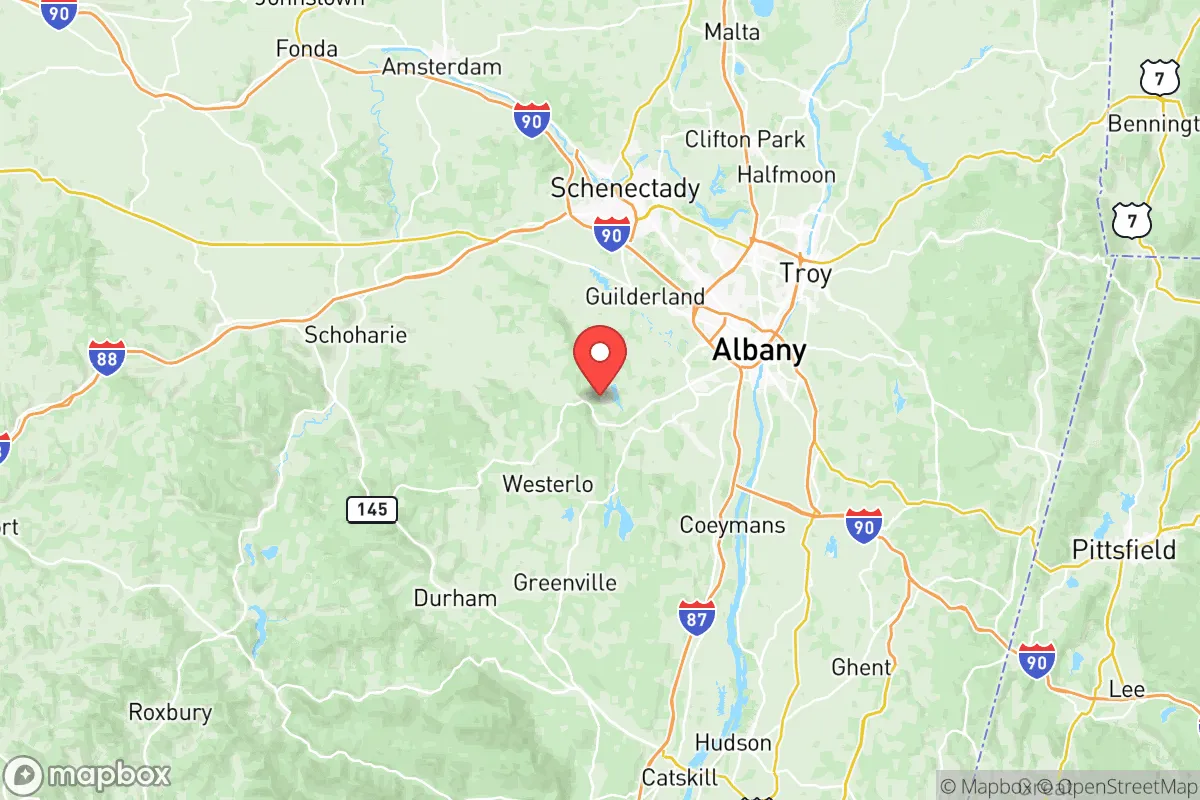
The county sits at the confluence of the Hudson and Mohawk Rivers, a natural crossroads that has historically made it a transportation hub — and that same geometry works for a survivalist if you know how to read the land. The Helderberg Escarpment, rising west of the city of Albany, provides high ground and natural defensibility in towns like Berne and Rensselaerville (in the county’s extreme southwest and west). Those areas are sparsely populated, heavily wooded, and offer plenty of cover and escape routes into the Catskills or the southern Adirondacks if things go sideways. The Hudson River corridor, though a choke point, also gives you access to fresh water, fishing, and a potential evacuation route north toward Lake George and the deep woods of Warren County. For a single individual or a family looking to bug out, the rural townships of Westerlo, Knox, and Berne represent some of the most defensible, low-profile land within an hour of a state capital. The climate is four-season with cold winters — that's a negative for comfort but a positive in terms of limiting year-round mobility for looters or large groups. The county’s elevation and rolling hills also mean that flooding risk is limited to the immediate floodplains of the Hudson and Mohawk, not your typical bug‑out homestead in the hills.
Fallout zones, military infrastructure, and other risks to factor in seriously
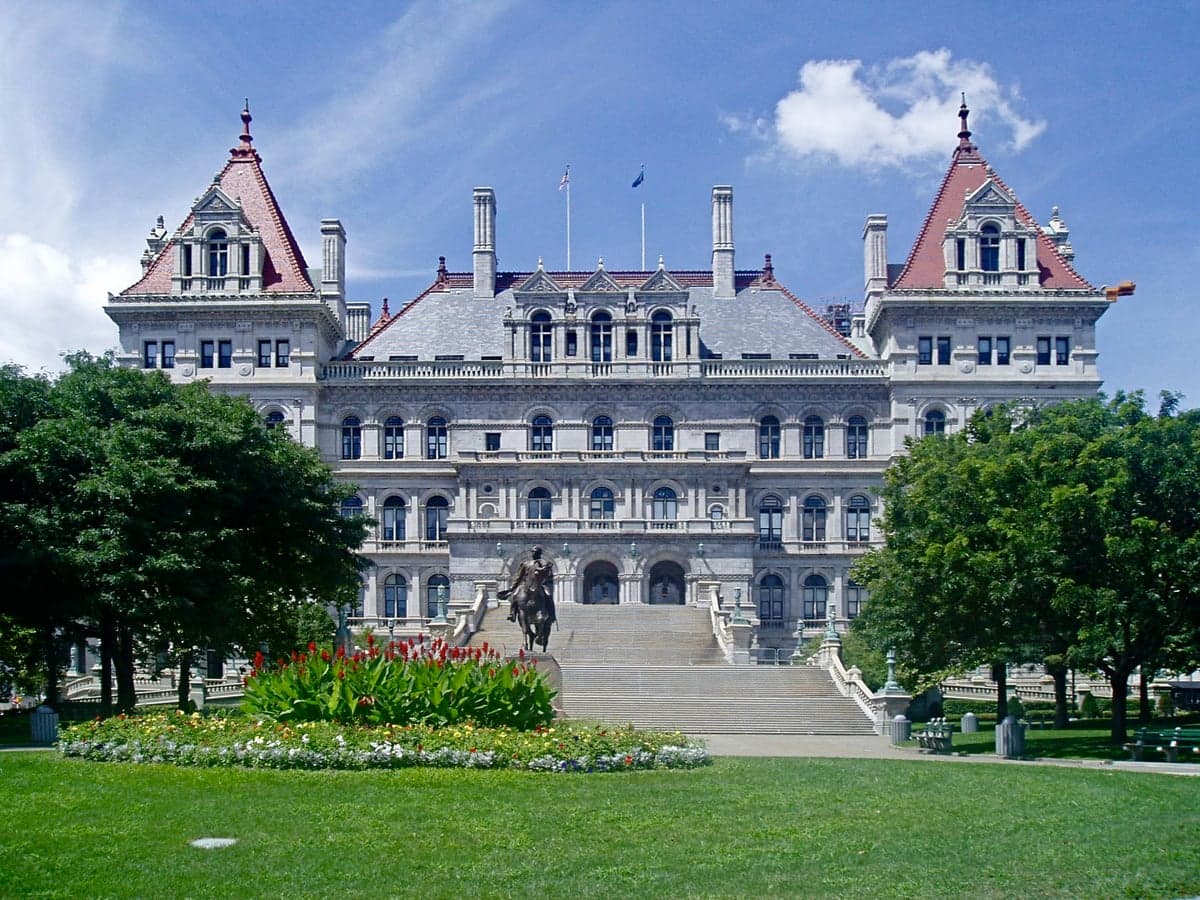
You can’t do a strategic assessment of Albany County without addressing the targets sitting on the map. Watervliet Arsenal (right on the county’s eastern edge, technically in the city of Watervliet) is a U.S. Army manufacturing facility that produces large-caliber cannon barrels and artillery components. During a war mobilization, a domestic terrorist strike, or a conventional military exchange, that facility is a high-value kinetic target. You do not want to be downwind or in the immediate blast zone if something goes critical. The Port of Albany, a busy deepwater port handling container cargo, bulk goods, and heavy machinery, is another concentration point — it could become a choke point for aid convoys or a target for sabotage during civil unrest. Then there’s the state government campus in downtown Albany, which during a nationwide collapse would attract large demonstrations, looting, or even coordinated attacks. The entire city of Albany is a population-dense urban area with over 95,000 residents; if a mass casualty event or pandemic hits the capital region, you’re looking at a potential refugee flow outward into the surrounding rural towns. That’s why any serious prepper relocating to Albany County should be looking at a minimum of 20–30 miles from the city core. Also be aware that Schenectady (adjacent county but only a few miles away) is home to a major General Electric research campus, and while that’s not a military site, high-tech facilities often have power grid and hazardous material risks that could radiate into your county. Bottom line: Albany County is not a remote sanctuary — it’s a near-peer proximity to targets that you need to map and avoid.
Setting up for sustainability: food, water, power, and security in Albany County
On the practical sustainability front, Albany County has real assets, but you have to get picky about where you buy. The county’s rural western towns (Berne, Knox, Westerlo, Rensselaerville) have deep groundwater wells, decent soil for market gardening, and are outside the floodplains. You can reasonably establish a year-round food production system with a combination of cold frames, root cellars, and small livestock — many of these areas already have a farming tradition. The Helderberg region is also dotted with small streams and ponds, so surface water is available for filtration, though you’ll want your own well. On energy, the county is served by National Grid, but grid reliability in rural towns is mediocre — winter storms routinely knock out power for days. That’s actually a feature, not a bug: it forces locals to be self-reliant, and you can buy a property with existing wood stoves and generator hookups. Solar potential is average due to the regional cloud cover, but not hopeless; a properly sized off-grid battery system will see you through. For defensibility, the Helderberg Escarpment gives you natural observation points and limited road access — Route 85 and Route 146 are the main corridors west, and both can be easily monitored or blocked if needed. However, do not plan to defend an urban or suburban property in Colonie, Guilderland, or Bethlehem; those areas are too close to the city’s infrastructure and will be evacuation corridors during a crisis. Stick to the hill towns of the far west and southwest, and you’ve got a workable base for a small family or a group of trusted individuals. Pro tip: establish caches and secondary routes into Schoharie County or Greene County if you need to push deeper into the woods.
So what’s the overall strategic picture for Albany County? It’s a capable but compromised location. You get the benefit of state-level resources — medical centers, National Guard presence, and a large regional food supply chain — but you also inherit the risk of being near the very institutions that will be epicenters of unrest during a collapse. If you buy land in Berne or Westerlo and maintain a low profile, you’ve got a solid long-term position with good water, defensible terrain, and escape routes into less populated counties. But if your plan is to live in the suburbs of Albany proper and bug out only when something happens, you’re going to get caught in the flow of people trying to do the same thing. For the conservative individual or parent who wants a strategic relocation option that balances access to infrastructure with genuine wilderness escape hatches, Albany County is a legitimate candidate — just make sure you’re buying west of the escarpment, not east of the arsenal. Know your ground, map your risks, and don’t put all your seeds in one Hudson Valley basket.

* Values derived from national, state, county, city and local statistics and may differ in a specific area. Last updated: 2026-06-03T00:47:32.000Z
Narrative content on this page is AI-generated and may contain mistakes. Verify any details that matter before acting on them.
ReloMaps may earn a commission from affiliate links at no extra cost to you.

