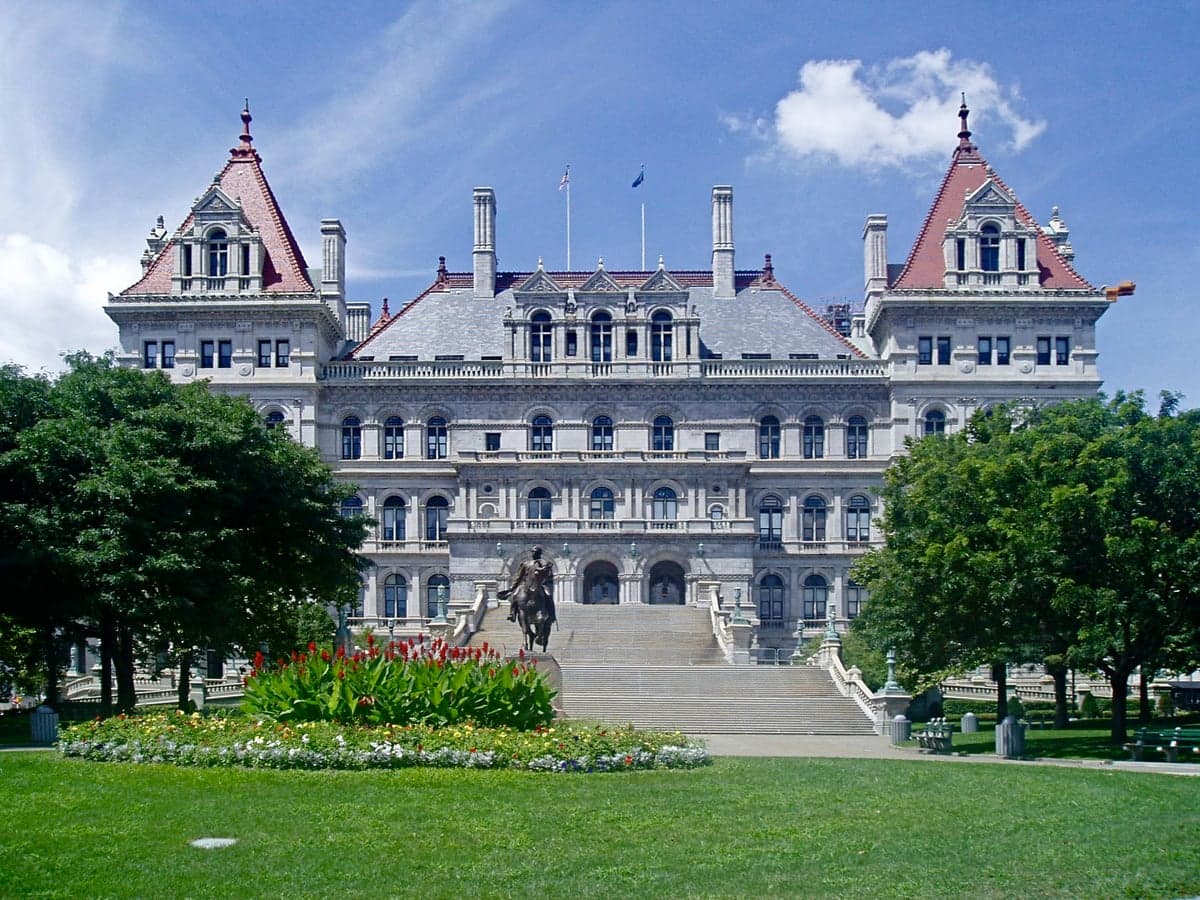
Photo: Wikipedia
Political ClimatePolitical Climate in Albany County
Showing district-level results — no local-only data available.
Local Political AnalysisPolitical Analysis of Albany County
Albany County, New York, has a Cook PVI of D+8, meaning it leans about eight points more Democratic than the national average, but that number doesn't tell the whole story. The county has been shifting steadily leftward over the past decade, especially since the 2020 election, with progressive policies on taxes, land use, and public safety gaining traction in the county seat and its inner suburbs. If you’re looking at this from a conservative perspective—where government overreach into personal freedoms and property rights is a real concern—the trajectory is troubling, and the contrast with New York, NY (Manhattan) is less about ideology and more about the pace and style of change.
How it compares
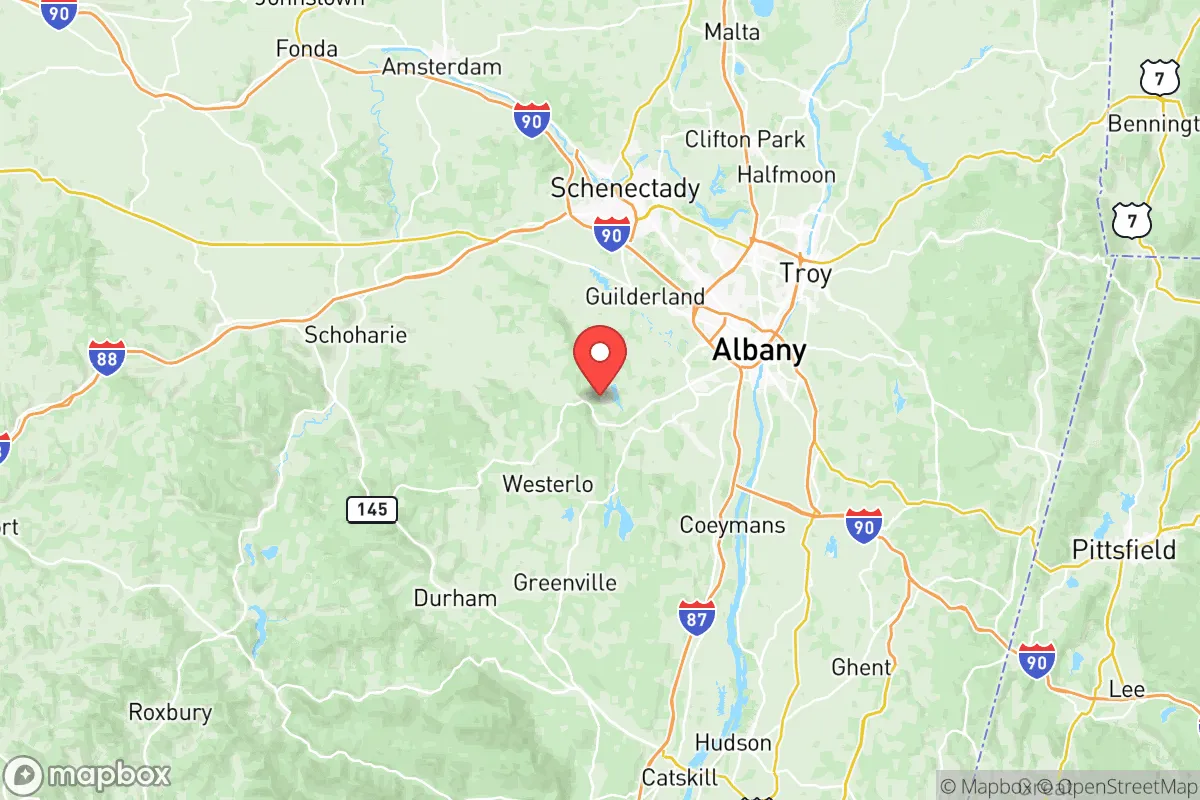
New York, NY is a deep-blue stronghold where progressive policies have been the norm for years, but Albany County is a different beast. The county’s political landscape isn’t monolithic: the city of Albany itself votes overwhelmingly Democratic (think 70-80% in most races), but towns like Bethlehem and Guilderland have become battlegrounds where moderate Democrats and even some Republicans still hold sway. Meanwhile, rural towns like Berne, Knox, and Westerlo lean red, with voters pushing back against state mandates on everything from gun laws to school curriculum. The swing precincts are in the suburban towns of Colonie and Halfmoon, where property taxes and school funding debates often tip elections. In New York, NY, you’re dealing with a dense, hyper-progressive urban core where dissent is marginalized; here in Albany County, you still have pockets where a conservative voice can win a town board seat—but those pockets are shrinking as the county’s population grows more diverse and younger, drawn by state government jobs and SUNY Albany.
What this means for residents
For a conservative-leaning resident, the practical impact is a slow erosion of local control. The county legislature has passed resolutions supporting sanctuary city policies, which limits cooperation with federal immigration enforcement, and the city of Albany has enacted rent control measures that override property owners’ rights. School boards in the suburbs are increasingly adopting DEI initiatives and critical race theory frameworks, often without public input. Property taxes in Albany County are among the highest in the state, and the county’s budget has grown by over 15% since 2020, driven by social services and public health mandates. If you value personal freedom—like the right to choose your own healthcare, educate your kids without government interference, or keep more of your paycheck—the trend is concerning. The county’s Democratic machine is well-organized, and primary challenges to moderate incumbents are becoming more common, pushing the whole county leftward.
On the cultural front, Albany County feels more like a small-town version of New York, NY than it did twenty years ago. The restaurant scene in downtown Albany has exploded with trendy spots, and the city’s nightlife now caters to a younger, more progressive crowd. But outside the city, in towns like Voorheesville and Altamont, you still find a slower pace where neighbors know each other and local government is less intrusive. The key difference from New York, NY is that here, the fight over personal freedoms is still winnable—if residents stay engaged. The county’s Republican Party is weak but active, and there are still school board seats and town council positions where a conservative candidate can make a difference. The long-term outlook, though, is that without a major shift in state-level policy—like property tax caps or education reform—Albany County will continue to mirror the progressive trends of New York, NY, just at a slower, more manageable pace.

State Political ClimatePolitical Climate in New York
State Political AnalysisPolitical Environment in the State
New York State has been a solidly blue stronghold for decades, with Democrats holding every statewide office and a supermajority in the legislature since 2018. Over the past 10-20 years, the state has moved noticeably leftward, driven largely by the massive population and electoral weight of New York City. What was once a more moderate, union-dominated Democratic party has become increasingly progressive, while Upstate’s conservative and independent voters have been steadily outvoted. If you’re a conservative thinking about relocating here, you need to understand how this imbalance shapes every aspect of life—from taxes to school policy to personal freedoms.
Urban vs. rural divide
New York’s political map is a textbook case of metropolitan domination. New York City—including Manhattan, Brooklyn, Queens, and the Bronx—delivers roughly two million votes for Democrats every election, overwhelming the rest of the state. Buffalo and Rochester in Western New York are also reliably blue, with Democratic mayors and city councils pushing progressive policies on housing, policing, and sanctuary status. Albany and Syracuse add to the urban-left coalition. Meanwhile, the massive rural stretches of the state—the Adirondacks, the Finger Lakes, the Southern Tier, and the North Country—vote red by margins of 20-30 points. Places like Plattsburgh, Utica, and Watertown have Republican-leaning county governments but little say in state politics because of how the districts are drawn and the sheer population imbalance. Even Staten Island, the only NYC borough that votes Republican in many local races, is regularly overridden by the city’s five-borough liberal consensus. The result is that rural and suburban conservatives feel like they live in a different country from their state capital.
Policy environment
New York’s policy environment is heavily tilted toward government intervention and high taxation. The state has the second-highest combined state and local tax burden in the nation, driven by progressive income taxes (top rate 10.9%) and some of the highest property taxes in the country. The regulatory posture is aggressive: new buildings must comply with the 2024 All-Electric Building Act, effectively banning natural gas hookups in most new construction—a major hit to energy choice and cost. Education policy is centralized, with the state imposing Common Core standards and a strict testing regime; school choice is very limited, with only a handful of charter schools allowed in NYC and none in most upstate districts. On healthcare, New York has expanded Medicaid to the fullest extent and continues to push for a single-payer system (New York Health Act), though it hasn’t passed yet. Election laws have been loosened significantly: no-excuse absentee voting, early voting, and automatic voter registration were all enacted in the last decade, which critics argue erodes election integrity. The 2022 Concealed Carry Improvement Act (CCIA) further tightened gun laws, banning firearms in “sensitive locations” like churches, parks, and private businesses unless the owner posts a sign—a clear infringement on the Second Amendment.
Trajectory & freedom
By almost any measure, New York is becoming less free for conservatives and moderates. The 2013 SAFE Act was the first major gun control law after Sandy Hook, and the 2022 CCIA went even further, requiring “proper cause” for a permit and restricting carry in most public places—a law now partly stayed by federal courts but still a chilling effect. Parental rights have been eroded: the 2019 Gender Expression Non-Discrimination Act (GENDA) protects gender identity in housing and employment, and the state Department of Education has issued guidance allowing students to change their names and pronouns without parental consent. The 2023 Clean Slate Act automatically seals certain criminal records, a move that undermines public safety and employers’ right to know. On property rights, the 2019 Housing Stability and Tenant Protection Act eliminated vacancy decontrol and placed strict rent regulations that discourage new construction. And the state has banned natural gas in new buildings starting in 2026 for smaller structures, 2029 for larger ones—essentially dictating what energy source you can use in your own home. All of these laws show a government that trusts itself more than its citizens.
Civil unrest & political movements
New York has seen significant civil unrest, especially during the 2020 Black Lives Matter protests, which turned into destructive riots in Buffalo, Rochester, and New York City. Left-wing activism is well-organized: groups like the Working Families Party hold real power, having ousted moderate Democrats in primaries. The state’s sanctuary policies are among the strongest in the country—New York City, Ithaca, Albany, and Rochester all limit cooperation with federal immigration enforcement—and the 2019 Green Light Law allows undocumented immigrants to get driver’s licenses. On the right, there have been grassroots “secession” movements in rural counties, with some supervisors passing symbolic resolutions calling for independence from the state, but nothing has gained legislative traction. Election integrity remains a flashpoint: the 2020 election saw widespread use of no-excuse absentee ballots, and the state continues to resist voter ID laws. For a new resident, the most visible public flashpoints are likely to be mask mandates, vaccine requirements, and gender identity policies in schools—issues that the state government pushes from Albany regardless of local sentiment.
Projection
Over the next 5-10 years, New York’s political trajectory is likely to continue leftward. The state is losing population to Florida, Texas, and the Carolinas, and those leaving tend to be higher-income, more conservative individuals. Those who stay or move in are often younger, more progressive, or dependent on government services. The Democratic supermajority in Albany is expected to persist, meaning more expansive government, higher taxes, and further restrictions on personal choice—particularly regarding energy, education, and guns. However, there is a countercurrent: upstate counties like Oneida (Utica), Jefferson (Watertown), and Clinton (Plattsburgh) may become more vocal and organize around Second Amendment and local control issues. The US Supreme Court’s decision in NYSRPA v. Bruen (2022) struck down the state’s old “proper cause” requirement for concealed carry, and ongoing lawsuits against the CCIA may provide some relief. But the legislature will continue to test the limits. Anyone moving here now should expect the state government to be an opponent on issues of personal freedom, not an ally.
Bottom line: if you’re a conservative considering a move to New York, understand that your vote for state-level office will be largely symbolic unless you live in a deeply red county. Your property taxes will be high, your ability to carry a firearm will be restricted, your children’s school curriculum will be set in Albany, and your energy choices for new construction will be limited. The state offers beautiful landscapes, strong economy in certain sectors, and cultural richness, but it comes with a government that is actively moving in a direction opposite to most conservative values. Choose your location carefully—rural upstate counties are your best bet for a community that shares your outlook, but even they are fighting an uphill battle against the political machine in the capital.
* Values derived from national, state, county, city and local statistics and may differ in a specific area. Last updated: 2026-06-03T00:47:32.000Z
Narrative content on this page is AI-generated and may contain mistakes. Verify any details that matter before acting on them.
ReloMaps may earn a commission from affiliate links at no extra cost to you.

