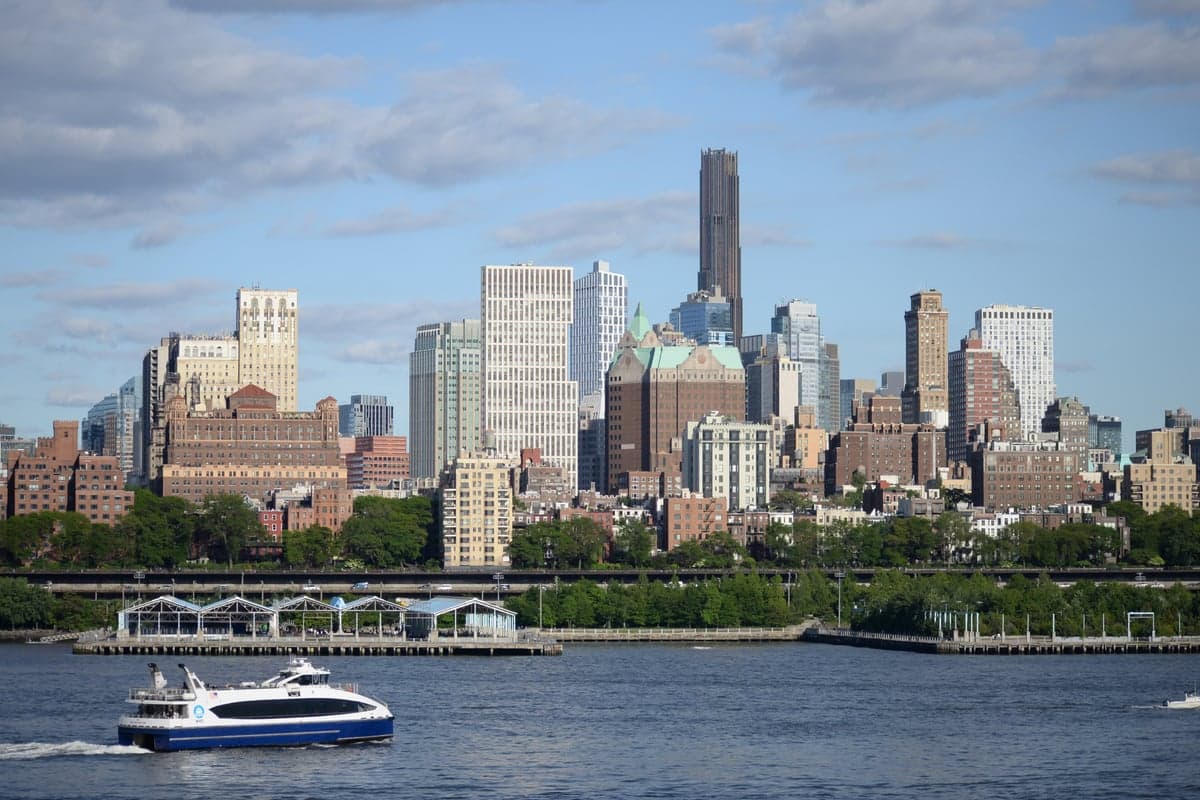
Photo: Wikipedia
Quality of Life in Kings County
A livable area that tracks near national norms for affordability, walkability, and neighborhood health.
What does Quality of Life tell us?
Quality of Life measures an area by evaluating factors like cost of living, nearby amenities, country club access, airport proximity, socioeconomic signals and neighborhood character. For large states, this is a general average — quality of life can vary dramatically between metro areas, suburbs, and rural communities within the same state.
What does this tell us?
Quality of Life measures an area by evaluating factors like cost of living, nearby amenities, country club access, airport proximity, socioeconomic signals and neighborhood character. For large states, this is a general average — quality of life can vary dramatically between metro areas, suburbs, and rural communities within the same state.
Cost of Living
118% above national average
43%
The Real Cost of Living in Kings County for 2026
| Tier | Individual | Family (4) |
|---|---|---|
| Survival | $28k | $54k |
| Comfortable | $125k | $184k |
| Luxury | $142k+ | $220k+ |
| Elite (Top 5%) | $216k+ | $334k+ |
Quality-of-Life Analysis
Kings County, coterminous with the New York City borough of Brooklyn, presents a quality-of-life spectrum that is almost entirely urban, with no rural pockets or smaller towns in the traditional sense. The county’s character is defined by dense, walkable neighborhoods, a world-class cultural scene, and a relentless pace that attracts professionals, artists, and families seeking proximity to Manhattan’s job market. With a cost-of-living index of 218 (more than double the U.S. average) and a median home value of $889,700, the range of options runs from hyper-urban, amenity-rich districts to quieter, more residential enclaves, but all within a single, continuous cityscape.
Largest town(s) & population centers
Kings County has no separate towns; its entire 71 square miles are divided into dozens of neighborhoods that function as distinct population centers. The most densely populated and iconic areas include Downtown Brooklyn, Williamsburg, and Park Slope. Downtown Brooklyn is the county’s central business hub, home to major employers like the Brooklyn Navy Yard (over 10,000 workers) and the New York City Transit Authority headquarters. Daily life here is defined by high-rise apartments, constant foot traffic, and subway access to Manhattan in under 20 minutes. Williamsburg, along the East River, has become a magnet for young professionals and creatives, with a median rent of $1,784 (though many units exceed $3,000) and a nightlife scene centered on Bedford Avenue. Park Slope, by contrast, offers a family-oriented lifestyle with tree-lined streets, brownstone row houses, and Prospect Park as a backyard. The average commute across the county is 42 minutes, reflecting the reality that most residents work outside Kings County, primarily in Manhattan.
Smaller towns & rural pockets
Kings County contains no smaller towns or rural areas in the conventional sense; it is 100% urbanized. However, certain neighborhoods function as quieter, lower-density enclaves within the urban fabric. Bay Ridge, in the southwestern corner, feels like a small town with its own main street (Third Avenue), a strong Middle Eastern and Irish community, and views of the Verrazzano-Narrows Bridge. Ditmas Park is a rare pocket of Victorian-era homes with large yards, offering a suburban feel within the city. Gerritsen Beach, a small waterfront community, has a tight-knit, almost rural character with single-family homes and canals. These areas lack the density of central Brooklyn but are still fully integrated into the city’s transit and utility networks. The term “rural” does not apply anywhere in Kings County; the closest approximation is the Green-Wood Cemetery (478 acres), which provides green space but no residential population.
Cost & lifestyle range
The cost-of-living spread in Kings County is extreme, driven by housing. At the high end, Brooklyn Heights and Cobble Hill command median home values well above the county’s $889,700 average, often exceeding $1.5 million for a two-bedroom co-op. These neighborhoods offer historic architecture, waterfront promenades, and top-rated schools like P.S. 8, attracting affluent professionals and families. At the lower end, Brownsville and East New York have median home values closer to $400,000–$500,000, with rents often below the county median of $1,784. These areas have fewer amenities, higher crime rates historically, and longer commutes (often 50+ minutes) due to less frequent subway service. The lifestyle range is similarly wide: in Williamsburg, residents pay a premium for rooftop bars, artisanal markets, and ferry access; in Canarsie, a more residential area with single-family homes, daily life centers on local parks, shopping plazas, and car ownership (unusual for Brooklyn). The county’s average commute of 42 minutes masks a reality where some residents travel over an hour each way, while those in Fort Greene or Boerum Hill may walk to work in Downtown Brooklyn in under 15 minutes.
Kings County is best suited for individuals and families who thrive in a dense, fast-paced urban environment and are willing to pay a premium for cultural access, job proximity, and neighborhood character. Those seeking quiet, space, or a lower cost of living will find the county challenging, as even its most affordable areas remain expensive by national standards. The county rewards residents who embrace public transit, walkability, and diversity, while those who prefer a car-dependent or rural lifestyle will likely look to neighboring counties like Nassau or Suffolk on Long Island.

Crime in Kings County
WARNING: The crime statistics are unreliable for this jurisdiction. Local authorities have either not reported or under reported their data to the FBI. This could be due to bad intentions, incompetence or technical issues. Regardless, we suggest skepticism.
Higher crime rates than 65% of comparable U.S. locations.
Violent CrimeViolent Crime Analysis
Property CrimeProperty Crime Analysis
Crime Analysis
Kings County, coextensive with Brooklyn, New York, presents a complex safety picture shaped by high population density, concentrated poverty in certain neighborhoods, and the policies of its progressive district attorney. With a reported violent crime rate of 361.3 per 100,000 residents and a property crime rate of 1,530.2 per 100,000, Brooklyn's overall crime numbers are elevated compared to national averages, though they remain below some other large urban counties. The day-to-day experience of safety varies dramatically depending on whether a resident lives in a high-crime corridor like Brownsville or a low-crime enclave like Park Slope.
Crime in context
Kings County's violent crime rate of 361.3 per 100K is roughly double the national average (about 180 per 100K in 2023) and significantly above the New York state average, which is pulled down by safer upstate suburbs. Property crime at 1,530.2 per 100K also exceeds the national figure of approximately 1,200 per 100K but is comparable to other dense urban boroughs. Brooklyn's numbers are driven by a handful of high-crime precincts — the 73rd Precinct (Brownsville) and the 75th Precinct (East New York) regularly post the highest robbery and shooting totals in the borough. Meanwhile, the 78th Precinct (Brooklyn Heights, Cobble Hill) and the 84th Precinct (Brooklyn Heights extension) record far lower felony rates. The borough's progressive District Attorney, Eric Gonzalez, has implemented diversion-first policies for nonviolent offenses and reduced cash bail — measures that critics argue have contributed to recidivism and a rise in quality-of-life crimes, especially in commercial corridors like Bushwick and Downtown Brooklyn.
What residents experience
For a typical resident, the immediate safety concern often revolves around property crime. Car thefts, package thefts, and break-ins are common complaints in neighborhoods like Williamsburg, Greenpoint, and parts of Bed-Stuy where density and foot traffic attract opportunistic theft. The NYPD's CompStat data show that while overall index crime has crept up since pre-pandemic lows, homicides — which spiked in 2020–2021 — have declined modestly. Still, shootings remain stubbornly high in the 73rd, 75th, and 79th Precincts (Bedford-Stuyvesant). Residents in those areas report regular gunfire and a visible gang presence, while those in Bay Ridge, Sheepshead Bay, and Bensonhurst experience lower violent crime but still contend with burglaries and auto theft. The presence of the Brooklyn District Attorney's progressive policies — including limited prosecution for turnstile-jumping and low-level drug possession — has led to a perception among many residents that the justice system is lenient, emboldening repeat offenders. This sentiment is especially strong in transit hubs like Atlantic Avenue and Borough Hall, where fare evasion and public disorder have become daily frustrations.
Neighborhood-level variation
Safety in Kings County is starkly neighborhood-dependent. The safest pockets — Park Slope, Brooklyn Heights, Ditmas Park, and Bay Ridge — consistently report violent crime rates below 150 per 100K, comparable to suburban communities. These areas benefit from active block associations, higher property values, and responsive local precincts. In contrast, Brownsville, East New York, and Bushwick face violent crime rates that can exceed 700 per 100K. Even within those neighborhoods, microblocks matter: the area around the Van Dyke Houses in Brownsville is notoriously dangerous, while nearby Cypress Hills sees less violence. The Brooklyn DA's office has faced sharp criticism from community boards in these high-crime areas for lacking prosecutorial teeth, particularly regarding illegal gun possession. Until policy course-correction occurs, prospects for safety gains in the borough's most challenged neighborhoods remain limited.
* Values derived from national, state, county, city and local statistics and may differ in a specific area. Last updated: 2026-06-05T13:16:54.000Z
Narrative content on this page is AI-generated and may contain mistakes. Verify any details that matter before acting on them.
ReloMaps may earn a commission from affiliate links at no extra cost to you.

