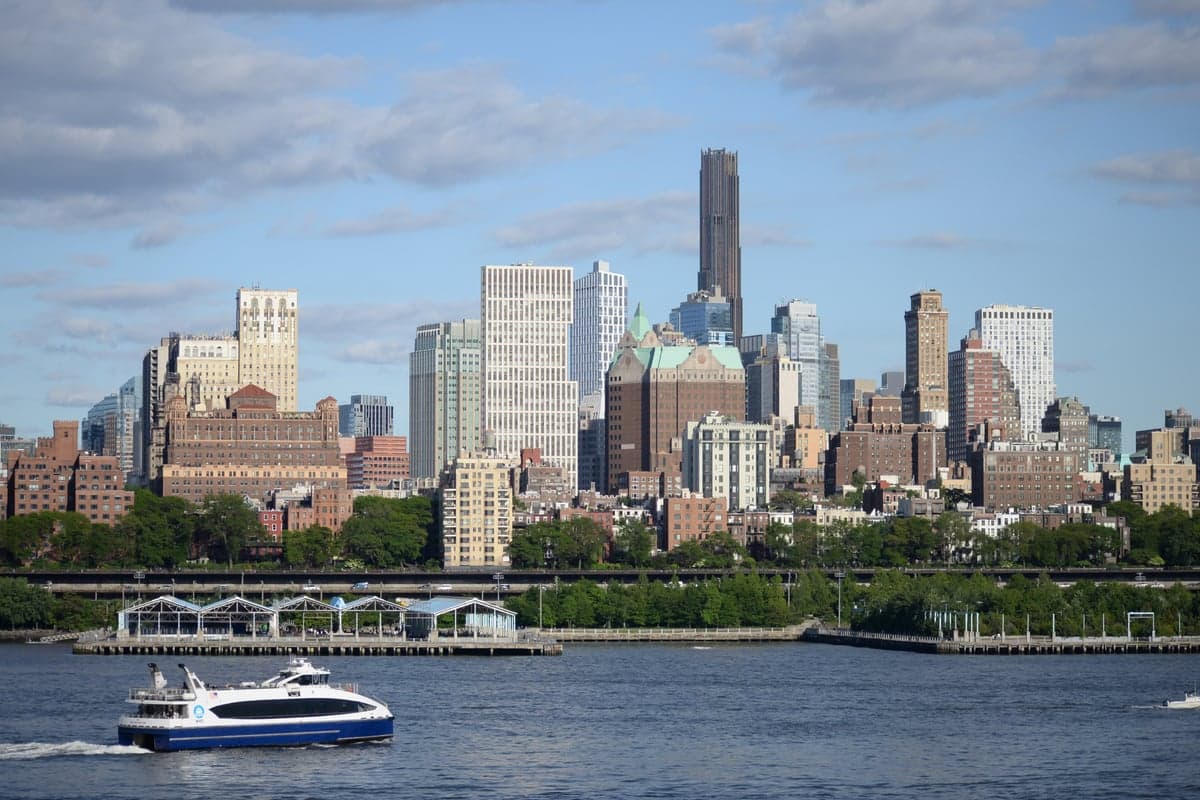
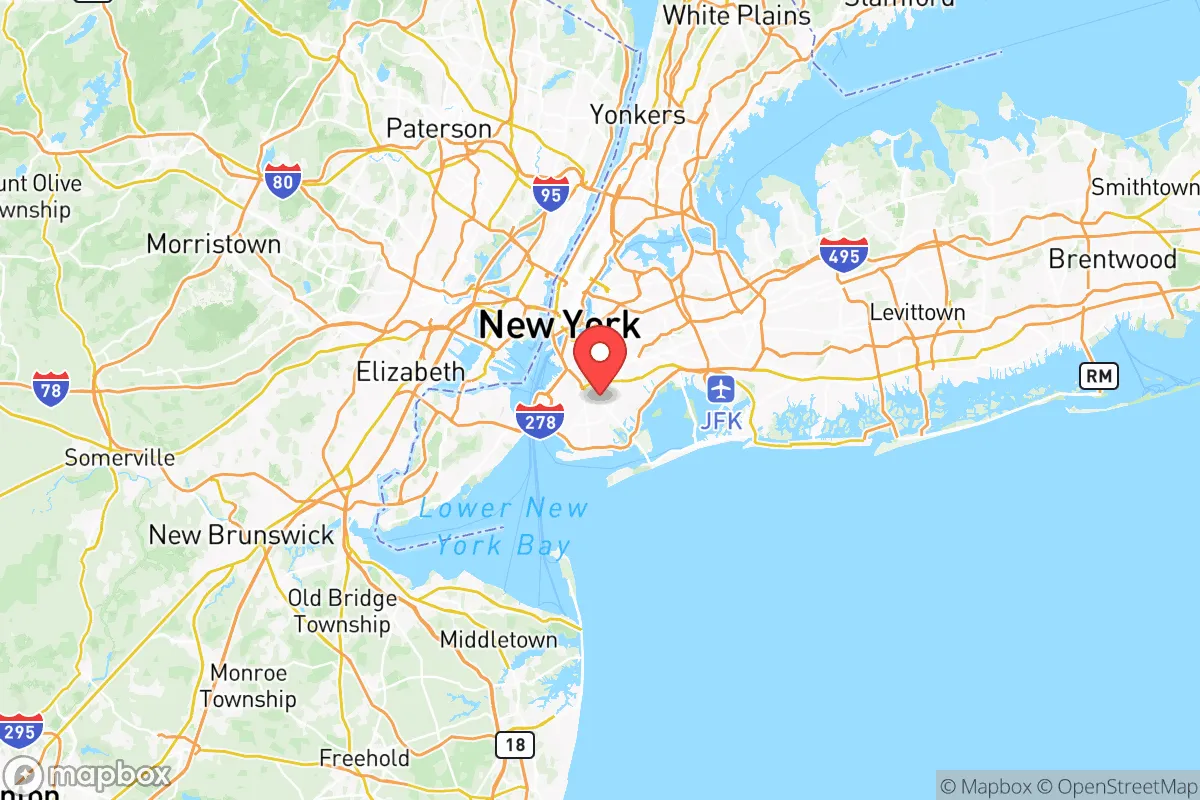
Photo: Wikipedia
Find The Best Places To Live in Kings County
PRO TIP! You can paste a Zillow or Redfin link to get info on that property.
Best Places to Live in Kings County
Cities & Towns in Kings County
Cities in Kings County
What It's Like Living in Kings County, NY
Living in Kings County—which is Brooklyn, full stop, with no rural towns or small cities to speak of—means signing up for one of the most intensely urban, culturally dense experiences in America. With a population of 2.6 million, it’s not just a borough; it would be the fourth-largest city in the U.S. if it were independent. The median age here is 36.3, and 41.3% of adults hold a college degree, giving the place a young, educated, ambitious energy that’s felt from the brownstone blocks of Park Slope to the warehouse lofts of Bushwick.
Daily Rhythm: The Commute, the Coffee, and the Constant Hum
For most residents, daily life is defined by the subway. The average commute clocks in at 42 minutes, one of the longest in the country, and that’s a number Brooklynites wear like a badge of honor. You’ll see people reading novels on the L train, parents wrangling strollers onto the 4/5 at Grand Army Plaza, and freelancers typing away on laptops at every café from Williamsburg’s Devocion to Cobble Hill’s Café Integral. Grocery shopping means a mix of Key Food, Trader Joe’s, and the weekend farmers market at Grand Army Plaza or Fort Greene. The median household income of $78,548 goes further here than in Manhattan, but the cost of living index of 218—more than double the national average—means most people are rent-burdened, especially with a median home value of $889,700. The kind of person who thrives here is someone who values walkability, cultural access, and career opportunity over square footage and a backyard.
Sports, Parks, and the Brooklyn Identity
Brooklyn is a sports town, but not in the Texas high-school-football sense. The Brooklyn Nets at Barclays Center in Prospect Heights are the marquee pro team, and the arena also hosts the New York Liberty (WNBA), who have a fiercely loyal following. For baseball purists, the Brooklyn Cyclones (Mets affiliate) play at Coney Island’s MCU Park, a summer ritual that feels like a throwback. High school sports are present but don’t dominate the way they do in suburban or rural areas—St. Francis Prep and Bishop Loughlin have strong basketball programs, but the real athletic culture is in the city’s recreational leagues. Prospect Park is the borough’s backyard: 585 acres of meadows, a lake, a zoo, and the annual Brooklyn Half Marathon that draws 25,000 runners. On weekends, you’ll find families picnicking on the Long Meadow, cyclists doing loops on the park drive, and kayakers on the lake. The Brooklyn Botanic Garden and Brooklyn Museum are right next door, making this stretch of Flatbush Avenue a cultural hub that rivals anything in Manhattan.
What’s There to Do: Food, Music, and the Quirks of Borough Life
Brooklyn’s food scene is legendary and hyper-local. You can eat your way around the world without leaving the borough: Di Fara Pizza in Midwood for classic slices, Peter Luger Steak House in Williamsburg for old-school beef, Smorgasburg in Prospect Park for a rotating roster of food vendors, and L&B Spumoni Gardens in Gravesend for Sicilian square slices and spumoni. Music venues like Brooklyn Steel, Music Hall of Williamsburg, and National Sawdust book everything from indie rock to experimental jazz. The Brooklyn Academy of Music (BAM) in Fort Greene is a world-class performing arts institution. Festivals include the Atlantic Antic (the city’s largest street festival, in Boerum Hill) and the Coney Island Mermaid Parade, a wonderfully weird celebration of summer solstice. A notable cultural quirk: Brooklynites are fiercely loyal to their neighborhoods. Ask someone where they live, and they’ll say “Ditmas Park” or “Greenpoint,” not just “Brooklyn.” That hyper-local identity shapes everything—which bar you go to, which playground your kids use, which pizza place you defend.
Pros and Cons of Living in Kings County
The upsides are real: unmatched cultural density, world-class food, a public transit system that (when it works) connects you to everything, and a sense of being at the center of the world. The violent crime rate of 361.3 per 100,000 is higher than the national average, though it’s concentrated in specific areas and has been declining for years. The biggest frustration for most residents is the cost: the median home value of $889,700 puts homeownership out of reach for all but the wealthiest, and rent eats up a huge chunk of that $78,548 median income. Traffic is brutal—driving from Bay Ridge to Williamsburg can take an hour on a bad day—and the subway’s aging infrastructure means delays are a fact of life. Weather-wise, summers are humid and sticky, winters are cold and gray, and spring and fall are brief but glorious. Schools are a mixed bag: some zoned public schools (like PS 321 in Park Slope or PS 8 in Brooklyn Heights) are excellent, but competition for spots is fierce, and many parents opt for private or parochial options. For singles and parents alike, the trade-off is clear: you give up space, quiet, and affordability for energy, opportunity, and a front-row seat to one of the world’s great cities.

* Values derived from national, state, county, city and local statistics and may differ in a specific area. Last updated: 2026-06-05T13:16:54.000Z
Narrative content on this page is AI-generated and may contain mistakes. Verify any details that matter before acting on them.
ReloMaps may earn a commission from affiliate links at no extra cost to you.

