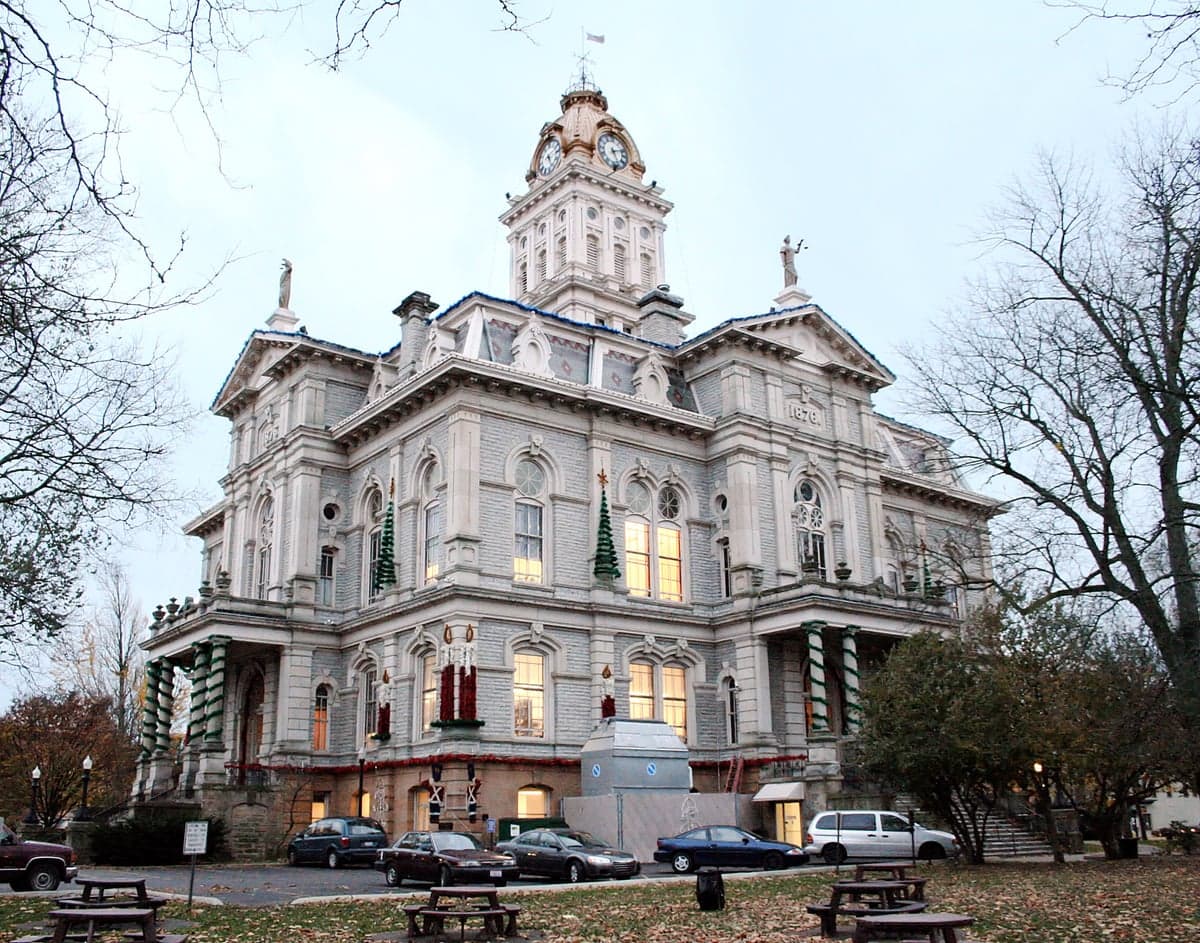
Photo: Wikipedia
Quality of Life in Newark, OH
A high quality of life with strong walkability, manageable living costs, healthy neighborhood signals, and solid amenity access.
What does Quality of Life tell us?
Quality of Life blends cost of living, nearby amenities, socioeconomic signals, and neighborhood character. City-level scores represent the whole municipality; individual neighborhoods can differ.
What does this tell us?
Quality of Life blends cost of living, nearby amenities, socioeconomic signals, and neighborhood character. City-level scores represent the whole municipality; individual neighborhoods can differ.
Cost of Living
28% below national average
The Real Cost of Living in Newark, OH for 2026
| Tier | Individual | Family (4) |
|---|---|---|
| Survival | $15k | $28k |
| Comfortable | $34k | $50k |
| Luxury | $99k+ | $154k+ |
| Elite (Top 5%) | $117k+ | $181k+ |
118%
The Area Signal
A metric tracking the socioeconomic signals of the area.


Hobbies
Explore the areaGroceries
4 within 10 miles
Gas
0 within 10 miles
Hospital
3 within 20 miles
Airport
John Glenn Columbus International Airport
Post Office
USPS — Newark, OH
Critical Amenities
Quality-of-Life Analysis
Newark, Ohio, offers a notably affordable quality of life that attracts a mix of working professionals, families, and retirees seeking lower costs without sacrificing proximity to Columbus. With a cost of living index of 72 (well below the U.S. average of 100), the area is characterized by a practical, middle-class demographic—many of whom commute to the state capital for higher-paying jobs while enjoying Newark’s quieter, more spacious residential environment. The city’s median household income aligns closely with its housing costs, creating a stable, debt-conscious community that values local amenities and outdoor recreation.
Cost of living, housing affordability, and how Newark compares to Columbus
Newark’s cost of living is a primary draw, with a median home value of $174,100—roughly half the typical price in Columbus, where the median exceeds $300,000. Median rent sits at $926, making it one of the most affordable rental markets in central Ohio for a city of its size. The average commute of 23.7 minutes is slightly longer than the national average but significantly shorter than many Columbus suburbs, reflecting Newark’s role as a bedroom community where residents trade a short drive for substantial housing savings. Property taxes in Licking County are moderate, and utility costs run below state averages, further stretching household budgets. For comparison, nearby Granville (just 5 miles west) has home values nearly double Newark’s, while Pataskala and Heath offer similar affordability but with fewer local services.
Local amenities, schools, and the daily rhythm of life in Newark
Daily life in Newark centers on a walkable downtown with independent shops, the Midland Theatre for live performances, and the Licking County Library system. The Newark City Schools district serves roughly 6,000 students, with Newark High School offering career-technical programs through the C-TEC center. For outdoor recreation, the Dawes Arboretum (a 2,000-acre botanical garden) and Buckeye Lake provide year-round hiking, boating, and fishing within a 15-minute drive. The city’s restaurant scene leans toward family-owned diners and pizzerias rather than upscale dining, reflecting its practical, no-frills character. Grocery access is solid, with Kroger and Walmart Supercenter locations, though specialty shopping often requires a trip to Columbus (about 35 minutes east on I-70). Healthcare is anchored by Licking Memorial Hospital, a 227-bed facility with strong local ratings for emergency and cardiac care.
Newark is best suited for those who prioritize affordable homeownership and a slower pace over urban nightlife or high-end retail. Remote workers, early-career families, and retirees on fixed incomes will find the low housing costs and short commute to Columbus especially appealing. The city lacks the cultural density of a major metro but compensates with strong community ties, accessible nature, and a cost structure that allows residents to save or invest more of their income. For anyone seeking a central Ohio base where a $175,000 home is the norm and daily errands don’t require a highway, Newark delivers a grounded, financially sustainable lifestyle.

Crime in Newark, OH
Generally safer than 72% of comparable U.S. locations.
Violent CrimeViolent Crime Analysis
Property CrimeProperty Crime Analysis
Crime Analysis
Newark, Ohio, reports a violent crime rate of 295.5 per 100,000 residents and a property crime rate of 1,350 per 100,000, placing it above national averages for both categories. While not among the most dangerous cities in the state, these figures signal a community where property crime is a more pressing daily concern than violent offenses. The city’s proximity to the Columbus metro area introduces additional dynamics, as regional crime trends and judicial policies in surrounding counties can influence local safety conditions.
Crime in context
Newark’s violent crime rate of 295.5 per 100,000 is roughly 20% higher than the national average of approximately 250 per 100,000, though it remains below the rates seen in larger Ohio cities like Columbus or Cleveland. Property crime, at 1,350 per 100,000, significantly exceeds the national average of about 1,200 per 100,000 and is notably higher than the Ohio state average of roughly 1,100 per 100,000. This disparity suggests that theft, burglary, and motor vehicle theft are more prevalent challenges in Newark than in many comparable small cities. The city’s location within Licking County, which has seen population growth tied to Columbus-area sprawl, may contribute to these elevated property crime numbers as transient populations and economic pressures increase.
What residents experience
For Newark residents, property crime is the most tangible safety concern, with incidents like vehicle break-ins and package thefts reported frequently in neighborhoods near downtown and along major corridors like Ohio 16. Violent crime, while less common, includes aggravated assault and robbery, often concentrated in specific areas rather than spread evenly across the city. Residents should be aware that Licking County’s judicial system, like many in Ohio’s metro-adjacent counties, has seen shifts toward progressive prosecution policies in recent years. Progressive district attorneys and judges who prioritize diversion programs and reduced sentencing for property and drug offenses can lead to higher recidivism rates, meaning more offenders return to the streets quickly. This approach, while intended to reduce incarceration, often undermines public safety by failing to hold repeat offenders accountable, directly impacting victims and increasing the likelihood of future crimes in the community.
Neighborhood-level variation is notable in Newark. Areas west of the downtown core, including the Hudson Avenue and Mount Vernon Road corridors, tend to see higher concentrations of both property and violent incidents, while the eastern and southern residential neighborhoods—such as those near the Newark campus of Ohio State University and the Cherry Valley area—report lower crime rates. Prospective residents should research block-level data and consider that the city’s overall figures mask pockets of significantly higher risk, particularly in rental-heavy districts near commercial zones. The influence of Columbus-area crime patterns, combined with local judicial leniency, makes Newark a location where caution and proactive safety measures—like home security systems and neighborhood watch participation—are strongly advised.
* Values derived from national, state, county, city and local statistics and may differ in a specific area. Last updated: 2026-04-19T10:25:57.000Z
Narrative content on this page is AI-generated and may contain mistakes. Verify any details that matter before acting on them.
ReloMaps may earn a commission from affiliate links at no extra cost to you.

