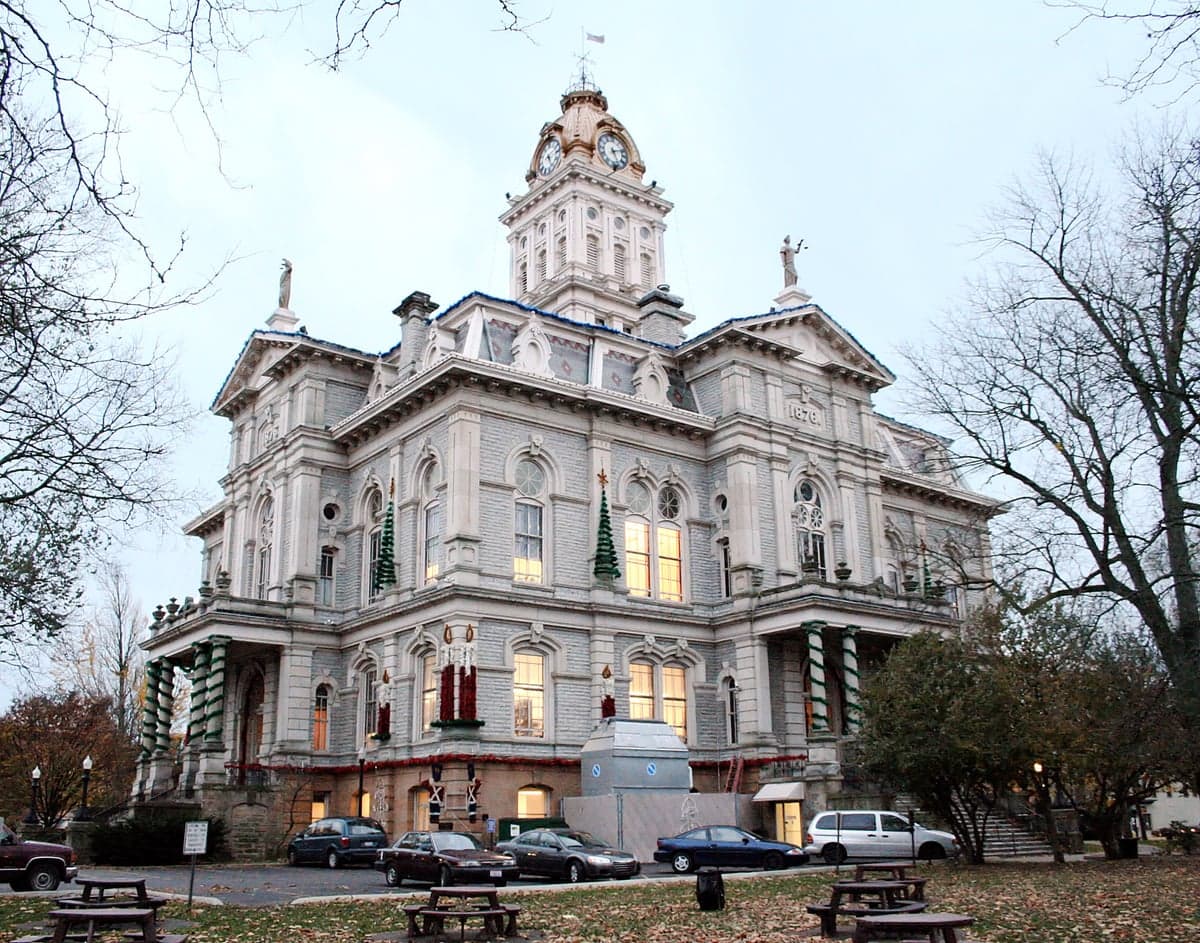
Photo: Wikipedia
Political ClimatePolitical Climate in Newark, OH
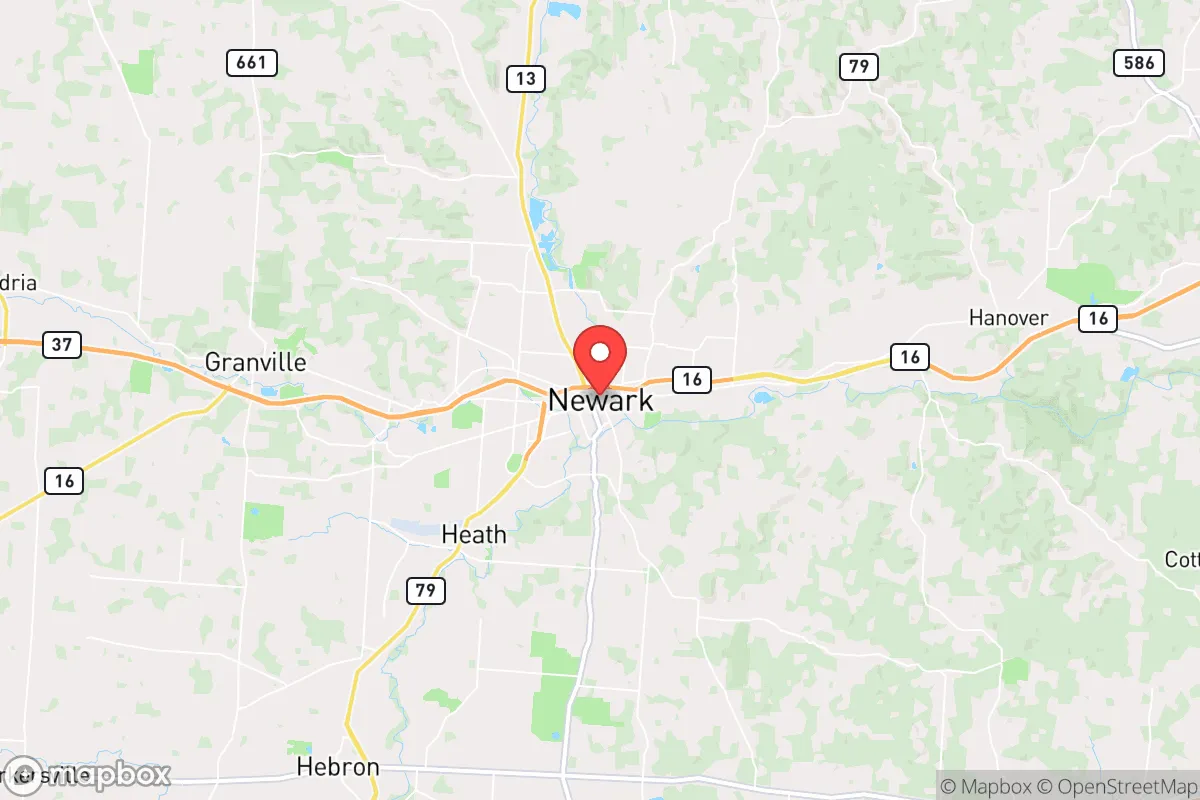
District shown is the primary district for this city’s centroid. Cities may span multiple districts.
Local Political AnalysisPolitical Analysis of Newark, OH
Newark, Ohio, has long been a rock-solid conservative stronghold, and that hasn't changed much despite some national trends. The Cook Partisan Voting Index (PVI) for the area sits at R+16, meaning it votes about 16 points more Republican than the national average. In practical terms, that means you can reliably expect Republican candidates to carry Licking County by comfortable margins in most elections. The city itself leans a bit more moderate than the surrounding rural townships, but overall, the political DNA here is deeply rooted in traditional values, limited government, and a healthy skepticism of federal overreach. That said, you can feel a subtle shift in the air, especially among younger folks moving in from Columbus, and it's worth keeping an eye on.
How it compares
Drive 30 minutes west on I-70, and you hit Columbus, a city that's gone deep blue in recent cycles. Newark is a completely different world politically. The contrast is stark: Columbus is all about progressive policies, expanding government programs, and a very different cultural vibe. Head east toward Zanesville or south toward Lancaster, and you'll find similar conservative territory, but Newark sits right on the edge of that urban-rural divide. The surrounding townships—like Granville, Heath, and Pataskala—are also reliably red, though Granville has a small pocket of liberal-leaning academics tied to Denison University. That's the only real exception. For the most part, the whole region votes the same way, but Newark is the biggest population center where those values are put to the test as the city grows.
What this means for residents
For folks who value personal freedoms and want to keep government out of their daily lives, Newark's political climate is a breath of fresh air. You won't see the kind of overreach you get in bigger cities—no heavy-handed mandates, no aggressive zoning that tells you what you can do with your own property, and no constant pressure to adopt every new social experiment that comes down the pike. The local government tends to be hands-off, focusing on basics like roads, safety, and schools rather than trying to engineer social change. That's a big reason why many families and small business owners feel comfortable here. The tax burden is reasonable, and there's a general understanding that you're free to live your life as you see fit, as long as you're not hurting anyone else. That's a tradition worth protecting.
Looking ahead, the biggest concern is the slow creep of progressive ideology that tends to follow population growth. As more people move from Columbus to escape higher costs and congestion, they bring their voting habits with them. So far, Newark has held the line, but it's something to watch. The local school board and city council races are where you'll see the first signs of a shift. If you're paying attention, you'll notice that the old guard—folks who remember when Newark was a smaller, quieter place—is being challenged by newcomers who want to "modernize" things. That usually means more regulations, higher spending, and a bigger role for government in your life. The good news is that the R+16 PVI isn't just a number; it reflects a deep cultural commitment to conservative principles that doesn't flip overnight. But it's not automatic either. Staying engaged locally is the only way to keep Newark from turning into another Columbus suburb where personal freedoms take a backseat to government programs.

State Political ClimatePolitical Climate in Ohio
State Political AnalysisPolitical Environment in the State
Ohio has long been the quintessential swing state, but over the past decade it has shifted decisively to the right, voting for Donald Trump by 8 points in both 2016 and 2020 and by a similar margin in 2024. The state’s political center of gravity now sits solidly in the conservative camp, driven by a coalition of working-class voters in small cities and rural areas who have abandoned the Democratic Party over cultural and economic issues. While the state was a battleground for two decades, the last three election cycles have shown a clear Republican lean that looks durable, though the major metros still provide a strong Democratic counterweight.
Urban vs. rural divide
The political map of Ohio is a study in contrasts. The three C’s — Cleveland, Columbus, and Cincinnati — are the Democratic strongholds, with Cuyahoga County (Cleveland) delivering a 30-point margin for Biden in 2020 and Franklin County (Columbus) coming in at 25 points. But outside these urban islands, the landscape is deeply red. The rural counties of western Ohio, like Mercer, Auglaize, and Shelby, routinely vote 75-80% Republican, while the Appalachian counties in the southeast — places like Belmont, Monroe, and Noble — have flipped hard from blue to red over the past 15 years. The real story is in the suburbs: Delaware County (north of Columbus) was a swing county in 2000 but now votes 60% Republican, while Warren County (north of Cincinnati) is one of the most reliably conservative counties in the nation. The divide isn’t just geographic — it’s cultural, with urban voters focused on progressive social policies and the rest of the state prioritizing economic freedom, gun rights, and local control.
Policy environment
Ohio’s policy environment has shifted sharply rightward since 2018, when Republicans gained a supermajority in the legislature and held the governor’s office. The state income tax has been cut from a top rate of 4.997% to a flat 3.5% as of 2025, with further reductions planned. There is no state-level estate tax, and property taxes are relatively low compared to the national average. On education, Ohio passed a universal school voucher program in 2023 — EdChoice Expansion — that allows any family, regardless of income, to use state funds for private or homeschool expenses. This has been a major win for parental rights. Healthcare policy is mixed: the state expanded Medicaid under the Affordable Care Act in 2014, but the legislature has pushed back on vaccine mandates and COVID-era restrictions, passing House Bill 435 in 2021 to ban vaccine passports. Election laws have tightened: House Bill 458 (2023) requires voter ID, limits drop boxes, and shortens the absentee ballot window. For a conservative, the policy environment is broadly favorable, though the Medicaid expansion remains a point of contention.
Trajectory & freedom
Ohio is trending more free in several key areas, but the trajectory is uneven. On gun rights, the state became a constitutional carry state in 2022 with Senate Bill 215, allowing permitless concealed carry for adults 21 and older. This was a major expansion of Second Amendment freedom. On parental rights, House Bill 8 (the “Parents’ Bill of Rights”) passed in 2023, requiring schools to notify parents about curriculum changes and medical services. However, the state has seen concerning encroachments: the Ohio Department of Health attempted to mandate COVID-19 vaccines for schoolchildren in 2021, though the legislature blocked it. Property rights have been strengthened by Senate Bill 135 (2024), which limits the use of eminent domain for private economic development. The biggest freedom concern is taxation: while income taxes are falling, local sales taxes and property taxes continue to creep up, especially in urban counties like Cuyahoga and Franklin. Overall, the state is moving in a liberty-friendly direction, but vigilance is needed on local tax burdens.
Civil unrest & political movements
Ohio has seen its share of political flashpoints. The 2020 protests in Columbus and Cincinnati over George Floyd’s death were large but mostly peaceful, though the state saw scattered property damage. The most significant movement on the right has been the “Ohio Freedom Alliance” and local “Moms for Liberty” chapters, which have been active in school board races, particularly in Delaware County and Butler County. Immigration politics are less heated than in border states, but Springfield became a national flashpoint in 2024 over Haitian migrant resettlement, with local officials claiming the influx strained schools and healthcare. The state has no sanctuary cities, and House Bill 170 (2023) requires local law enforcement to cooperate with ICE. Election integrity remains a live issue: the 2020 election in Ohio was widely seen as secure, but the legislature passed House Bill 458 to tighten procedures. There is no serious secession or nullification rhetoric, though some rural counties have passed symbolic resolutions asserting local control over health mandates.
Projection
Over the next 5-10 years, Ohio is likely to become more conservative, not less. The demographic trends favor the GOP: the urban cores of Cleveland and Cincinnati are losing population, while the exurbs and smaller cities like Delaware, Powell, and Mason are growing rapidly. In-migration is coming from other Midwest states and from the Northeast, with many newcomers drawn by lower taxes and housing costs. The Republican supermajority is expected to hold, and further tax cuts are likely — the flat income tax could drop to 2.5% by 2030. However, the state faces headwinds: the aging population in rural areas could reduce the GOP’s rural base, and Columbus continues to grow as a blue island due to Ohio State University and tech sector expansion. A new resident moving in now should expect a state that is reliably red at the state level, with conservative policies on guns, education, and taxes, but with persistent blue pockets in the major cities that will keep the culture war alive.
Bottom line for a new resident: Ohio offers a strong conservative policy environment with low taxes, school choice, and robust gun rights, but you’ll need to choose your county carefully. The rural and exurban areas are deeply red and family-friendly, while the urban cores are increasingly progressive. If you’re looking for a state where your values are reflected in state law and where the political trajectory is moving in your direction, Ohio is a solid bet — just avoid the cities if you want to avoid the culture war battles.
* Values derived from national, state, county, city and local statistics and may differ in a specific area. Last updated: 2026-04-19T10:25:57.000Z
Narrative content on this page is AI-generated and may contain mistakes. Verify any details that matter before acting on them.
ReloMaps may earn a commission from affiliate links at no extra cost to you.

