Demographics of Newbury, VT
Affluence Level in Newbury, VT
A middle-class area roughly in line with national averages across income, home values, education, and employment.
People of Newbury, VT
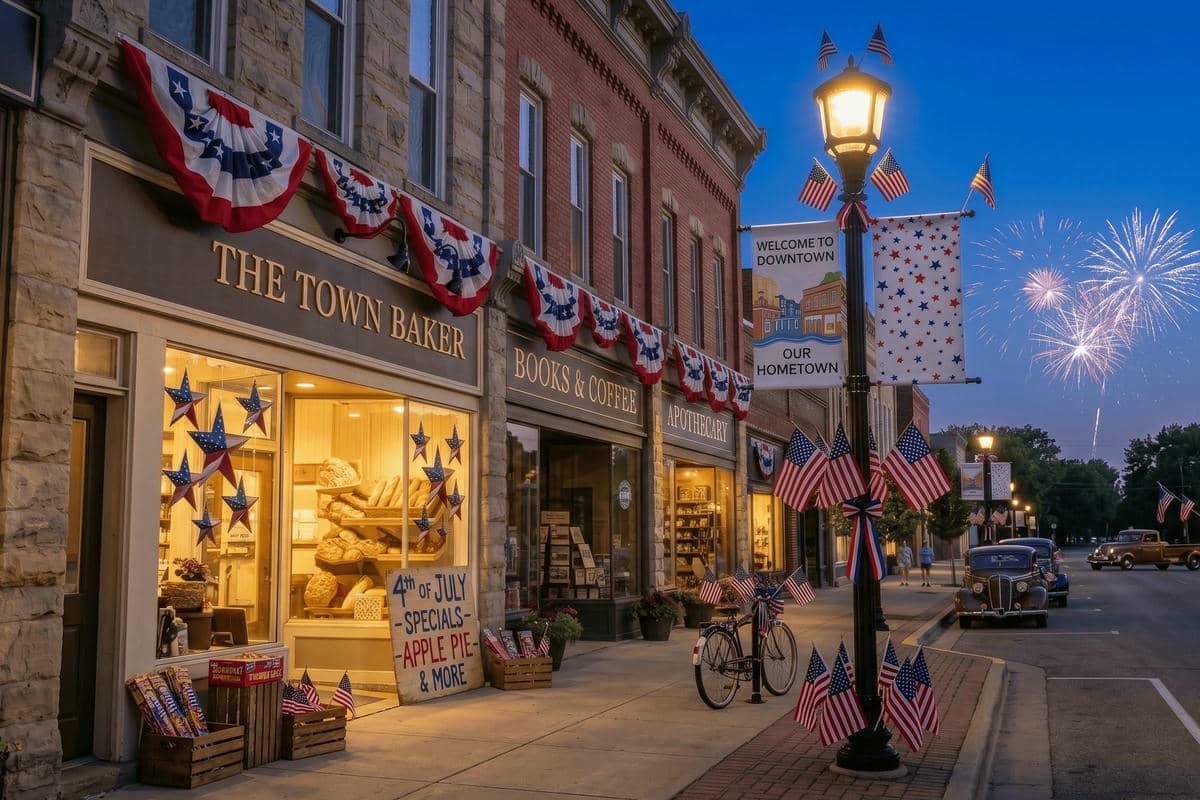
Newbury, Vermont, is a small, rural town of 381 residents, characterized by its predominantly white population (90.0%) and a notably high college education rate of 40.7%. The town’s identity is rooted in its historic villages and agricultural landscape, with a very low foreign-born population of 2.6% and a small Hispanic community at 4.5%. It remains a quiet, family-oriented community where generational ties to the land and local institutions like the Newbury Public Library and Oxbow High School define daily life.
How the city was settled and grew
Newbury’s human history begins with its 1763 charter by Governor Benning Wentworth of New Hampshire, part of a wave of land grants along the Connecticut River. The first permanent settlers, primarily of English and Scottish descent, arrived in the 1760s and 1770s, drawn by fertile river-bottom land and the promise of self-sufficient farming. The town’s original settlement clustered around the South Newbury village, where the first meetinghouse and mills were built along the river. A second wave of settlers, including families from Massachusetts and Connecticut, established the Newbury Village (the town center) in the early 1800s, building homes around the common and the Congregational church. The arrival of the railroad in the mid-19th century spurred a small industrial base, with a woolen mill and a carriage factory in West Newbury, attracting a modest number of Irish and French-Canadian laborers. These groups settled in modest homes near the mills, forming the town’s first ethnic enclaves. By 1900, the population had peaked at around 1,200, but the decline of small-scale manufacturing and the rise of larger regional centers led to a steady outflow through the mid-20th century.
Modern era (post-1965)
After 1965, Newbury experienced a slow, steady decline in population as young adults left for jobs in larger towns like St. Johnsbury or Lebanon, New Hampshire. The town saw no significant influx from the post-1965 immigration reforms; the foreign-born population remains at just 2.6%, reflecting the area’s limited economic draw for new international arrivals. Instead, the modern era has been defined by domestic in-migration of retirees and second-home buyers, particularly from southern New England and the New York metropolitan area. These newcomers have concentrated in the Lake Morey area, a resort community centered on the lake’s shoreline, where seasonal homes and year-round retirement properties have been developed. The South Newbury historic district has also seen a modest revival, with old farmhouses being renovated by families seeking a rural lifestyle. The small Black (2.1%) and Hispanic (4.5%) populations are dispersed across the town, with no distinct ethnic neighborhoods forming. The college-educated share of 40.7% is notably high for a town of this size, driven largely by the influx of educated retirees and remote workers who value the area’s natural amenities.
The future
Newbury’s population is likely to remain stable or decline slightly over the next 10-20 years, as the aging cohort of retirees is not fully replaced by younger families. The town is not homogenizing into a single identity but rather tribalizing into two distinct groups: long-established, multi-generational families who live in the Newbury Village and West Newbury areas, and newer, more affluent arrivals concentrated around Lake Morey and South Newbury. The Hispanic and Black communities are small and show no signs of rapid growth, given the lack of economic drivers like large employers or affordable housing stock. The East/Southeast Asian and Indian-subcontinent populations are effectively zero, and no trends suggest a change. The future demographic trajectory points toward a continued, gradual aging of the population, with the town becoming more of a quiet, scenic enclave for remote workers and retirees rather than a growing family destination.
For someone moving in now, Newbury offers a stable, low-density community with strong ties to its historic past. The town is becoming a place where newcomers are welcomed but must integrate into an established social fabric, with the Lake Morey area providing a natural entry point for those seeking a resort-style lifestyle. It is not a place of rapid demographic change or cultural diversity, but rather a steady, rural Vermont town where property values and community expectations reflect its quiet, educated, and predominantly white character.

* Values derived from national, state, county, city and local statistics and may differ in a specific area. Last updated: 2026-04-30T06:46:32.000Z
Narrative content on this page is AI-generated and may contain mistakes. Verify any details that matter before acting on them.
ReloMaps may earn a commission from affiliate links at no extra cost to you.

