Political ClimatePolitical Climate in Newbury, VT
District shown is the primary district for this city’s centroid. Cities may span multiple districts.
Inherited from parent state — no local data available.
Local Political AnalysisPolitical Analysis of Newbury, VT
Newbury, Vermont, leans heavily to the left, with a Cook Partisan Voting Index of D+17, meaning it votes about 17 points more Democratic than the national average. That’s a pretty stark shift from what I remember growing up here, when folks kept their politics close to the vest and the town was more of a mix—farmers, loggers, and a few summer folks. Now, the local elections and town meetings feel like they’ve been taken over by a progressive wave, and the trajectory seems to be heading further in that direction, especially as more out-of-state transplants move in from places like Boston and New York. It’s not the same quiet, live-and-let-live place it used to be.
How it compares
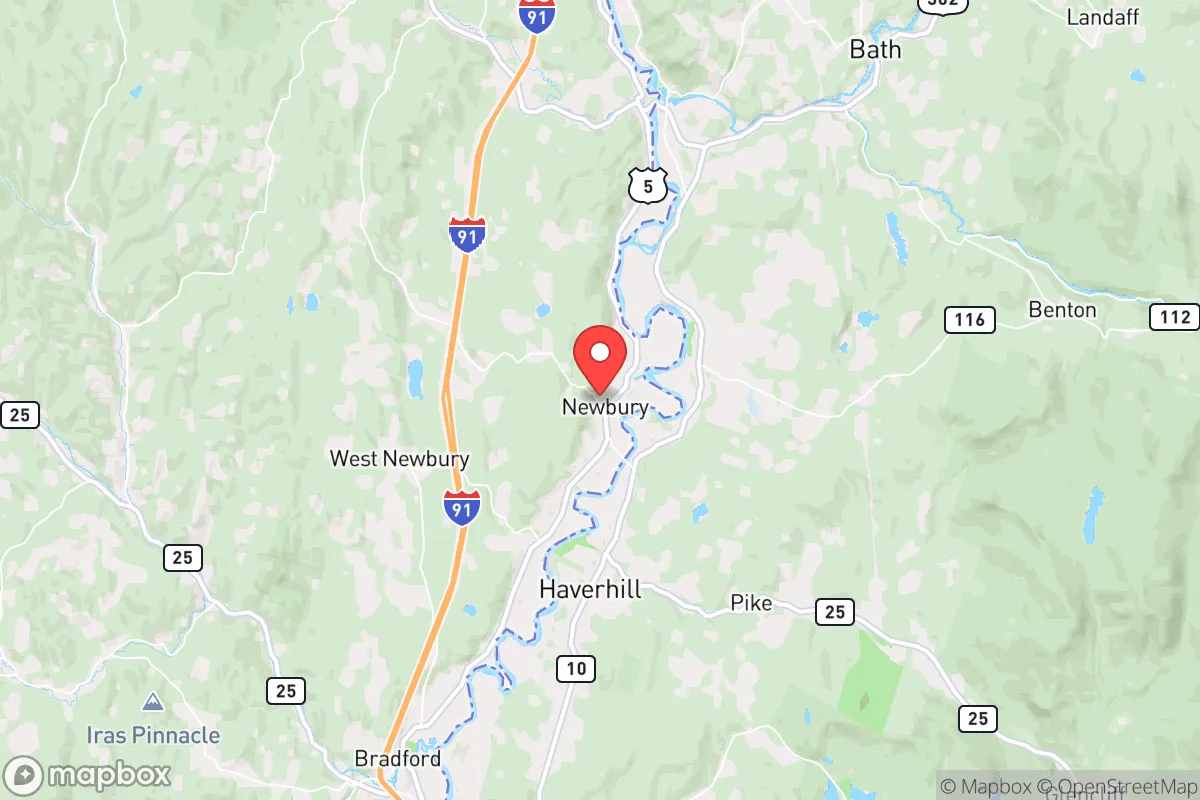
If you drive just a few miles south or west, you’ll hit towns like Bradford or Wells River, which still have a more balanced, independent streak—people there tend to vote their conscience, not a party line. But Newbury itself is a different animal. Compared to neighboring Topsham or even parts of Haverhill, Newbury’s politics are noticeably more progressive, with a strong push for things like renewable energy mandates and strict land-use regulations that can feel like government overreach. The contrast is sharp: while those surrounding towns might grumble about state mandates, Newbury’s local boards often seem eager to adopt them, sometimes going further than what Montpelier requires. It’s a real shift from the old days when the town’s identity was rooted in self-reliance and a healthy skepticism of outside control.
What this means for residents
For folks who value personal freedoms—like the right to use your own land as you see fit, or to keep your business decisions private—Newbury’s current climate can feel stifling. Town meeting votes on things like zoning changes or school policies often lean toward progressive ideals, which can mean more rules and less wiggle room for individual choice. If you’re a hunter, a small-scale farmer, or someone who just wants to be left alone, you might find yourself butting heads with neighbors who see government intervention as a tool for good. The local school board, for instance, has been pushing curriculum changes that align with broader state trends, which some parents see as an erosion of local control. It’s not a place where you can easily opt out of the prevailing mindset without feeling like an outsider.
Culturally, Newbury has traded its old Yankee independence for a more activist, policy-driven vibe. You’ll see more “coexist” bumper stickers than “Don’t Tread on Me” ones these days, and the local general store’s bulletin board is just as likely to have a petition for a new town ordinance as a notice for a community potluck. The long-term trend, if it holds, points to even tighter regulations on everything from short-term rentals to wood-burning stoves—things that used to be nobody’s business but your own. For anyone who values the freedom to live without constant oversight, it’s worth keeping an eye on how far this progressive shift goes before it starts to feel like you’re living under a microscope in your own hometown.

State Political ClimatePolitical Climate in Vermont
State Political AnalysisPolitical Environment in the State
Vermont has long been painted as a deep-blue bastion, but the reality on the ground is more complicated than the national narrative suggests. The state leans reliably Democratic at the presidential level—voting for Joe Biden by roughly 35 points in 2020—yet it harbors a stubborn, independent-minded conservative streak, particularly in its rural northern and northeastern reaches. Over the past 20 years, the political center of gravity has shifted leftward as out-of-state transplants from New York and Massachusetts have flooded Chittenden County, but the old Yankee Republican tradition still holds sway in places like the Northeast Kingdom and Rutland County, creating a state that votes blue but often thinks purple.
Urban vs. rural divide
The political map of Vermont is a tale of two landscapes. Chittenden County, anchored by Burlington and South Burlington, is the engine of the state’s progressive politics—home to the University of Vermont, a dense concentration of tech and healthcare workers, and a vocal activist class that has pushed the legislature leftward for decades. In 2022, Burlington’s mayoral race was won by a Progressive-Democrat coalition candidate, and the city council routinely debates defunding police and implementing rent control. Drive an hour east to Newport in Orleans County, and you’ll find a different world: Trump won Orleans by 20 points in 2020, and the local economy depends on logging, dairy farming, and seasonal tourism. The divide is starkest in the Northeast Kingdom (Essex, Orleans, and Caledonia counties), where voters consistently reject statewide Democratic candidates even as they send moderate Republicans to the statehouse. Rutland City itself is a swing area—it voted for Biden in 2020 but elected a Republican mayor in 2023—while the surrounding Rutland County towns lean conservative. The I-89 corridor from Burlington to Montpelier is the blue spine; everything east of the Green Mountains is a red island in a blue sea.
Policy environment
Vermont’s policy environment is a mixed bag for a conservative-leaning newcomer. The state has no sales tax, which sounds great until you realize it has one of the highest property tax burdens in the nation—an average effective rate of 1.87%, among the top five states nationally. Income taxes are progressive, topping out at 8.75% for individuals earning over $213,000, and the state recently enacted a payroll tax for paid family leave (Act 47, effective 2023) that deducts 0.44% from every paycheck. On education, Vermont’s Act 46 forced school district consolidation, reducing local control and angering rural towns that lost their community schools. Healthcare is dominated by the state’s Green Mountain Care single-payer system for Medicaid, but private insurance remains the norm for most workers. Election laws are among the most accessible in the country: universal mail-in ballots were made permanent in 2021, same-day registration is allowed, and no voter ID is required at the polls—a policy that concerns conservatives who prioritize election integrity. Gun laws are restrictive: a 2018 package (Act 94) banned magazines over ten rounds, raised the purchase age to 21, and instituted universal background checks on private sales. A 2023 law (Act 6) added a 72-hour waiting period and a ban on carrying firearms in hospitals and state buildings. For a conservative, the regulatory posture is heavy and growing heavier.
Trajectory & freedom
Vermont is becoming less free by nearly every measure tracked by the Cato Institute’s Freedom in the 50 States index, which ranks it 38th overall for personal and economic freedom. The most concerning trend for conservatives is the erosion of parental rights. In 2023, the legislature passed Act 1, which removed the requirement that schools notify parents if a child changes their gender identity or pronouns—effectively cutting parents out of the loop. The same session saw Act 14, which codified abortion access as a “fundamental right” and removed parental consent requirements for minors seeking abortions. On property rights, the state’s Act 250 land-use law gives regional commissions veto power over development, making it nearly impossible to build new housing in rural areas without years of permitting. The 2024 legislative session saw a push for a clean heat standard that would effectively mandate heat pumps and penalize homeowners who use oil or propane—a direct government intervention into personal energy choices. On the plus side, Vermont has no “red flag” law that allows confiscation of firearms without due process, though such a law has been proposed repeatedly. The trajectory is clear: the legislature, dominated by a Progressive-Democrat supermajority, is moving to centralize control over education, energy, and family decisions.
Civil unrest & political movements
Vermont has seen its share of political flashpoints. The Black Lives Matter protests in Burlington during summer 2020 were large and occasionally violent, with the city council voting to cut the police budget by 30%—a decision later partially reversed after a spike in shootings. The Yellow Vests movement, a loose coalition of gun-rights activists and libertarians, held rallies at the Statehouse in Montpelier in 2019 and 2020, drawing hundreds to protest the magazine ban and waiting period. More recently, the parental rights movement has gained steam, with groups like Vermonters for Parental Rights organizing school board takeovers in towns like Essex Junction and Milton. Immigration politics are relatively quiet—Vermont has no sanctuary city laws, though Burlington has a “welcoming city” ordinance that limits cooperation with ICE. Election integrity remains a hot-button issue: the 2020 election saw no major fraud cases, but the permanent mail-in ballot system has drawn criticism from conservatives who worry about ballot harvesting and lack of signature verification. The most visible flashpoint for a new resident would be the Statehouse protests during legislative sessions, where dueling rallies on gun rights and abortion access are common. The political temperature is high, but it’s a cold war rather than open conflict—most Vermonters are polite about their disagreements.
Projection
Over the next 5-10 years, Vermont will likely become more progressive and less affordable. In-migration from high-tax states like New York and Massachusetts is accelerating—the state gained over 5,000 new residents in 2023 alone, mostly in Chittenden County and the Upper Valley (around Hanover). These newcomers tend to be wealthier, more educated, and more left-leaning than native Vermonters, and they vote in primaries. The rural exodus continues: towns in the Northeast Kingdom are losing population, which means their political influence in the legislature is shrinking as districts are redrawn. The Democratic supermajority in the House and Senate is likely to hold or grow, meaning more progressive legislation on climate mandates, gun control, and social policy. The property tax burden will continue to rise as the state’s aging population strains school budgets and municipal services. For a conservative moving in now, expect to find a state where your vote in statewide races is effectively meaningless, but where local politics—school boards, selectboards, and town meetings—still offer real leverage. The state’s independent streak means that a well-organized conservative minority can still win local battles, especially in the Northeast Kingdom and southern counties like Bennington and Windham.
Bottom line for a new resident: If you’re a conservative looking for a low-tax, high-freedom haven, Vermont is not that place—and it’s getting less so every year. The property taxes will eat you alive, the gun laws are among the strictest in New England, and the state government is actively hostile to parental rights and energy choice. But if you value stunning natural beauty, low crime rates, and a community where your voice still matters at the town meeting level, Vermont can work—provided you pick your town carefully. Stick to the Northeast Kingdom or the rural corners of Rutland and Bennington counties, and you’ll find neighbors who share your values. Move to Burlington or Montpelier, and you’ll feel like a stranger in your own state. The key is knowing where to plant your flag.
* Values derived from national, state, county, city and local statistics and may differ in a specific area. Last updated: 2026-04-30T06:46:32.000Z
Narrative content on this page is AI-generated and may contain mistakes. Verify any details that matter before acting on them.
ReloMaps may earn a commission from affiliate links at no extra cost to you.

