
Photo by Tommy Bond on Unsplash
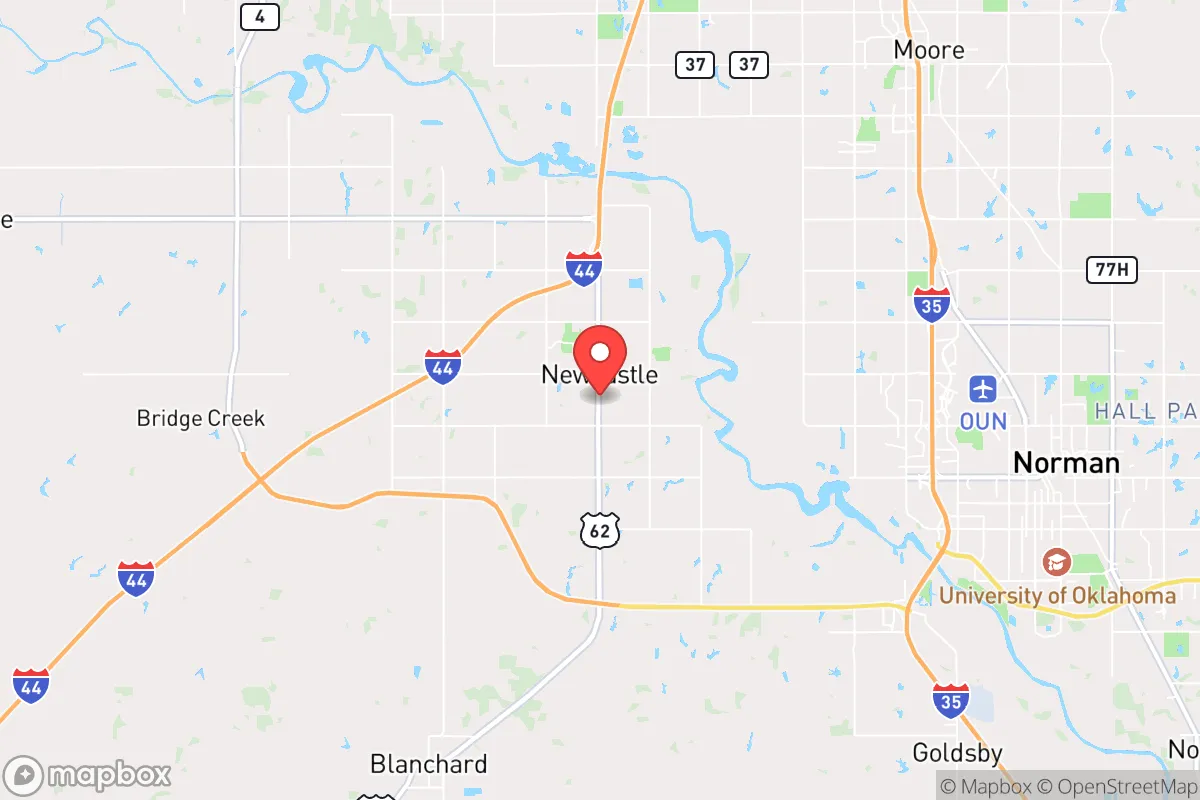
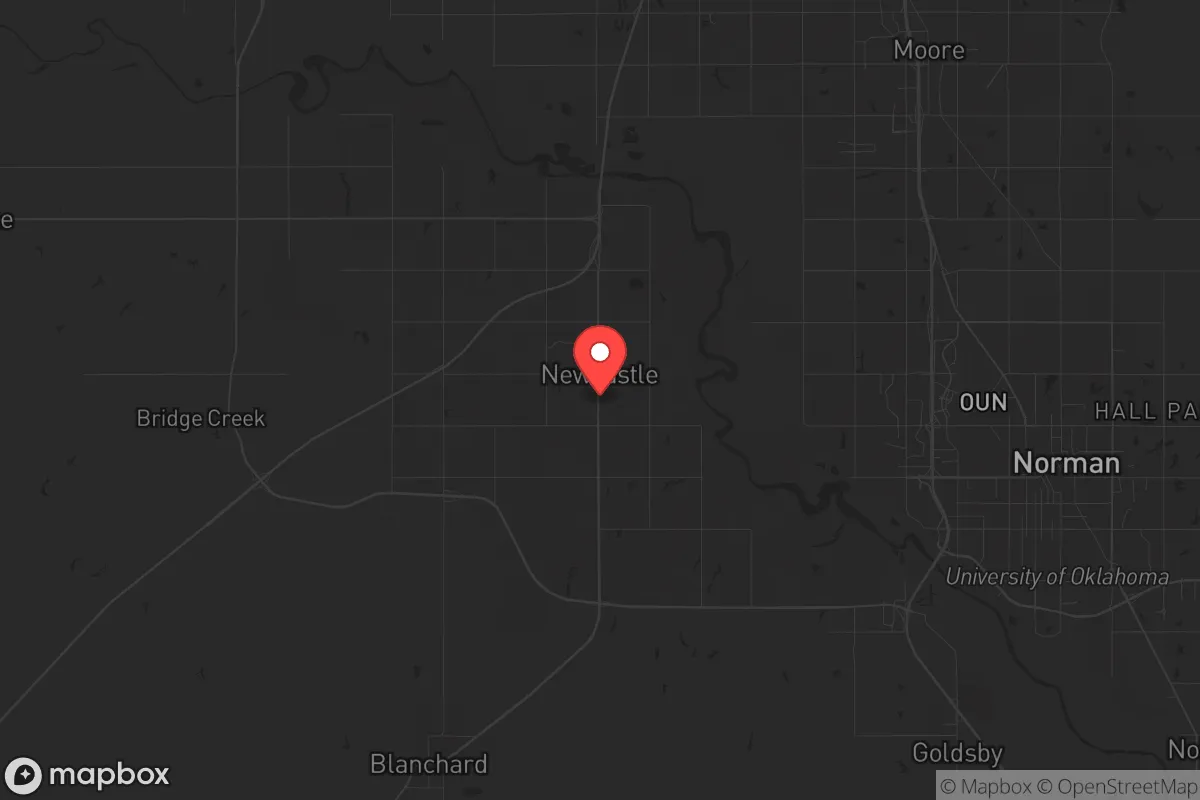
Strategic Assessment of Newcastle, OK
Meaningful friction. Expect exposure to either population pressure, blast zones, or natural disaster risk. Consider buying a retreat property.
What does the Strategic Assessment tell us?
Our Strategic Assessment grades tactical survivability of an area. Major population centers, military targets, fallout zones, natural disasters, and border exposure all drive risk — lower exposure means a more defensible position in a crisis.
This is heavily inspired by Joel Skousen's Strategic Relocation book. Highly recommended you checkout the book ($)What does this tell us?
Our Strategic Assessment grades tactical survivability of an area. Major population centers, military targets, fallout zones, natural disasters, and border exposure all drive risk — lower exposure means a more defensible position in a crisis.
This is heavily inspired by Joel Skousen's Strategic Relocation book. Highly recommended you checkout the book ($)Strategic Pillars

Key Distances
Regional Safe Places
Below is our recommended "safe zones" in Oklahoma and the surrounding area based on our strategic heuristics. For most people, it's unrealistic to live in a “safe zone” full-time due to work, family or other personal reasons. They tend to be more rural. However, many of these areas are perfect for second homes and retreat properties that double as a vacation home or even a short-term rental.
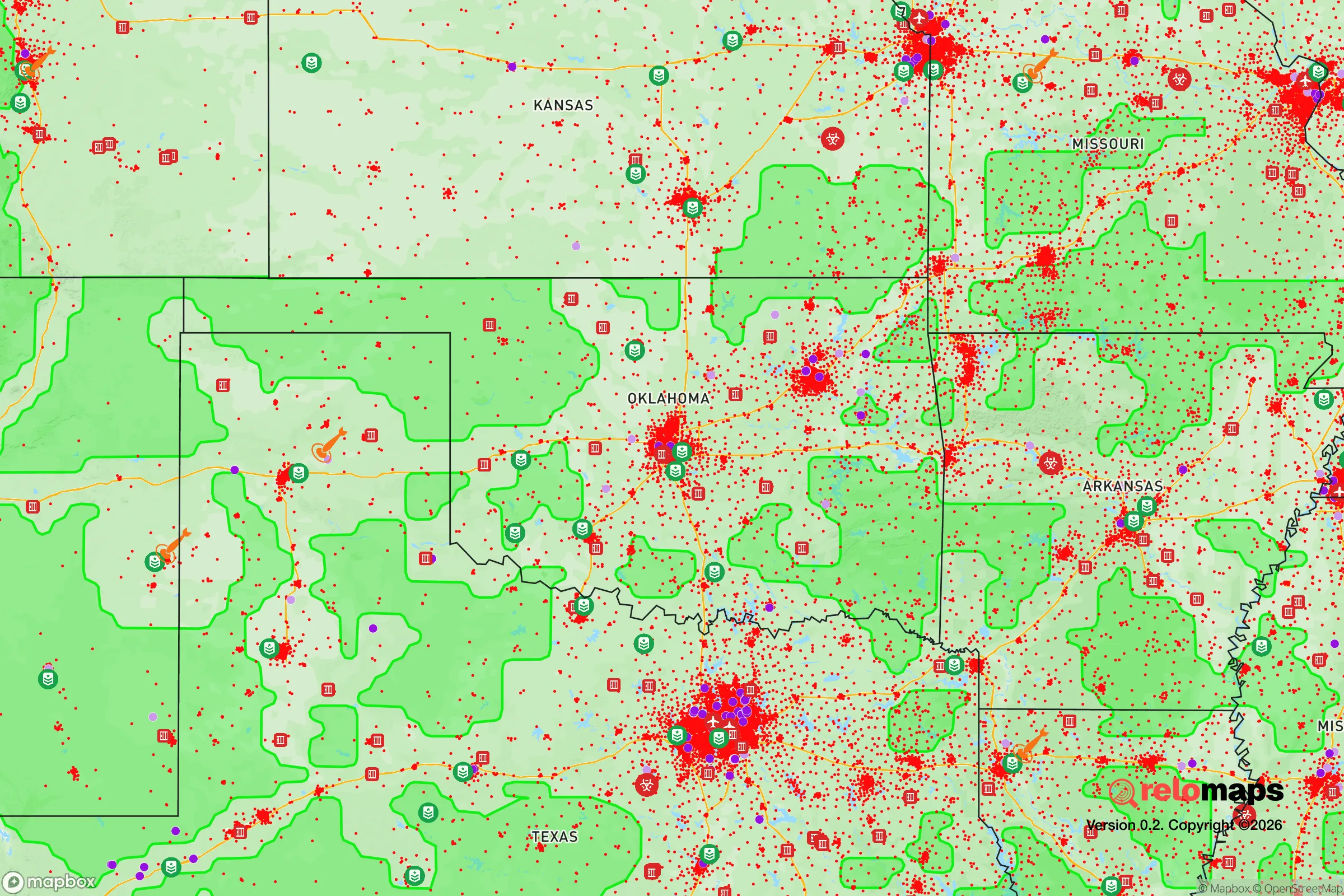
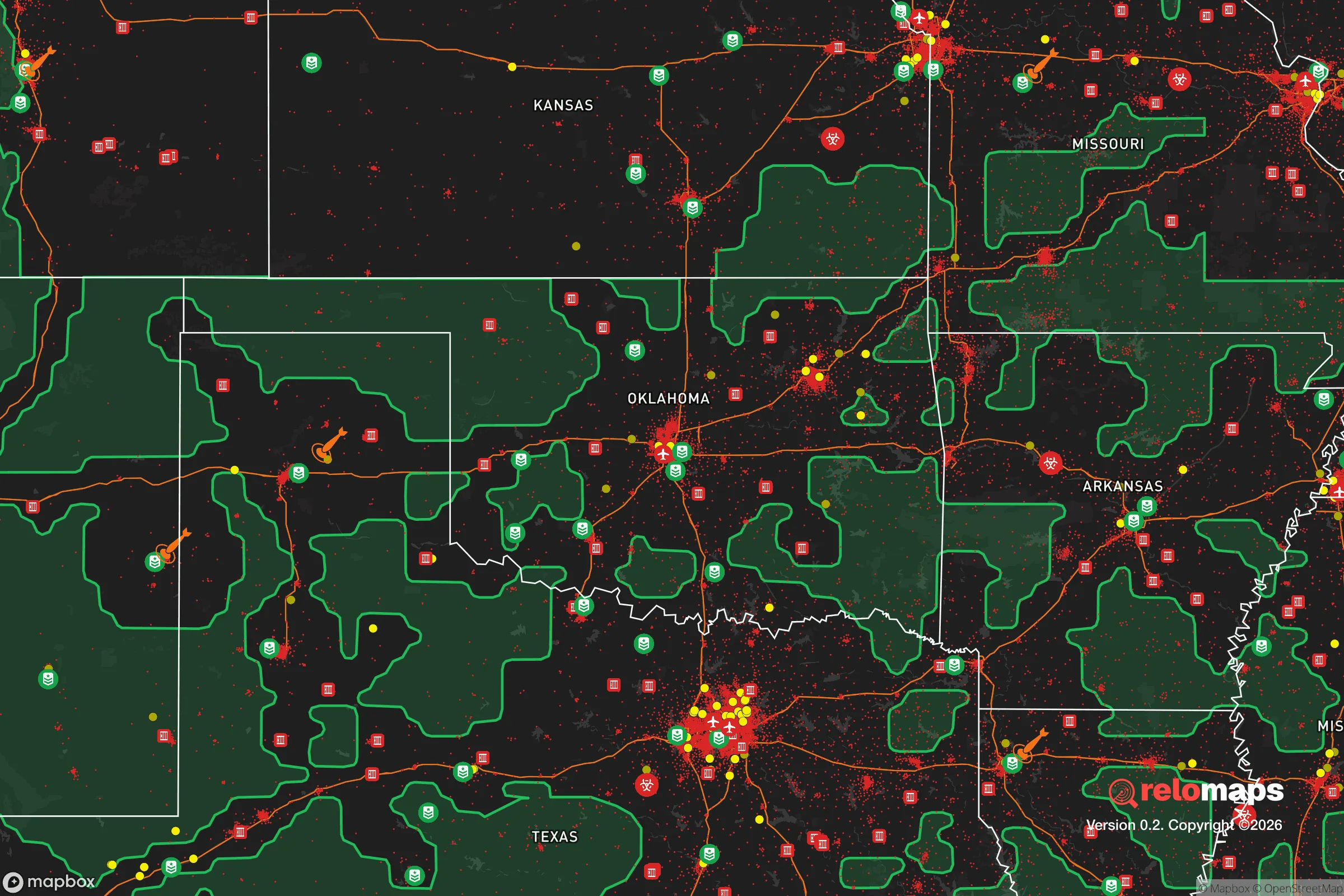


Important Note: For informational purposes only. This does not mean nothing bad ever happens in the green zones. Please use common sense. This is based on public data and modeled with AI. We tried to take a conservative approach but mistakes happen. We update this regularly as new information becomes available.
Solar Generator Recommendations
Backup power matters more here than in safer locations. We've picked three solar generators across budgets and capacity tiers — start with the budget unit if you only need a few essentials, or step up if you want to run a fridge and HVAC for days at a time.

Jackery Portable Power Station Explorer 300
Budget OptionPower on the Go: Weighing only 11 lbs, it's convenient to set up and store with book-sized foldable solar panels

BLUETTI Portable Power Station AC180
Designed for both indoor and outdoor scenarios, AC180 is highly capable as it has a robost capacity and continuous output power.

EF ECOFLOW DELTA Pro Ultra Power Station
Upgraded PickEcoFlow DELTA Pro Ultra is a whole-home energy system designed to grow with your family. Integrated with the Smart Home Panel 2, it scales to meet your evolving energy needs — keeping your home powered, intelligent, and secure through every stage of life.
We earn a commission, at no additional cost to you.
Strategic Assessment Analysis
Newcastle, Oklahoma, sits in a precarious but potentially advantageous position for those prioritizing resilience and self-sufficiency. Located just southwest of Oklahoma City in McClain County, this town of roughly 12,000 offers a blend of rural buffer and access to critical infrastructure, but its proximity to a major metropolitan area introduces significant vulnerabilities. For the conservative-minded prepper or survivalist, Newcastle presents a mixed bag: it provides enough distance from the urban core to avoid the worst of immediate fallout from a civic collapse or disaster, yet remains close enough to be affected by the chaos that would follow a major event. The key is understanding where the town’s natural advantages end and its exposure to risk begins.
Geographic position and natural advantages for long-term survival
Newcastle’s location in central Oklahoma places it in a region with distinct natural benefits for those thinking about long-term sustainability. The town sits on the eastern edge of the Cross Timbers ecoregion, a transitional zone between the prairies and the forests of eastern Oklahoma. This means ample access to hardwood timber for fuel, construction, and defense, while also having open grasslands suitable for grazing or small-scale agriculture. The Canadian River runs just north of town, providing a surface water source that, while seasonal and prone to flash flooding, can be tapped for irrigation or emergency supply with proper filtration. The area’s average annual rainfall of about 36 inches supports dryland farming without heavy reliance on irrigation, a critical factor if supply chains falter. Newcastle’s elevation—roughly 1,200 feet above sea level—offers slight topographic relief, giving residents vantage points for observation and defense, though the terrain is generally rolling rather than mountainous. For a relocator, the soil quality in McClain County is decent for row crops like corn, soybeans, and wheat, and the growing season of about 210 days allows for multiple harvest cycles. These natural assets make Newcastle a viable base for a semi-self-sufficient lifestyle, provided you can secure enough land—most residential lots in town are small, so rural acreage outside the city limits is where the real value lies.
Risks, exposures, and proximity to fallout-relevant landmarks
The most glaring vulnerability for Newcastle is its proximity to Oklahoma City, just 15 miles northeast. In a scenario involving civil unrest, mass casualty events, or a major disaster, Newcastle would be directly in the path of urban refugees fleeing the metro. The town sits along Interstate 44 and State Highway 62, both major evacuation routes, meaning traffic jams, resource shortages, and potential violence from desperate populations would hit Newcastle within hours of any event. Additionally, the area is within the blast and fallout radius of several critical infrastructure targets. Tinker Air Force Base, a major military installation, is only 20 miles east; a strike or accident there would render Newcastle uninhabitable for weeks due to radioactive or chemical contamination. The Oklahoma City metropolitan area also hosts multiple chemical plants, refineries, and rail yards that could become secondary hazards. Tornadoes are a persistent natural threat—Oklahoma sits in the heart of Tornado Alley, and Newcastle has been hit by EF-2 and EF-3 storms in recent decades. While you can build a storm shelter, the lack of natural barriers like mountains means you’re exposed to the full force of severe weather. For the prepper, the biggest risk is not the initial event but the aftermath: Newcastle’s population density (roughly 1,200 people per square mile in the town proper) means that during a prolonged crisis, competition for local resources—food, water, fuel, medical supplies—would be intense. The town’s police and fire departments are small, and mutual aid agreements with surrounding communities would be strained or nonexistent during a widespread emergency.
Practical resilience for a relocator: food, water, energy, and defensibility
For a relocator serious about resilience, Newcastle offers a workable but not ideal foundation. Water is the most critical concern. The municipal water supply comes from Lake Thunderbird and the Canadian River, both of which are vulnerable to contamination, drought, or infrastructure failure. A well on your property is essential—McClain County’s groundwater is generally good, with the Garber-Wellington aquifer providing reliable yields at depths of 200-400 feet. However, drilling a well can cost $10,000-$20,000, and you’ll need a backup pump powered by solar or generator. Food production is feasible: the growing season is long enough for vegetables, fruit trees, and small livestock like chickens or goats. Newcastle’s zoning allows for backyard chickens and small-scale agriculture, but check HOA restrictions if you’re in a subdivision. For energy, solar is viable—Oklahoma averages 230 sunny days per year—but you’ll need battery storage to handle grid outages, which are common during storms. Natural gas is widely available in the area, so a dual-fuel generator is a practical backup. Defensibility is where Newcastle falls short. The town is laid out in a typical suburban grid, with multiple access points and no natural chokepoints. Your best bet is to secure a property on the outskirts, preferably with a long driveway, tree cover, and a clear line of sight to approach routes. Fencing, motion-sensor lighting, and a reinforced safe room are non-negotiable. The local gun culture is strong—Oklahoma is a constitutional carry state—so you won’t face legal hurdles for self-defense, but you’ll need to be prepared for the reality that in a crisis, your neighbors may not be as prepared as you are. Stockpiling food, water, and medical supplies for at least three months is the baseline recommendation, given the town’s vulnerability to supply chain disruptions from metro-area chaos.
The overall strategic picture for Newcastle is one of calculated risk. It offers a decent natural environment for self-sufficiency, with good soil, water access, and a climate that supports year-round food production. But its proximity to Oklahoma City and major infrastructure targets means that in any large-scale event—whether economic collapse, civil unrest, or a natural disaster—Newcastle would be a pressure point rather than a safe haven. For the conservative relocator who values community and wants to be close to urban amenities while maintaining a prepper mindset, Newcastle can work if you’re willing to invest heavily in on-site resilience: a well, solar power, food storage, and a defensible property. But if your primary goal is to be truly off the grid and insulated from the fallout of societal breakdown, you’d be better served looking further west or south, into the more remote parts of McClain County or neighboring Grady County, where population density drops and natural buffers increase. Newcastle is a compromise—a place where you can live a semi-prepared life without abandoning all modern conveniences, but one that demands constant vigilance and a realistic understanding of its vulnerabilities.

* Values derived from national, state, county, city and local statistics and may differ in a specific area. Last updated: 2026-04-21T08:13:03.000Z
Narrative content on this page is AI-generated and may contain mistakes. Verify any details that matter before acting on them.
ReloMaps may earn a commission from affiliate links at no extra cost to you.

