
Photo by Tommy Bond on Unsplash
Political ClimatePolitical Climate in Newcastle, OK
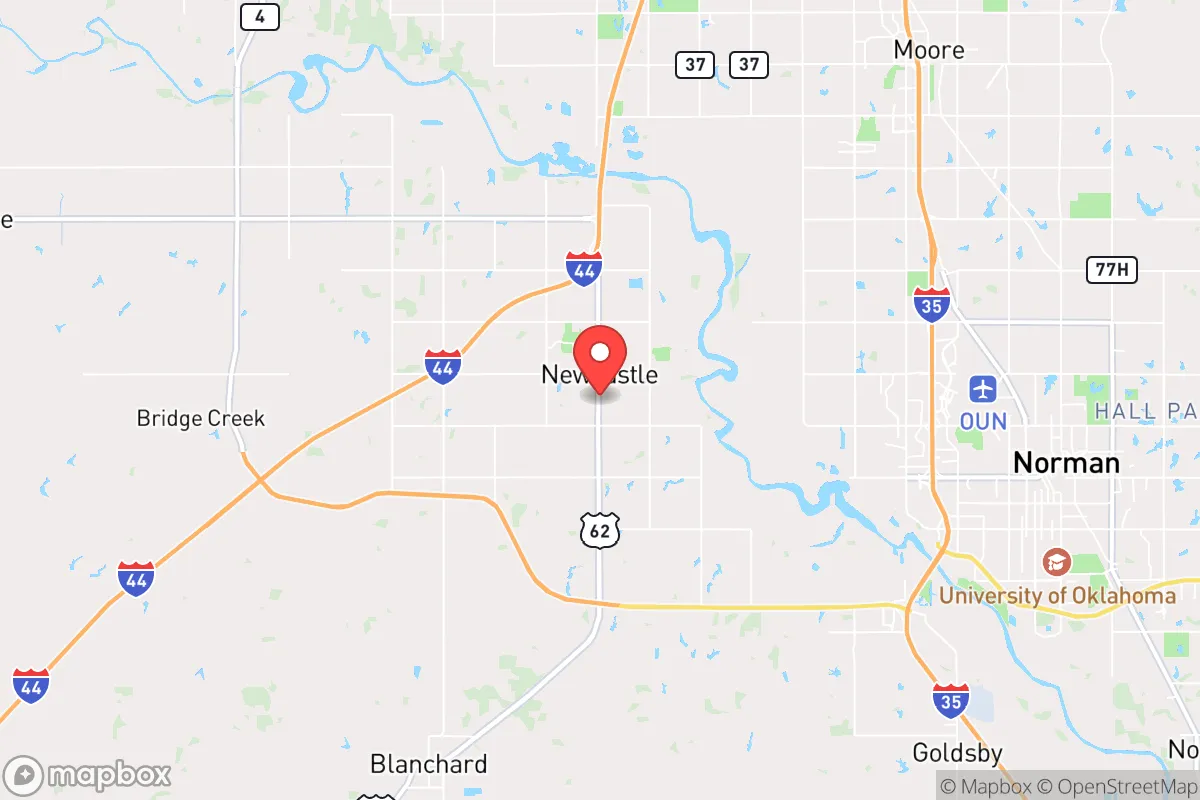
District shown is the primary district for this city’s centroid. Cities may span multiple districts.
Local Political AnalysisPolitical Analysis of Newcastle, OK
Newcastle, Oklahoma, is about as solidly conservative as they come, and that’s not changing anytime soon. The Cook PVI clocks it at R+17, meaning the area votes a full 17 points more Republican than the national average. In plain terms, you’re looking at a place where the GOP primary is often the real election, and Democrats rarely crack 35% in local races. The political lean here isn’t just a habit—it’s a deeply held conviction that government should stay out of your business, your paycheck, and your family’s life. If you’re looking for a place where personal freedom and limited government are still the default, this is it.
How it compares
Drive 20 minutes east into Oklahoma City proper, and you’ll hit a different world—especially in areas like the Paseo District or near the Capitol, where progressive politics have a real foothold. Newcastle, by contrast, feels like a bulwark against that shift. Surrounding towns like Blanchard and Tuttle lean similarly red, but Newcastle has a tighter-knit, almost rural feel that keeps the politics more grounded. The contrast is stark: in OKC, you see city council debates over bike lanes and diversity initiatives; in Newcastle, the talk is about property rights, school choice, and keeping the county commission from overstepping. The trajectory here is holding steady, but there’s a quiet concern among long-time residents that the metro’s growth could bring unwanted progressive influence. So far, though, the R+17 rating hasn’t budged, and local elections consistently reflect that.
What this means for residents
For the people living here, the political climate translates into a government that mostly stays out of the way. Property taxes are low, zoning is minimal, and there’s no appetite for the kind of overreach you see in blue states—no mask mandates that drag on, no heavy-handed business closures, no school board pushing critical theory. The local schools, Newcastle Public Schools, still operate with a focus on traditional values, and parents have a real say in what’s taught. That said, there’s a growing unease as the state legislature in Oklahoma City occasionally flirts with policies that feel like a step toward bigger government—like new sales tax proposals or state-level mandates on local land use. Residents here watch that like hawks. The general vibe is: we moved here to be left alone, and we’ll fight to keep it that way.
One cultural distinction that sets Newcastle apart is its strong sense of self-reliance. You won’t find a lot of HOA-heavy subdivisions dictating what color you can paint your fence. Instead, you’ve got acreage, pickup trucks, and a community that handles its own problems. The local churches and the VFW post are still the social hubs, not city-sponsored events. If you’re considering a move here, understand that the political climate isn’t just about who you vote for—it’s about a way of life that prizes independence over convenience, and tradition over trends. The long-term outlook? As long as the metro’s growth doesn’t dilute the local culture, Newcastle will stay a redoubt of common sense and personal liberty.

State Political ClimatePolitical Climate in Oklahoma
State Political AnalysisPolitical Environment in the State
Oklahoma has been a reliably red state for decades, with Republicans holding every statewide office and supermajorities in both legislative chambers, but the political climate here is more nuanced than a simple party label suggests. The state’s conservative lean is deep and durable—Donald Trump won it by 33 points in 2020 and by a similar margin in 2024—but the real story is the growing tension between the traditional, small-government, libertarian-leaning conservatism of rural Oklahoma and the more pragmatic, business-friendly, and occasionally moderate conservatism emerging in the Oklahoma City and Tulsa metros. Over the last 10-20 years, the state has shifted rightward on cultural issues while simultaneously wrestling with chronic underfunding of core services, creating a unique environment where personal freedom is expansive in some areas but constrained by fiscal reality in others.
Urban vs. rural divide
The political map of Oklahoma is a textbook example of the urban-rural split that defines American politics today. Oklahoma City and Tulsa are the two blue-ish islands in a sea of deep red. Oklahoma County, home to OKC, has trended more competitive in recent cycles—it voted for Trump by only 4 points in 2020, down from 12 points in 2016—driven by a growing professional class and a younger, more diverse population in the city’s core neighborhoods like the Plaza District and Midtown. Tulsa County is similar, with Trump winning it by 8 points in 2020, but the city of Tulsa itself is a Democratic stronghold, anchored by the University of Tulsa and a revitalized downtown. Surrounding these metros, the picture flips hard. Suburban counties like Canadian (west of OKC) and Cleveland (south, home to Norman) are solidly Republican but with a more educated, suburban flavor—think school board battles and property tax debates rather than culture war fireworks. Drive an hour in any direction from either city, and you hit counties like Adair, Pushmataha, or Cimarron, where Trump won by 70-80 points and the local economy is ranching, oil, or tribal gaming. The divide isn’t just partisan; it’s cultural. Rural Oklahomans see the state as a last bastion of self-reliance, while urbanites increasingly view it as a place that needs to invest in education and infrastructure to keep up with the rest of the country.
Policy environment
Oklahoma’s policy environment is a mixed bag for a conservative moving here. On the plus side, the state has no personal property tax on vehicles or boats, and the state income tax was cut from 4.75% to 4.5% in 2024, with a path to 3.99% if revenue triggers are met. The corporate tax rate is a flat 4%, and the regulatory climate is generally light—permitting for oil and gas drilling is straightforward, and occupational licensing reforms have been modest but real. On the education front, Oklahoma was an early adopter of school choice, with the 2023 Oklahoma Parental Choice Tax Credit Act providing up to $7,500 per child for private school expenses, and charter schools are relatively easy to start. However, the state’s healthcare environment is a concern. Oklahoma did not expand Medicaid until 2021 (via a ballot initiative, not legislative action), and the system remains strained, with rural hospital closures a persistent issue. Election laws are solid: voter ID is required, early voting is available for three days, and the state uses paper ballots with auditable results. There’s no widespread concern about election integrity here—Oklahoma consistently ranks high for election administration. The biggest red flag for a freedom-minded newcomer is the state’s heavy reliance on oil and gas tax revenue, which makes the budget volatile and leads to periodic austerity that affects everything from road maintenance to state park funding.
Trajectory & freedom
On the trajectory of freedom, Oklahoma has been a mixed bag over the last five years, but the trend is cautiously positive for conservatives. The biggest win was the 2023 passage of constitutional carry—Oklahoma became the 25th state to allow permitless carry of firearms, a major expansion of Second Amendment rights. On parental rights, the 2022 Parents’ Bill of Rights (HB 1775) was strengthened, requiring schools to notify parents of any curriculum involving sexuality or gender identity and giving parents the right to opt their children out. The state also passed a near-total abortion ban in 2022 (SB 612) with no exceptions for rape or incest, which has held up in court. On the concerning side, the state’s medical marijuana program, which was one of the most permissive in the country when voters approved it in 2018, has been steadily tightened by the legislature—caps on dispensary licenses, stricter testing requirements, and a ban on out-of-state ownership. This feels like a classic case of government overreach: voters said yes, and the legislature keeps chipping away. Property rights are generally strong, with no statewide zoning mandates, but local governments in places like Norman and Edmond have used zoning to block new housing, driving up costs. The biggest freedom concern long-term is the state’s tax burden: while income taxes are low, the state’s sales tax (4.5% state, plus local up to 5.5%) and high property taxes in some counties (especially in the Tulsa area) mean the overall tax load is higher than many expect.
Civil unrest & political movements
Civil unrest in Oklahoma is rare and localized, but there are flashpoints a new resident should be aware of. The most visible political movement in recent years has been the “Okie Exodus”—a loose coalition of rural conservatives and libertarians who advocate for secession from the United States, or at least a radical devolution of federal power. This isn’t mainstream, but it has a real presence in counties like Delaware and Cherokee, where “State of Jefferson” style rhetoric is common at county commission meetings. On the left, the Oklahoma City protests of 2020 were significant, with several nights of clashes between protesters and police, but the movement fizzled quickly and hasn’t re-emerged at scale. Immigration politics are relatively quiet—Oklahoma is not a border state, and the immigrant population is small (about 6% foreign-born), but there have been flashpoints in Guymon and Altus, where meatpacking plants employ a large Hispanic workforce, leading to occasional tensions over housing and schools. The most visible political flashpoint today is the school board wars in suburban districts like Owasso and Yukon, where conservative parents have organized to challenge library books and curriculum, often clashing with teachers’ unions. These fights are intense but local—you won’t see them on the news unless you’re looking. Overall, the state is politically stable, with no serious threat of civil unrest, but the cultural divide between urban and rural is real and occasionally spills into public view.
Projection
Looking ahead 5-10 years, Oklahoma is likely to remain solidly red, but the nature of that conservatism is shifting. The biggest demographic trend is the in-migration of conservatives from California and Texas, drawn by lower housing costs and a perceived “freer” environment. These newcomers are settling in the suburbs of Oklahoma City—places like Mustang, Piedmont, and Choctaw—and they tend to be more culturally conservative than the native Oklahomans they’re joining. This will likely push the state further right on social issues (more school choice, more restrictions on abortion, more resistance to LGBTQ+ protections) while creating tension on economic issues, as these newcomers often want lower taxes and less regulation but also expect high-quality schools and infrastructure. The tribal gaming compact renegotiations, which expire in 2025, could be a major flashpoint—tribes operate most of the state’s casinos and contribute heavily to the economy, but the state has been trying to claw back revenue, and a breakdown could lead to a messy legal fight. The medical marijuana industry is likely to continue being regulated into near-oblivion, which will disappoint libertarians. The biggest wildcard is education funding: if the state can’t find a way to adequately fund public schools while expanding school choice, the suburban exodus to private schools could hollow out the public system, creating a two-tier society that even many conservatives find troubling. For a newcomer, the projection is clear: Oklahoma will remain a place where personal freedom is broad on guns, taxes, and lifestyle, but where the quality of public services—especially schools and healthcare—will be a persistent source of frustration.
Bottom line for a new resident: If you’re a conservative looking for a state where your values are reflected in law and your wallet isn’t constantly raided, Oklahoma is a solid bet. You’ll find constitutional carry, school choice, low income taxes, and a culture that respects self-reliance. But don’t expect a libertarian paradise—the state has a habit of regulating things voters approved (medical marijuana), underfunding schools until they’re in crisis, and letting local governments run roughshod over property rights with zoning. The best places to land are the outer suburbs of Oklahoma City—Edmond, Yukon, or Mustang—where you get good schools, low crime, and a conservative community without the isolation of rural life. Avoid the small towns unless you’re ready for a slower pace and limited services. Oklahoma is a good place to raise a family if you’re willing to be engaged in your local school board and your county commission—because the freedom you get here is the kind you have to defend, not the kind that’s handed to you.
* Values derived from national, state, county, city and local statistics and may differ in a specific area. Last updated: 2026-04-21T08:13:03.000Z
Narrative content on this page is AI-generated and may contain mistakes. Verify any details that matter before acting on them.
ReloMaps may earn a commission from affiliate links at no extra cost to you.

