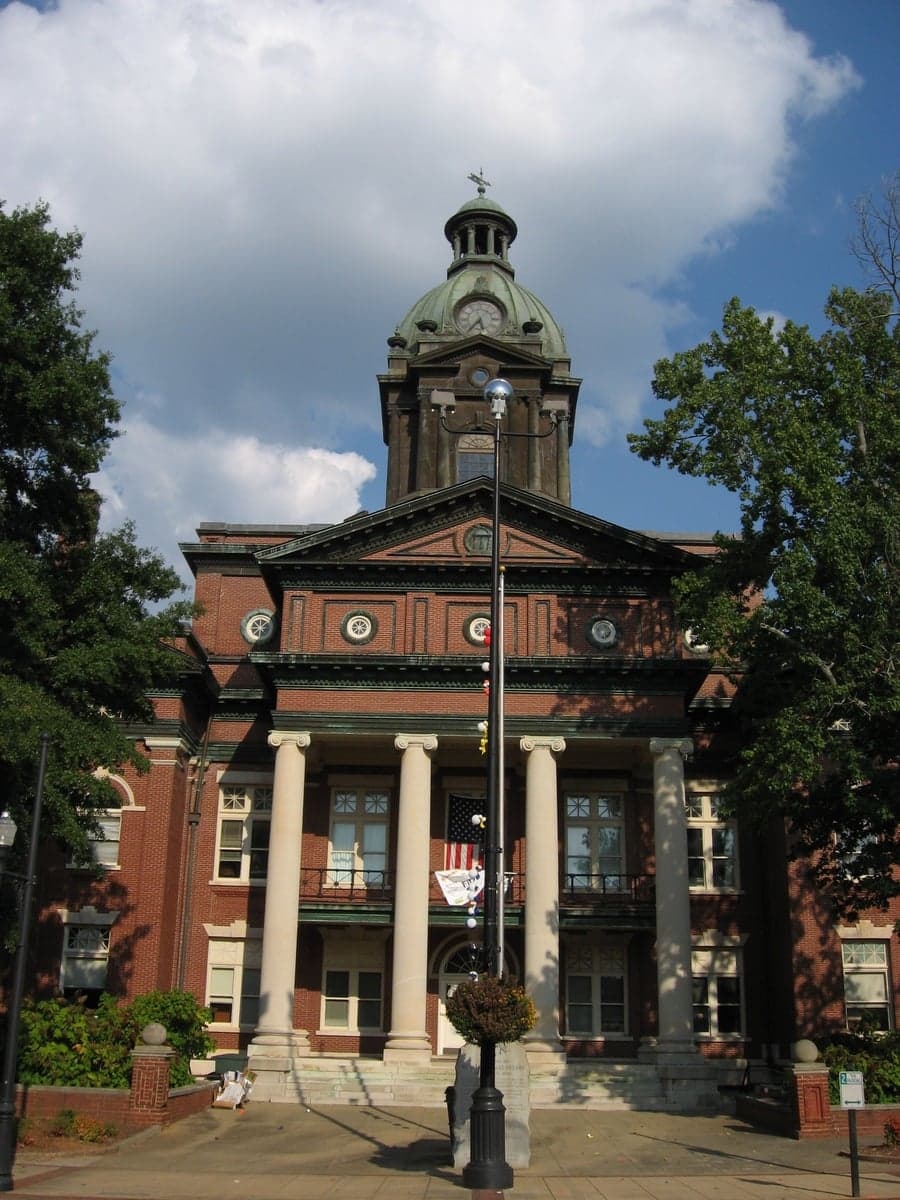
Photo: Wikipedia
Political ClimatePolitical Climate in Newnan, GA
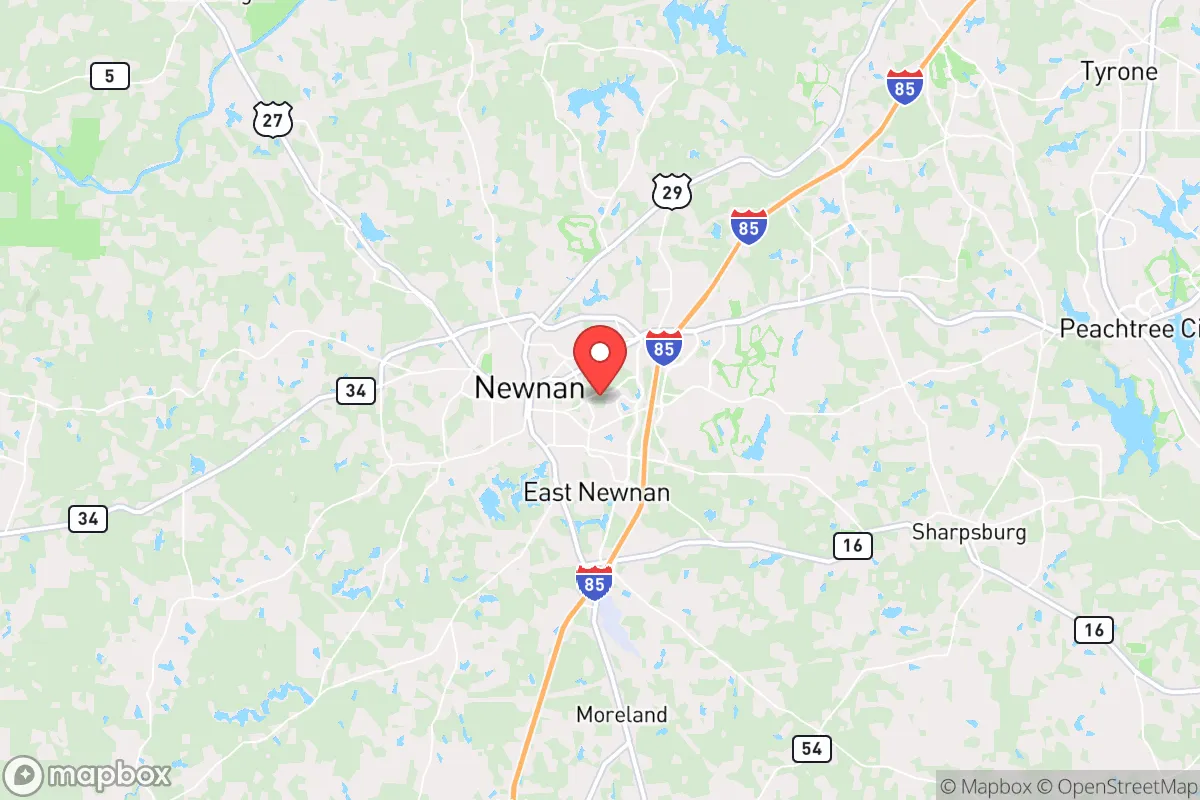
District shown is the primary district for this city’s centroid. Cities may span multiple districts.
Local Political AnalysisPolitical Analysis of Newnan, GA
Newnan has long been a reliably conservative stronghold, and that hasn't changed much, even as the Atlanta metro area creeps closer. The Cook PVI of R+15 tells you the baseline: this is a place where Republican candidates routinely win by double digits, and the local culture reflects that. But if you've lived here a while, you've noticed the political climate isn't quite as simple as it was twenty years ago. The old guard of small-government, personal-liberty-minded folks is still the majority, but there's a growing undercurrent of progressive influence, mostly from newcomers priced out of Atlanta who bring their big-city voting habits with them. The trajectory is slow, but it's there — and it's worth keeping an eye on.
How it compares
Drive twenty minutes east to Peachtree City, and you'll find a similar conservative tilt, though it's a bit more suburban and corporate in its politics. Head north toward Fayetteville, and the story is much the same — solid red, but with a noticeable uptick in Democratic yard signs in the newer subdivisions. The real contrast is with Atlanta itself, which is a deep-blue urban core. Newnan feels like a different world: here, the talk at the coffee shop is about property taxes, school choice, and Second Amendment rights, not transit bonds or rent control. Compared to nearby Senoia or Sharpsburg, Newnan is more politically engaged — you see more campaign signs, more local activism — but the underlying conservative values are shared. The worry for many long-time residents is that as Coweta County grows, the political center of gravity could shift, especially if the county commission starts courting development that brings in a more transient, less rooted population.
What this means for residents
For now, living in Newnan means your local government is generally on your side when it comes to keeping government out of your personal life. Zoning fights are usually about property rights, not social engineering. The school board has resisted the kind of curriculum overhauls you see in metro Atlanta districts. But the pressure is mounting. You'll see it in small ways: a push for more "inclusive" library materials, a proposal for a diversity committee at the county level, or a local candidate who talks about "equity" instead of opportunity. These are the early warning signs. If you value your right to raise your kids without the state telling you what they should think, or your ability to run a small business without a pile of new regulations, Newnan is still a good bet — but you have to stay involved. The local elections matter more than the national ones here, because that's where the real overreach starts.
Culturally, Newnan still feels like a place where the Fourth of July parade is a bigger deal than any political rally. The local policy distinctions are subtle but real: the city has a strong tradition of low property taxes and minimal business licensing requirements. There's no city income tax, and the county has resisted adopting the kind of "livable wage" ordinances or inclusionary zoning policies you see in more progressive suburbs. That said, the recent push for a new downtown master plan raised eyebrows among folks who saw it as a backdoor way to impose design standards and restrict property use. So far, the common-sense majority has held the line, but the long-term trend depends on who shows up to vote in the next few cycles. If you're the kind of person who believes the government that governs least governs best, Newnan is still your kind of town — but don't take it for granted.

State Political ClimatePolitical Climate in Georgia
State Political AnalysisPolitical Environment in the State
Georgia has shifted from a reliably conservative stronghold to a genuine battleground state over the past two decades, with its partisan lean narrowing from a double-digit Republican advantage in the 2000s to a razor-thin margin of just 0.2% in the 2020 presidential election. The state’s political identity is now defined by a powerful tension: a rapidly growing, diversifying metro Atlanta that leans increasingly Democratic, and a deeply conservative, rural and exurban hinterland that remains solidly red. For a conservative considering relocation, Georgia still offers a relatively low-tax, business-friendly environment, but the trajectory is unmistakably toward a more competitive, and in some policy areas, more progressive landscape.
Urban vs. rural divide
The political map of Georgia is a study in stark contrasts. The Atlanta metropolitan area, encompassing Fulton, DeKalb, Cobb, and Gwinnett counties, is the engine of Democratic growth. Gwinnett County, once a Republican stronghold, flipped to Biden by 18 points in 2020, driven by an influx of diverse, college-educated professionals and immigrants. Meanwhile, the rest of the state remains overwhelmingly Republican. The rural “Black Belt” counties in the southwest, like Dougherty and Randolph, vote heavily Democratic but have shrinking populations, while the vast majority of rural and small-town Georgia—places like Dalton in the northwest, Valdosta in the south, and Augusta in the east—vote red by large margins. The political future hinges on whether the exurban counties like Forsyth and Cherokee can hold their conservative majorities against the outward creep of Atlanta’s liberal influence. For now, the state legislature remains firmly under Republican control, but the governor’s mansion and Senate seats are now genuinely competitive.
Policy environment
On paper, Georgia’s policy environment is still friendly to conservative priorities. The state has a flat income tax rate of 5.49%, which is scheduled to drop to 4.99% by 2029, and a homestead exemption that keeps property taxes relatively low for homeowners. Georgia is a right-to-work state, and its regulatory climate is generally pro-business, with no state-level minimum wage above the federal $7.25. However, the policy picture is more mixed than it appears. The state has expanded Medicaid under the Affordable Care Act, a move many conservatives opposed, and Atlanta’s city government has implemented its own paid sick leave and non-discrimination ordinances that preempt state law in some areas. Education policy is a bright spot for conservatives: Georgia has a robust school choice program, including the Georgia Special Needs Scholarship and the new Promise Scholarship, which allows state funds to follow students to private schools. Election laws have been a flashpoint, with the 2021 SB 202 law tightening voter ID requirements and limiting drop boxes, which Republicans argue secures elections but Democrats call suppression. For a conservative, the state-level policy environment is still largely favorable, but local control in metro Atlanta is increasingly progressive.
Trajectory & freedom
Georgia’s trajectory on personal liberty is a mixed bag that should give conservatives pause. On the positive side, Georgia became a constitutional carry state in 2022, allowing law-abiding citizens to carry a concealed firearm without a permit—a major win for Second Amendment rights. The state also passed the “Heartbeat Bill” (HB 481) in 2019, banning abortion after a fetal heartbeat is detected, which was a significant victory for the pro-life movement. However, the state has also seen expansions of government overreach that alarm conservatives. Atlanta’s city council has repeatedly pushed for sanctuary city policies, though state law (HB 87) prohibits such measures. More concerning is the trend toward progressive local ordinances that infringe on property rights and free speech. For example, the city of Athens has enacted rent control measures and restrictions on short-term rentals, while Savannah has implemented strict noise and signage ordinances that some residents view as government overreach. The biggest threat to freedom in Georgia is the growing influence of progressive local governments in the metro area, which are increasingly willing to regulate everything from gas stoves to lawn care equipment.
Civil unrest & political movements
Georgia has been a focal point for political activism on both sides, and the temperature is rising. The 2020 election cycle saw massive protests in Atlanta following the death of George Floyd, with some demonstrations turning violent and leading to property damage in the city’s downtown and Buckhead neighborhoods. The “Stop the Steal” movement was also active, with large rallies at the state capitol in 2020 and 2021. Immigration politics are a constant flashpoint, particularly in the agricultural regions of south Georgia, where the city of Gainesville has a large Latino population and has seen tensions over enforcement of state immigration laws. The “election integrity” debate remains raw, with many conservatives still skeptical of the 2020 results in Georgia, despite multiple audits and recounts. The most visible political movement in recent years has been the push for Buckhead to secede from Atlanta, driven by residents frustrated with rising crime and progressive governance. While that effort failed in the legislature, it reflects a broader trend of suburban conservatives feeling alienated from the urban core. A new resident will notice that political conversations in Georgia are more intense and polarized than in many other states, with yard signs, bumper stickers, and local news coverage reflecting the deep divide.
Projection
Over the next 5-10 years, Georgia is likely to become even more competitive, with the Atlanta metro area continuing to grow and diversify. The state’s population is projected to increase by another 1.5 million people by 2030, with most of that growth concentrated in the metro counties. This demographic shift will almost certainly push the state further toward the center, and possibly into the blue column for presidential elections. However, the state legislature is likely to remain Republican for the foreseeable future due to gerrymandering and the concentration of Democratic voters in a few urban counties. The key battleground will be the exurbs, places like Forsyth County and Paulding County, which are still red but are seeing an influx of younger, more moderate families. For a conservative moving to Georgia now, the expectation should be that the state will continue to be a political battleground, with the state government remaining conservative but local governments in the metro area becoming more progressive. The freedom to live as you see fit will depend heavily on which county you choose to settle in.
For a conservative considering a move to Georgia, the bottom line is this: the state still offers a favorable tax and regulatory environment, strong gun rights, and a pro-life legal framework at the state level. But the political winds are shifting, and the metro Atlanta area is increasingly hostile to conservative values. If you choose to move here, pick your county carefully—the difference between living in Forsyth County versus DeKalb County is the difference between a community that shares your values and one that is actively working against them. Georgia is still a good bet for conservatives, but it’s no longer a safe one. You’ll need to be engaged, vote in every election, and be prepared for the fight to keep the state from following the path of Virginia or Colorado.
* Values derived from national, state, county, city and local statistics and may differ in a specific area. Last updated: 2026-04-30T05:08:50.000Z
Narrative content on this page is AI-generated and may contain mistakes. Verify any details that matter before acting on them.
ReloMaps may earn a commission from affiliate links at no extra cost to you.

