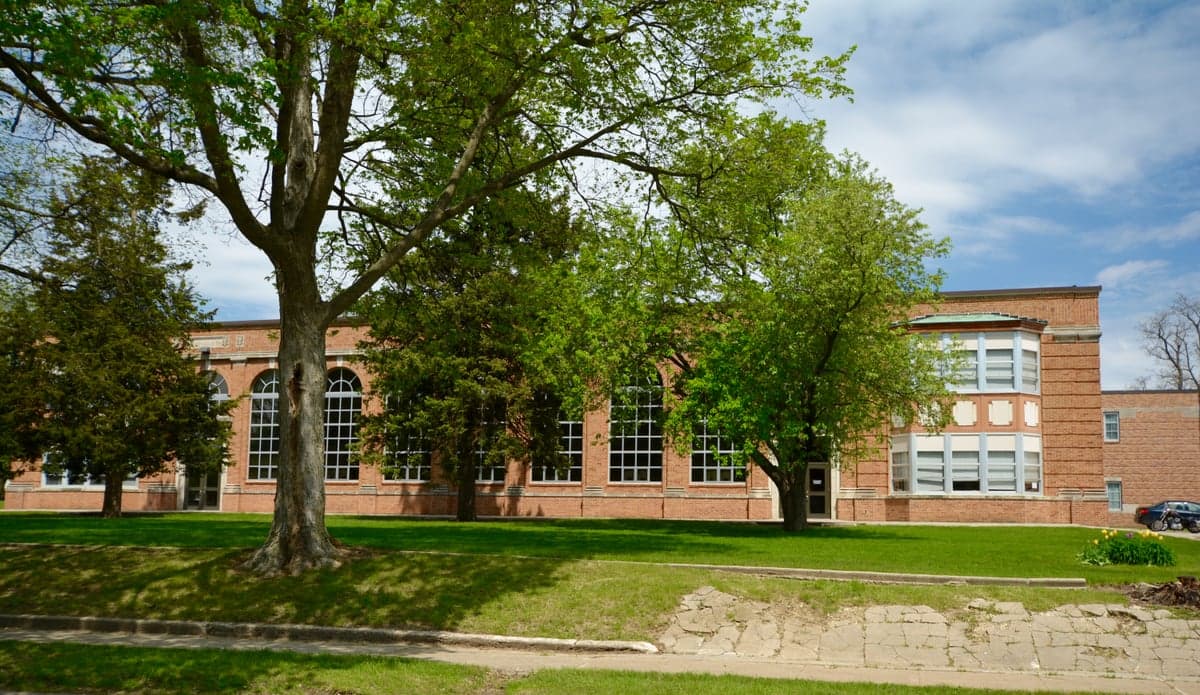
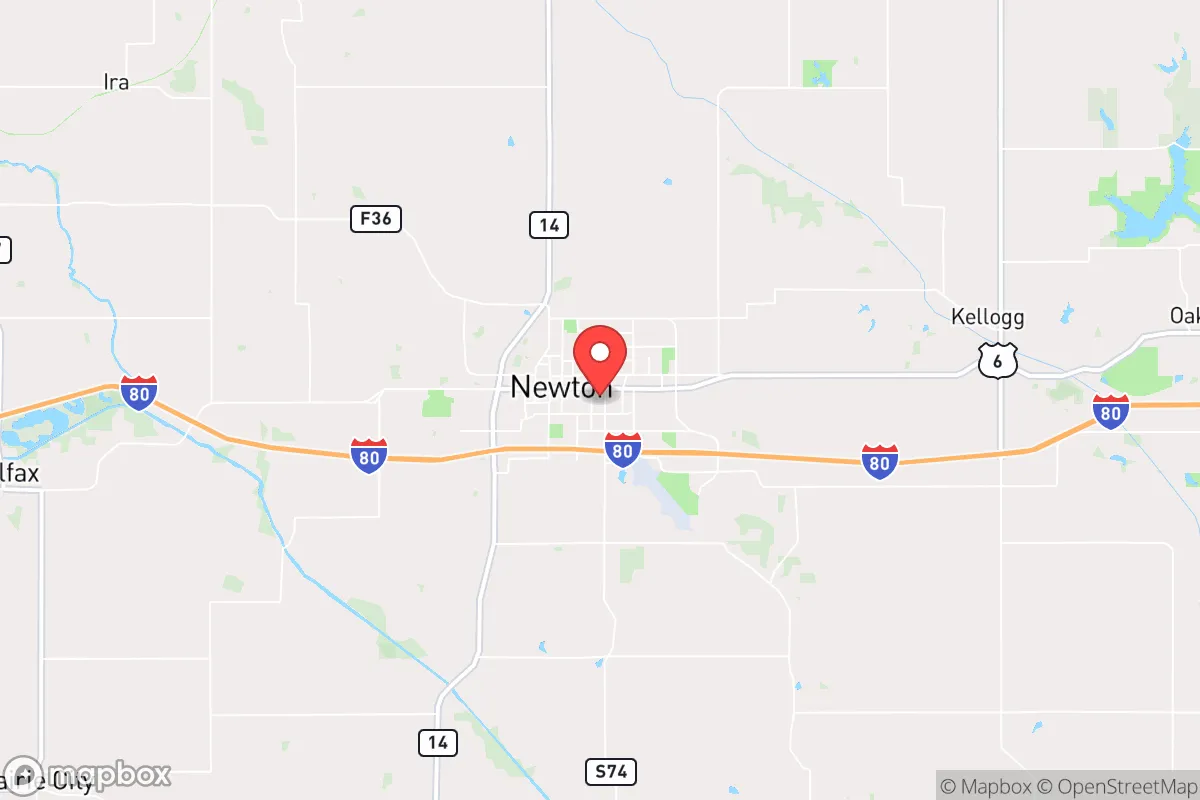
Photo: Wikipedia
Strategic Assessment of Newton, IA
Workable tactical position. Some exposure to population density or targets, but generally defensible in a crisis.
What does the Strategic Assessment tell us?
Our Strategic Assessment grades tactical survivability of an area. Major population centers, military targets, fallout zones, natural disasters, and border exposure all drive risk — lower exposure means a more defensible position in a crisis.
This is heavily inspired by Joel Skousen's Strategic Relocation book. Highly recommended you checkout the book ($)What does this tell us?
Our Strategic Assessment grades tactical survivability of an area. Major population centers, military targets, fallout zones, natural disasters, and border exposure all drive risk — lower exposure means a more defensible position in a crisis.
This is heavily inspired by Joel Skousen's Strategic Relocation book. Highly recommended you checkout the book ($)Strategic Pillars

Key Distances
Regional Safe Places
Below is our recommended "safe zones" in Iowa and the surrounding area based on our strategic heuristics. For most people, it's unrealistic to live in a “safe zone” full-time due to work, family or other personal reasons. They tend to be more rural. However, many of these areas are perfect for second homes and retreat properties that double as a vacation home or even a short-term rental.
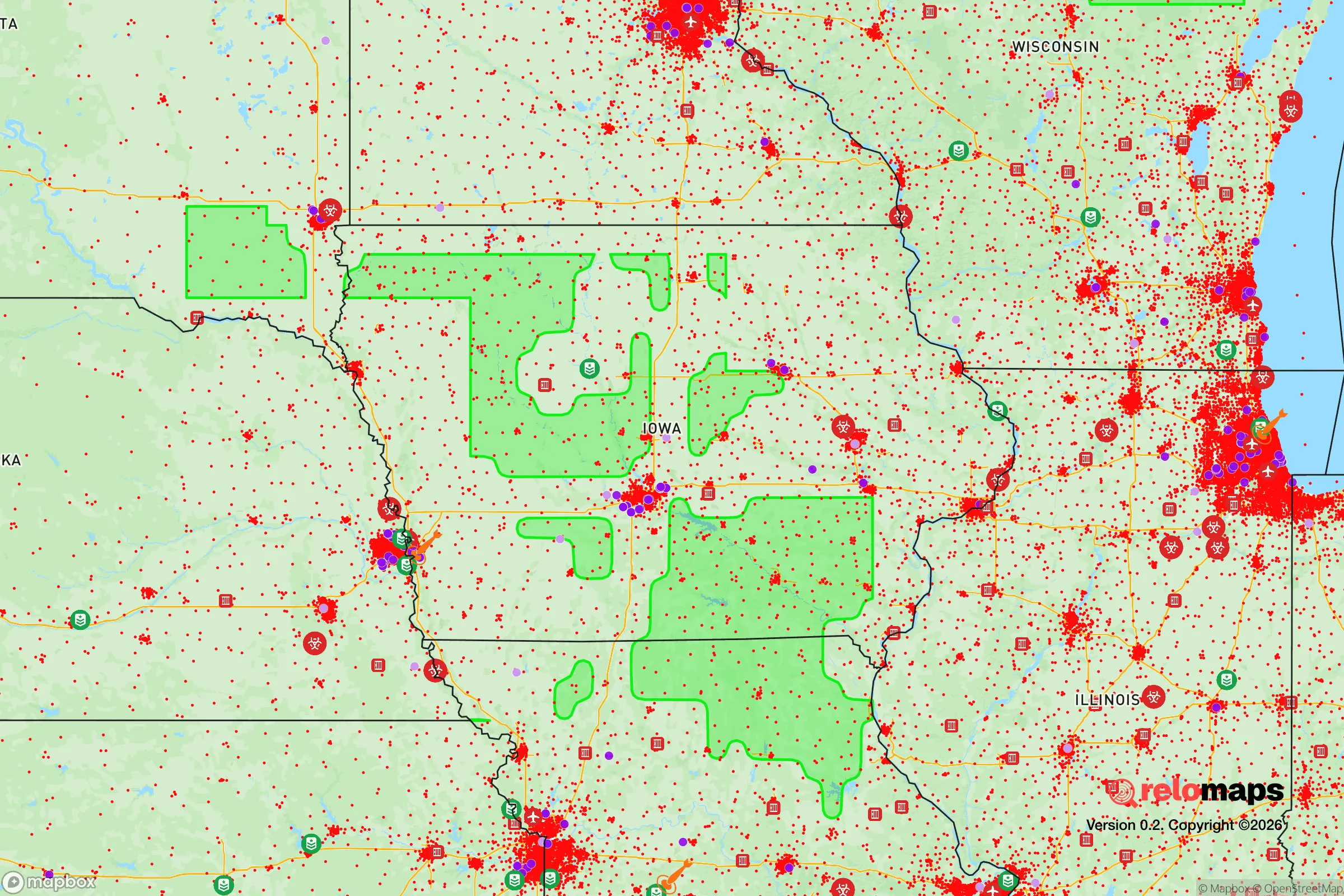
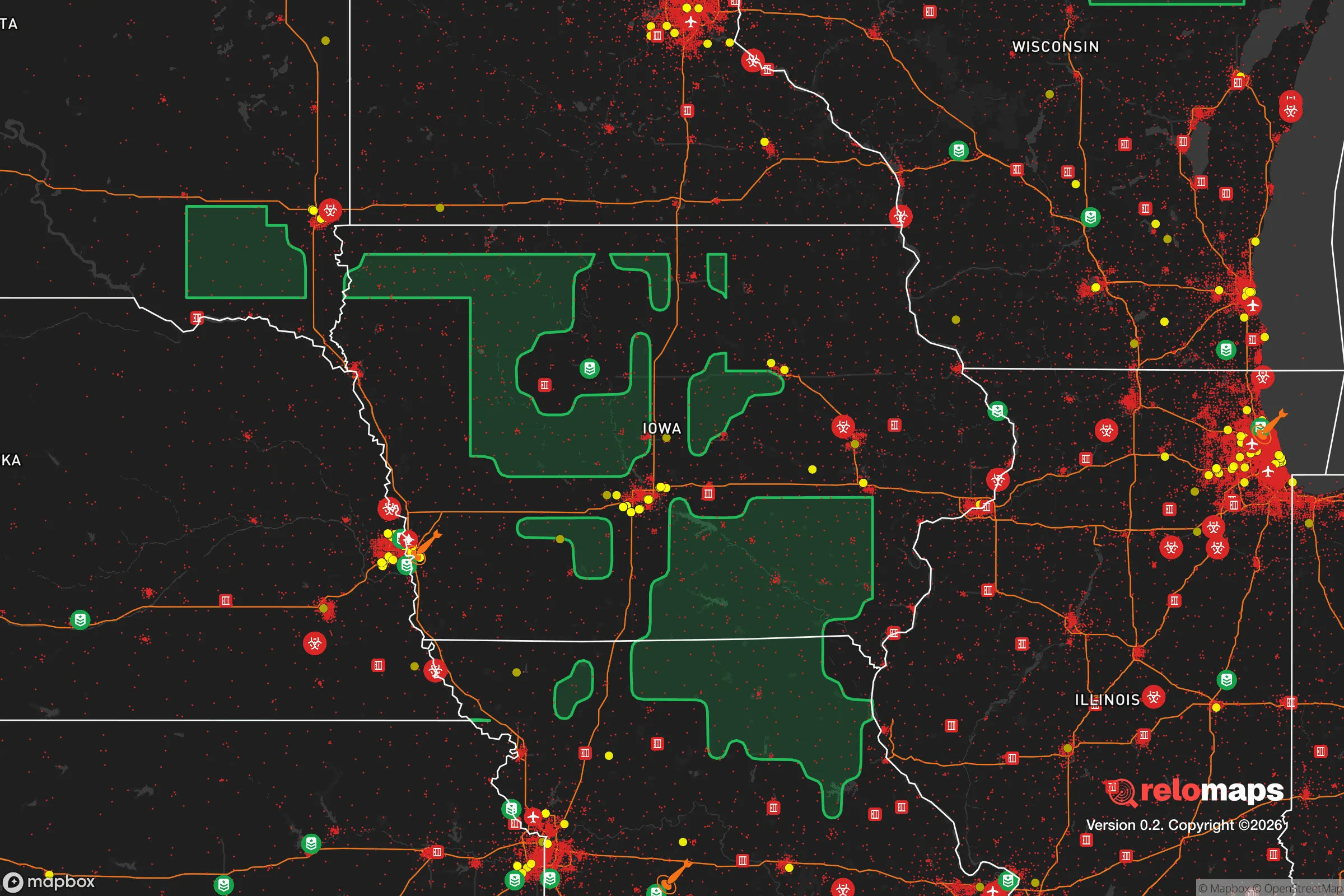


Important Note: For informational purposes only. This does not mean nothing bad ever happens in the green zones. Please use common sense. This is based on public data and modeled with AI. We tried to take a conservative approach but mistakes happen. We update this regularly as new information becomes available.
Solar Generator Recommendations
Backup power matters more here than in safer locations. We've picked three solar generators across budgets and capacity tiers — start with the budget unit if you only need a few essentials, or step up if you want to run a fridge and HVAC for days at a time.

Jackery Portable Power Station Explorer 300
Budget OptionPower on the Go: Weighing only 11 lbs, it's convenient to set up and store with book-sized foldable solar panels

BLUETTI Portable Power Station AC180
Designed for both indoor and outdoor scenarios, AC180 is highly capable as it has a robost capacity and continuous output power.

EF ECOFLOW DELTA Pro Ultra Power Station
Upgraded PickEcoFlow DELTA Pro Ultra is a whole-home energy system designed to grow with your family. Integrated with the Smart Home Panel 2, it scales to meet your evolving energy needs — keeping your home powered, intelligent, and secure through every stage of life.
We earn a commission, at no additional cost to you.
Strategic Assessment Analysis
Newton, Iowa, sits in a sweet spot that few relocators fully appreciate: close enough to Des Moines for supply runs and employment, yet far enough to avoid the blast radius of a major metropolitan target. With a population hovering around 15,000 and a county seat status in Jasper County, this town offers a blend of small-town resilience and industrial backbone that appeals to those thinking through worst-case scenarios. Its location along Interstate 80 and the Union Pacific rail line gives it logistical advantages for both daily life and emergency movement, while the surrounding agricultural land provides a buffer against the chaos that tends to ripple outward from larger cities.
Geographic position and natural advantages for long-term stability
Newton’s geography is its first line of defense. Situated roughly 30 miles east of Des Moines, it sits outside the immediate fallout zone of a major strike on the state capital, yet close enough to access the resources of a mid-sized city if needed. The town is surrounded by flat, fertile farmland—ideal for small-scale agriculture or barter economies if supply chains falter. The South Skunk River runs nearby, offering a secondary water source beyond municipal supplies, and the area’s shallow groundwater aquifers are generally reliable for well drilling. The terrain lacks significant elevation, which means no natural chokepoints for defense, but it also means no steep valleys that trap chemical or radiological fallout. For a relocator, the flatness is a trade-off: easier movement and farming, but harder to hide or fortify. The region’s temperate climate supports three-season gardening, and the local soil is rich enough to sustain a family plot without heavy inputs. Newton’s position along I-80 also means it’s a natural corridor for east-west travel, which could be a double-edged sword—useful for evacuation or resupply, but also a route for displaced populations during a crisis.
Risks, exposures, and proximity to fallout-relevant landmarks
The biggest risk for Newton is its proximity to Des Moines, which is a plausible target for a range of threats—from EMP attacks to conventional strikes on infrastructure. The city’s airport, federal buildings, and major corporate HQs (like Principal Financial and Wells Fargo) make it a high-value target. Newton sits just outside the likely blast radius of a single nuclear weapon aimed at downtown Des Moines, but fallout patterns depend on wind direction. Prevailing winds in Iowa blow west to east, meaning Newton could be in the downwind plume if the strike is west of the city. That said, the town’s distance (30 miles) gives a few hours for evacuation or sheltering, which is more than most suburbs get. Other risks include the nearby Newton Municipal Airport, which could become a secondary target if used for military or FEMA operations, and the Union Pacific rail yard, which might attract sabotage or looting during unrest. The town’s industrial base—once home to Maytag and now hosting a TPI Composites wind turbine blade plant—could be a target for economic disruption, but it’s not a high-priority military objective. Flooding is a minor concern along the South Skunk River, but the town’s elevation keeps most residential areas dry. Tornadoes are the most frequent natural threat, with an average of one to two touchdowns per decade in Jasper County; a sturdy basement or storm shelter is non-negotiable for any relocator.
Practical resilience for a relocator: food, water, energy, and defensibility
For a prepper-minded individual or family, Newton offers a workable baseline but requires deliberate upgrades. The municipal water supply comes from groundwater wells and is treated with chlorine, which means it’s potable now but vulnerable to contamination or power loss. A deep well (200-300 feet) on private property is a smart investment, as the local aquifer has decent yield and minimal industrial pollution. The town’s electrical grid is tied to MidAmerican Energy, which relies on a mix of coal, wind, and natural gas. Solar panels are viable here—Iowa averages about 200 sunny days per year—but winter cloud cover can reduce output for weeks at a time. A backup generator with a 500-gallon propane tank is a practical hedge. Food resilience is strong: the surrounding farmland produces corn, soybeans, and livestock, and the Jasper County Farmers Market operates seasonally. For long-term storage, the local climate is dry enough to prevent rapid spoilage, and there are several Amish and Mennonite communities within 20 miles that sell bulk grains, seeds, and tools. Defensibility is moderate. Newton’s layout is a typical Midwestern grid, with wide streets and detached homes that offer clear sightlines but limited cover. A rural property on the outskirts—say, along Highway 14 or County Road F17—provides better standoff distance and room for a garden, chicken coop, and rainwater catchment. The town’s police force is small (about 20 officers), and the Jasper County Sheriff’s Office covers the rest; during a prolonged crisis, response times would stretch to hours or days. Building a network of like-minded neighbors is critical—there are already a few prepper groups and gun clubs in the area, and the local gun culture is strong, with several ranges and sporting goods stores within a 15-minute drive.
The overall strategic picture for Newton is one of cautious optimism. It’s not a hardened bunker town, but it’s also not a high-risk urban center. The combination of agricultural self-sufficiency, moderate distance from a major target, and existing industrial infrastructure makes it a viable base for someone who wants to be prepared without going off-grid entirely. The biggest weaknesses are the lack of natural barriers and the reliance on a single interstate for evacuation, but these can be mitigated with a well-stocked property, a reliable vehicle, and a plan for multiple scenarios. For a conservative-leaning relocator who values community, self-reliance, and a slower pace of life, Newton offers a solid foundation—just don’t expect it to be a fortress. The real value here is in the land, the people, and the distance from the chaos, not in any pre-built security. If you’re willing to put in the work, this town can be a quiet anchor in a stormy world.

* Values derived from national, state, county, city and local statistics and may differ in a specific area. Last updated: 2026-04-23T00:45:57.000Z
Narrative content on this page is AI-generated and may contain mistakes. Verify any details that matter before acting on them.
ReloMaps may earn a commission from affiliate links at no extra cost to you.

