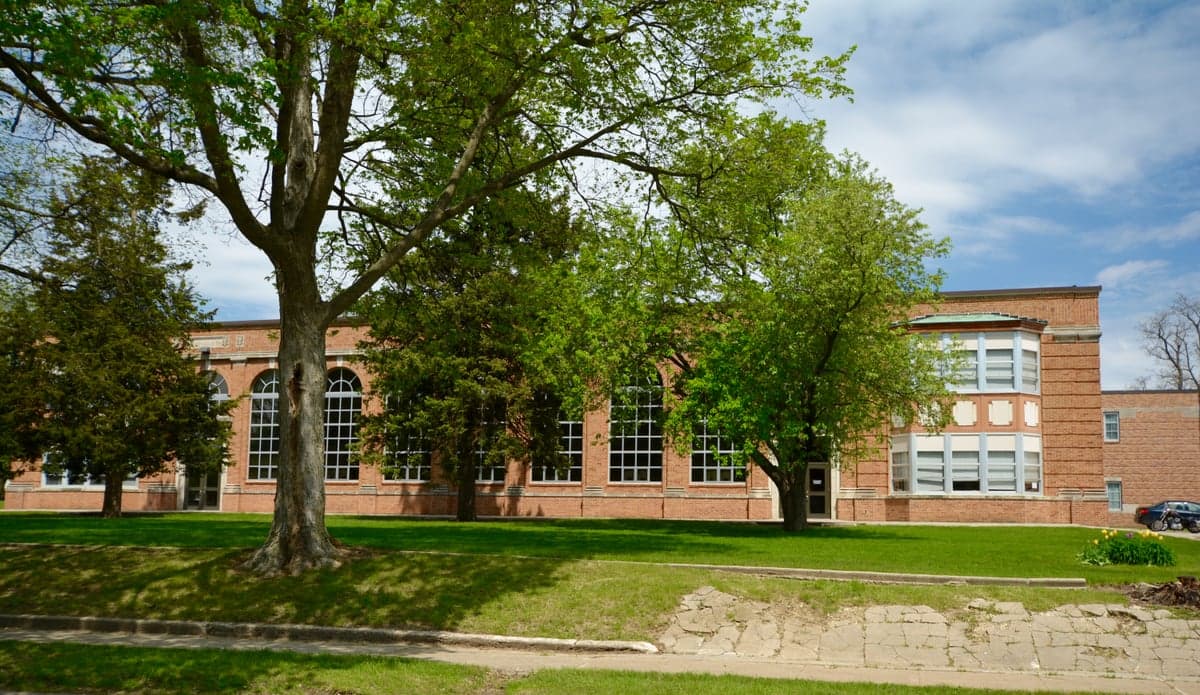
Photo: Wikipedia
Political ClimatePolitical Climate in Newton, IA
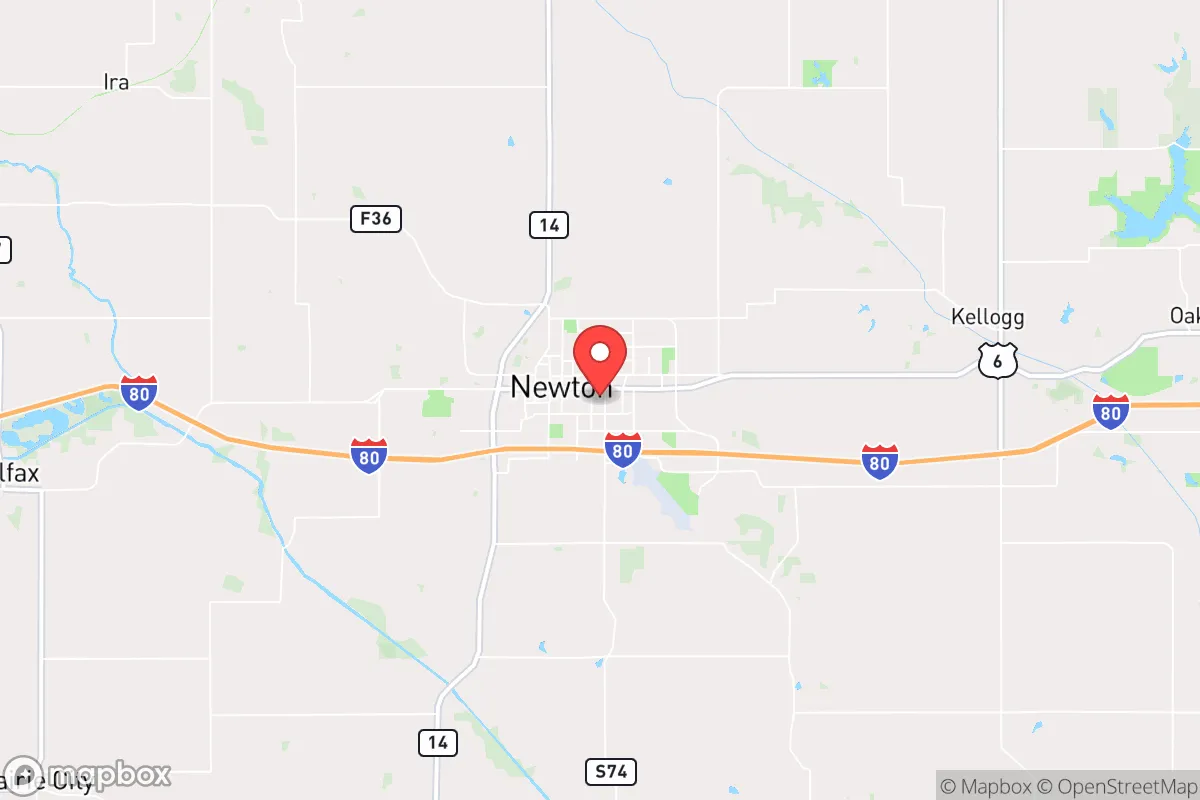
District shown is the primary district for this city’s centroid. Cities may span multiple districts.
Local Political AnalysisPolitical Analysis of Newton, IA
Newton sits in a reliably conservative pocket of Iowa, with a Cook PVI of R+4 that reflects a solid but not overwhelming Republican lean. The town has long been a place where folks value self-reliance and local control, but like many communities in the Midwest, you can feel the political winds shifting. While the county still votes red by comfortable margins, there's been a noticeable uptick in progressive activism over the last few years, especially around school board meetings and city council races. It's not a blue wave by any stretch, but it's enough to make a long-time resident keep a closer eye on local elections.
How it compares
Drive 30 miles east to Grinnell and you'll find a starkly different political landscape — that town's liberal arts college and younger demographic push it noticeably left, with local races often swinging toward progressive candidates. Head west to Pella, and you're back in deep-red territory, where the conservative vote is more unified and vocal. Newton sits in the middle, politically and geographically. The surrounding Jasper County has held steady for Republicans in presidential years, but the city itself has seen a slow creep of progressive ideas, particularly around zoning regulations and public spending. Compared to Des Moines, which is about 45 minutes west and leans heavily Democratic, Newton still feels like a place where common-sense conservatism holds the line — but the line is getting tested.
What this means for residents
For someone who values personal freedoms and limited government, the biggest concern here is the gradual expansion of local ordinances that nibble at property rights and individual choices. Recent debates over mask mandates in city buildings and proposed changes to short-term rental rules have raised eyebrows among folks who remember when Newton's government mostly stayed out of people's business. The school board has become a battleground, with some members pushing for curriculum changes that align with broader progressive trends, while a vocal parent group fights to keep things grounded in traditional values. Property taxes have crept up too, funding projects that not everyone agrees on, and there's a growing sense that the city council is more willing to take cues from state-level progressive groups than from the folks who've lived here for decades.
Looking ahead, the trajectory depends heavily on who shows up to vote in local primaries. The R+4 rating means the area isn't going to flip overnight, but apathy among conservative voters could let a few key races slip to candidates with a different vision for the town. The long-term concern is that Newton could follow the path of other small Iowa cities — like Marshalltown or Ottumwa — where a handful of progressive wins on the city council led to higher fees, more restrictive land-use rules, and a general feeling that the government was getting too big for its britches. For now, the town still feels like a place where a handshake matters more than a hashtag, but keeping it that way means staying engaged and voting in every single election, not just the presidential ones.

State Political ClimatePolitical Climate in Iowa
State Political AnalysisPolitical Environment in the State
Iowa has long been a reliably Republican state in presidential elections, but its political identity is more nuanced than a simple red-state label suggests. The state voted for Donald Trump by 8 points in 2020 and 9 points in 2024, a shift rightward from the 2016 margin, but the real story is a decade-long consolidation of conservative power at the state level, even as some suburban and college-town pockets trend blue. The dominant coalition is a mix of rural, agricultural, and evangelical voters, with a growing libertarian streak that has reshaped the state’s policy landscape.
Urban vs. rural divide
The political map of Iowa is a classic tale of three distinct regions. The Des Moines metro area, including Polk County and the suburbs of Ankeny, West Des Moines, and Waukee, has become a Democratic stronghold, with Polk County voting for Biden by 17 points in 2020 and Harris by 15 in 2024. This is driven by a growing professional class, insurance and finance workers, and younger families. In contrast, the rural counties of northwest Iowa—like Sioux County (home to Orange City and Sioux Center) and Plymouth County (Le Mars)—are among the most Republican in the nation, often voting 70-80% for Trump. The eastern part of the state, including Dubuque and Davenport, is more competitive, with Dubuque County flipping from Obama to Trump to Biden and back to Trump in 2024, reflecting its working-class, Catholic, and union-heavy electorate. The real political battleground is the suburban ring around Des Moines, where fast-growing Ankeny and Waukee have shifted rightward since 2020, driven by families fleeing higher taxes and progressive policies in other states.
Policy environment
Iowa’s policy environment has undergone a dramatic conservative overhaul since 2017. The state now has a flat income tax of 3.8%, set to drop to 3.5% by 2027, and has eliminated the inheritance tax entirely. Property taxes are capped at 2% annual growth for residential properties, a direct check on local government overreach. On education, Iowa passed a universal school choice program in 2023, allowing any family to use state funds for private or homeschool expenses—a major win for parental rights. The state also enacted a six-week abortion ban in 2023, which was upheld by the Iowa Supreme Court in 2024, making it one of the most restrictive in the Midwest. Election integrity measures include strict voter ID laws, a ban on ballot drop boxes, and a shortened absentee voting window. Healthcare policy remains relatively free-market, with no state-run insurance exchange and limited Medicaid expansion. The overall regulatory posture is business-friendly, with right-to-work laws and no state-level minimum wage above the federal floor.
Trajectory & freedom
Iowa is clearly trending toward greater personal freedom in several key areas, but with some concerning caveats. On the positive side, the state passed constitutional carry in 2021, allowing permitless carry of firearms, and has not enacted any red-flag laws. The 2023 school choice law is a landmark expansion of educational freedom, and the flat tax cuts are ongoing. However, the state’s COVID-era emergency powers were a flashpoint: Governor Kim Reynolds’ extended emergency declarations in 2020-2021 were challenged in court, and the legislature has since passed laws limiting a governor’s ability to shut down businesses or mandate vaccines without legislative approval. On medical freedom, Iowa banned vaccine passports for government services and prohibits employers from mandating COVID-19 vaccines as a condition of employment. Property rights remain strong, with no statewide rent control and limited zoning restrictions outside of Des Moines and Iowa City. The trajectory is clearly toward more individual liberty, but the state’s heavy reliance on property taxes for local funding remains a sore point for many homeowners.
Civil unrest & political movements
Iowa has seen relatively little civil unrest compared to coastal states, but there have been notable flashpoints. The 2020 Black Lives Matter protests in Des Moines and Iowa City were largely peaceful, though a few nights of property damage in downtown Des Moines led to a strong police response and subsequent calls for defunding the police—which went nowhere in the state legislature. The most organized political movements are on the right: the Iowa Firearms Coalition is a powerful grassroots force that has successfully blocked any gun control legislation, and the Iowa Parents for Educational Freedom group was instrumental in passing school choice. Immigration politics are relatively quiet, as Iowa has no sanctuary cities and the state passed a law in 2024 requiring local law enforcement to cooperate with ICE. Election integrity remains a hot topic: the 2020 election in Iowa was certified without major controversy, but the state’s Republican-controlled legislature has passed multiple bills tightening voting rules, including a ban on private funding for elections and a requirement for post-election audits. The most visible political movement is the annual Iowa Freedom Summit in Des Moines, which draws conservative activists from across the Midwest.
Projection
Over the next 5-10 years, Iowa is likely to become more conservative, not less. The key demographic driver is in-migration from blue states like Illinois, California, and Minnesota, with many newcomers settling in the Des Moines suburbs of Ankeny, Waukee, and Johnston. These migrants are often families seeking lower taxes, better schools, and more personal freedom, and they tend to vote Republican once they arrive. The rural population is aging and shrinking, but the growth in conservative-leaning suburbs is more than offsetting those losses. The state’s Democratic Party is in disarray, having lost every statewide office and both chambers of the legislature. The only potential countertrend is the growth of Iowa City and Ames, which are college towns that lean heavily Democratic, but their populations are too small to flip the state. Expect continued tax cuts, further school choice expansion, and a hardening of the state’s pro-life and pro-gun laws. A new resident moving in now should expect a state that is firmly conservative, with a government that is actively shrinking its footprint in your life.
For a conservative individual or family considering relocation, Iowa offers a rare combination of low taxes, strong gun rights, educational freedom, and a political culture that respects personal autonomy. The state is not without its challenges—property taxes are high relative to income, and the winters are brutal—but the policy trajectory is unmistakably toward greater liberty. If you’re looking for a place where your vote actually counts and your values are reflected in state law, Iowa is one of the safest bets in the country right now.
* Values derived from national, state, county, city and local statistics and may differ in a specific area. Last updated: 2026-04-23T00:45:57.000Z
Narrative content on this page is AI-generated and may contain mistakes. Verify any details that matter before acting on them.
ReloMaps may earn a commission from affiliate links at no extra cost to you.

