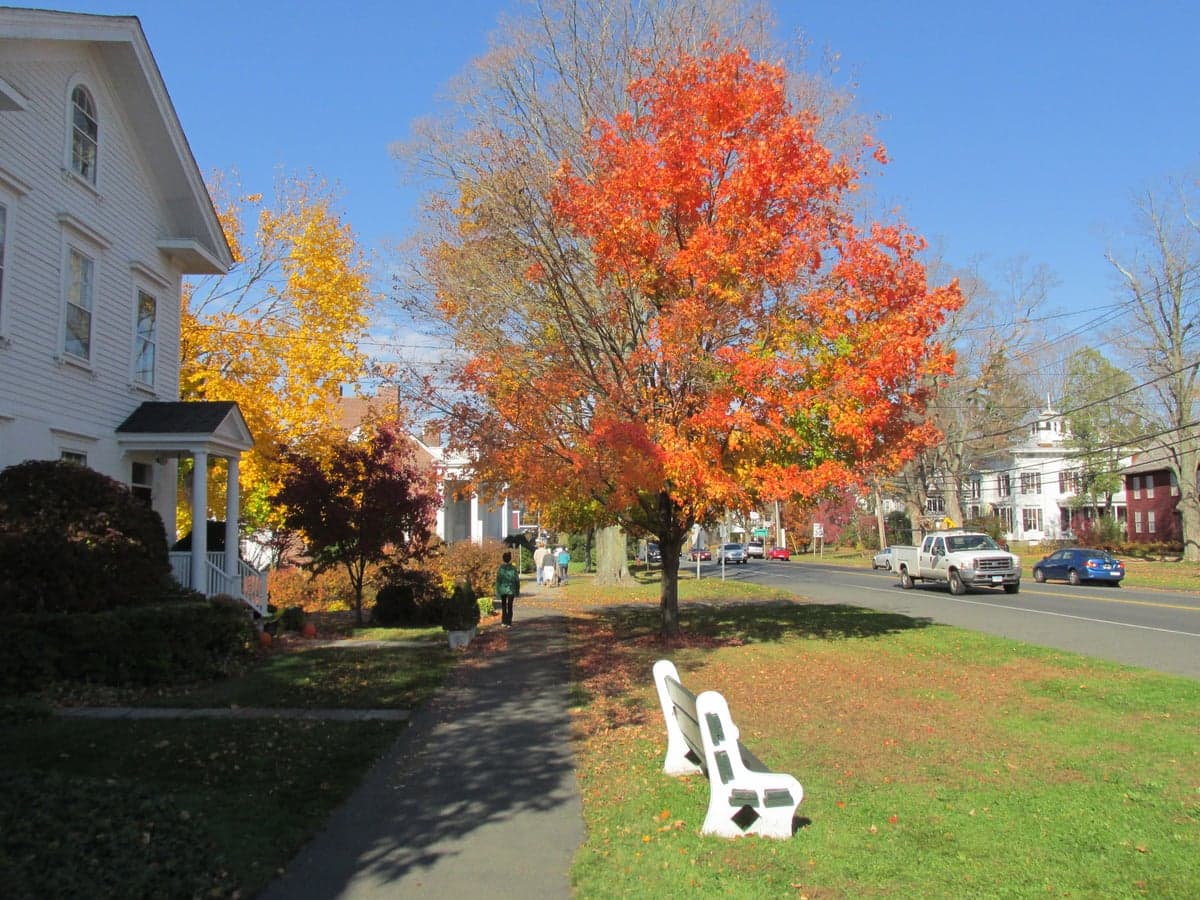
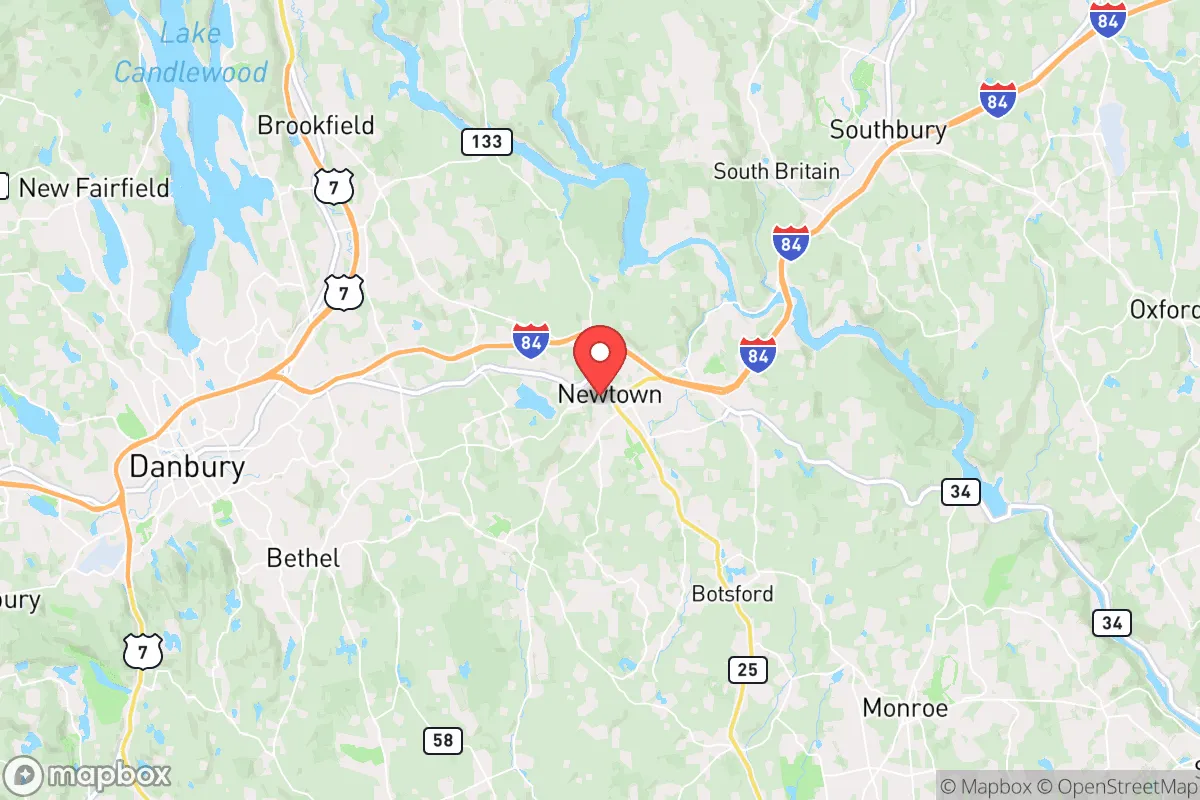
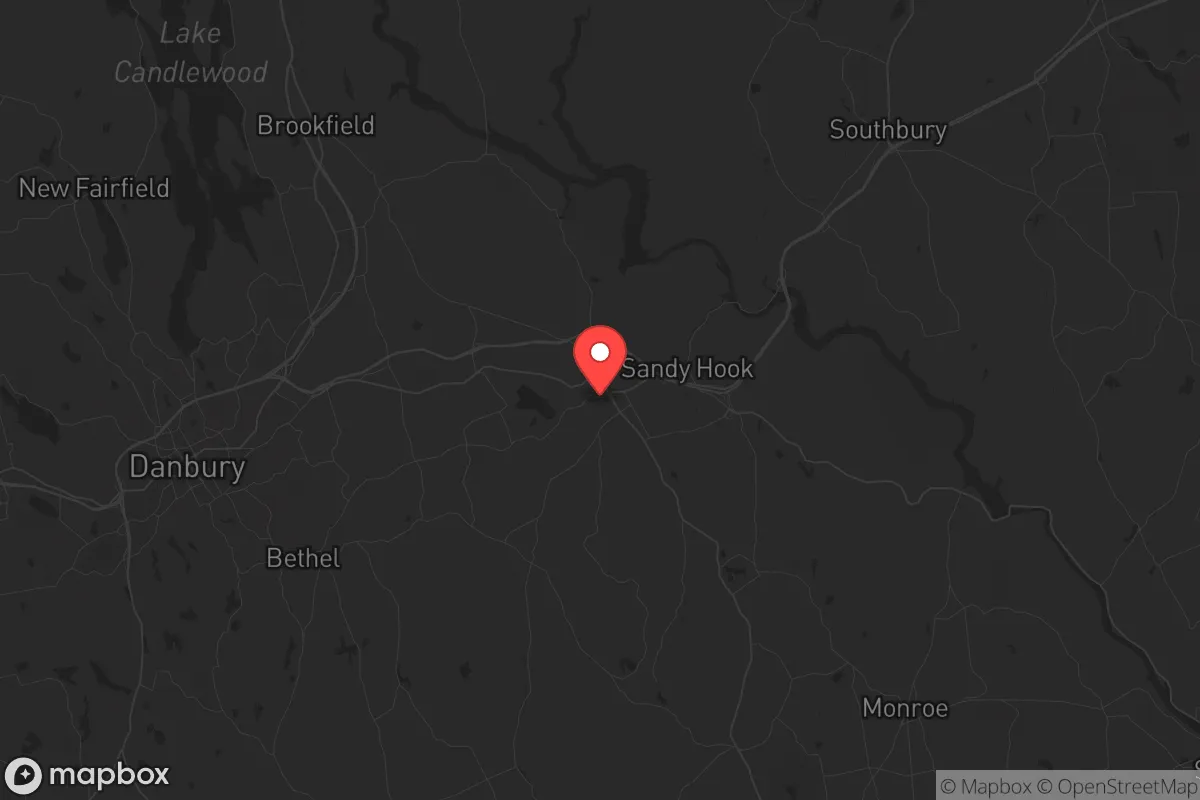
Photo: Wikipedia
Demographics of Newtown, CT
Affluence Level in Newtown, CT
An upper-middle-class area. Household wealth, education levels, and homeownership run ahead of national benchmarks.
People of Newtown, CT
Newtown, Connecticut, is a small, affluent, and predominantly white community of 1,968 residents, characterized by a high degree of educational attainment—62.9% hold a college degree—and a notably low foreign-born population of just 2.9%. The town’s identity is rooted in its historic New England village center, a strong sense of local heritage, and a demographic profile that has remained remarkably stable over decades, with 87.2% of the population identifying as white. This homogeneity, combined with a modest but growing Hispanic community (8.9%) and small East/Southeast Asian (1.7%) and Black (1.4%) populations, makes Newtown a place where tradition and continuity are the dominant cultural forces.
How the city was settled and grew
Newtown was founded in 1705 as a farming community, part of a wave of English Puritan settlement spreading inland from coastal Connecticut. The original settlers were primarily of English descent, drawn by the promise of fertile land and religious autonomy. The town’s historic core, Main Street and the Borough of Newtown, was the initial hub, where families built homes, churches, and the town’s first meeting house. As the population grew through the 18th and 19th centuries, distinct neighborhoods emerged. Dodgingtown, settled by farmers seeking more remote land, became a rural enclave of English-descended families. Hawleyville, a later 19th-century hamlet, grew around the railroad and attracted a small number of Irish and Italian laborers who worked on the tracks and in local mills. These groups, however, remained a minor presence, and Newtown’s population remained overwhelmingly of British Protestant stock through the early 20th century. The town’s growth was slow and steady, driven by agriculture and small-scale manufacturing, with no major industrial boom to attract large waves of foreign immigrants.
Modern era (post-1965)
The post-1965 era, marked by the Hart-Cellar Act and broader suburbanization, had a muted impact on Newtown compared to many other Connecticut towns. The town did not experience a significant influx of new immigrant groups. Instead, domestic in-migration from other parts of Connecticut and the New York metropolitan area became the primary driver of population change. These new residents, overwhelmingly white and college-educated, were drawn by Newtown’s excellent public schools, rural character, and proximity to employment centers like Danbury and Fairfield County. The neighborhood of Sandy Hook, a village within Newtown, absorbed much of this growth, evolving from a small mill village into a suburban bedroom community with new single-family homes. Taunton, another historic district, also saw infill development, attracting families seeking larger lots and a more secluded setting. The Hispanic population, now at 8.9%, began to grow in the 1990s and 2000s, largely concentrated in the more affordable housing stock near the Newtown Village area and along the Route 25 corridor, often working in service, landscaping, and construction jobs. The East/Southeast Asian community (1.7%) and Black population (1.4%) remain very small, with no single neighborhood emerging as a distinct ethnic enclave; these residents are dispersed throughout the town, primarily in Sandy Hook and the Borough.
The future
Newtown’s demographic trajectory points toward continued stability rather than dramatic change. The town’s high housing costs, limited rental stock, and lack of major employers will likely keep overall growth slow. The white population share, while still dominant, may continue a very gradual decline as the Hispanic community grows, both through natural increase and continued in-migration of families seeking better schools and a safe environment. The East/Southeast Asian and Black populations are expected to remain small, as Newtown does not have the job base or cultural infrastructure to attract larger numbers. The town is not tribalizing into distinct ethnic enclaves; rather, it is slowly becoming slightly more diverse in a diffuse, assimilated manner. The biggest demographic pressure will likely come from aging residents and the challenge of attracting younger families, who may be priced out by the high cost of living. The next 10-20 years will likely see Newtown remain a predominantly white, highly educated, and politically moderate-to-conservative community, with a modestly growing Hispanic minority that is increasingly integrated into the town’s social and civic life.
For a prospective resident, Newtown offers a stable, safe, and historically rooted environment where demographic change is gradual and assimilation is the norm. It is not a place of rapid transformation or ethnic clustering, but rather a community where tradition holds strong, and new arrivals—whether from other parts of the U.S. or abroad—are expected to integrate into an established, predominantly white, and highly educated social fabric. This makes it an attractive option for those seeking continuity and a high quality of life, but less so for those looking for a diverse, multicultural, or rapidly evolving urban environment.

* Values derived from national, state, county, city and local statistics and may differ in a specific area. Last updated: 2026-04-19T07:38:50.000Z
Narrative content on this page is AI-generated and may contain mistakes. Verify any details that matter before acting on them.
ReloMaps may earn a commission from affiliate links at no extra cost to you.

