
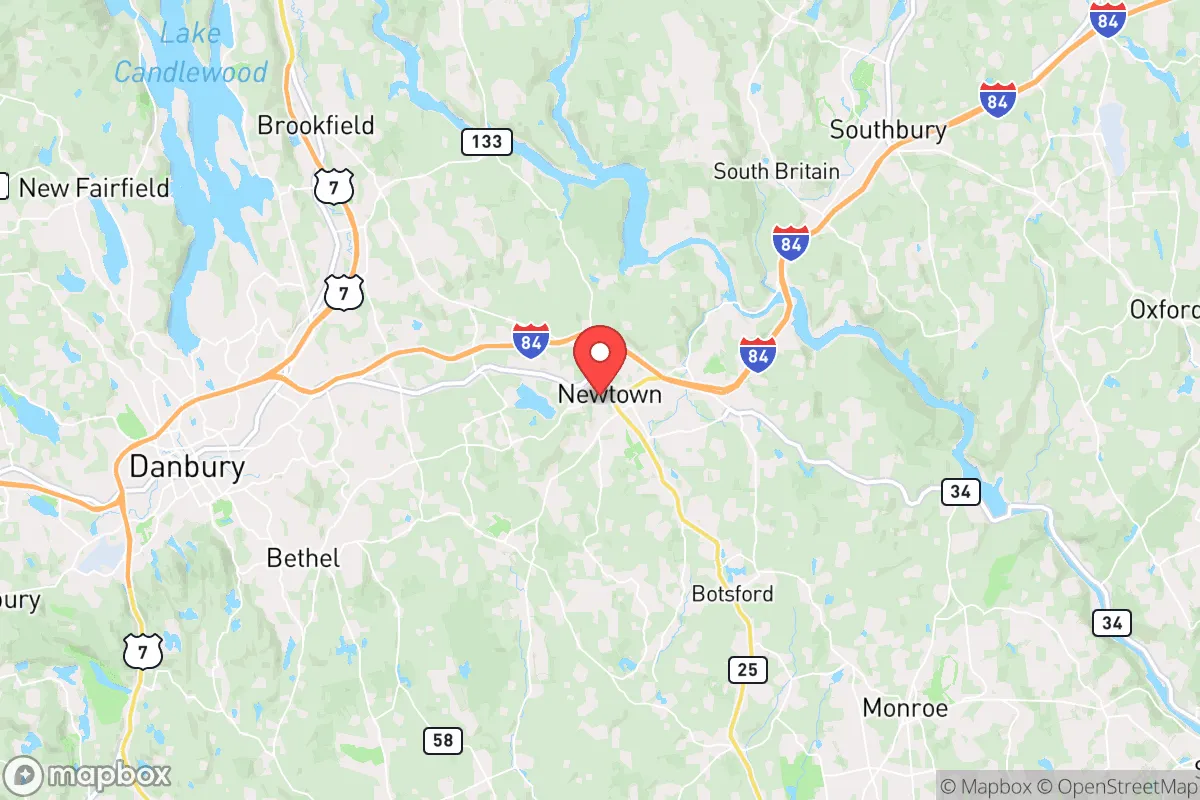
Photo: Wikipedia
Personal Sovereignty in Newtown, CT
Viable for self-reliance. Generally workable, though some barriers may limit total independence.
What does Personal Sovereignty tell us?
Personal Sovereignty measures your capacity for self-reliance and independence with minimal government friction. Higher scores mean fewer barriers between you and the way you want to live... but it assumes you have the space you need and good neighbors.
What does this tell us?
Personal Sovereignty measures your capacity for self-reliance and independence with minimal government friction. Higher scores mean fewer barriers between you and the way you want to live... but it assumes you have the space you need and good neighbors.
State Policy
Energy independence: Importer (5% of energy produced in-state)
Personal Liberty
Homesteading

Personal Liberty Analysis
For the liberty-minded individual or family evaluating Newtown, Connecticut, the personal sovereignty picture is a study in contradictions: a town with deep-rooted traditions of self-reliance and community resilience, operating under the increasingly heavy hand of a state government that has steadily eroded personal freedoms. While Newtown itself retains a strong character of local independence—evident in its land-use patterns and civic life—the legal and regulatory framework of Connecticut imposes significant constraints on gun rights, tax burdens, and parental autonomy that cannot be ignored. This analysis breaks down the specific factors that determine how much control you truly have over your life, property, and family in this Fairfield County town.
Tax burden and regulatory posture: the cost of living free
Connecticut’s tax posture is one of the most aggressive in the nation, and Newtown residents feel it directly. The state imposes a progressive income tax with a top marginal rate of 6.99%, a 6.35% sales tax, and some of the highest property taxes in the country. Newtown’s mill rate hovers around 30-32 mills, meaning a home assessed at $400,000 carries an annual property tax bill of roughly $12,000 to $13,000. This is a heavy, recurring drain on personal sovereignty—every dollar sent to Hartford is a dollar you cannot allocate to your own preparedness, savings, or family. The regulatory environment is equally burdensome: Connecticut has a statewide building code that is among the most stringent in New England, and local zoning in Newtown is administered by a Planning and Zoning Commission that requires permits for most structural changes, including sheds over 200 square feet, fences over four feet, and any new driveway access. The state also mandates a 1% real estate conveyance tax on sellers, plus an additional 0.75% for properties over $800,000, which can lock in place those who might otherwise relocate to a freer jurisdiction. For the prepper, this means every improvement to your property—whether a root cellar, a greenhouse, or a reinforced safe room—must navigate a permitting process that invites government scrutiny and delay.
Self-defense and gun law specifics: navigating a restrictive state
For the survivalist, Connecticut’s firearm laws are a primary concern and a significant limitation on personal sovereignty. The state requires a permit to purchase any handgun or long gun, and that permit demands an 8-hour safety course, fingerprinting, a background check through the state’s system, and a $70 fee (plus local fees that can push it over $100). The wait for a permit can stretch 8-12 weeks in some jurisdictions. Once you have a permit, you face a state-level assault weapons ban that outlaws many common semi-automatic rifles by name and feature, including the AR-15 platform. Magazine capacity is capped at 10 rounds. The state also has a "duty to retreat" law in public spaces, meaning you cannot use deadly force unless you have no safe avenue of escape—a stark contrast to stand-your-ground states. Newtown itself is not a "Second Amendment sanctuary" town; the local police department strictly enforces state law. For the prepper, this means your defensive capabilities are legally limited to handguns with 10-round magazines, bolt-action or lever-action rifles, and shotguns. Stockpiling ammunition is legal, but you cannot buy it online without having it shipped to a licensed dealer for a background check. The practical takeaway: if self-defense is a core pillar of your sovereignty plan, Connecticut is a hostile environment, and Newtown offers no local buffer against state-level restrictions.
Self-reliance and homesteading viability: lot sizes, zoning, and off-grid feasibility
Newtown’s rural character offers some genuine advantages for the self-reliant. The town’s zoning regulations require minimum lot sizes of one to two acres in most residential zones, with some areas requiring three acres. This means you can own enough land for a substantial garden, a small orchard, and even a few chickens (allowed by right on lots of one acre or more, with a limit of six hens and no roosters). Beekeeping is permitted with registration. However, the state’s building code and local health regulations make true off-grid living nearly impossible. Connecticut requires all habitable dwellings to be connected to a public water supply or a permitted private well, and wastewater must go to a public sewer or a state-approved septic system. Solar panels are allowed, but net metering rules require interconnection with the grid; you cannot legally disconnect from the utility. Rainwater collection is permitted for non-potable uses like irrigation, but you cannot use it for drinking without a permit and treatment system. Livestock beyond chickens—such as goats, sheep, or pigs—is restricted in most residential zones and requires a special permit from the Planning and Zoning Commission. For the prepper seeking true independence, Newtown offers a decent foundation in land and gardening potential, but the regulatory framework prevents the kind of complete self-sufficiency that is possible in less restrictive states like New Hampshire or Maine.
Personal liberties: parental rights, medical autonomy, speech, and property
On the spectrum of personal liberties, Connecticut leans heavily toward state authority over individual and parental rights. The state has a mandatory vaccination law for school attendance, with no philosophical exemption—only medical exemptions are recognized. During the COVID-19 pandemic, Connecticut was among the states with the longest-lasting school mask mandates and vaccine requirements for healthcare workers. Parental rights in education are limited: the state has a comprehensive sex education mandate that includes LGBTQ+ topics, and parents cannot opt their children out of specific lessons—only the entire curriculum. Medical autonomy is similarly constrained: Connecticut has a "right-to-die" law for terminally ill adults, but it also has some of the strictest COVID-19 public health orders in the Northeast. On property rights, the state’s "blue laws" restrict Sunday sales of certain items, and the state’s Department of Energy and Environmental Protection (DEEP) has broad authority over wetlands and watercourses, which can severely limit what you can do on your own land if you have a stream, pond, or marshy area. Free speech is protected under the First Amendment, but Connecticut has a "hate speech" statute that can be used to prosecute certain types of expression, and the state has a history of aggressive enforcement of campaign finance and lobbying laws that can chill political activism. For the liberty-minded individual, Newtown offers a community that respects privacy and neighborly non-interference, but the state government in Hartford consistently asserts its authority over personal and parental decisions.
In the broader context of the Northeast, Newtown represents a middle ground—more freedom than the urbanized, heavily regulated towns of lower Fairfield County, but far less sovereignty than rural towns in New Hampshire, Vermont, or Maine. The town’s large lots, strong community networks, and rural zoning provide a foundation for self-reliance, but the state’s tax burden, gun laws, and regulatory reach impose significant limits on personal autonomy. For the survivalist or prepper who values independence above all, Newtown is a compromise: you can have a garden, a workshop, and a tight-knit community, but you will be paying heavily for the privilege and operating within a legal framework that restricts your ability to defend yourself, homeschool without interference, or live entirely off the grid. If your priority is maximum personal sovereignty, you would be better served looking north to the free states of New England. But if your circumstances require you to stay in Connecticut, Newtown is one of the better options for preserving a measure of independence within a system that is fundamentally hostile to it.

* Values derived from national, state, county, city and local statistics and may differ in a specific area. Last updated: 2026-04-19T07:38:50.000Z
Narrative content on this page is AI-generated and may contain mistakes. Verify any details that matter before acting on them.
ReloMaps may earn a commission from affiliate links at no extra cost to you.

