Photo: Wikipedia
Political ClimatePolitical Climate in Newtown, CT
District shown is the primary district for this city’s centroid. Cities may span multiple districts.
Local Political AnalysisPolitical Analysis of Newtown, CT
Newtown, Connecticut, has a Cook PVI of D+3, meaning it leans slightly Democratic in presidential elections, but that number doesn’t tell the whole story for anyone who’s lived here a while. The town has a deep-rooted independent streak, and a lot of us remember when it was a reliably red or purple area, especially in local races. Over the last decade or so, the political center of gravity has shifted left, driven largely by newcomers from New York and by national trends that have made even local school board and land use meetings feel like proxy battles for cable news. The trajectory is concerning if you value limited government and local control, because the pressure to align with progressive state mandates is constant.
How it compares
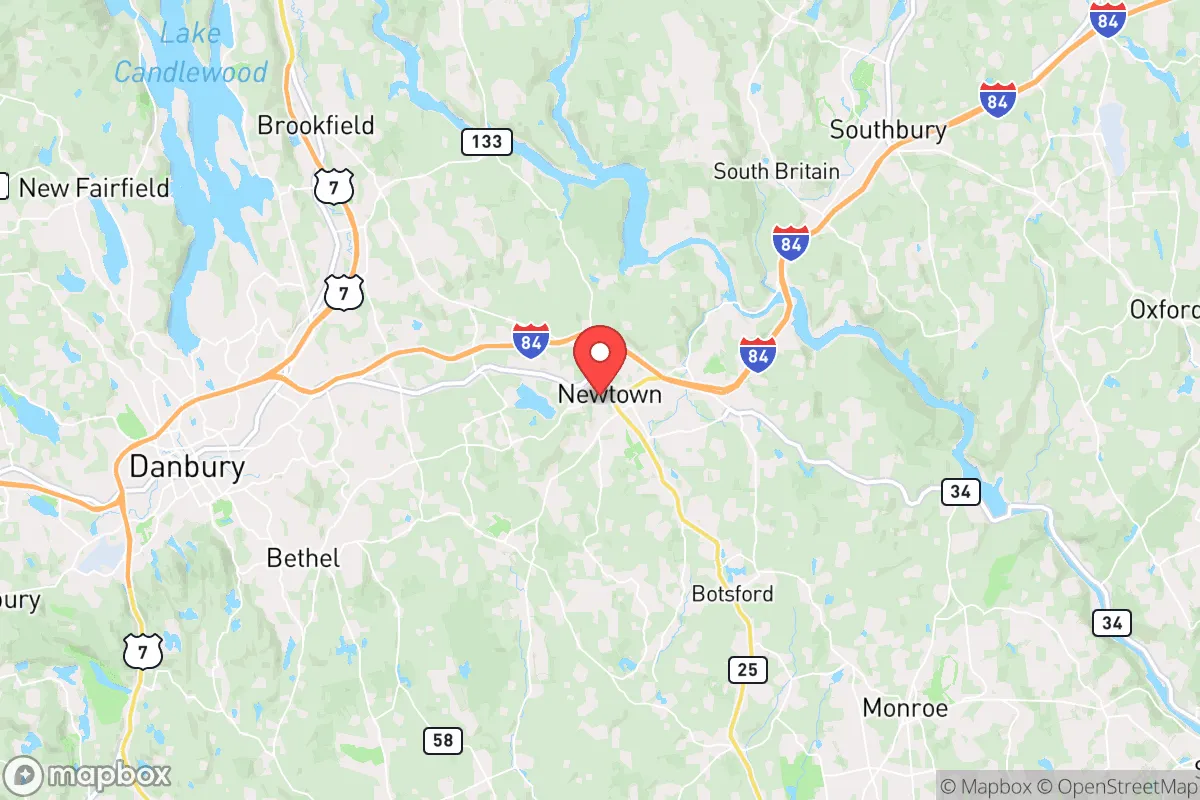
If you drive ten minutes south to Danbury, you’ll find a more diverse, working-class city that still votes reliably Democratic but with a grittier, less ideological feel. Head north or west into Brookfield, New Milford, or Roxbury, and you’re in towns that are noticeably more conservative—places where the Second Amendment is still a given and property tax caps are a sacred cow. Newtown sits right in the middle, politically and geographically. It’s not as deep blue as Westport or New Canaan down on the Gold Coast, but it’s no longer the kind of place where a Republican can win a Board of Selectmen seat without a serious fight. The contrast with surrounding towns is stark: we get the same Hartford mandates on education, energy, and land use, but our local leadership is more willing to go along with them than our neighbors are.
What this means for residents
For a family or a small business owner, the practical effect of this shift is a slow but steady creep of government overreach into daily life. Hartford’s push for electric vehicle mandates, regional school equity funding, and strict affordable housing quotas (like the 8-30g law) all land harder here than they do in towns that fight back. You’ll see it in your property tax bill, in the increasing number of zoning variances granted for multi-family developments, and in the school curriculum debates that now dominate PTA meetings. The town’s leadership has become more receptive to state-level progressive priorities, which means less local discretion on things like spending, land use, and even public safety policies. If you value the right to make decisions for your family without a state bureaucrat’s sign-off, that’s a real concern.
What sets Newtown apart culturally
Despite the political drift, Newtown still has a strong civic culture that resists the worst excesses of progressive overreach. The town’s volunteer fire departments, the active sports leagues, and the fierce independence of the farming families in the Sandy Hook and Hawleyville sections all act as a brake on the most aggressive policy changes. You won’t see the kind of performative activism you get in the more affluent shoreline towns. But the long-term trend is clear: as the state continues to centralize power and as the local electorate becomes more transient and less rooted, the old Newtown—the one that prided itself on minding its own business and keeping government small—is fading. If you’re considering a move here, understand that the political climate is in flux, and the direction it’s heading is toward more regulation, higher taxes, and less local autonomy. It’s still a great place to raise a family, but you’ll need to stay engaged if you want to keep it that way.

State Political ClimatePolitical Climate in Connecticut
State Political AnalysisPolitical Environment in the State
Connecticut has shifted from a classic swing state to a reliably blue stronghold over the past two decades, with Democrats now holding every statewide office and supermajorities in both legislative chambers. The state voted for Hillary Clinton by 14 points in 2016, Joe Biden by 20 points in 2020, and Kamala Harris by roughly 16 points in 2024, a trajectory that reflects the consolidation of suburban and urban progressive coalitions. For a conservative considering relocation, the reality is that Connecticut’s political culture is dominated by a well-funded, activist-driven Democratic machine that has steadily tightened its grip on policy, taxation, and personal freedoms.
Urban vs. rural divide
The political map of Connecticut is a tale of three distinct regions. The southwestern corner, anchored by Stamford, Greenwich, and Norwalk, is the engine of Democratic dominance—these wealthy, highly educated suburbs of New York City vote 65-70% Democratic and supply the bulk of campaign cash and activist energy. The state’s largest city, Bridgeport, is a Democratic stronghold where machine politics and high turnout for progressive candidates are the norm. In contrast, the eastern half of the state—places like Killingly, Plainfield, and Thompson—votes reliably Republican, often by 20-30 point margins, but these rural towns lack the population to counterbalance the metro areas. The Hartford metro area, including the capital city itself and its inner-ring suburbs like West Hartford, is solidly blue, while the New Haven area, home to Yale University, is a progressive bastion that drives left-wing policy on everything from zoning to criminal justice. The only real political outliers are a handful of exurban towns like Litchfield and Washington, where moderate Republicans can still win local races, but even these are trending blue as wealthy New York transplants move in.
Policy environment
Connecticut’s policy environment is defined by high taxes, heavy regulation, and a government that actively expands its reach into daily life. The state has the highest property tax burden in the nation, with effective rates averaging 2.1% of home value, and a progressive income tax that tops out at 6.99% on income over $500,000. Sales tax is 6.35%, and there’s a 1% surcharge on prepared food and beverages. On education, the state mandates a “science of reading” curriculum but also imposes strict diversity, equity, and inclusion (DEI) requirements on public schools, including mandatory ethnic studies and LGBTQ+ inclusive curricula. Healthcare is heavily regulated, with a public option for health insurance and a state-run paid family and medical leave program funded by a 0.5% payroll tax on all workers. Election laws are among the most permissive in the country: no-excuse absentee voting, same-day voter registration, and automatic voter registration at the DMV. The state also has a strict assault weapons ban, a 10-round magazine limit, and a permit-to-purchase requirement for handguns that can take months to process. For conservatives, the policy environment feels like a slow-motion takeover of personal autonomy, with the state inserting itself into everything from how you heat your home (a proposed ban on natural gas in new construction) to how you raise your kids.
Trajectory & freedom
Connecticut is becoming less free by almost any measure, and the trend is accelerating. In 2023, the legislature passed a sweeping gun control package (HB 6667) that expanded the state’s “assault weapon” ban, raised the purchasing age to 21 for all firearms, and required microstamping technology on new handguns—a mandate that effectively bans many popular models. On parental rights, the state passed a law in 2022 (SB 2) that prohibits school districts from requiring parental notification when a child changes their gender identity or pronouns, overriding local control. In 2024, the legislature passed a “climate change” bill that mandates net-zero emissions by 2040, effectively banning new fossil fuel infrastructure and forcing homeowners to replace oil and gas heating systems with heat pumps. Property rights have been eroded by a 2023 law that allows municipalities to impose rent control and “just cause” eviction requirements, even in single-family homes. The state also expanded its paid leave program in 2024 to cover 12 weeks for “any reason,” including mental health days, and increased the payroll tax to fund it. On the positive side for conservatives, Connecticut has no state-level “sanctuary” law for illegal immigration, though several cities, including New Haven and Hartford, have declared themselves sanctuary cities and limit cooperation with ICE. The overall trajectory is clear: the state is using its supermajority to push a progressive agenda that leaves little room for individual choice, especially on guns, education, and energy.
Civil unrest & political movements
Connecticut has seen relatively little large-scale civil unrest compared to other states, but there are persistent flashpoints. The Black Lives Matter protests in 2020 were large and sustained in Hartford, New Haven, and Bridgeport, with some turning violent—including looting in downtown Hartford. Since then, the state has seen a rise in organized progressive activism, particularly around housing policy (the “YIMBY” movement pushing for upzoning in suburbs) and environmental justice. On the right, the Second Amendment sanctuary movement has been active, with over 30 towns passing resolutions declaring themselves “Second Amendment sanctuaries” in response to the 2023 gun law, though these resolutions have no legal force. The 2020 election integrity controversy was less intense here than in other states, but there were credible reports of absentee ballot irregularities in Bridgeport during the 2023 municipal elections, leading to a court-ordered redo of the Democratic primary. Immigration politics are a simmering issue: while the state has no sanctuary law, the influx of migrants from New York City has strained resources in towns like Danbury and Norwalk, where hotels have been converted into emergency shelters. The most visible flashpoint for a new resident would be the constant tension between local control and state mandates, particularly around school curriculum and zoning—towns like Fairfield and Ridgefield have fought state efforts to force higher-density housing in single-family neighborhoods.
Projection
Over the next 5-10 years, Connecticut will likely become more progressive and less free for conservatives. The demographic trends are unfavorable: the state’s population is aging, with a net outflow of younger families to lower-tax states like Florida and Texas, while the remaining population is increasingly concentrated in the blue-voting metro areas. The Democratic supermajority is unlikely to be broken, as the state’s gerrymandered legislative districts and the dominance of the New York City media market make it nearly impossible for Republicans to win statewide. Expect more gun control, including a likely ban on “ghost guns” and a push for a state-level “red flag” law with no due process protections. The paid leave program will expand, and the state will likely pass a single-payer healthcare system or a public option that crowds out private insurance. On education, expect mandatory “ethnic studies” requirements and a ban on charter schools. The only wild card is the state’s fiscal crisis: Connecticut has the highest debt per capita in the nation and a massive unfunded pension liability, which could force tax increases that accelerate the exodus of high earners. For a conservative moving in now, the realistic expectation is that the state will continue to tighten its grip on personal freedoms, and the political environment will feel increasingly hostile to traditional values.
Bottom line for a new resident: If you value low taxes, gun rights, parental control over education, and the freedom to make your own choices about energy and healthcare, Connecticut is a tough place to call home. The state’s political culture is dominated by a progressive establishment that sees government as the solution to every problem, and the trajectory is toward more regulation, higher taxes, and less individual liberty. You can find conservative-friendly enclaves in the rural east and northwest, but you’ll be fighting an uphill battle against a state government that is increasingly indifferent to your values. If you’re moving here for a job or family, be prepared to pay a premium for your principles—and to watch the state get more progressive every election cycle.
* Values derived from national, state, county, city and local statistics and may differ in a specific area. Last updated: 2026-04-19T07:38:50.000Z
Narrative content on this page is AI-generated and may contain mistakes. Verify any details that matter before acting on them.
ReloMaps may earn a commission from affiliate links at no extra cost to you.

