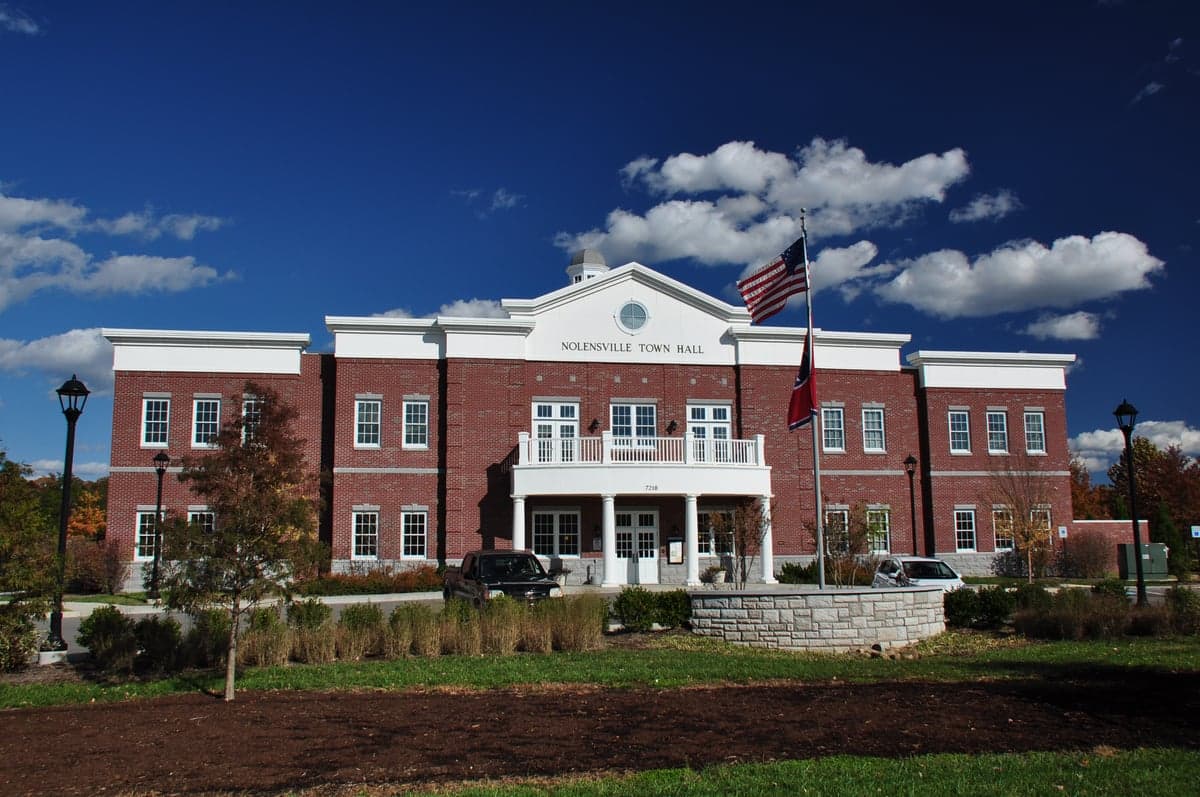
Photo: Wikipedia
Personal Sovereignty in Nolensville, TN
Viable for self-reliance. Generally workable, though some barriers may limit total independence.
What does Personal Sovereignty tell us?
Personal Sovereignty measures your capacity for self-reliance and independence with minimal government friction. Higher scores mean fewer barriers between you and the way you want to live... but it assumes you have the space you need and good neighbors.
What does this tell us?
Personal Sovereignty measures your capacity for self-reliance and independence with minimal government friction. Higher scores mean fewer barriers between you and the way you want to live... but it assumes you have the space you need and good neighbors.
State Policy
Energy independence: Importer (25% of energy produced in-state)
Personal Liberty
Homesteading

Personal Liberty Analysis
Nolensville, Tennessee, offers a notably strong environment for personal sovereignty, particularly when measured against the accelerating erosion of individual freedoms seen in many other parts of the country. This Williamson County community sits within a state that has deliberately positioned itself as a refuge from federal overreach and progressive state-level mandates, making it a serious consideration for those prioritizing autonomy, self-reliance, and minimal government intrusion. For the survivalist or prepper mindset, Nolensville provides a strategic balance—close enough to Nashville’s infrastructure for supply runs and employment, yet far enough to avoid the worst of urban governance and its accompanying restrictions on personal liberty.
Tax burden and regulatory posture in Tennessee
Tennessee’s tax structure is a major draw for those seeking to keep more of their own resources. The state has no personal income tax on wages, a policy that directly protects your earnings from government seizure. Property taxes in Williamson County, while higher than some rural Tennessee counties, remain moderate by national standards—typically around 0.6% to 0.8% of assessed value, which is far below the burdens found in states like New York, California, or Illinois. Sales tax is the primary revenue source, hovering near 9.75% in the area, but this is a consumption-based tax you can partially control through your spending habits. The regulatory posture in Nolensville and Williamson County leans heavily toward business-friendly, with minimal red tape for home-based enterprises, small-scale manufacturing, or trades. Zoning is present but not oppressive; the county generally respects property rights and avoids the kind of overreaching land-use restrictions common in more progressive jurisdictions. For the prepper, this means fewer hurdles to establishing workshops, storage facilities, or even small-scale agricultural operations on your property.
Self-defense rights and gun law specifics
Tennessee is a constitutional carry state, meaning no permit is required to carry a firearm openly or concealed for any law-abiding adult 21 or older. This is a bedrock protection of personal sovereignty—the state trusts you to defend yourself without asking permission first. Nolensville itself has no local ordinances that further restrict firearms, and Williamson County is generally supportive of Second Amendment rights. Stand-your-ground laws are in full effect, with no duty to retreat if you are in a place you have a legal right to be. The state also preempts local governments from enacting stricter gun laws than state statute, so you won’t see the kind of municipal bans or magazine capacity limits that plague cities in blue states. For those building a defensive capability, Tennessee also allows the possession of NFA items (suppressors, short-barreled rifles) with federal compliance, and private sales between individuals remain legal without background checks. The legal climate here is one of the most favorable in the Southeast for those who view personal armament as a non-negotiable aspect of liberty.
Self-reliance and homesteading viability in Nolensville
While Nolensville has seen rapid suburban development, pockets of land still exist that support a self-reliant lifestyle. Lot sizes in the older parts of town and unincorporated Williamson County can range from 1 to 5 acres, with some larger parcels available on the outskirts. Zoning in the county allows for livestock, including chickens, goats, and even cattle on sufficient acreage, though homeowners’ associations in newer subdivisions often impose restrictions—so careful property selection is critical. The soil in Middle Tennessee is generally fertile, supporting vegetable gardens, fruit trees, and small orchards. Water access is reliable via municipal systems in town, but many rural properties have wells, giving you independence from city water. Off-grid feasibility is moderate: solar is viable given the region’s sun exposure, but the local utility, Middle Tennessee Electric, has net metering policies that are reasonable but not exceptionally generous. Rainwater collection is legal and encouraged for non-potable uses. The biggest challenge for full homesteading is the rising land prices in Williamson County, but for those willing to look just outside the town limits—into Rutherford or Marshall counties—affordable acreage is still available. The regulatory environment does not actively hinder self-sufficiency, but you must verify HOA covenants before purchasing.
Personal liberties: parental rights, medical autonomy, speech, and property
Tennessee has been at the forefront of protecting parental rights, with state law affirming that parents have the fundamental right to direct the upbringing, education, and healthcare of their children. This means no forced medical mandates for school attendance, no curriculum that undermines parental authority, and a legal framework that pushes back against federal overreach in education. Medical autonomy is similarly respected: Tennessee does not have a state-level vaccine passport system, and the legislature has passed laws prohibiting discrimination based on vaccination status. The state also protects conscience rights for medical practitioners and patients, limiting the kind of compelled treatment seen elsewhere. Free speech is robustly protected, with no hate speech laws that chill political or religious expression. Property rights are strong, with eminent domain limited to genuine public use and compensation requirements that are among the fairest in the nation. The state has also passed laws to protect landowners from frivolous nuisance lawsuits related to agricultural operations. For the prepper, this legal environment means you can stockpile supplies, store food, and maintain defensive capabilities without fear of government seizure or regulatory harassment—provided you are not violating specific fire or safety codes.
Overall, Nolensville sits in a sweet spot for personal sovereignty. It offers the protections of Tennessee’s state-level constitutional carry, no income tax, and strong parental rights, while being far enough from Nashville’s urban governance to avoid the worst of progressive overreach. The trade-off is that Williamson County is affluent and growing, which brings higher property values and some HOA restrictions, but for those willing to navigate those factors, the area provides a legal and cultural environment that respects individual liberty. Compared to states like California, New York, or even Virginia, Nolensville is a bastion of freedom. For the strategic relocator with a survivalist mindset, it represents a viable base of operations—close enough to resources, far enough from tyranny, and governed by a state that still remembers what the Tenth Amendment means.

* Values derived from national, state, county, city and local statistics and may differ in a specific area. Last updated: 2026-05-01T11:22:18.000Z
Narrative content on this page is AI-generated and may contain mistakes. Verify any details that matter before acting on them.
ReloMaps may earn a commission from affiliate links at no extra cost to you.

