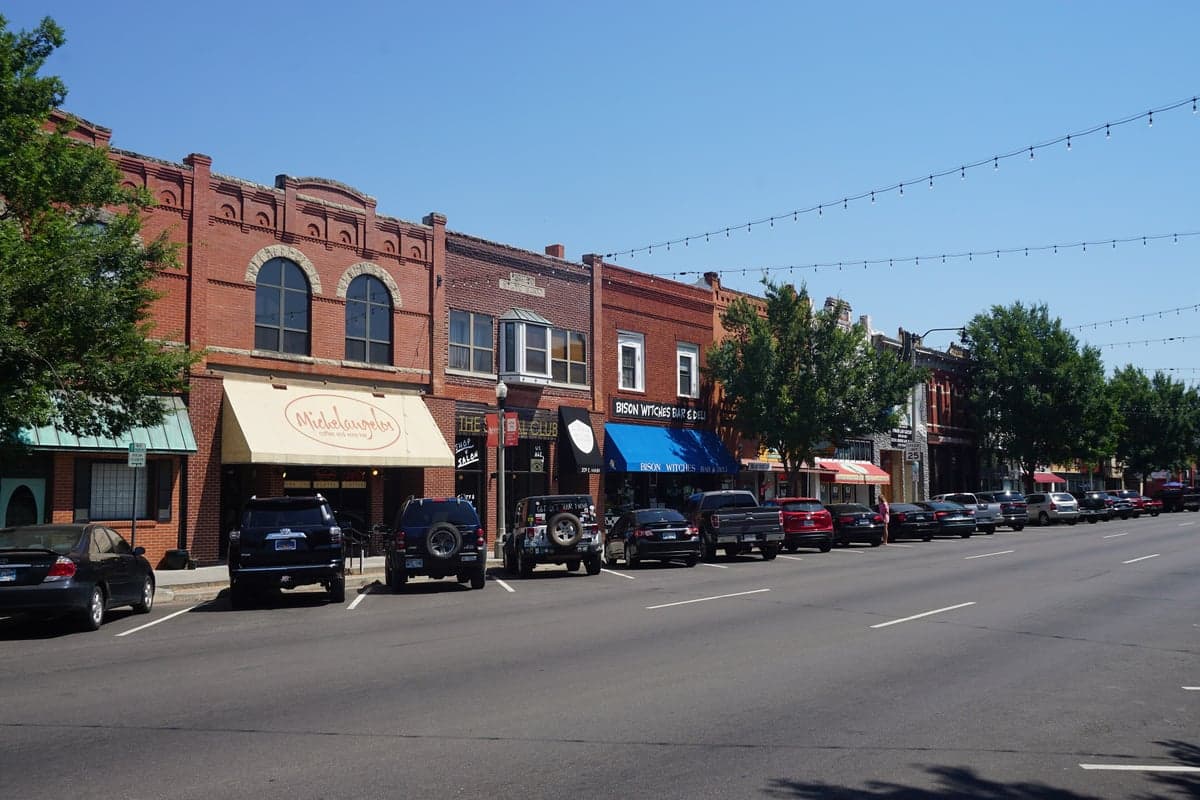
Photo: Wikipedia
Personal Sovereignty in Norman, OK
Strong independent fundamentals that actively favor personal liberty and low regulation.
What does Personal Sovereignty tell us?
Personal Sovereignty measures your capacity for self-reliance and independence with minimal government friction. Higher scores mean fewer barriers between you and the way you want to live... but it assumes you have the space you need and good neighbors.
What does this tell us?
Personal Sovereignty measures your capacity for self-reliance and independence with minimal government friction. Higher scores mean fewer barriers between you and the way you want to live... but it assumes you have the space you need and good neighbors.
State Policy
Energy independence: Net exporter (180% of energy produced in-state)
Personal Liberty
Homesteading

Personal Liberty Analysis
Norman, Oklahoma offers a mixed but generally favorable environment for personal sovereignty, where state-level protections often counterbalance local progressive policies. As a college town anchored by the University of Oklahoma, Norman’s political culture leans left relative to the rest of the state, but Oklahoma’s strong constitutional framework—including a Republican trifecta in state government and a deeply embedded culture of self-reliance—provides a meaningful buffer. For the survivalist or prepper mindset, the key question is whether Norman’s local ordinances and zoning codes erode the autonomy that state law otherwise guarantees. The answer is nuanced: you can live with a high degree of personal freedom here, but you must navigate a few local choke points, particularly around property use and regulatory compliance.
Tax burden and regulatory posture: How Oklahoma’s low-tax environment holds up in Norman
Oklahoma is one of the most tax-friendly states in the country, and Norman largely inherits that advantage. There is no state income tax on Social Security benefits, and the flat state income tax rate is 4.75% as of 2025, with ongoing legislative pressure to reduce it further. Property taxes are among the lowest in the nation—effective rates in Cleveland County hover around 0.85% of assessed value, meaning a $300,000 home carries an annual tax bill of roughly $2,550. Sales tax in Norman is 8.625% (state + city + county), which is moderate but not punishing. For a prepper, the low property tax burden means you can hold land without the state effectively renting it from you—a critical consideration for long-term self-sufficiency. However, Norman’s city government imposes a stormwater utility fee and a franchise fee on utilities that add roughly $15–$25 per month to your bills. These are minor annoyances, not existential threats. The regulatory posture is generally light: no state-level building codes in unincorporated areas, though Norman enforces the International Residential Code (IRC) within city limits. For those seeking to build a detached workshop, root cellar, or auxiliary dwelling, expect permit fees and inspections that can slow you down but rarely block you outright. The biggest regulatory risk is the city’s zoning code, which restricts certain uses in residential zones—more on that below.
Self-defense and gun law specifics: What Norman allows and what it restricts
Oklahoma is a constitutional carry state, meaning no permit is required to carry a firearm openly or concealed for anyone 21 or older who can legally possess a firearm. Norman does not impose its own gun registration or magazine capacity limits, and the city council’s attempts to pass local gun control ordinances have been repeatedly preempted by state law under Oklahoma Statute Title 21, Section 1289.24, which prohibits municipalities from regulating firearms beyond state law. This is a critical win for personal sovereignty: you can carry in Norman without fear of local bans. Stand-your-ground laws apply statewide, and there is no duty to retreat in any place you are lawfully present. Castle doctrine protections extend to vehicles and workplaces. For preppers, the practical takeaway is that Norman is a safe harbor for firearm ownership—no waiting periods, no purchase permits, and no restrictions on long guns or handguns beyond federal background checks. The only local friction point is that carrying on University of Oklahoma property is prohibited (even with a permit), which is a federal gun-free school zone issue, not a city ordinance. Also, Norman’s police department has a reputation for proactive enforcement of noise and disturbance laws, so discharging firearms for target practice within city limits is illegal—you’ll need to drive 20 minutes to a rural range or private land. Overall, Norman offers strong self-defense autonomy, with the caveat that you must respect campus boundaries and city discharge ordinances.
Self-reliance and homesteading viability: Lot sizes, zoning, and off-grid feasibility
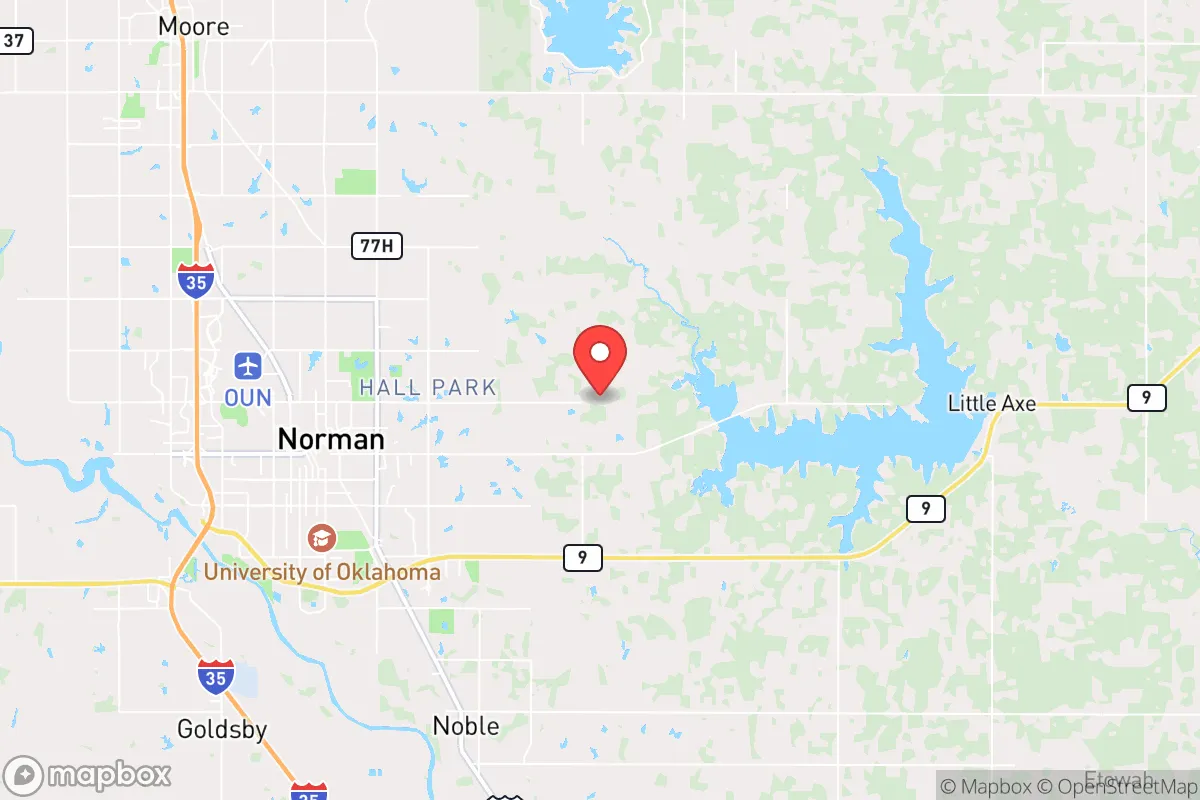
This is where Norman’s local character most directly challenges personal sovereignty. The city’s zoning code divides residential land into districts with minimum lot sizes ranging from 6,000 square feet (R-1 single-family) to 20,000 square feet (R-1A large lot). In practice, most newer subdivisions enforce HOAs that ban chickens, goats, or front-yard gardens. If you want true homesteading—raising livestock, keeping bees, or growing a substantial portion of your own food—you need to buy outside city limits. The unincorporated areas of Cleveland County (east of Norman toward Noble, or south toward Purcell) allow agricultural zoning with no minimum lot size for livestock and no building permits for sheds or barns under 200 square feet. Off-grid feasibility is limited within Norman: the city requires connection to municipal water and sewer for any habitable structure, and solar panel installations must comply with the 2021 International Energy Conservation Code, which adds permitting costs. However, Oklahoma’s net metering law (Title 17, Section 190) requires utilities to credit you for excess solar generation at the retail rate, so grid-tied solar is viable. Rainwater collection is legal and unregulated at the state level, but Norman’s stormwater ordinance technically prohibits diverting rainwater in ways that affect drainage—a gray area that could invite a code enforcement visit if you build a large cistern without a permit. For the serious prepper, the best strategy is to buy a parcel of at least 1–2 acres in an unincorporated area within 15 minutes of Norman, where you can build a well, septic system, and off-grid power without city interference. Inside city limits, you’re trading convenience for autonomy.
Personal liberties: Parental rights, medical autonomy, speech, and property
Oklahoma has strong statutory protections for parental rights. Under Oklahoma Statute Title 10, Section 1-2-101, parents have the fundamental right to direct the upbringing, education, and health care of their children. This means Norman public schools cannot provide medical treatment or mental health counseling without parental consent, and the state’s Parents’ Bill of Rights (passed in 2022) explicitly guarantees access to curriculum materials and the right to opt out of any instruction parents find objectionable. For medical autonomy, Oklahoma is a mixed bag: the state has some of the strictest abortion laws in the nation (near-total ban), which aligns with conservative values, but it also has a vaccine mandate for school attendance (with medical and religious exemptions available). The religious exemption is broad and rarely challenged, so homeschooling or private schooling remains a viable alternative. Speech protections are robust—Oklahoma has no hate speech laws that criminalize political expression, and Norman’s city council has not enacted any local ordinances restricting public assembly or protest beyond standard time-place-manner rules. Property rights are protected by the Oklahoma Property Rights Protection Act, which requires government to prove a compelling interest before taking land via eminent domain. However, Norman’s historic preservation commission can restrict exterior modifications to homes in designated historic districts—a direct infringement on property autonomy that affects roughly 5% of residential parcels. For the survivalist, the biggest liberty concern is Norman’s no-camping ordinance, which bans sleeping in vehicles or tents on public property, effectively criminalizing homelessness. This reflects a broader local attitude that prioritizes order over individual autonomy in public spaces.
Overall, Norman offers a solid foundation for personal sovereignty, especially compared to blue-state metros like Austin or Denver. The state’s low taxes, constitutional carry, and parental rights laws create a baseline of freedom that local progressive policies cannot easily override. The trade-offs are real but manageable: you sacrifice some homesteading autonomy inside city limits, and you must accept a modest regulatory burden for building and utilities. For the prepper or conservative individual, the smart play is to live just outside Norman’s city limits—within a 10-minute drive of its amenities—while enjoying the full protections of Oklahoma law. In that scenario, Norman becomes a strategic hub rather than a constraint, offering access to jobs, healthcare, and supply chains without the sovereignty erosion found in more restrictive jurisdictions. Relative to the national landscape, Norman ranks in the top 20% of U.S. cities for personal freedom when weighted by tax burden, gun rights, and parental autonomy—a solid B+ in a country where most urban areas are failing the test.

* Values derived from national, state, county, city and local statistics and may differ in a specific area. Last updated: 2026-04-28T19:56:41.000Z
Narrative content on this page is AI-generated and may contain mistakes. Verify any details that matter before acting on them.
ReloMaps may earn a commission from affiliate links at no extra cost to you.

