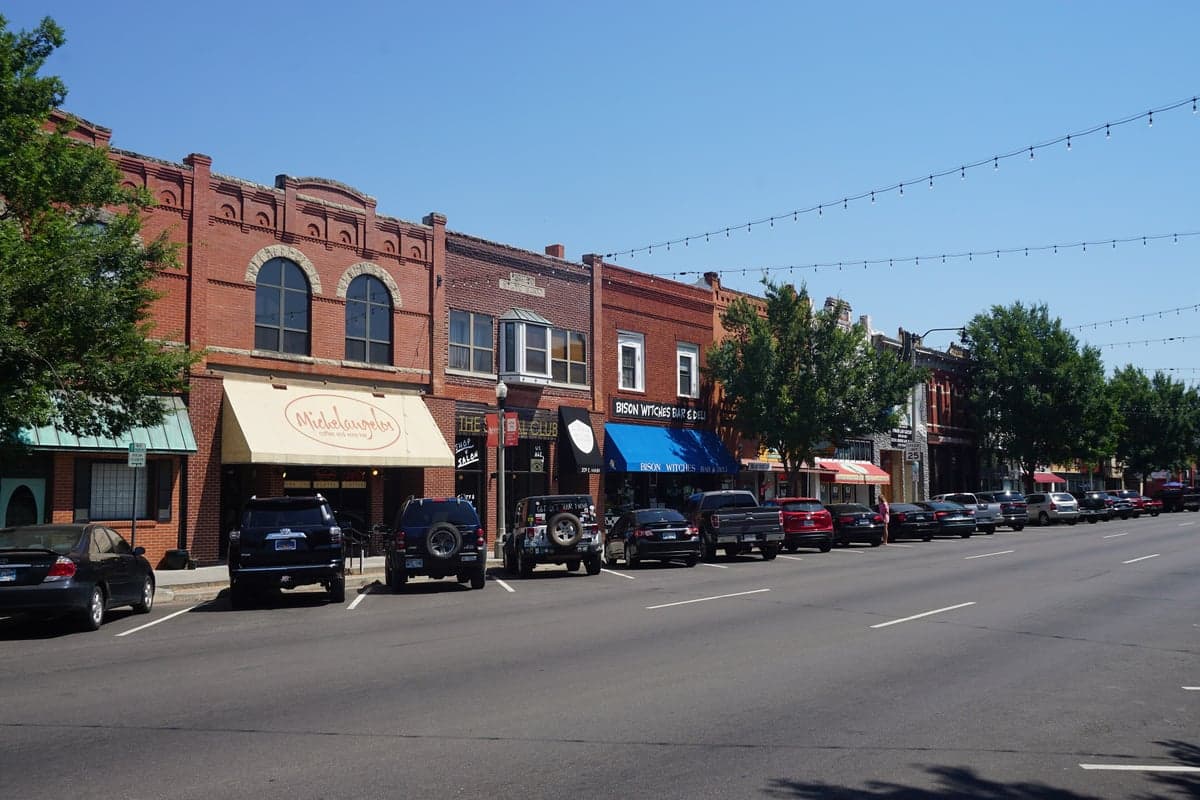
Photo: Wikipedia
Political ClimatePolitical Climate in Norman, OK
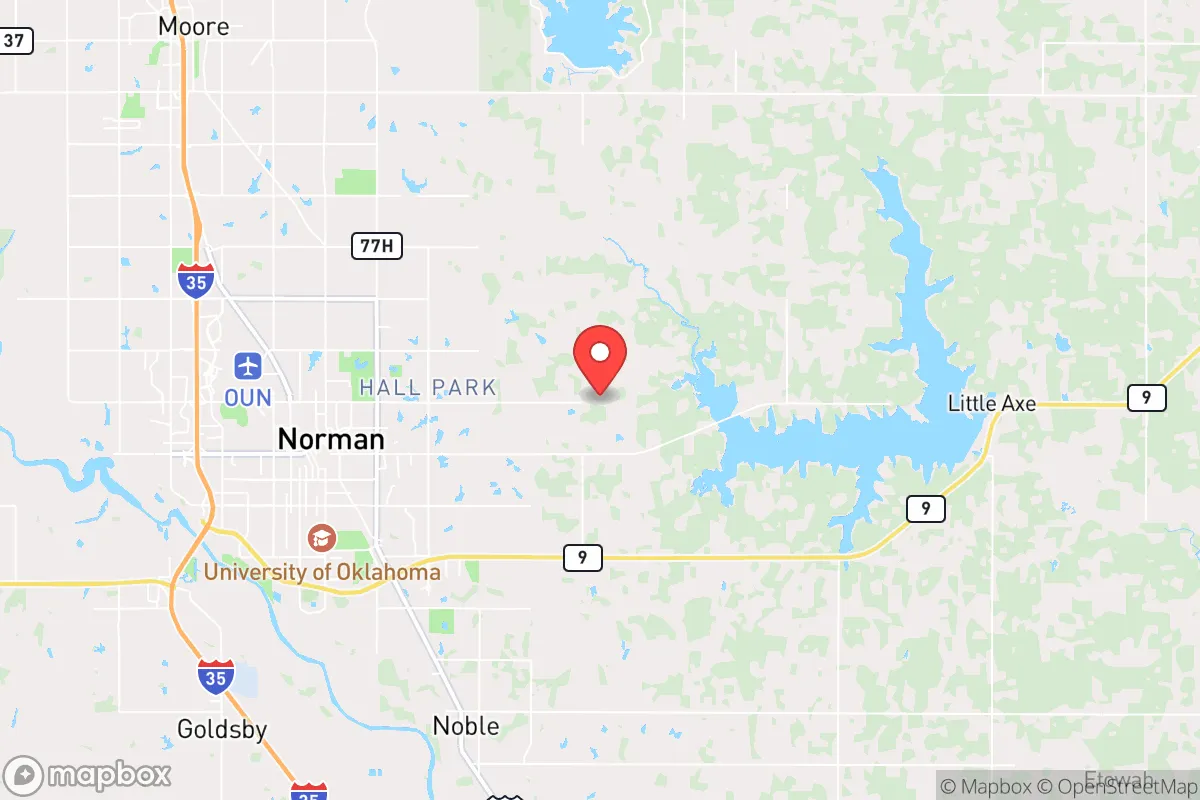
District shown is the primary district for this city’s centroid. Cities may span multiple districts.
Local Political AnalysisPolitical Analysis of Norman, OK
Norman, Oklahoma, has historically been a bit of a blue dot in a deep red state, but don't let that fool you into thinking it's a bastion of conservative values. The city's political lean has shifted noticeably leftward over the past decade, driven largely by the University of Oklahoma's influence and an influx of younger, more progressive residents. While the surrounding Cleveland County still leans Republican, Norman itself now consistently votes for Democratic candidates in local and national elections, a trend that has accelerated since 2020. For a long-time resident like myself, it's a stark change from the Norman I grew up in, where common-sense, limited-government principles were the norm.
How it compares
To understand Norman's political climate, you have to look at the contrast with its neighbors. Drive 20 minutes south to Moore or 30 minutes east to Shawnee, and you're back in solidly conservative territory—places where the Second Amendment is respected, taxes are low, and the local government stays out of your business. Even nearby Oklahoma City, while more moderate, still has a far more business-friendly and less ideologically driven atmosphere than Norman. The Cook PVI rating of R+17 for the congressional district tells you the broader region is deeply red, but Norman itself is the exception. It's a classic college-town dynamic: the university acts as a magnet for out-of-state transplants and faculty who bring big-government, progressive ideas with them, creating a political bubble that feels disconnected from the values of the rest of the state.
What this means for residents
For those of us who value personal freedoms and limited government, the shift in Norman's politics is concerning. You're seeing more local ordinances that feel like government overreach—from zoning restrictions that make it harder to start a small business to noise and rental regulations that treat property owners like they're running a public utility. The city council has become increasingly willing to impose mandates and restrictions that would have been unthinkable 20 years ago. Property taxes have crept up to fund pet projects favored by the progressive bloc, and there's a growing sense that if you want to be left alone to live your life, you're better off in a neighboring town. The public schools, once a point of pride, are now caught up in culture wars that prioritize ideology over academics, which is a big reason why many families I know have moved to Moore or even rural areas south of town.
On the cultural side, Norman still has its charms—the arts scene is vibrant, and the food is better than you'll find in most Oklahoma towns. But the political undercurrent is hard to ignore. The city's leadership seems more focused on signaling progressive values than on practical governance, like keeping streets paved or ensuring police have the resources they need. If this trajectory continues, I see Norman becoming a place where conservative families and small business owners feel increasingly unwelcome, pushed out by higher costs and a government that doesn't share their values. For now, it's still a livable city, but you have to keep your head on a swivel and your vote ready at every local election.

State Political ClimatePolitical Climate in Oklahoma
State Political AnalysisPolitical Environment in the State
Oklahoma has long been one of the most reliably conservative states in the nation, with a deep-rooted Republican lean that has only solidified over the past two decades. The state hasn’t voted for a Democratic presidential candidate since 1964, and as of 2024, every single one of its 77 counties went red, with Donald Trump carrying the state by over 34 points. The dominant coalition is a blend of evangelical Christians, rural ranchers, oil-and-gas workers, and suburban families who prioritize low taxes, gun rights, and limited government. Over the last 10-20 years, the shift has been dramatic: Democrats once held a majority of state legislative seats as recently as 2004, but today the GOP holds supermajorities in both chambers, and the last statewide Democrat was ousted in 2018. For a conservative-leaning individual or family looking to relocate, Oklahoma offers a political climate that is not just friendly but actively protective of traditional values and personal freedoms.
Urban vs. rural divide
The political map of Oklahoma is a textbook case of the urban-rural split, but with a twist: even the state’s largest city, Oklahoma City, leans conservative overall. Oklahoma County, which contains OKC, voted for Trump by about 12 points in 2024, though the city’s core is more moderate. Tulsa, the second-largest city, is similarly red-leaning, with Tulsa County going +15 for Trump. The real blue pockets are tiny and shrinking: Norman, home to the University of Oklahoma, and Stillwater, home to Oklahoma State, are the only notable liberal islands, driven by faculty and student populations. Meanwhile, the rural expanse—places like Enid, Lawton, Woodward, and the Panhandle towns of Guymon and Boise City—vote 70-80% Republican. The suburban rings around OKC and Tulsa, such as Edmond, Yukon, Broken Arrow, and Bixby, are among the most conservative suburbs in the country, often voting +40 or more for GOP candidates. The divide isn’t just about party; it’s about worldview. Rural and suburban Oklahomans see government as a necessary evil, while the urban cores, especially Norman, occasionally flirt with progressive policies that get quickly checked by the state legislature.
Policy environment
Oklahoma’s policy environment is a dream for conservatives who want government out of their wallets and lives. The state has a flat income tax rate of 4.75% (down from 5% in 2022), and there’s a serious push to eliminate it entirely—Governor Kevin Stitt has called for a path to zero income tax by 2028. Property taxes are among the lowest in the nation, averaging about 0.9% of home value, and there’s no estate tax. The regulatory posture is aggressively pro-business, especially for energy, agriculture, and manufacturing. On education, the state passed universal school choice in 2023 through the Oklahoma Parental Choice Tax Credit Act, which gives families up to $7,500 per child for private school or homeschooling expenses—a huge win for parental rights. Healthcare is more mixed: the state expanded Medicaid in 2021 via a ballot initiative, but the legislature has kept it lean, and there’s no state-run insurance mandate. Election laws are strict: voter ID is required, early voting is limited to three days, and absentee ballots require a notary or witness. The state also passed a law in 2022 banning ranked-choice voting and requiring hand-counting of ballots in some counties. For a conservative, this is a state that actively protects election integrity and fiscal sanity.
Trajectory & freedom
Oklahoma is on a clear trajectory toward more freedom, not less, which is a refreshing trend for anyone watching other states drift left. In 2023, the legislature passed a permitless carry law for firearms, meaning any law-abiding adult can carry a concealed handgun without a license or training course—a major expansion of Second Amendment rights. On parental rights, the 2022 “Save Women’s Sports Act” bans biological males from competing in female school sports, and the 2023 “Students’ Right to Know Act” requires schools to notify parents of any curriculum involving sexuality or gender identity. Medical autonomy took a hit with the near-total abortion ban (triggered in 2022, with no exceptions for rape or incest), but for pro-life families, that’s a feature, not a bug. Property rights are strong: the state has a robust “right to farm” law protecting agricultural operations from nuisance lawsuits, and there’s no state-level rent control. Taxation is trending downward, with the income tax rate dropping from 5.25% to 4.75% in 2024 and further cuts likely. The only area of concern is a slight uptick in state-level spending on infrastructure and education, but it’s still far below the national average. If you’re moving here for freedom, you’ll find it expanding every legislative session.
Civil unrest & political movements
Oklahoma is remarkably stable compared to coastal states, but it’s not without its flashpoints. The most visible political movement in recent years has been the “Oklahoma Freedom Caucus” in the state legislature, a hardline conservative group that has pushed for school choice, tax cuts, and anti-woke policies. They’ve clashed with more moderate Republicans, but their influence is growing. On the left, the “Oklahoma Policy Institute” and local activist groups have organized protests over the abortion ban and education funding, but these are small and largely confined to Norman and Tulsa’s arts district. Immigration politics are relatively quiet—Oklahoma passed a law in 2024 requiring local law enforcement to cooperate with ICE, and there are no sanctuary cities. The most heated controversy has been over “critical race theory” and LGBTQ+ curriculum in schools, with the state board of education banning both in 2022, leading to a few school board showdowns in places like Edmond and Norman. Election integrity has been a major topic since 2020, with the state launching a forensic audit of voting machines in 2022 (finding no widespread fraud, but tightening procedures anyway). A new resident would notice a general sense of civic calm—no nightly protests, no defund-police movements, and a strong cultural expectation that politics stays out of everyday life.
Projection
Over the next 5-10 years, Oklahoma is likely to become even more conservative, driven by two forces: in-migration from blue states and the continued exodus of young liberals to coastal cities. The state is seeing a steady influx of families from California, Colorado, and Illinois, drawn by low housing costs and conservative governance—places like Stillwater and Edmond are growing fast. The Hispanic population is rising (now about 12% of the state), but this group in Oklahoma tends to be more culturally conservative and religious than in other states, so it’s not shifting the politics left. The biggest risk is a potential economic downturn in the energy sector, which could strain the state budget and slow tax cuts, but the diversification into aerospace, bioscience, and data centers (Google and Meta have built massive facilities near Pryor and Altus) provides a buffer. Expect the income tax to be fully eliminated by 2030, school choice to expand further, and the state to continue leading on Second Amendment and parental rights legislation. The only wild card is the growing influence of the “Oklahoma City” metro’s moderate business wing, which may push for more infrastructure spending, but that’s a far cry from the progressive shifts seen in Texas or Florida. For a conservative moving in now, the state in a decade will look very much like it does today—only freer, richer, and more firmly red.
For a new resident, the bottom line is this: Oklahoma offers a political climate where your values are not just tolerated but actively codified into law. You won’t fight culture wars in your kid’s classroom, you won’t see your taxes skyrocket, and you won’t worry about your gun rights being eroded. The state is stable, predictable, and moving in the right direction. If you’re looking for a place where government stays out of your life and your family’s future, Oklahoma is one of the safest bets in the country.
* Values derived from national, state, county, city and local statistics and may differ in a specific area. Last updated: 2026-04-28T19:56:41.000Z
Narrative content on this page is AI-generated and may contain mistakes. Verify any details that matter before acting on them.
ReloMaps may earn a commission from affiliate links at no extra cost to you.

