 Popular
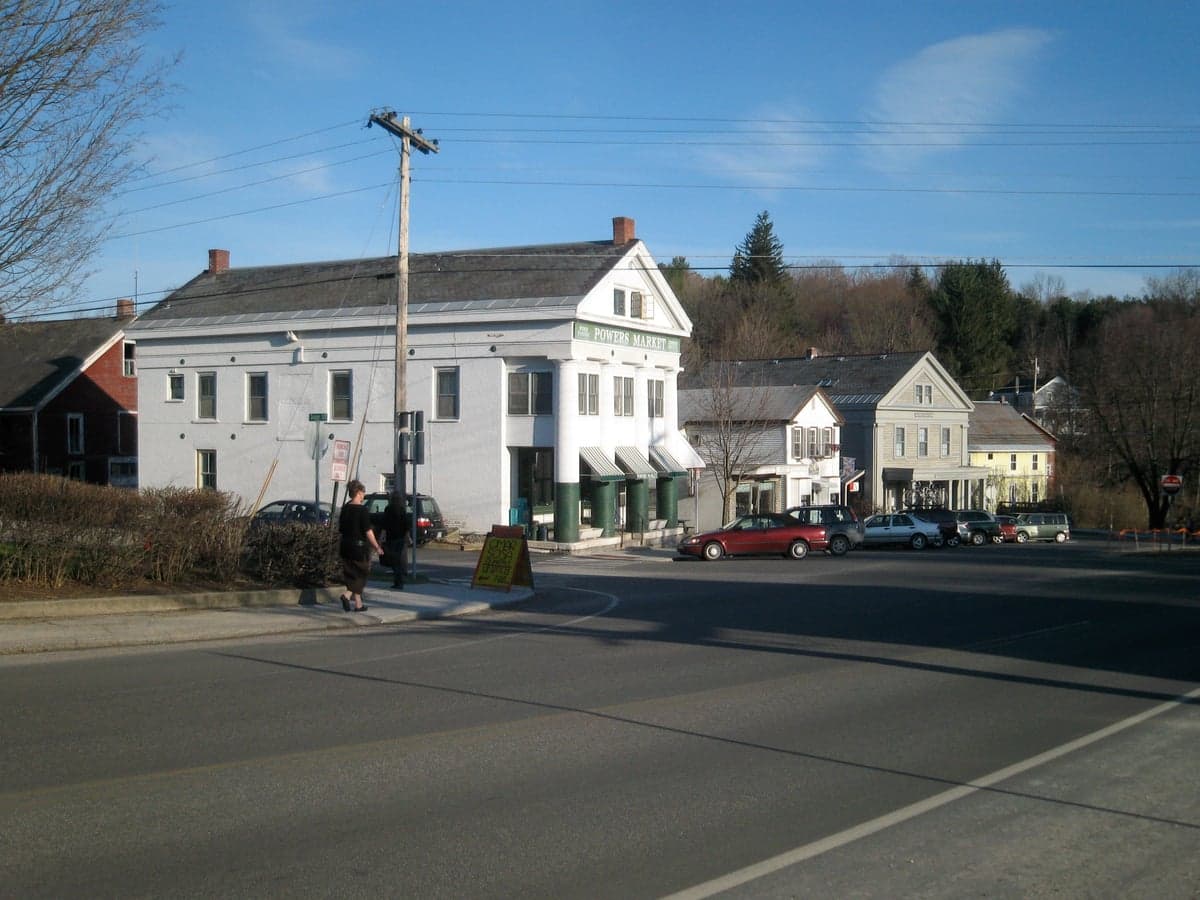
Photo: Wikipedia
Political ClimatePolitical Climate in North Bennington, VT
District shown is the primary district for this city’s centroid. Cities may span multiple districts.
Inherited from parent state — no local data available.
Local Political AnalysisPolitical Analysis of North Bennington, VT
North Bennington, Vermont, leans heavily Democratic, with a Cook PVI of D+17, meaning it votes about 17 points more Democratic than the national average. That’s a stark shift from what this area used to be—even 20 years ago, you’d find a mix of independent-minded folks who voted for the person, not the party. Now, it’s solidly blue, and the trajectory is worrying for anyone who values personal freedoms and local control. The town’s politics have moved from a live-and-let-live ethos to one where progressive policies are pushed hard, often without much debate.
How it compares
If you drive 10 miles south to Bennington proper, you’ll find a similar Democratic lean, though it’s a bit more moderate—Bennington County as a whole still has some old-school conservative pockets, especially in the rural outskirts like Shaftsbury or Arlington. Those towns vote more mixed, with Republicans often winning local offices. But North Bennington? It’s become a bubble. Compare it to Manchester, about 20 miles northeast, which is more purple—there, you’ll see a real split between the tourist-driven economy and the working-class roots. North Bennington’s politics are closer to Burlington’s, just on a smaller scale: heavy on environmental regulations, social justice initiatives, and a general distrust of anything that smells like traditional values. The contrast is sharp when you talk to folks in Pownal, just west, where the vibe is still “keep the government out of my business.”
What this means for residents
For residents, this political climate translates into real-life hassles. You’ve got town boards that are quick to adopt state-level mandates—like strict land-use rules that make it harder to build a shed or run a small business from your property. Property taxes are high, and they keep climbing to fund programs that not everyone agrees with, like diversity training in the local schools or subsidized housing projects that don’t always fit the town’s character. The push for renewable energy mandates means you might face pressure to install solar panels or heat pumps, even if the upfront cost is steep. And if you’re a gun owner or value Second Amendment rights, you’ll feel the squeeze—Vermont’s red-flag laws and magazine bans are enforced here more than in neighboring towns. The local government tends to side with activists over longtime residents, so speaking up at a meeting can feel like shouting into the wind.
On the cultural side, North Bennington has a distinct identity that’s worth noting. It’s home to Bennington College, a progressive liberal arts school that heavily influences the town’s politics—think art shows, organic co-ops, and a general disdain for corporate America. That’s fine if you’re into it, but it can feel alienating if you’re not. The town’s annual events, like the North Bennington Outdoor Sculpture Show, reflect that artistic bent, but they also draw a crowd that’s more aligned with the college than the working-class families who’ve been here for generations. Looking ahead, I see this place getting more polarized. The young professionals moving in from out of state are bringing big-city attitudes, and the old-timers are either leaving or staying quiet. If you’re considering a move here, know that your personal freedoms—whether it’s how you use your land, what you teach your kids, or how you defend your home—will face more scrutiny than they would in a less progressive town. It’s a trade-off: you get a vibrant, artsy community, but you lose a lot of the independence that made Vermont special in the first place.

State Political ClimatePolitical Climate in Vermont
State Political AnalysisPolitical Environment in the State
Vermont has long been painted as a deep-blue bastion, and in statewide elections, that label sticks — the state hasn’t voted for a Republican president since George H.W. Bush in 1988, and Democrats hold supermajorities in both legislative chambers. But if you dig past the Burlington bubble and the Chittenden County corridor, you’ll find a state that’s far more politically complex than its national reputation suggests. Over the last 20 years, the rural-urban divide has widened dramatically, with small towns and working-class regions shifting rightward even as the state legislature races left. For a conservative considering relocation, Vermont offers a strange paradox: stunning natural beauty and tight-knit communities, paired with a policy environment that increasingly feels like a laboratory for progressive governance.
Urban vs. rural divide
The political map of Vermont is a study in contrasts. Chittenden County, anchored by Burlington, South Burlington, and Winooski, drives the state’s Democratic supermajority — these towns routinely deliver 70-80% of their votes to Democratic candidates. Burlington itself is a classic college town (University of Vermont, Champlain College) with a young, activist base that pushes the state’s policy further left than even most Democrats in rural areas are comfortable with. Drive 30 minutes in any direction, and the landscape flips. Rutland County, once a Democratic stronghold, has trended Republican in presidential races since 2016, with towns like Rutland City and Castleton showing narrow GOP wins. The Northeast Kingdom — Essex, Orleans, and Caledonia counties — is reliably red at the local level, with towns like Newport and St. Johnsbury voting Republican by double digits. Even traditionally blue-leaning areas like Addison County (Middlebury) have seen suburban voters drift right on issues like taxes and school curriculum. The divide isn’t just urban vs. rural; it’s also generational. Older residents in places like Bennington and Springfield remember a Vermont that was fiscally conservative and socially tolerant, while younger transplants in Chittenden County push for universal healthcare, rent control, and carbon taxes.
Policy environment
Vermont’s policy environment is where the rubber meets the road for a conservative newcomer. The state has the highest combined state and local tax burden in the nation, according to the Tax Foundation, driven by a progressive income tax (top rate 8.75% on income over $213,150) and one of the highest property tax rates in the country — the statewide education property tax alone averages around $1.50 per $100 of assessed value. The regulatory posture is aggressive: Vermont was the first state to mandate a renewable energy standard (Act 250, the nation’s first land-use law, is still in effect and notoriously cumbersome for builders), and it’s one of a handful of states with a single-payer healthcare system in name (Green Mountain Care, though it’s more a public option than true single-payer). Education policy is a flashpoint: Vermont’s Act 46 forced school district consolidation, and more recently, Act 1 (2024) removed local school board control over curriculum, centralizing decisions in Montpelier. Parents in towns like Milton and Essex Junction have voiced strong opposition to the state’s adoption of the “Vermont Portrait of a Graduate” framework, which critics say prioritizes social-emotional learning over core academics. Election laws are among the most liberal: universal mail-in voting, same-day registration, and no voter ID requirement — a setup that conservatives in the state argue undermines election integrity, though no major fraud has been proven.
Trajectory & freedom
On the freedom index, Vermont is a mixed bag trending downward. Gun rights have been under sustained assault since 2018, when the legislature passed Act 94 (universal background checks, a 10-round magazine limit, and a raise-the-age-to-21 law) and Act 69 (red flag law allowing temporary seizure of firearms without a criminal conviction). In 2023, the legislature added a ban on “ghost guns” and a 72-hour waiting period for all firearm purchases. The state also passed a near-total abortion access law (Act 47, 2019) and a law requiring insurance to cover gender-affirming care for minors (Act 14, 2022) — both seen by conservatives as government overreach into medical decisions. On the plus side, Vermont has no sales tax, no right-to-work law (though union membership is high), and relatively low business taxes for small operations. Parental rights took a hit in 2024 with Act 1, which removed local control over school curriculum and banned schools from notifying parents if a child changes their gender identity or pronouns — a law that sparked massive protests in Montpelier and led to the formation of several parental rights groups. Property rights are also under pressure: Act 250 reform proposals in 2025 aim to further restrict development in rural areas, making it harder to build a home on your own land.
Civil unrest & political movements
Vermont’s political activism is visible and organized on both sides. The 2020 racial justice protests in Burlington turned violent, with property damage and clashes between protesters and police, leading to a $1.5 million settlement for a man injured by a rubber bullet. The state’s sanctuary policy — Vermont was the first state to pass a “Trust Act” (2017) limiting local cooperation with ICE — has made it a magnet for out-of-state activists, and border security is a live issue in towns like Swanton and Alburgh near the Canadian border, where illegal crossings have increased. On the right, the Vermont Republican Party is small but vocal, with groups like the Vermont Federation of Republican Women and the “Vermonters for Liberty” network organizing around school board races and gun rights. The 2023-2024 school board elections saw a wave of conservative candidates win in towns like Milton, Essex, and St. Albans, driven by parental backlash to Act 1 and critical race theory in schools. Election integrity remains a sore spot: the state’s universal mail-in system has been criticized for lack of signature verification, though no major irregularities have been documented. The “Secession of Vermont” movement, once a fringe idea, has gained some traction among libertarians and conservatives frustrated with Montpelier’s overreach, but it remains a symbolic gesture.
Projection
Over the next 5-10 years, Vermont’s political trajectory is likely to accelerate leftward at the state level while rural areas continue to resist. Demographic trends favor the progressive agenda: Chittenden County is growing, while rural counties like Essex and Orleans are losing population. The influx of remote workers from New York and Massachusetts — many of whom bring progressive voting habits — is reshaping towns like Stowe, Manchester, and Woodstock, driving up housing costs and shifting local elections. The state’s aging population (median age 43, second-highest in the nation) means that younger, more liberal voters will gradually replace older, more conservative ones. However, the parental rights movement is not going away; expect more school board battles and potential ballot initiatives to restore local control. The biggest wildcard is the state’s fiscal health: Vermont’s pension system is underfunded by over $5 billion, and the state’s high tax burden is driving out middle-class families. If the economy sours, the progressive spending spree could hit a wall, leading to a backlash at the ballot box. For now, a conservative moving to Vermont should expect to live in a state where Montpelier is actively hostile to their values, but where local communities — especially in the Northeast Kingdom and southern Vermont — still offer a refuge of common sense.
Bottom line for a new resident: Vermont is a beautiful state with a strong sense of place, but it’s not a conservative-friendly policy environment. If you’re moving here, choose your town carefully — stick to rural areas like the Northeast Kingdom (Newport, St. Johnsbury) or southern Vermont (Bennington, Manchester) where local politics still lean rightaint. Be prepared for high taxes, aggressive gun control, and a state government that doesn’t trust parents with their kids’ education. The trade-off is unmatched natural beauty, low crime, and a community that still values neighborliness — but you’ll have to fight for your freedoms at the local level.
* Values derived from national, state, county, city and local statistics and may differ in a specific area. Last updated: 2026-04-30T03:08:52.000Z
Narrative content on this page is AI-generated and may contain mistakes. Verify any details that matter before acting on them.
ReloMaps may earn a commission from affiliate links at no extra cost to you.

