Photo: Wikipedia
Demographics of Wayne County
Affluence Level in Wayne County
A below-average socioeconomic profile. Incomes, home values, and educational attainment trail the U.S., with higher poverty and unemployment.
People of Wayne County
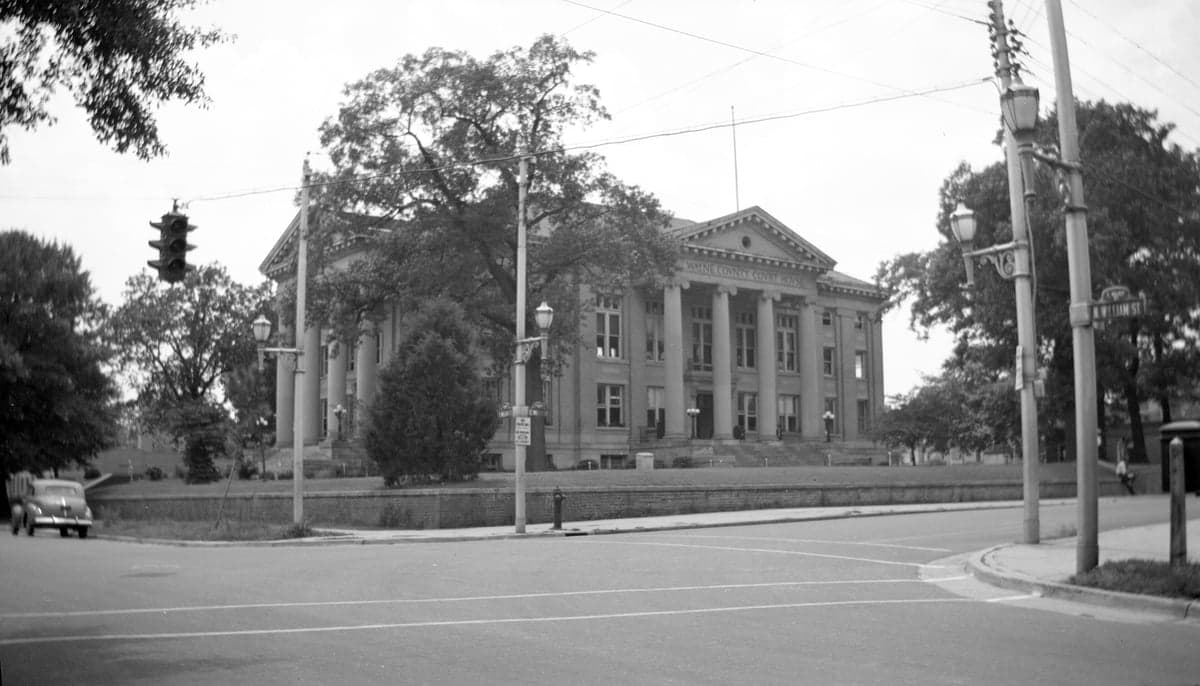
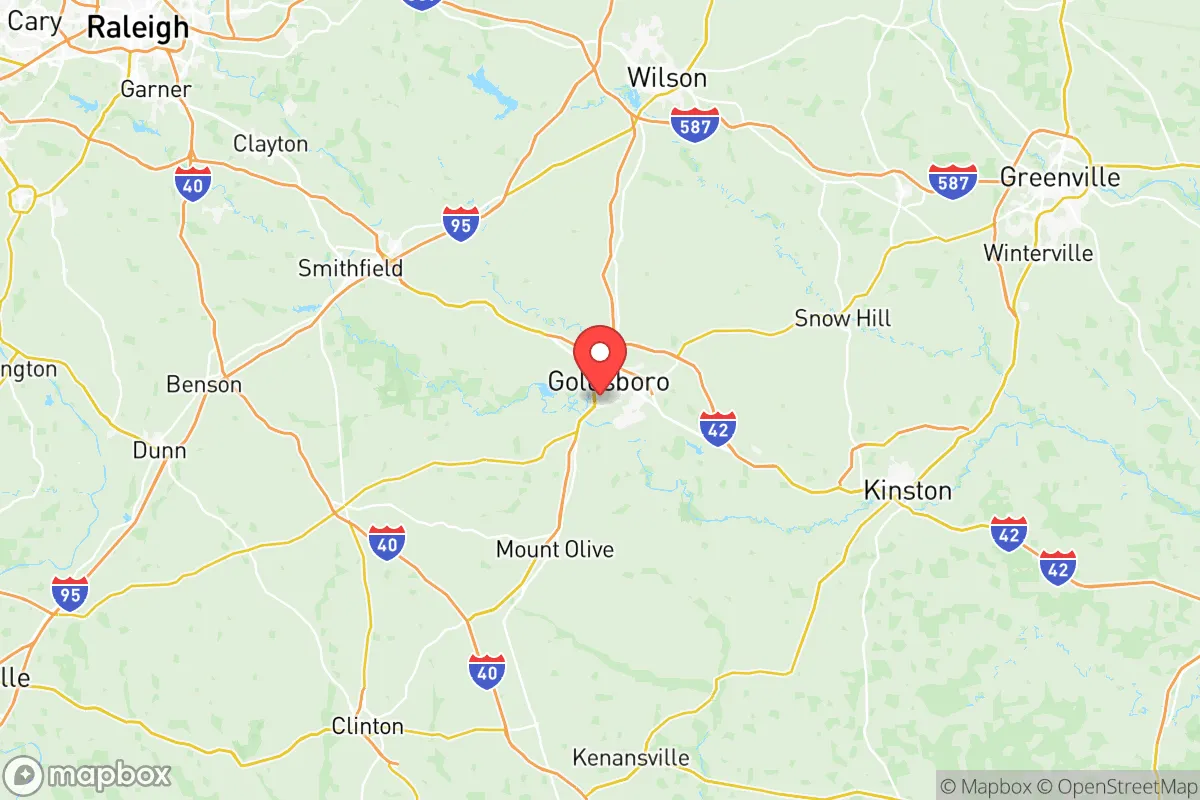
Wayne County, North Carolina, is a community of roughly 117,600 residents defined by its deep agricultural roots, a strong military presence from Seymour Johnson Air Force Base, and a demographic profile that is majority-minority, with a population that is 51.0% White, 30.2% Black, and 13.2% Hispanic. The county seat, Goldsboro, serves as the economic and cultural hub, while smaller towns like Mount Olive, Fremont, and Pikeville retain distinct identities shaped by the waves of people who settled them. The county’s character is a blend of traditional Southern values, a growing Hispanic workforce, and a stable African American community whose history here stretches back generations.
Settlement & growth (pre-1960)
Before European settlement, the area now known as Wayne County was inhabited by the Tuscarora people, an Iroquoian-speaking nation whose villages dotted the Neuse River watershed. The Tuscarora were largely displaced or absorbed after the Tuscarora War (1711–1715), opening the land to European colonists. The first permanent European settlers were primarily English and Scots-Irish farmers moving south from Virginia and the Albemarle region, drawn by the fertile, low-lying coastal plain and the promise of land grants. By the time Wayne County was officially formed in 1779 from Dobbs County, these early families had established small farms and plantations centered around what would become Goldsboro, the county seat incorporated in 1847.
The 19th century brought two transformative waves. The first was the forced migration of enslaved African people, who by 1860 made up a significant portion of the county’s population, working the cotton and tobacco fields that dominated the economy. After the Civil War, many freedmen remained in the area, establishing communities like the Stantonsburg area and the Fremont vicinity, where they became sharecroppers and small landowners. The second wave was the arrival of German and Swiss immigrants in the late 1800s, who were recruited to work in the burgeoning tobacco industry. These families settled heavily in Mount Olive, where the Mount Olive Pickle Company (founded in 1926) became a major employer and a cultural touchstone, and in Walnut Creek and Pikeville, where they established small farms and businesses. The county’s population grew steadily through the early 1900s, reaching 60,000 by 1950, driven by the expansion of tobacco farming and the establishment of Seymour Johnson Air Force Base in 1942, which brought a steady influx of military personnel and civilian support staff.
Modern era (post-1965)
The 1965 Hart-Cellar Act had a modest but noticeable effect on Wayne County, unlike the dramatic changes seen in major metropolitan areas. The county’s foreign-born population remains low at 4.7%, but the composition has shifted. The most significant post-1965 change has been the growth of the Hispanic population, which now stands at 13.2%. This wave began in the 1990s and accelerated in the 2000s, driven by demand for labor in agriculture (tobacco, sweet potatoes, and poultry processing) and construction. Hispanic families have concentrated in Goldsboro, particularly in the eastern and southern parts of the city, and in Mount Olive, where the pickle company and other food-processing plants provide steady employment. This community is predominantly Mexican and Central American, and it has established small businesses, churches, and social networks that are reshaping the county’s cultural landscape.
Domestic migration has also played a role. The African American population, which had been declining slightly due to outmigration to Northern cities during the Great Migration, stabilized after 1970 as the military base and local industries provided stable jobs. The White population, while still the largest single group at 51.0%, has seen a gradual relative decline as the Hispanic share grew and as younger, college-educated Whites left for urban job markets in Raleigh and Charlotte. The Asian population remains tiny at 0.7% (East and Southeast Asian communities), and the Indian subcontinent population is even smaller at 0.4%, with most individuals associated with the military or medical professions at the base and local hospitals. Suburbanization has been limited; new residential development has mostly occurred in the Grantham and Brogden areas on the outskirts of Goldsboro, where families seek larger lots and newer homes while remaining close to the base and downtown.
The future
Wayne County is projected to become more diverse, but slowly. The Hispanic population is expected to continue growing, potentially reaching 18-20% by 2040, driven by both natural increase and continued labor demand in agriculture and light manufacturing. The African American share is likely to remain stable or grow slightly, as the community is well-established and has a younger median age than the White population. The White population will continue its gradual relative decline, though it will remain the largest single group for the foreseeable future. The foreign-born share may rise to 6-7% as Hispanic families sponsor relatives and as the base attracts a small number of military-connected immigrants.
Geographically, new growth will likely concentrate in Goldsboro’s expanding southern and eastern edges, near the base and along the US-70 corridor, which connects the county to Raleigh and the Research Triangle. Smaller towns like Mount Olive and Fremont may see modest Hispanic infill but are unlikely to experience rapid growth due to limited housing stock and job opportunities. The county’s cultural identity is evolving from a biracial Black-White Southern community to a tri-ethnic one, with Hispanic culture becoming more visible in restaurants, festivals, and churches. For a newcomer, this means moving into a place that is still deeply rooted in its agricultural and military heritage, but where the faces and voices are becoming more varied with each passing year.
Wayne County is becoming a more diverse, slowly growing community where the military base anchors the economy, agriculture remains a major employer, and the Hispanic population is the primary driver of demographic change. For someone moving in now, the county offers a lower cost of living than the nearby Triangle, a strong sense of local identity, and a population that is increasingly accustomed to cultural variety, even if the pace of change is gradual compared to urban centers. The key takeaway is that Wayne County is not a place of rapid transformation, but of steady, incremental evolution—a community where the past and future coexist in the fields, on the base, and in the neighborhoods of Goldsboro and its surrounding towns.

* Values derived from national, state, county, city and local statistics and may differ in a specific area. Last updated: 2026-06-11T18:20:02.000Z
Narrative content on this page is AI-generated and may contain mistakes. Verify any details that matter before acting on them.
ReloMaps may earn a commission from affiliate links at no extra cost to you.

