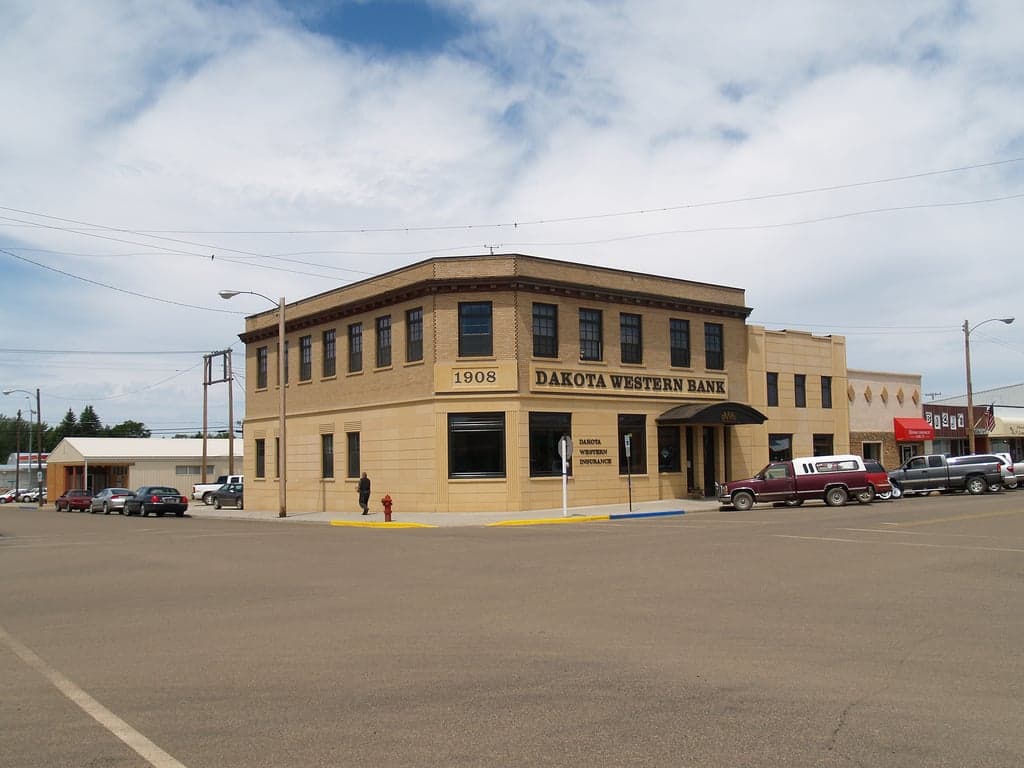
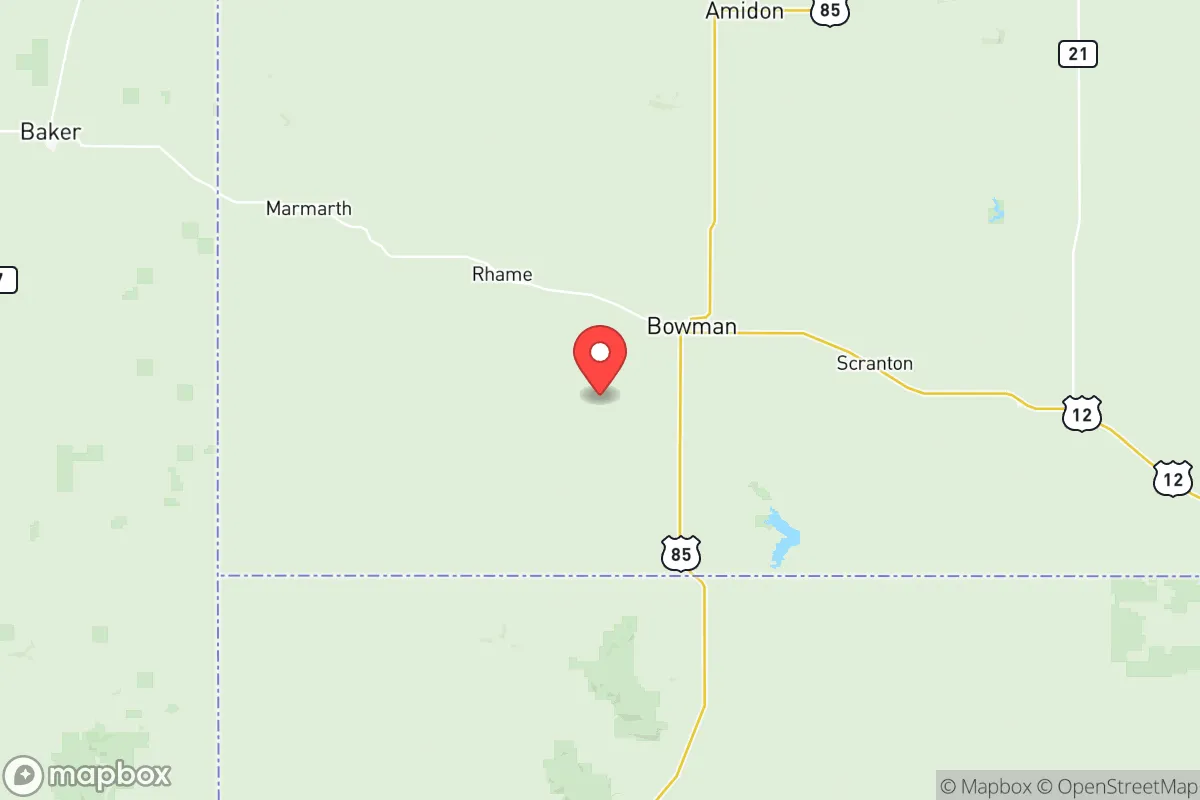
Photo: Wikipedia
Find The Best Places To Live in Bowman County
PRO TIP! You can paste a Zillow or Redfin link to get info on that property.
Best Places to Live in Bowman County
Cities & Towns in Bowman County
Cities in Bowman County
What It's Like Living in Bowman County, ND
Bowman County feels like a place where people still wave at passing cars on gravel roads, and where the nearest stoplight is a notable landmark. With a population just under 2,935 spread across the county seat of Bowman, the smaller town of Scranton, and wide-open rural stretches, life here moves at a pace that suits folks who value space, quiet, and knowing their neighbors. It’s the kind of county where a 18-minute average commute is a genuine perk, and where the median home value of $176,400 makes owning a place feel attainable in a way it rarely does elsewhere.
Daily Rhythm in a County of Few Strangers
Most mornings in Bowman County start early, often with a cup of coffee at a local spot like the Bowman Diner or the Scranton Cafe, where the talk turns to cattle prices, the weekend’s high school game, or the weather. The county’s economy is anchored by agriculture, oil field support, and small businesses, so workdays are hands-on and often outdoors. After work, you’ll find families at the Bowman County Recreation Center for youth basketball or open swim, or at the Bowman Golf Course, a nine-hole course that doubles as a social hub in summer. Grocery shopping means the Bowman Super Valu or a quick trip to Scranton’s Cenex; for anything bigger, people make the hour drive to Dickinson or even Bismarck. The county’s median age of 42.7 reflects a mix of established ranchers, young families drawn by affordable land, and a few retirees who appreciate the low cost of living—70 on the index, meaning everyday expenses are about 30% below the national average.
Weekends often involve helping a neighbor with a fence, hunting pheasant in the fall, or driving to Gascoyne for a community potluck. There’s a self-reliance here that’s less about survival and more about choice—people fix their own trucks, garden in the short growing season, and keep an eye on each other’s places. The county’s 27.3% college-educated rate is lower than national averages, but that’s less a measure of ambition than a reflection of the trades and ranching that sustain the local economy. The person who fits in here values competence over credentials and doesn’t mind a 30-mile drive for a decent sushi dinner (which you won’t find here, anyway).
Sports, Community, and the Things That Bring People Together
High school sports are the county’s biggest stage. The Bowman Bulldogs football and basketball teams draw crowds that fill the gym on Friday nights, and the rivalry with Scranton’s Miners is the kind of small-town drama that defines entire seasons. In the fall, the county fair in Bowman brings in rodeo events, 4-H livestock shows, and a midway that feels like a time capsule. For outdoor enthusiasts, the Little Missouri River runs through the county’s western edge, offering decent fishing for northern pike and catfish, while the Cedar River National Grassland just south of Scranton provides miles of hiking and hunting access. The Bowman County Museum in town preserves the area’s homesteading and oil boom history, but the real entertainment is often a bonfire at a friend’s place or a Sunday afternoon at the Bowman Bowling Center.
There’s no movie theater or concert venue, so residents get creative. The Bowman Summerfest in July features a parade, car show, and live music on Main Street, while the Scranton Threshing Bee in August draws antique tractor enthusiasts from across the region. For a date night, the Bowman Bar and Scranton’s Rusty Nail are the go-to spots—think pool tables, cold beer, and the occasional live country band. The county’s violent crime rate of 235.4 per 100,000 is slightly above the national average, but most residents will tell you that number is skewed by a few isolated incidents, and they still leave their doors unlocked in the rural areas.
Pros and Cons of Life in Bowman County
The upsides are straightforward: affordable housing (median home value $176,400), a median household income of $83,773 that stretches further here than almost anywhere, and a genuine sense of community where people show up for each other. The downsides are equally real. Winters are long and harsh—expect snow from November through March, with wind chills that can drop below -30°F. The isolation can feel suffocating for some, especially single adults in their 20s and 30s, as the nearest city with a real nightlife or dating scene is Bismarck, two hours east. Shopping is limited, and the nearest hospital with full services is in Dickinson, about 45 minutes north. For families, the schools in Bowman and Scranton are small but well-regarded, with class sizes that allow teachers to know every student by name—a double-edged sword for kids who crave anonymity.
What frustrates longtime residents most is the lack of workforce housing for young families and the slow internet speeds in rural areas, though fiber is slowly being run along the main highways. The county’s economy is tied to oil and agriculture, which means booms and busts are part of the rhythm. But for the right person—someone who values quiet, space, and a life where your word is your bond—Bowman County offers a version of the American dream that’s increasingly hard to find. It’s not for everyone, and it doesn’t pretend to be.

* Values derived from national, state, county, city and local statistics and may differ in a specific area. Last updated: 2026-08-14T01:08:23.000Z
Narrative content on this page is AI-generated and may contain mistakes. Verify any details that matter before acting on them.
ReloMaps may earn a commission from affiliate links at no extra cost to you.

