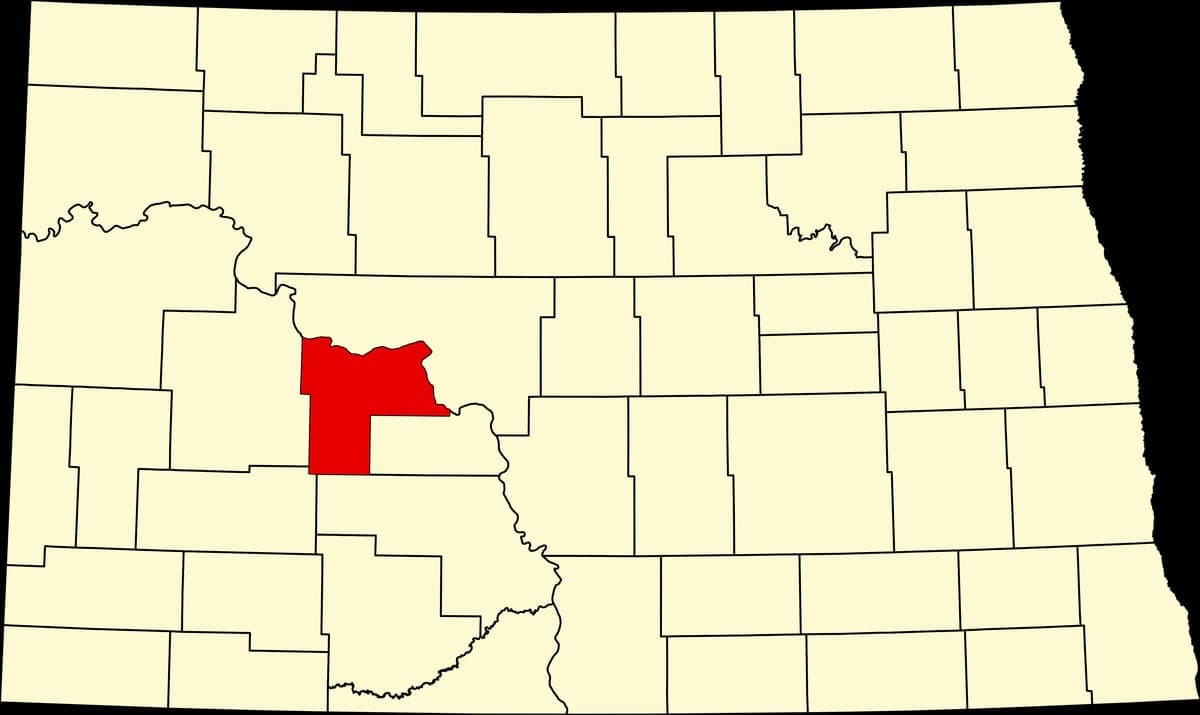
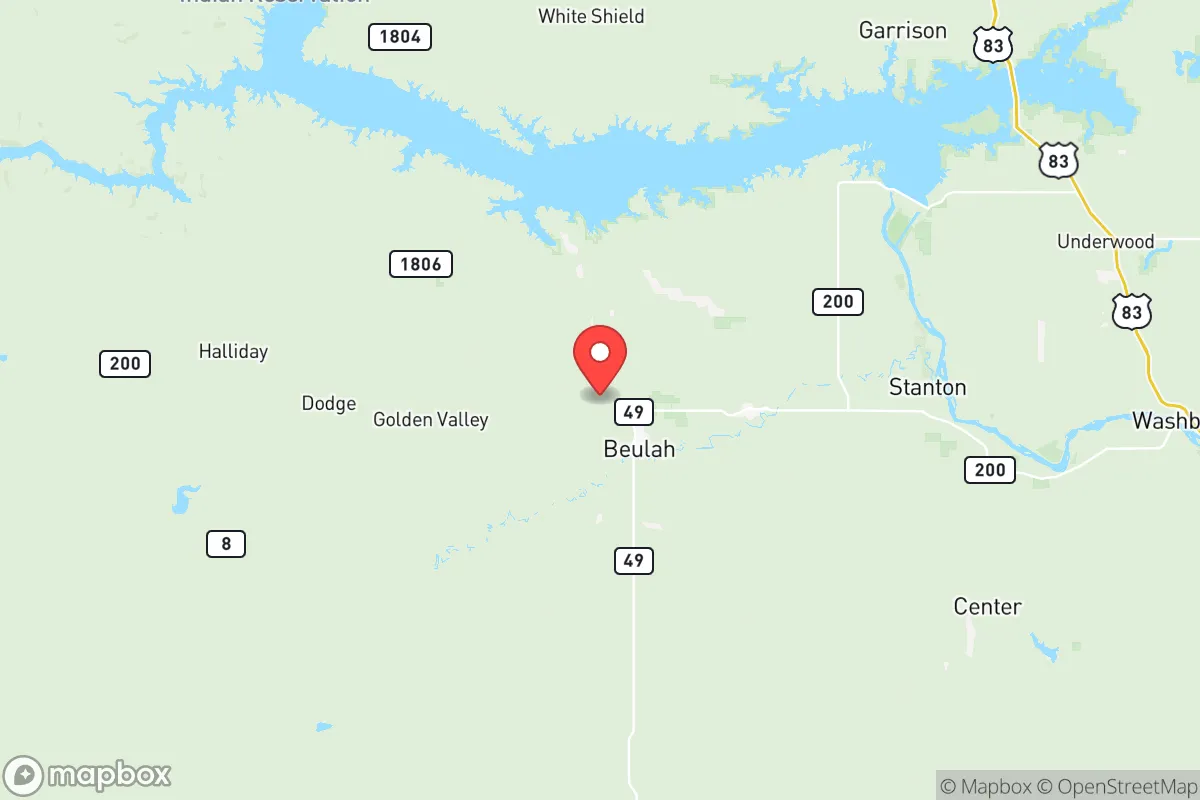
Photo: Wikipedia
Personal Sovereignty in Mercer County
Viable for self-reliance. Generally workable, though some barriers may limit total independence.
What does Personal Sovereignty tell us?
Personal Sovereignty measures your capacity for self-reliance and independence with minimal government friction. Higher scores mean fewer barriers between you and the way you want to live... but it assumes you have the space you need and good neighbors.
What does this tell us?
Personal Sovereignty measures your capacity for self-reliance and independence with minimal government friction. Higher scores mean fewer barriers between you and the way you want to live... but it assumes you have the space you need and good neighbors.
State Policy
Energy independence: Net exporter (500% of energy produced in-state)
Personal Liberty
Homesteading

Personal Liberty Analysis
Mercer County, North Dakota, offers one of the strongest personal sovereignty environments in the Upper Great Plains, with a governing philosophy that consistently prioritizes individual autonomy over regulatory oversight. The county’s small population—roughly 8,000 residents spread across towns like Beulah, Hazen, Stanton, and Zap—means local government is accessible and often deferential to property owners and business operators. For a relocation-minded individual or family seeking maximum personal freedom, Mercer County presents a low-friction alternative to more heavily regulated urban and coastal areas, though the trade-offs include limited services and a harsh winter climate that demands genuine self-reliance.
Tax burden and regulatory posture for individuals and small businesses
North Dakota’s state-level tax structure is among the most favorable in the nation for those prioritizing financial autonomy, and Mercer County amplifies that advantage. There is no state income tax on wages, and the state’s corporate income tax rate is a flat 1.41% on the first $50 million of taxable income—effectively negligible for most small businesses. Property taxes in Mercer County are moderate, with the county’s mill levy typically running around 100-120 mills depending on the specific township or city. For example, a home valued at $200,000 in Beulah or Hazen would carry an annual property tax bill of roughly $2,000 to $2,400, which is competitive even by rural standards. Sales tax in the county is 6.5% (5% state plus 1.5% local), with no additional city-level sales tax in most unincorporated areas. The regulatory posture is distinctly light-touch: Mercer County has no county-wide zoning ordinance for agricultural or rural residential land, meaning a landowner near Zap or Stanton can build a home, workshop, or barn without submitting plans to a planning commission. Business licensing requirements are minimal—a simple city business license in Hazen or Beulah costs under $100 annually, and home-based businesses face virtually no regulatory hurdles as long as they don’t create nuisance complaints. The county’s economic base in coal mining and power generation (the Coal Creek Station and Great Plains Synfuels Plant are major employers) has fostered a pro-business, pro-development culture that resists new regulatory impositions.
Self-defense rights and gun law specifics in Mercer County
North Dakota is a constitutional carry state, and Mercer County fully reflects that legal framework. As of 2026, any law-abiding adult 18 or older may carry a concealed firearm without a permit, both inside the county and throughout the state. There is no requirement to register firearms, no waiting period for purchases, and no state-level ban on any class of firearm, including standard-capacity magazines or so-called “assault weapons.” The county sheriff’s office in Stanton processes permits for those who still want a concealed carry license for reciprocity with other states, but the process is straightforward—typically a 30-day turnaround with a $60 fee and no subjective “good cause” requirement. Stand-your-ground laws apply statewide, with no duty to retreat in any place where a person has a legal right to be. Gun culture in Mercer County is deeply ingrained: shooting ranges are common, hunting is a primary recreational activity, and firearms are openly carried in towns like Beulah and Hazen without drawing attention. The county’s rural character means that many residents keep firearms for both self-defense and predator control on agricultural land. For a reader prioritizing Second Amendment autonomy, Mercer County offers one of the least restrictive environments in the country, with no local ordinances that exceed state law.
Self-reliance and homesteading viability: lot sizes, zoning, and off-grid feasibility
Mercer County is a prime destination for homesteaders and off-grid advocates, largely because of its permissive land-use policies and affordable rural property. Agricultural and rural residential parcels outside city limits are not subject to county zoning, meaning a landowner near Zap or along the Knife River can build a cabin, install solar panels, drill a well, and set up a composting toilet without applying for variances or conditional-use permits. Minimum lot sizes for rural residential development are typically 1 to 5 acres depending on the township, but many parcels available for sale are 40 acres or larger—plenty of room for a self-sufficient operation. Off-grid living is entirely legal: there are no county or state mandates requiring connection to the electrical grid, municipal water, or sewer systems. Solar and wind energy systems are common, and the county’s building code (adopted at the state level) applies only to new construction and is relatively lenient—no requirement for engineered foundation plans on simple structures under 1,000 square feet. In towns like Beulah and Hazen, city zoning is more structured but still accommodating: Hazen allows accessory dwelling units and small-scale livestock (chickens, rabbits) within city limits, while Beulah permits backyard gardens and rain barrels without permits. The main constraint for off-grid living is the climate: winter temperatures regularly drop below -20°F, requiring robust heating systems and significant fuel storage. But for those willing to invest in insulation and backup power, Mercer County offers a legal and practical environment where self-reliance is the norm, not an exception.
Personal liberties: parental rights, medical autonomy, speech, and property
Mercer County’s cultural and legal environment strongly supports parental rights and medical autonomy, consistent with North Dakota’s broader conservative tilt. Parental rights in education are protected by state law: parents have the right to review all instructional materials, opt their children out of any curriculum they find objectionable, and are notified of any changes to a student’s mental, emotional, or physical health status. The county’s school districts—Beulah Public School District 27 and Hazen Public School District 3—are small and responsive, with school boards that regularly hear parent concerns at monthly meetings. Medical autonomy is similarly broad: North Dakota has no state-level vaccine mandate for adults, no mask mandates in effect, and no restrictions on the purchase of over-the-counter supplements or alternative treatments. Telehealth and direct-primary-care arrangements are common, and the county’s two critical-access hospitals (in Beulah and Hazen) offer basic services without the bureaucratic layers of large urban systems. Free speech is robustly protected, with no local hate-speech ordinances or content-based restrictions on public expression. Property rights are a cornerstone of the county’s identity: eminent domain is rarely used, and the county assessor’s office in Stanton is known for reasonable valuations and transparent appeal processes. For a reader concerned about government overreach in personal health or family decisions, Mercer County’s combination of state-level protections and local cultural norms creates a high degree of personal sovereignty.
Overall, Mercer County ranks among the most personally sovereign areas in the northern Plains, comparable to neighboring counties like Dunn or McLean but with better infrastructure and access to services. The absence of income tax, minimal zoning, constitutional carry, and strong parental-rights protections create an environment where individual choice is the default, not the exception. For a family or individual relocating from a high-regulation state like California, New York, or Illinois, the adjustment is significant—not just in policy, but in the expectation that residents handle their own problems without government intervention. The trade-off is real: fewer public services, harsher winters, and a social expectation of self-sufficiency that can feel isolating to those accustomed to urban convenience. But for the reader who values personal freedom as a primary relocation criterion, Mercer County delivers on nearly every axis of autonomy.

* Values derived from national, state, county, city and local statistics and may differ in a specific area. Last updated: 2026-08-24T21:35:47.000Z
Narrative content on this page is AI-generated and may contain mistakes. Verify any details that matter before acting on them.
ReloMaps may earn a commission from affiliate links at no extra cost to you.

