Photo: Wikipedia
Political ClimatePolitical Climate in Mercer County
Showing state-level results — no local-only data available.
Local Political AnalysisPolitical Analysis of Mercer County
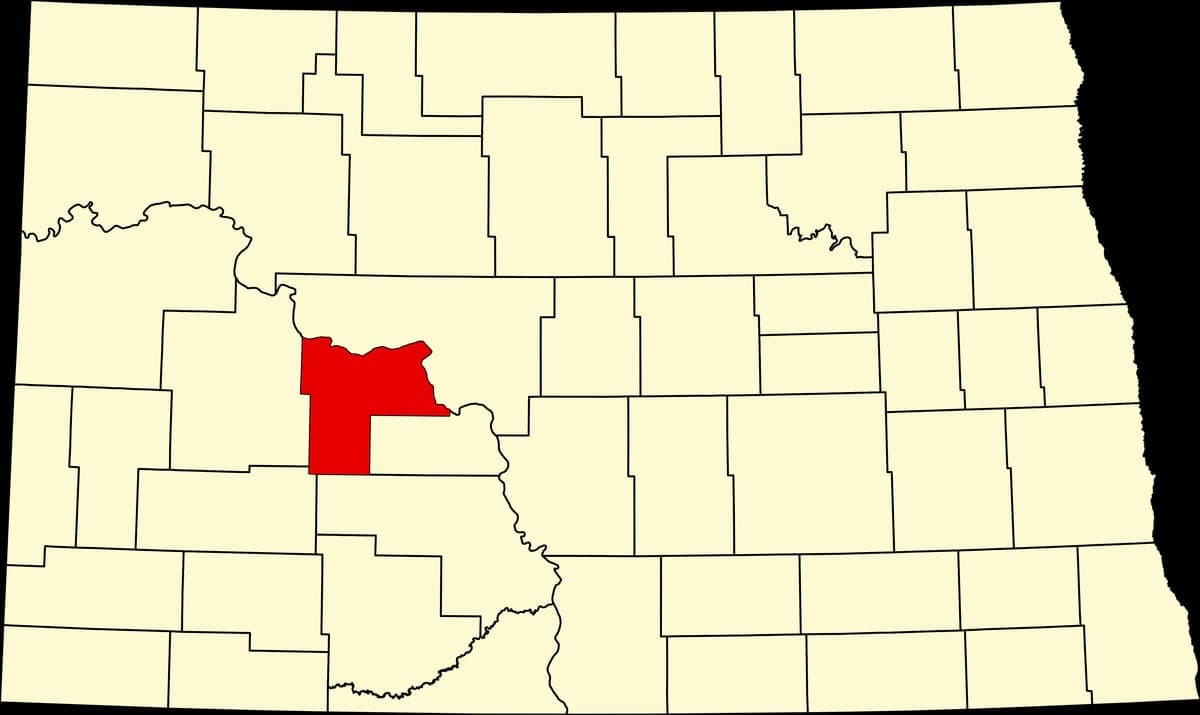
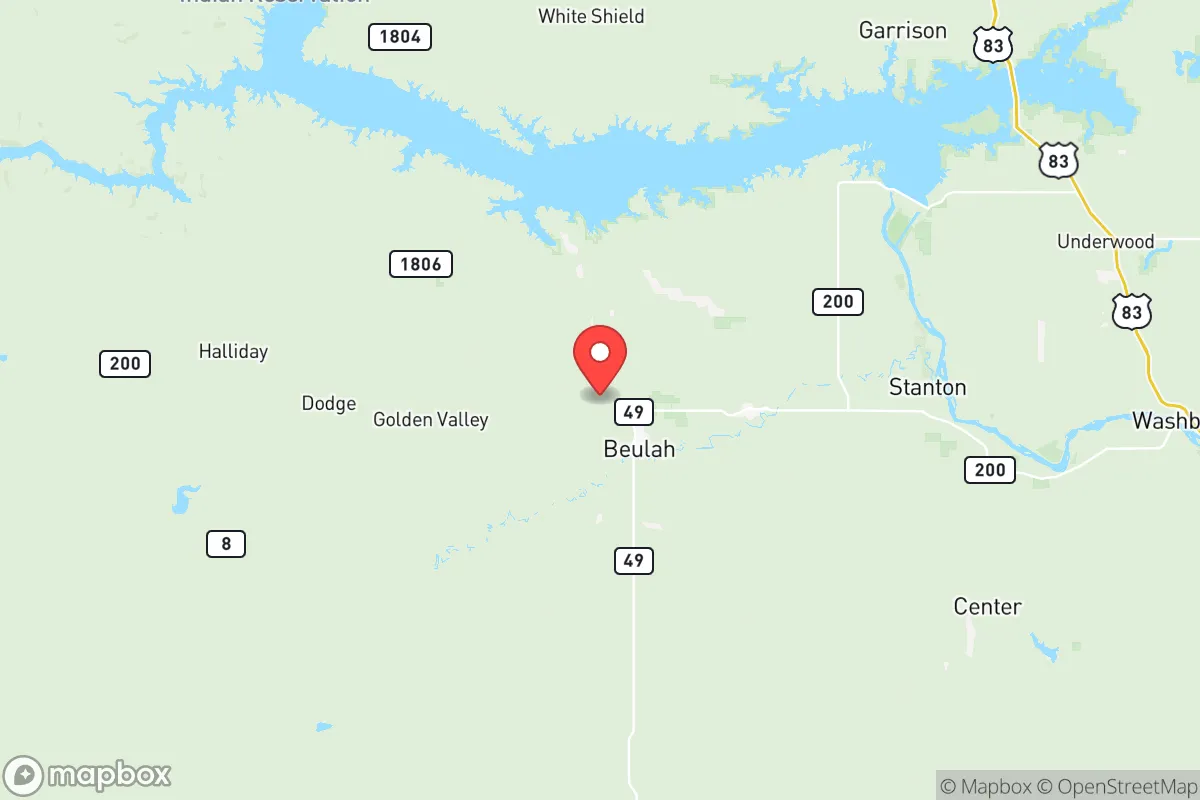
Mercer County, North Dakota, is a reliably Republican stronghold with a Cook Partisan Voting Index of R+18, meaning it votes about 18 points more Republican than the national average. The county has consistently backed GOP candidates in presidential elections by wide margins, and this conservative lean is deeply embedded in its local politics. While the county as a whole is solidly red, there are subtle variations between its communities: the county seat of Stanton and the smaller town of Hazen tend to be the most reliably Republican, while the larger town of Beulah, home to a significant number of workers at the nearby coal-fired power plants and the Dakota Gasification Company, shows a slightly more moderate streak, though still firmly in the GOP column. The trajectory here is one of stability rather than dramatic change; the county's political character has remained remarkably consistent over the past two decades, with no signs of a major shift on the horizon.
How it compares
Compared to the rest of North Dakota, Mercer County is more conservative than the state average. While North Dakota as a whole is also a reliably Republican state—it hasn't voted for a Democratic presidential candidate since 1964—Mercer County's R+18 rating places it among the more GOP-friendly counties in the state. For context, the state's largest county, Cass County (home to Fargo), is considerably more moderate, while counties in the western oil patch, like McKenzie County, are even more conservative. Mercer County sits comfortably in the conservative camp, but it's not an outlier; it's representative of the rural, agricultural and energy-producing regions that form the backbone of the state's Republican majority. The lack of a Cook PVI for the state itself makes a direct numerical comparison impossible, but the practical effect is clear: a Republican candidate can expect to win Mercer County by a larger margin than they would statewide.
What this means for residents
For conservative residents, the political climate in Mercer County is a comfortable fit. Local elections are dominated by Republicans, and the county's policies on taxes, land use, and energy development generally align with conservative principles. A conservative can expect their vote to carry significant weight in local primaries, which often decide the general election. For liberal residents, the reality is more challenging. They are a distinct minority, and their political views are unlikely to be reflected in local government or in the county's representation in the state legislature. This can lead to a sense of isolation, but it doesn't mean they are without a voice. In Beulah, for example, a small but active group of Democrats and independents participate in local civic life, focusing on issues like education funding and environmental stewardship of the Missouri River, which runs through the county. The key for any resident, regardless of affiliation, is to engage at the local level, where personal relationships and community involvement often matter more than party labels.
Culturally, Mercer County is a place where traditional values, self-reliance, and a strong work ethic are highly prized. The county's economy is heavily tied to energy production (coal and natural gas) and agriculture, which shapes its political priorities. There is a strong sense of community, and people tend to know their neighbors. Policy debates often center on balancing economic development with environmental concerns, particularly regarding the Missouri River and the region's air quality. While the county is overwhelmingly conservative, it is not monolithic; there are nuanced discussions about the future of coal, the role of renewable energy, and the best ways to support local schools and infrastructure. The political climate is stable, but it is not static, and the county's residents are actively shaping its future through their votes and their participation in local affairs.

State Political ClimatePolitical Climate in North Dakota
State Political AnalysisPolitical Environment in the State
North Dakota is a deeply red state, with Republicans holding every statewide office and supermajorities in both legislative chambers, but its conservatism is distinct from the national brand—rooted in a populist, libertarian-leaning, and fiercely independent streak. The state has not voted for a Democratic presidential candidate since Lyndon Johnson in 1964, and in 2024, Donald Trump carried it by roughly 20 points, though that margin has narrowed slightly from 33 points in 2020 as the Bakken oil patch counties have become less dominant. The dominant coalition is a mix of rural agricultural conservatives, oil-and-gas libertarians, and a small but vocal contingent of moderate Republicans and Democrats who still hold sway in a handful of legislative districts, particularly around Fargo and Grand Forks.
Urban vs. rural divide
The political map breaks down along a clear urban-rural axis, but with a twist: the state's largest city, Fargo, is the only reliably blue-leaning metro area, and even there, the county (Cass) has voted Republican in every presidential race since 2000, though by single digits. Grand Forks, home to the University of North Dakota, is a swing area—Grand Forks County went for Trump by about 12 points in 2024, but local races often flip between parties. The real Republican strongholds are the rural counties: McLean, Mountrail, and Williams counties in the oil patch routinely deliver 70-80% Republican margins, while the far northeastern counties like Cavalier and Towner are more competitive, sometimes electing Democrats to the state legislature. The Turtle Mountain and Spirit Lake reservations are Democratic strongholds, but their populations are small enough that they rarely shift statewide outcomes. What this means in practice is that a relocator moving to Fargo will encounter a more mixed political environment—with a visible Democratic presence and active progressive groups—while someone settling in Williston or Dickinson will find near-unanimous conservative sentiment.
Policy environment
North Dakota's policy environment is defined by low taxes, minimal regulation, and a hands-off approach to personal liberties that appeals to both libertarians and traditional conservatives. The state has no state income tax (individual income tax was eliminated in phases, with the final rate hitting 0% in 2024), a flat 4.31% corporate income tax, and property taxes that are among the lowest in the nation—averaging about 0.98% of assessed value. The regulatory posture is business-friendly: there are no statewide zoning mandates, no rent control, and no state-level minimum wage above the federal $7.25 (though Fargo and Grand Forks have local ordinances at $8.00 and $8.50 respectively). Education policy is decentralized, with strong local control over school boards and a robust school choice movement—the state has a tax-credit scholarship program for private school tuition, and in 2023, the legislature passed a bill allowing public funds to follow students to private schools via education savings accounts. Healthcare is a mixed bag: the state expanded Medicaid under the Affordable Care Act in 2013, but the legislature has repeatedly rejected proposals for a state-based health insurance exchange, leaving residents reliant on the federal marketplace. Election laws are moderately restrictive: voter ID is required (with a strict photo ID law passed in 2013 and upheld in 2024), same-day voter registration is not allowed, and mail-in voting is available only with an excuse. However, the state has no voter ID requirement for absentee ballots, and early voting is available for 14 days before an election.
Recent policy direction
The last five years have seen a sharp rightward shift on cultural and social issues, even as the state maintains its libertarian streak on economic matters. In 2023, the legislature passed a near-total abortion ban (HB 1250) that prohibits the procedure after six weeks, with exceptions only for rape, incest, and medical emergencies—a law that took effect immediately after the Dobbs decision. Gun laws are among the most permissive in the country: the state has constitutional carry (no permit needed for concealed or open carry), no waiting periods, no magazine capacity limits, and a "stand your ground" self-defense law passed in 2017. On education, the 2023 session saw the passage of a "parents' bill of rights" (SB 2150) that requires schools to notify parents of any curriculum changes related to sexuality or gender identity, and a ban on transgender girls participating in K-12 sports (HB 1298). Property rights are strongly protected: the state has a "right to farm" constitutional amendment (passed in 2012) that limits local regulation of agricultural operations, and a 2023 law (HB 1420) that restricts the use of eminent domain for carbon pipeline projects—a direct response to the Summit Carbon Solutions pipeline controversy. On privacy and surveillance, North Dakota has no state-level data privacy law, but it does have a 2023 law (SB 2151) that prohibits the use of facial recognition technology by law enforcement without a warrant. Voting access has tightened: in 2021, the legislature passed a law (HB 1256) that eliminated the state's voter registration portal and required all registration to be done by mail or in person, and in 2023, a bill (SB 2140) that shortened the absentee ballot request window from 45 days to 15 days before an election.
Civil unrest & political movements
North Dakota has a history of political activism that is both left- and right-wing, but the most visible flashpoints in recent years have been around energy and land rights. The Dakota Access Pipeline protests at the Standing Rock Reservation in 2016-2017 drew thousands of activists from across the country, leading to clashes with law enforcement and a lasting legacy of tension between the state government and tribal nations. On the right, the Bismarck-based "Patriot" movement has been active since the early 2010s, organizing around Second Amendment rights and opposition to federal land management, particularly in the Little Missouri National Grassland. The state has no sanctuary cities or counties for immigration enforcement, but there is a small but vocal movement in Fargo pushing for a "welcoming city" ordinance—so far unsuccessful. Election integrity has been a recurring issue: in 2020, the state's Republican secretary of state, Al Jaeger, defended the integrity of the election against claims of fraud, but in 2022, the legislature passed a bill (HB 1369) creating a new election integrity unit within the secretary of state's office. The most visible political movement a new resident would notice is the carbon pipeline debate: the proposed Summit Carbon Solutions pipeline, which would carry captured CO2 from ethanol plants to underground storage in western North Dakota, has sparked fierce opposition from landowners and some county commissions, leading to a 2023 law that gives the state Public Service Commission authority to override local zoning restrictions—a move that has united libertarians, environmentalists, and property rights advocates in protest.
Projection
Over the next 5-10 years, North Dakota's political trajectory is likely to remain deeply conservative, but with a growing tension between the old-guard agricultural populism and the newer, more culturally conservative oil-patch libertarianism. The state's population is aging and slowly declining (it lost about 3% of its population between 2020 and 2025), but in-migration from out-of-state—particularly to the oil patch and to Fargo—is bringing in a younger, more diverse, and slightly more moderate electorate. The Fargo metro area is growing at about 1.5% annually, and its political lean is slowly shifting leftward, though it will remain a swing area for the foreseeable future. The oil patch counties, by contrast, are seeing a demographic shift toward older, wealthier retirees and remote workers, which could moderate their politics slightly but not enough to flip them. The biggest wildcard is the carbon pipeline issue: if the pipeline is built and leads to significant land-use conflicts, it could galvanize a property-rights movement that crosses party lines, potentially reshaping the state's political coalitions. For a new resident, the bottom line is that North Dakota will remain a reliably red state for at least the next decade, but the flavor of that conservatism is evolving—less about farm subsidies and more about cultural issues, energy policy, and the tension between local control and state preemption.
For someone moving to North Dakota, the practical takeaway is that you'll find a state where your personal freedoms—whether to carry a gun, homeschool your kids, or run a business without heavy regulation—are broadly protected, but where the political climate is increasingly shaped by cultural battles over abortion, transgender rights, and energy development. If you're conservative, you'll feel at home almost anywhere, though you'll find more like-minded neighbors in the oil patch and rural counties than in Fargo or Grand Forks. If you're liberal, you'll find a small but active community in the college towns and the reservations, but you should expect to be in the minority in most public spaces. The state's politics are serious but not hostile—people tend to be polite and pragmatic, even when they disagree, and the low population density means that local relationships often matter more than party labels. Just be aware that the carbon pipeline debate is likely to dominate local news for the next few years, and if you buy rural land, you may find yourself in the middle of it.
* Values derived from national, state, county, city and local statistics and may differ in a specific area. Last updated: 2026-08-24T21:35:47.000Z
Narrative content on this page is AI-generated and may contain mistakes. Verify any details that matter before acting on them.
ReloMaps may earn a commission from affiliate links at no extra cost to you.

