
Photo: Wikipedia
Demographics of Pierce County
Affluence Level in Pierce County
A middle-class area roughly in line with national averages across income, home values, education, and employment.
People of Pierce County
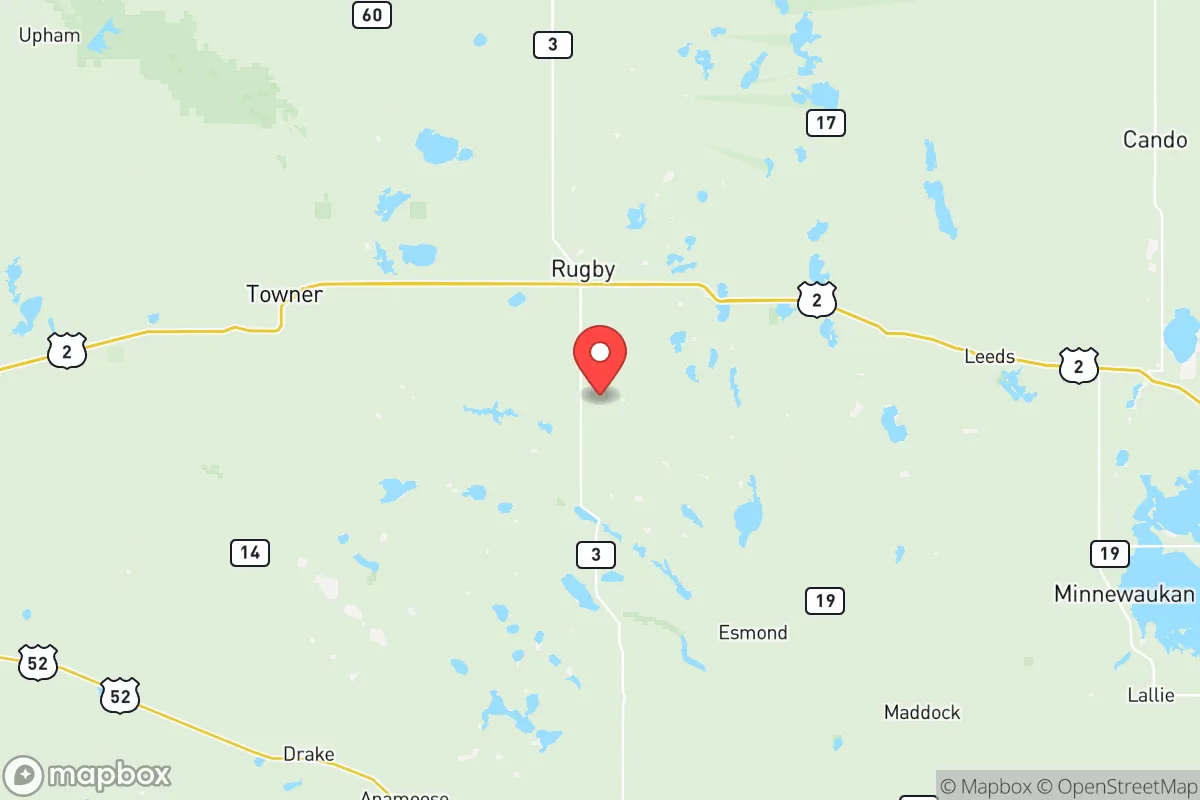
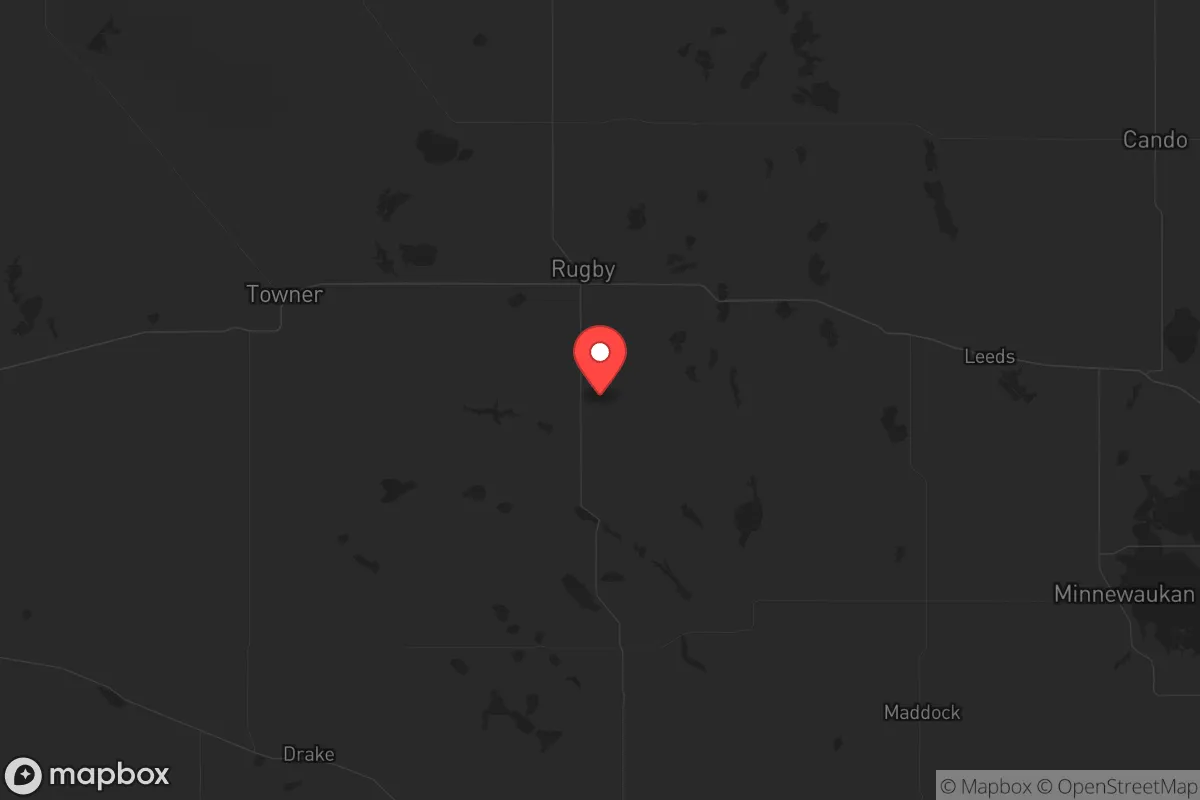
Pierce County, North Dakota, is home to roughly 3,961 residents, making it one of the state's more sparsely populated rural counties. The population is overwhelmingly white (93.1%) and native-born, with a foreign-born share of just 0.2% — one of the lowest in the nation. The county's identity is rooted in its agricultural heritage and the legacy of European settlement, with a small but stable Hispanic (1.1%) and East/Southeast Asian (0.5%) presence. This is a place where community ties run deep, church attendance is high, and the pace of life is dictated by the seasons and the land.
Settlement & growth (pre-1960)
Before European settlement, the area that is now Pierce County was part of the traditional territory of the Dakota (Sioux) people, particularly the Sisseton and Wahpeton bands. The land was used for seasonal hunting and gathering, with no permanent agricultural settlements. The first non-Native presence came with fur traders and explorers in the early 19th century, but significant American settlement did not begin until after the 1887 Dawes Act and the subsequent opening of the region to homesteading.
The major wave of settlement occurred between 1880 and 1910, driven by the Northern Pacific Railroad's expansion and the promise of cheap land under the Homestead Act. The county was officially organized in 1889. The first settlers were predominantly of German and Norwegian descent, drawn from the Upper Midwest and directly from Europe. These groups established the county's foundational towns. Rugby, the county seat and largest town, was founded in 1886 as a railroad hub and quickly became the commercial and social center. Other early settlements included Wolford, Balta, Barton, and Orrin, each serving as a trading post and gathering point for surrounding farm families. The town of Silva was also platted during this period, though it never grew large. The economy was entirely agrarian, focused on wheat, oats, and livestock, with small-scale creameries and grain elevators dotting the landscape.
The population peaked around 1920 at roughly 8,000 residents. The Dust Bowl and Great Depression of the 1930s hit the region hard, causing an out-migration of families who could not sustain their farms. Unlike the Sun Belt or industrial cities, Pierce County did not see any significant in-migration from the Great Migration of Black Americans from the South, nor from Dust Bowl Okies — the county remained overwhelmingly white and rural. The post-World War II era saw a continued decline in farm population as agricultural consolidation reduced the number of family farms, a trend that accelerated through the 1950s and 1960s.
Modern era (post-1965)
The 1965 Hart-Cellar Act, which reshaped U.S. immigration, had virtually no impact on Pierce County. The foreign-born population remains at 0.2%, and the county did not experience the waves of immigration from Latin America, Asia, or Africa that transformed many urban and suburban areas. The demographic story of the modern era is one of steady population decline and aging, not diversification. From a peak of around 8,000 in 1920, the population fell to 4,675 by 2000 and to 3,961 by the 2020s.
The small Hispanic population (1.1%) is largely tied to seasonal agricultural labor, particularly in the potato and sugar beet fields that remain part of the regional economy. These workers often live in Rugby or commute from larger towns like Minot. The East/Southeast Asian population (0.5%) and Indian subcontinent population (0.3%) are almost entirely professionals — doctors, engineers, and academics — associated with the Heart of America Medical Center in Rugby, the county's largest employer. There is no distinct ethnic enclave; these residents are dispersed and integrated into the broader community. The Black population (0.3%) is similarly small and tied to professional roles.
Domestic migration has been outward, not inward. Young adults leave for college and jobs in larger cities like Fargo, Bismarck, or Minneapolis, and many do not return. The county has seen some in-migration of retirees and a small number of remote workers seeking a low-cost, rural lifestyle, but this has not offset the natural decrease (more deaths than births) that has characterized the county since the 1990s. Suburbanization has not occurred in any meaningful sense; Rugby remains the only incorporated city with a population over 1,000, and the surrounding townships are depopulating.
The future
The demographic trajectory of Pierce County is one of continued slow decline and homogenization. The population is aging — the median age is over 50 — and the birth rate is below replacement. Without a significant influx of new residents, the county will likely see its population drop below 3,500 within the next two decades. The small immigrant and minority populations are not growing; they are plateauing or being absorbed into the white majority through intermarriage and assimilation.
There is no sign of tribalization into distinct ethnic enclaves. The county remains culturally cohesive, with a strong sense of local identity centered on Rugby's status as the "Geographical Center of North America" (a monument in the town marks the spot). The biggest demographic wildcard is the potential for energy development — the Bakken oil fields are about 60 miles west, and if extraction expands eastward, it could bring a temporary influx of workers. However, this has not materialized to date, and the county's economy remains tied to agriculture and healthcare.
For a newcomer, Pierce County offers a stable, safe, and deeply rooted community where nearly everyone knows their neighbors. The trade-off is limited economic opportunity, a long winter, and a population that is shrinking rather than growing. It is a place for those seeking a quiet, rural life with strong social bonds, not for those looking for diversity or rapid change.

* Values derived from national, state, county, city and local statistics and may differ in a specific area. Last updated: 2026-05-12T18:03:09.000Z
Narrative content on this page is AI-generated and may contain mistakes. Verify any details that matter before acting on them.
ReloMaps may earn a commission from affiliate links at no extra cost to you.

