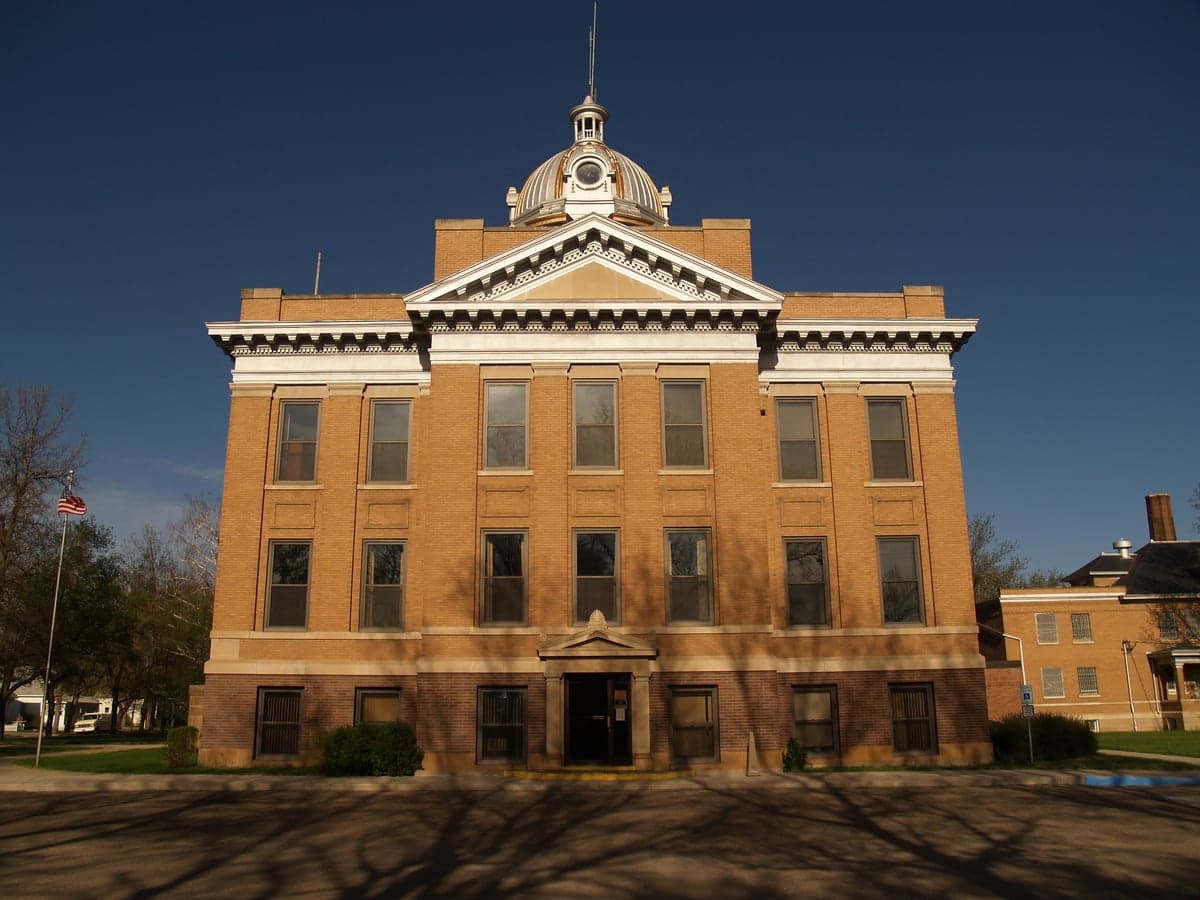
Photo: Wikipedia
Political ClimatePolitical Climate in Pierce County
Showing state-level results — no local-only data available.
Local Political AnalysisPolitical Analysis of Pierce County
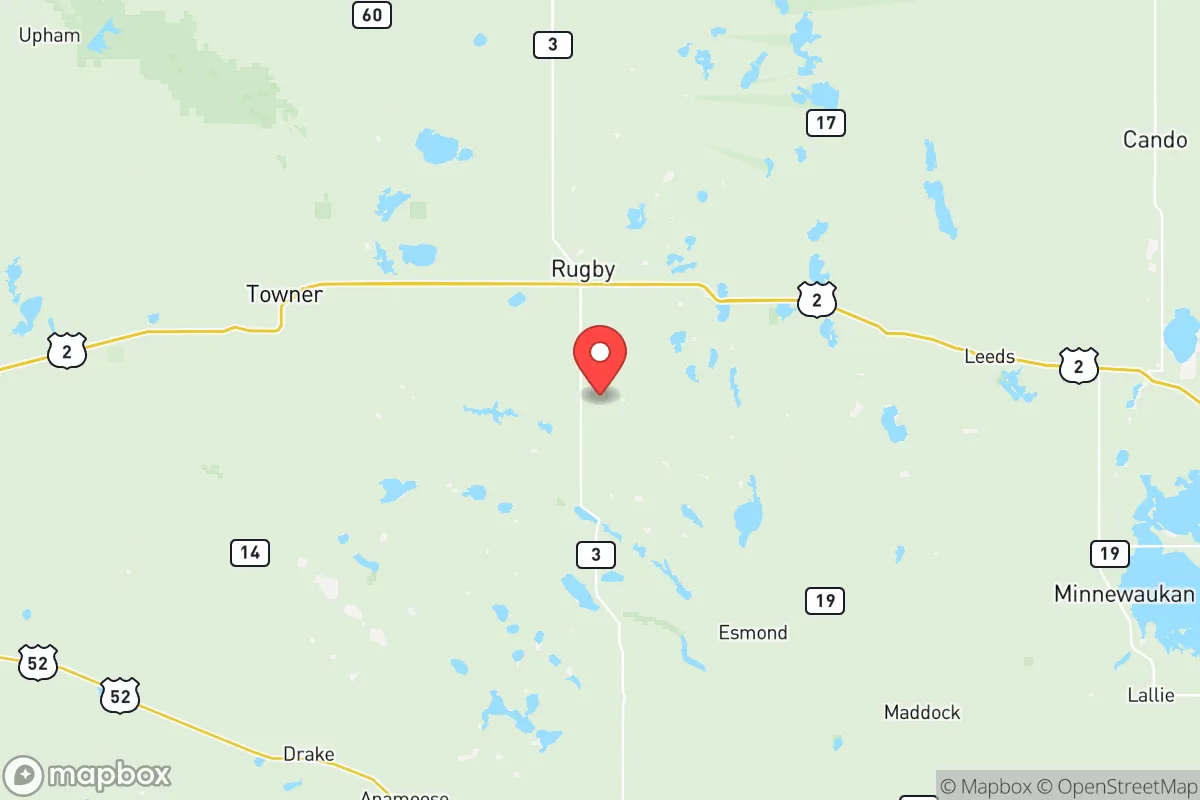
Pierce County, North Dakota, is about as reliably red as they come, with a Cook PVI of R+18 that puts it right in line with the rest of the state. That means you can pretty much bank on conservative candidates carrying the county by comfortable margins in most elections, though the picture gets a little more interesting when you zoom in on specific towns. Rugby, the county seat and biggest town, is the heart of that conservative vote, while smaller communities like Balta and Wolford tend to be even more rock-ribbed Republican. The only real exception you'll find is in the tiny precinct around the Turtle Mountain Indian Reservation's edge near Dunseith, where you might see a few more Democratic votes trickle in, but it's never enough to shift the county's overall lean.
How it compares
When you stack Pierce County up against the rest of North Dakota, the numbers are basically a mirror image—both carry that R+18 PVI. But the feel on the ground is a bit different. The state as a whole has seen some urban drift toward the center in places like Fargo and Bismarck, where younger voters and new arrivals have nudged things slightly purple in a few precincts. Pierce County hasn't caught that bug. The population here is older, more rooted, and overwhelmingly tied to agriculture and small-town life, which keeps the political culture more traditional. You won't find the same kind of progressive activism or even moderate Republicanism that's started cropping up in the state's bigger cities. It's a place where the county commission, school board, and even the local soil conservation district are all run by folks who take a pretty dim view of government overreach into personal freedoms—whether that's gun rights, property rights, or how you raise your kids.
What this means for residents
For someone living here, the political climate means you're not constantly butting heads with neighbors over hot-button issues. There's a general consensus that the government should stay out of your business, and that's reflected in local policy. Tax levies are kept low, zoning is minimal, and there's no appetite for the kind of progressive social experiments you see in blue states. The downside is that this homogeneity can make the area feel a bit insular—if you're not on the same page politically, you might find yourself keeping your opinions to yourself over coffee at the Rusty Nail in Rugby. But for folks who value personal liberty and a hands-off approach from authorities, it's a comfortable fit. The recent push from the state level to preempt local ordinances on things like firearms and energy development has actually been a relief here, because it keeps county government from being tempted to overstep.
Culturally, Pierce County is a place where the old ways still hold sway. The annual Pierce County Fair in Rugby is as much a political gathering as it is a livestock show—candidates shake hands, and folks talk about what's really bothering them, which is usually taxes or federal overreach. There's a wariness of any shift toward progressive ideology, and you can feel it in conversations about everything from school curriculum to land use. Looking ahead, the biggest concern among locals is that the state's growing oil and tech sectors might eventually bring in outsiders who don't share those values. For now, though, Pierce County remains a stronghold where the R+18 rating isn't just a statistic—it's a way of life.

State Political ClimatePolitical Climate in North Dakota
State Political AnalysisPolitical Environment in the State
North Dakota is about as reliably conservative as a state gets, with a Cook Partisan Voting Index of R+18, meaning it votes roughly 18 points more Republican than the national average. The dominant coalition is a blend of rural agricultural interests, energy sector workers from the Bakken oil fields, and a strong libertarian streak that distrusts federal overreach. Over the last 10-20 years, the state has actually shifted further right, driven by an influx of workers to places like Williston and Watford City during the oil boom, and a simultaneous exodus of younger, more moderate voters from the larger towns to out-of-state metros. The Democratic-NPL (Nonpartisan League) party, once a powerhouse in the state, has been reduced to a handful of legislative seats, mostly concentrated in a few specific pockets.
Urban vs. rural divide
The political map of North Dakota is starkly simple: the rural areas are deep red, and the few urban centers provide the only blue spots. Fargo and Grand Forks are the two main metro areas that lean more moderate or even slightly Democratic, driven by the presence of North Dakota State University and the University of North Dakota, along with a larger service-sector and healthcare workforce. In the 2024 election, Cass County (Fargo) was one of the few counties where the Republican margin was under 10 points. Meanwhile, Bismarck and Mandan are reliably conservative, with Burleigh County routinely delivering 70%+ Republican votes. The real engine of the state's rightward tilt, however, is the western half. Minot, Dickinson, and the oil patch counties like McKenzie County (home to Watford City) are among the most Republican in the nation, often voting 80-85% for GOP candidates. The divide isn't just about party; it's cultural. The western energy towns are pro-business, pro-energy, and deeply skeptical of environmental regulations, while the eastern college towns have a more cosmopolitan, though still relatively conservative, vibe.
Policy environment
North Dakota's policy environment is a conservative's dream, with a few notable wrinkles. The state has no personal or corporate income tax (a flat 1.5% corporate rate was eliminated in 2023), relying instead on a mix of property taxes, sales taxes, and oil extraction revenue. The regulatory posture is aggressively pro-business, especially for energy and agriculture. Education policy is solidly in favor of school choice, with a robust private school and homeschooling community, though the state has not yet passed a universal voucher program. Healthcare is a mixed bag: the state expanded Medicaid under the Affordable Care Act in 2013, a move that was controversial among conservatives but has since become accepted. Election laws are among the most secure in the nation, with strict voter ID requirements and no-excuse absentee voting only recently expanded. The state legislature is dominated by the Republican Party, holding supermajorities in both chambers, which means conservative bills on abortion (a near-total ban), gun rights (constitutional carry), and parental rights in education pass easily.
Trajectory & freedom
On the whole, North Dakota is becoming more free in the traditional conservative sense, but there are warning signs. Recent legislation has expanded personal liberty in several key areas. In 2023, the state passed a constitutional carry law, allowing any legal gun owner to carry a concealed firearm without a permit. The same year, the legislature passed a parental rights in education bill, requiring schools to notify parents of any curriculum involving sexuality or gender identity and to obtain consent before providing mental health services. Property rights were strengthened with a law limiting the use of eminent domain for carbon pipeline projects, a direct response to the controversial Summit Carbon Solutions pipeline. However, there are concerning trends. The state has seen a push for centralized data collection through a proposed "digital identity" system, which raised alarms among privacy advocates. Additionally, the state's heavy reliance on federal oil and gas leasing means that federal overreach—like the Biden administration's pause on new leases—directly impacts local freedom. The biggest red flag for liberty-minded residents is the increasing use of state preemption laws to override local ordinances on everything from fracking bans to plastic bag bans, which, while often conservative in effect, represents a concentration of power in Bismarck.
Civil unrest & political movements
North Dakota is not a hotbed of civil unrest, but it has seen its share of political flashpoints. The most significant was the Dakota Access Pipeline protests at the Standing Rock Sioux Reservation in 2016-2017, which drew thousands of activists from across the country and resulted in clashes with law enforcement. That event left a lasting scar, with ongoing tensions between the state government and tribal nations over pipeline safety and treaty rights. On the right, the Bakken oil boom created a libertarian-leaning, pro-energy movement that has been highly effective at the ballot box, pushing for deregulation and opposing any carbon tax or cap-and-trade schemes. There is also a growing election integrity movement in the state, with activists pushing for hand-counting of ballots and paper-only voting, though the state's current system is already considered secure. Immigration politics are relatively quiet, as North Dakota has a very small foreign-born population (around 4%), but there have been local debates in Fargo and Grand Forks about refugee resettlement, with some conservative groups opposing it. You won't see daily protests, but the political energy is real, especially around energy policy and land rights.
Projection
Over the next 5-10 years, North Dakota is likely to remain deeply conservative, but the nature of that conservatism may shift. The demographic trend is concerning for the state's long-term vitality: the rural population is aging and shrinking, while the oil patch towns are volatile, subject to boom-and-bust cycles. In-migration is mostly from other conservative states like Texas and Montana, which will reinforce the rightward tilt. However, the Fargo-Moorhead area is growing steadily and could become a more moderate, even purple, region over time, especially if it attracts more tech and healthcare workers from the coasts. The biggest wild card is the energy transition. If federal policy shifts heavily toward renewables, North Dakota's oil and coal industries could face serious headwinds, potentially driving a populist, anti-establishment backlash. A new resident moving in now should expect a state that is politically stable, with low taxes and high personal freedom, but also one that is increasingly reliant on a single industry (energy) and facing a demographic cliff. The state will likely double down on its conservative identity, but the tension between rural traditionalists and the more pragmatic, business-friendly conservatives in the cities will be the defining political story.
For someone choosing North Dakota as a relocation destination, the bottom line is this: you are moving to a state where your personal freedoms—from gun ownership to school choice to low taxes—are well-protected and likely to stay that way. The government in Bismarck is generally on your side, not looking to micromanage your life. However, you need to be aware that the state's economy is tied to the energy sector, and the winters are long and harsh. The political culture is one of self-reliance and neighborly help, not government handouts. If you value a place where your vote actually counts (your vote in a state with R+18 is a drop in a very red bucket, but it's a bucket that aligns with your values), and where the biggest political fights are about how to keep the federal government out of your business, North Dakota is a solid bet. Just don't expect the amenities or diversity of a coastal state—that's the trade-off for the freedom you'll find here.
* Values derived from national, state, county, city and local statistics and may differ in a specific area. Last updated: 2026-05-12T18:03:09.000Z
Narrative content on this page is AI-generated and may contain mistakes. Verify any details that matter before acting on them.
ReloMaps may earn a commission from affiliate links at no extra cost to you.

