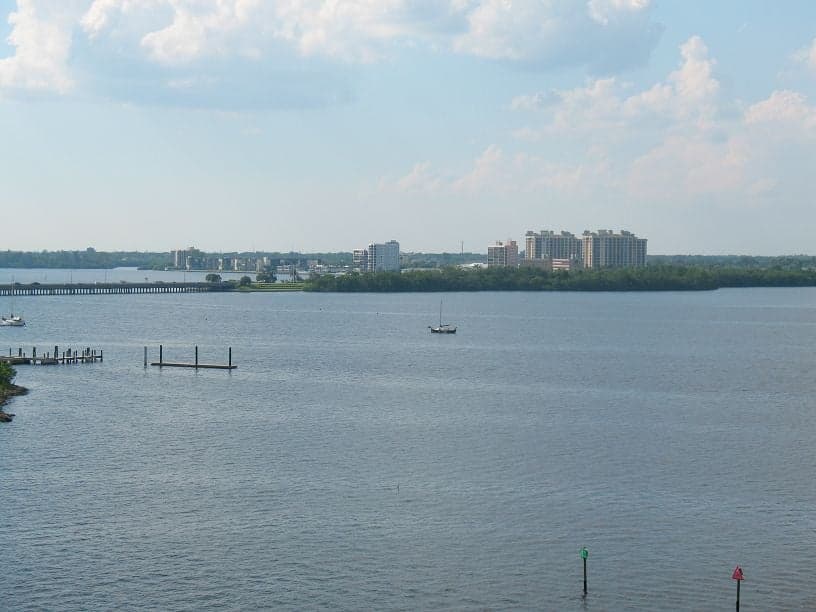
Photo: Wikipedia
Strategic Assessment of North Fort Myers, FL
Workable tactical position. Some exposure to population density or targets, but generally defensible in a crisis.
What does the Strategic Assessment tell us?
Our Strategic Assessment grades tactical survivability of an area. Major population centers, military targets, fallout zones, natural disasters, and border exposure all drive risk — lower exposure means a more defensible position in a crisis.
This is heavily inspired by Joel Skousen's Strategic Relocation book. Highly recommended you checkout the book ($)What does this tell us?
Our Strategic Assessment grades tactical survivability of an area. Major population centers, military targets, fallout zones, natural disasters, and border exposure all drive risk — lower exposure means a more defensible position in a crisis.
This is heavily inspired by Joel Skousen's Strategic Relocation book. Highly recommended you checkout the book ($)Strategic Pillars

Key Distances
Regional Safe Places
Below is our recommended "safe zones" in Florida and the surrounding area based on our strategic heuristics. For most people, it's unrealistic to live in a “safe zone” full-time due to work, family or other personal reasons. They tend to be more rural. However, many of these areas are perfect for second homes and retreat properties that double as a vacation home or even a short-term rental.

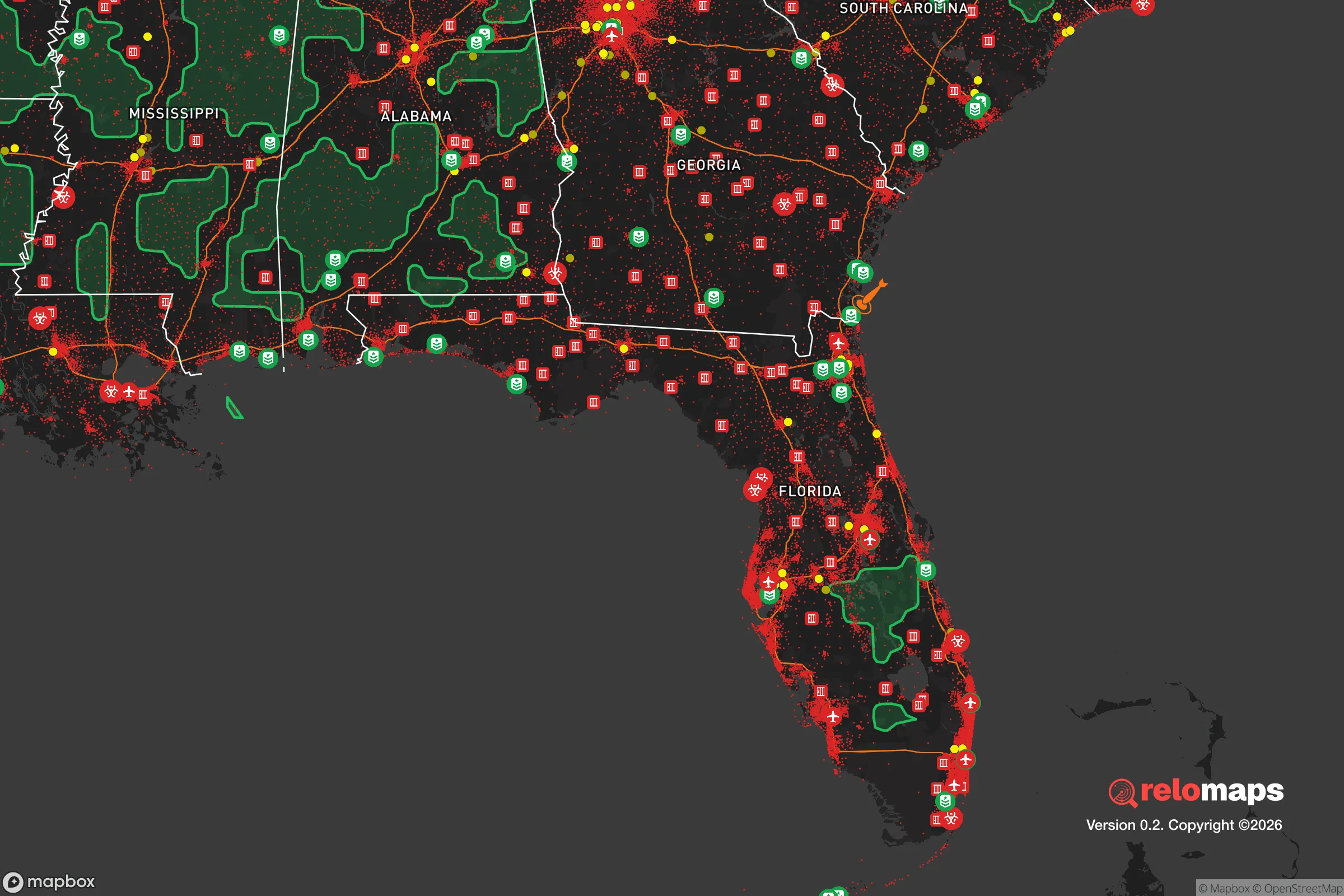


Important Note: For informational purposes only. This does not mean nothing bad ever happens in the green zones. Please use common sense. This is based on public data and modeled with AI. We tried to take a conservative approach but mistakes happen. We update this regularly as new information becomes available.
Solar Generator Recommendations
Backup power matters more here than in safer locations. We've picked three solar generators across budgets and capacity tiers — start with the budget unit if you only need a few essentials, or step up if you want to run a fridge and HVAC for days at a time.

Jackery Portable Power Station Explorer 300
Budget OptionPower on the Go: Weighing only 11 lbs, it's convenient to set up and store with book-sized foldable solar panels

BLUETTI Portable Power Station AC180
Designed for both indoor and outdoor scenarios, AC180 is highly capable as it has a robost capacity and continuous output power.

EF ECOFLOW DELTA Pro Ultra Power Station
Upgraded PickEcoFlow DELTA Pro Ultra is a whole-home energy system designed to grow with your family. Integrated with the Smart Home Panel 2, it scales to meet your evolving energy needs — keeping your home powered, intelligent, and secure through every stage of life.
We earn a commission, at no additional cost to you.
Strategic Assessment Analysis
North Fort Myers, Florida, offers a mixed strategic picture for the conservative prepper or survivalist. Its primary advantage is geographic positioning—sitting on the Caloosahatchee River, it provides a natural water source and a buffer from the densest urban chaos, while still being within a reasonable drive of critical infrastructure. However, its proximity to Fort Myers proper, the heavily populated I-75 corridor, and the Gulf Coast’s hurricane alley introduces significant vulnerabilities that must be weighed carefully. For a relocator prioritizing long-term resilience, this area is a calculated trade-off: decent natural resources and a lower population density than nearby cities, but with real exposure to storm surges, coastal evacuation gridlock, and the fallout from a major metropolitan collapse.
Geographic position and natural advantages for long-term survival
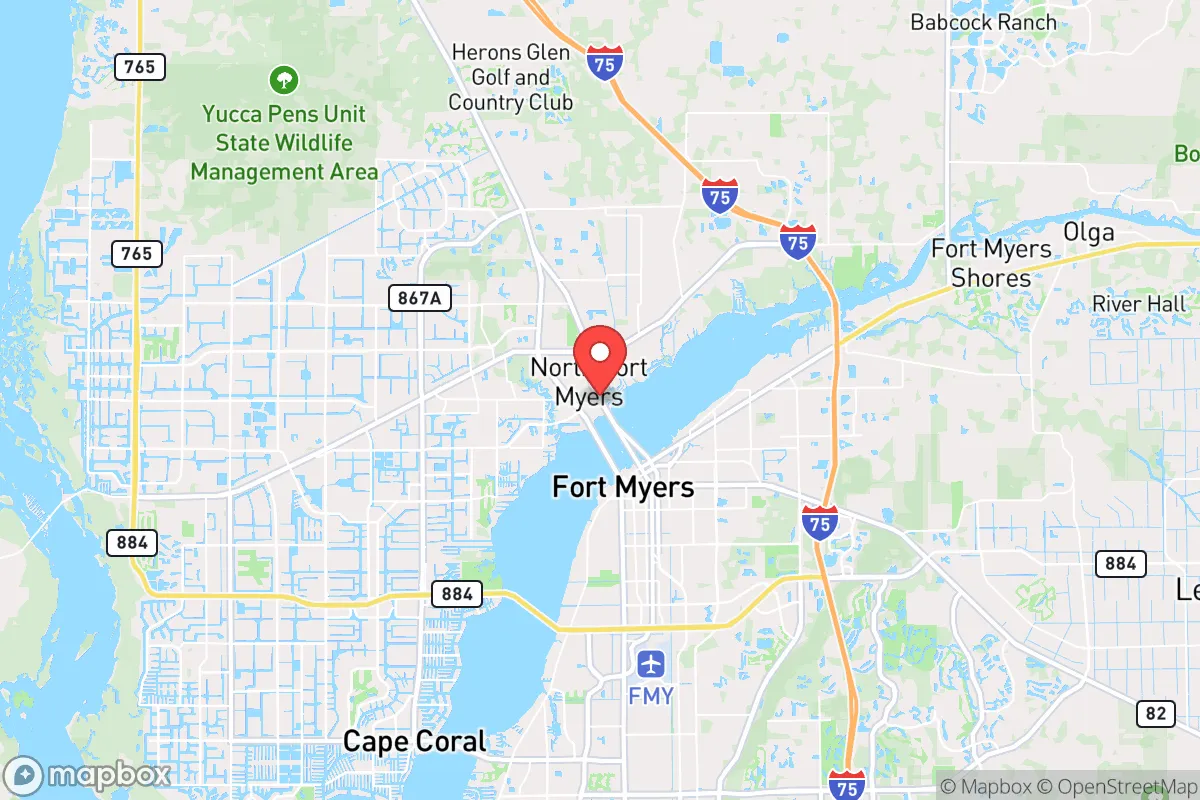
North Fort Myers sits north of the Caloosahatchee River, directly across from the city of Fort Myers, in Lee County. Its location offers several natural advantages for a prepper mindset. The river itself is a reliable freshwater source—critical for filtration, irrigation, and potential off-grid water collection—and the surrounding landscape includes a mix of pine flatwoods, wetlands, and agricultural land. The area is less built up than South Fort Myers or Cape Coral, with more rural pockets and larger lots, which can support gardening, rainwater catchment, and small livestock. The proximity to the Gulf of Mexico (roughly 10–15 miles west) provides access to marine resources like fishing, but this is a double-edged sword given storm surge risks. The region’s flat terrain and subtropical climate allow for year-round growing seasons, a major plus for food security. For a relocator, the key natural advantage is the Caloosahatchee River as a defensive barrier and water source, plus the ability to tap into the area’s agricultural history—there are still working farms and nurseries that could be leveraged in a grid-down scenario.
Risks, exposures, and proximity to fallout-relevant landmarks
The most glaring vulnerability is hurricane exposure. North Fort Myers is in a high-risk zone for storm surge, especially along the river and near the coast. Hurricane Ian (2022) demonstrated this brutally: the area saw catastrophic flooding, with storm surge pushing miles inland, destroying homes, and causing prolonged power outages. For a prepper, this means any retreat must be built to elevated standards—elevated structures, flood-proofing, and a robust evacuation plan for Category 3+ storms. The area is also within 20 miles of the I-75 corridor, a major north-south evacuation route that becomes a parking lot during emergencies. In a mass casualty event or civil unrest scenario, that highway would be a chokepoint for both fleeing populations and looters. Additionally, North Fort Myers is roughly 30 miles from the Southwest Florida International Airport (RSW) and 15 miles from the Port of Fort Myers—both potential targets for disruption or fallout in a national crisis. The proximity to Fort Myers proper (population ~90,000) and Cape Coral (~200,000) means that any urban collapse would send waves of refugees north across the river. The Caloosahatchee bridges—particularly the Edison Bridge and the Cape Coral Bridge—are single points of failure that could be blocked or overwhelmed. For a survivalist, these are hard negatives: the area is not remote enough to avoid spillover from a city’s collapse, and its coastal location makes it a natural target for storm-related disasters.
Practical resilience for a relocator: food, water, energy, and defensibility
For a relocator serious about self-sufficiency, North Fort Myers has mixed marks. Water is abundant via the Caloosahatchee, but it’s brackish near the coast and requires treatment—reverse osmosis or distillation is a must. The water table is high, so shallow wells are feasible in many areas, but saltwater intrusion is a growing concern. Food resilience is better: the growing season is 10–11 months, and local soil (sandy loam in places) can support citrus, vegetables, and tropical fruits with amendment. There are also local farmers’ markets and small-scale farms that could be bartered with in a crisis. Energy-wise, solar is viable—Florida gets 230+ sunny days a year—but hurricane winds mean panels must be ground-mounted or reinforced. Battery storage is essential, as grid outages are frequent. Defensibility is the weak point. North Fort Myers is flat, with few natural chokepoints or high ground. The river provides a barrier to the south, but the north and east are open to approach from rural Lee County and unincorporated areas. The housing stock is a mix of older single-family homes, mobile homes, and newer subdivisions—many of which are not built for security. A prepper would need to prioritize a property with a fenced perimeter, clear sightlines, and a location away from main roads. The area’s population density (roughly 1,200 people per square mile) is moderate—not rural enough to be truly isolated, but not urban enough to be a complete liability. For a single individual or family, the key is to find a property with well water, solar potential, and a defensible layout, ideally on a larger lot (1+ acres) away from the river’s floodplain.
Overall, North Fort Myers is a strategic compromise. It offers genuine natural advantages—water, growing season, and a river barrier—that a prepared relocator can exploit. But its coastal location, hurricane risk, and proximity to major population centers make it a high-maintenance retreat that requires constant vigilance and hardening. For a conservative prepper looking for a place to ride out a moderate crisis (economic downturn, temporary grid failure, localized unrest), it could work with the right property and preparations. For a full-scale collapse scenario—where cities become ungovernable and coastal areas are hit by repeated storms—the area’s vulnerabilities likely outweigh its benefits. The smart move here is to treat North Fort Myers as a base camp, not a final redoubt: use it for its resources, but have a secondary bug-out location further inland (e.g., the Lake Okeechobee region or central Florida’s ridge country) for when the risks become untenable. If you’re willing to invest in flood-proofing, solar, and a solid community network, this area can be a viable option—but it’s not a set-it-and-forget-it survival spot. It demands active management and a clear-eyed acceptance of its exposure.

* Values derived from national, state, county, city and local statistics and may differ in a specific area. Last updated: 2026-05-14T01:43:14.000Z
Narrative content on this page is AI-generated and may contain mistakes. Verify any details that matter before acting on them.
ReloMaps may earn a commission from affiliate links at no extra cost to you.

