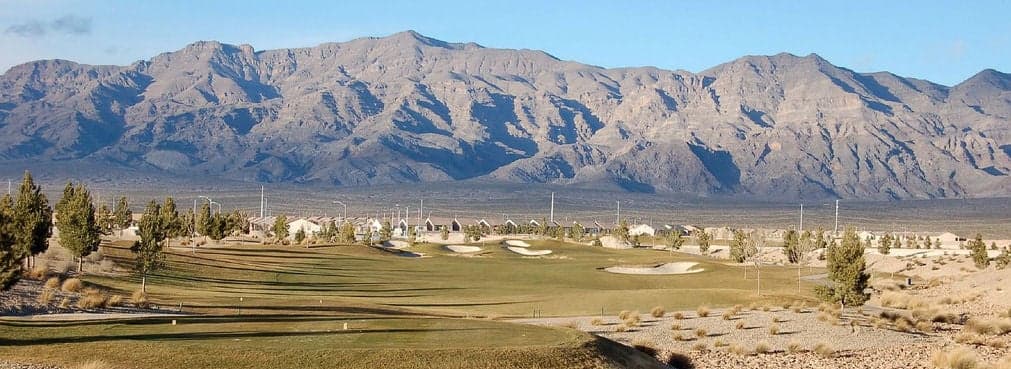
Photo: Wikipedia
Personal Sovereignty in North Las Vegas, NV
Viable for self-reliance. Generally workable, though some barriers may limit total independence.
What does Personal Sovereignty tell us?
Personal Sovereignty measures your capacity for self-reliance and independence with minimal government friction. Higher scores mean fewer barriers between you and the way you want to live... but it assumes you have the space you need and good neighbors.
What does this tell us?
Personal Sovereignty measures your capacity for self-reliance and independence with minimal government friction. Higher scores mean fewer barriers between you and the way you want to live... but it assumes you have the space you need and good neighbors.
State Policy
Energy independence: Importer (15% of energy produced in-state)
Personal Liberty
Homesteading

Personal Liberty Analysis
North Las Vegas offers a mixed but workable environment for personal sovereignty, where Nevada’s generally libertarian state framework provides a baseline of autonomy that local governance sometimes chips away at. For a survivalist or prepper mindset, the key trade-off is this: the state’s lack of income tax and relatively light business regulation create a foundation for self-reliance, but Clark County’s urban density and progressive local ordinances can introduce friction points around property use, self-defense, and medical freedom. The city’s position as a working-class suburb of Las Vegas means you get proximity to desert escape routes and federal land, but you’ll need to navigate a municipal code that favors development over homesteading. Overall, North Las Vegas is a viable base for those prioritizing financial independence and legal gun ownership, provided you’re willing to work around zoning constraints and a local political climate that leans left on social issues.
Tax burden and regulatory posture: how Nevada’s framework supports autonomy
Nevada’s tax structure is a major draw for anyone seeking to minimize government extraction from their income and assets. There is no state income tax, no corporate income tax, and no franchise tax on businesses, which means every dollar you earn stays in your pocket or your prepping budget. The state’s sales tax in Clark County runs about 8.38%, but that’s a consumption tax you can partially control by buying strategically. Property taxes are capped by the state constitution at a maximum of 3% annual increase on assessed value, and the effective rate in North Las Vegas hovers around 0.6% of market value—among the lowest in the Western U.S. For a prepper, this tax environment means less revenue for state programs you may not support and more capital for land, supplies, and training. On the regulatory side, Nevada is generally business-friendly, with no state-level occupational licensing for many trades and a right-to-work law that weakens union influence. However, Clark County imposes its own building codes and environmental regulations that can complicate off-grid modifications like solar panel installations or rainwater catchment—Nevada water law is prior appropriation, and capturing rainwater without a permit is technically illegal, though rarely enforced for small-scale use. The state’s overall regulatory posture is light compared to California or Oregon, but you’ll still need to pull permits for major structural changes.
Self-defense and gun law specifics: what Nevada allows and where limits exist
Nevada is a shall-issue state for concealed carry permits, meaning if you meet basic criteria (age 21, no felony record, pass a background check and a four-hour training course), the county sheriff must issue the permit. North Las Vegas residents apply through the Las Vegas Metropolitan Police Department, which processes applications within 60 days. Open carry is legal without a permit for anyone 18 or older who can legally possess a firearm, though in practice, doing so in urban areas may attract police attention. The state has no magazine capacity restrictions, no assault weapon ban, and no universal background check law for private sales—though a 2016 ballot initiative closed the “gun show loophole” for commercial sales at events. Stand-your-ground laws are on the books, with no duty to retreat in any place you have a legal right to be. Castle doctrine applies to your home and vehicle. For preppers, the key limitation is that Nevada does not recognize permits from all states—check reciprocity maps before traveling. Also, Clark County has a local ordinance prohibiting firearms in county parks and on public transit, which can be a nuisance if you’re commuting with gear. The state’s firearm preemption law generally prevents cities from passing stricter rules, but North Las Vegas has occasionally tested those boundaries with zoning restrictions on gun stores. Overall, Nevada ranks as a solidly pro-2A state, but you’re still subject to federal NFA rules for suppressors and short-barreled rifles.
Self-reliance and homesteading viability: lot sizes, zoning, and off-grid feasibility
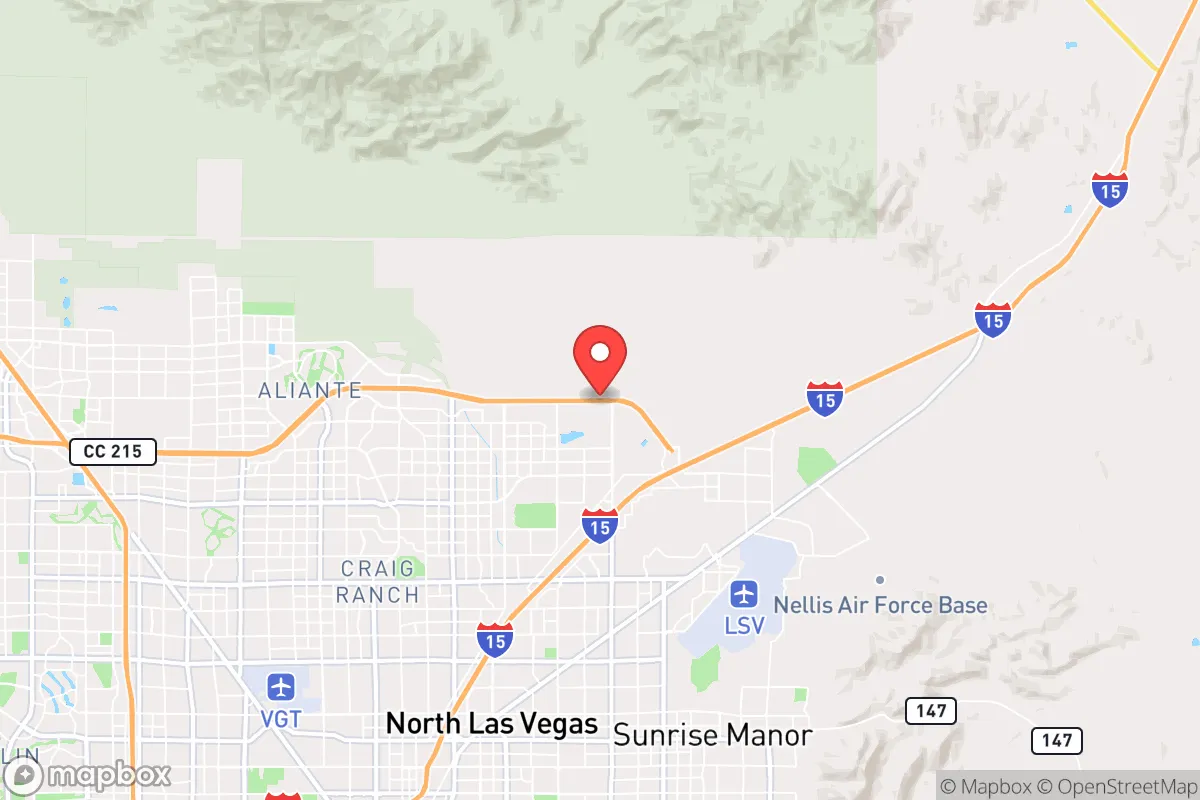
North Las Vegas is primarily a suburban grid of tract homes on quarter-acre lots, with some older neighborhoods offering slightly larger parcels up to half an acre. The city’s zoning code is oriented toward conventional residential development, meaning raising livestock is restricted to specific agricultural zones (A-1 and A-2) that are rare within city limits. Chickens are allowed in residential areas with a permit and a 10-foot setback from structures, but goats, pigs, or larger animals require a minimum of one acre and a special use permit. For a serious homesteader, this is a significant constraint—you’re not going to run a mini-farm on a standard subdivision lot. Off-grid living is even more challenging: North Las Vegas requires connection to municipal water and sewer for any habitable structure, and solar panels must be grid-tied unless you obtain a variance. Rainwater catchment is legally ambiguous, as mentioned, and well drilling is impractical in most of the valley due to groundwater depletion and permitting hurdles. The upside is that federal land is 20–30 minutes north via I-15, offering BLM-managed desert where you can practice bushcraft, shoot, or cache supplies without local interference. For those willing to commute, unincorporated Clark County areas like Moapa or Logandale allow much more freedom—larger lots, no building codes, and actual off-grid potential. Within North Las Vegas itself, self-reliance is more about financial independence and stockpiling than land-based subsistence.
Personal liberties: parental rights, medical autonomy, speech, and property
Nevada’s legal framework generally respects parental rights, with a strong presumption in favor of parental decision-making in education and healthcare. The state does not mandate COVID-19 vaccines for school attendance, and parents can opt out of any school immunization requirement with a religious or medical exemption—no philosophical exemption, but the religious one is broad and rarely challenged. Homeschooling is straightforward: file a notice of intent with the local school district, provide a basic curriculum outline, and you’re set. No standardized testing requirements, no home visits. On medical autonomy, Nevada has legalized medical marijuana and recreational cannabis, which some preppers view as a positive for self-medication options, but the federal illegality remains a concern for those with security clearances or NFA items. The state also has a “right to try” law for terminally ill patients to access experimental treatments, and there is no state-level vaccine mandate for adults. Free speech is protected under the Nevada Constitution, which has its own strong free-expression clause, and the state has no anti-SLAPP law as robust as California’s, but defamation lawsuits are still difficult to win. Property rights are generally respected, though Clark County’s eminent domain authority is broad for infrastructure projects—the I-15 expansion and the Las Vegas Raiders stadium both involved contested takings. For a prepper, the most relevant property issue is that North Las Vegas has a high rate of code enforcement complaints regarding junk vehicles, unkempt yards, and unpermitted structures, which can clash with stockpiling or equipment storage habits.
Compared to other Western cities, North Las Vegas offers a middle-ground sovereignty profile—stronger than California or Colorado on taxes and guns, weaker than rural Idaho or Arizona on land use and off-grid potential. The city’s advantage is its low cost of entry and proximity to vast public lands, which allow you to practice self-reliance skills outside city limits even if your home lot is small. The main compromises are zoning restrictions that limit homesteading and a local government that can be meddlesome on property maintenance. For a survivalist willing to adapt—using a storage unit for bulk supplies, joining a shooting club on BLM land, and keeping a low profile on code issues—North Las Vegas is a functional base. Just don’t expect to live like a mountain man within city limits; treat it as a launch point for the desert beyond.

* Values derived from national, state, county, city and local statistics and may differ in a specific area. Last updated: 2026-04-23T04:09:41.000Z
Narrative content on this page is AI-generated and may contain mistakes. Verify any details that matter before acting on them.
ReloMaps may earn a commission from affiliate links at no extra cost to you.

