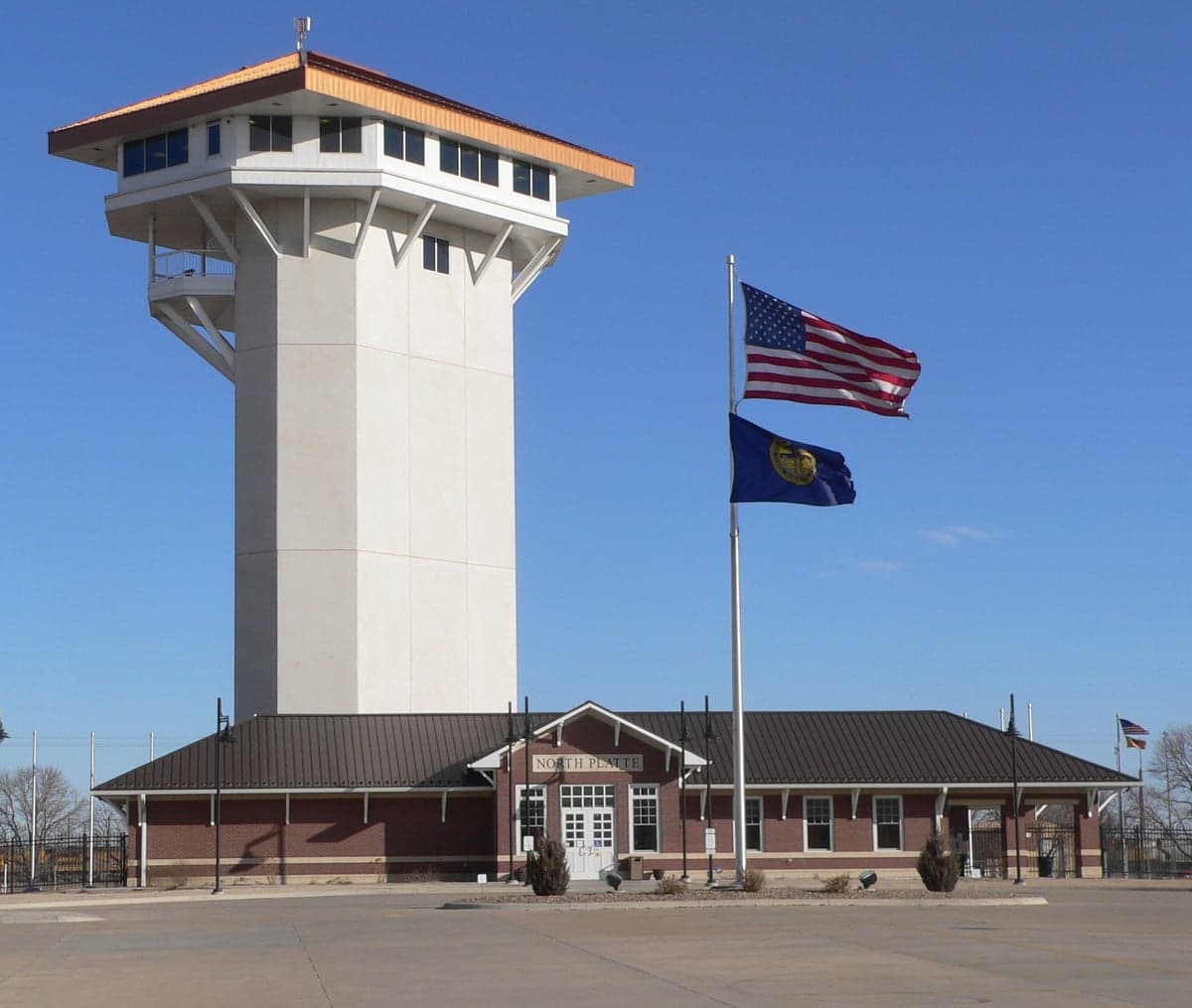
Photo: Wikipedia
Political ClimatePolitical Climate in North Platte, NE
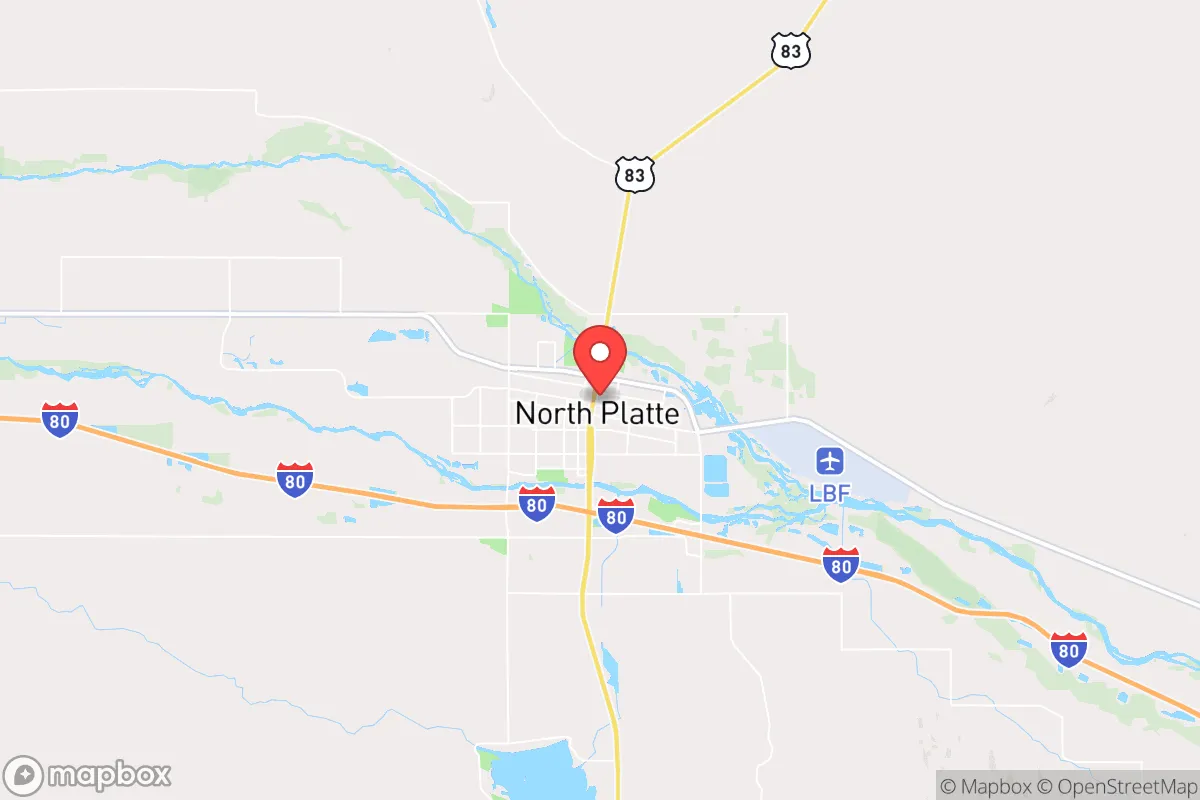
District shown is the primary district for this city’s centroid. Cities may span multiple districts.
Local Political AnalysisPolitical Analysis of North Platte, NE
North Platte has long been a rock-solid conservative stronghold, and honestly, that’s not changing anytime soon. With a Cook PVI of R+27, this town votes Republican by a margin that’s nearly double the national average for red districts. The last few election cycles have only reinforced that trend—Lincoln County went heavily for Trump in both 2020 and 2024, and local races rarely see a competitive Democrat. The trajectory here is steady: folks value their Second Amendment rights, low taxes, and a government that stays out of their business. You won’t find much appetite for the progressive experiments you see in places like Lincoln or Omaha, which feel like a different world entirely.
How it compares
Drive an hour east to Lexington, and you’ll see a more mixed political picture—more union influence from the meatpacking plants, a growing Hispanic population that leans slightly more Democratic in local races. Head west to Ogallala, and it’s even more conservative than North Platte, if you can believe it. But the real contrast is with the state’s urban centers. Lincoln and Omaha are blue islands in a red sea, pushing things like stricter gun laws and higher property taxes to fund social programs. North Platte residents watch that with a wary eye—we’ve seen what happens when government overreach creeps in from the coasts or the capital. Our county commissioners and state reps consistently vote to protect local control, especially on land use and school curriculum decisions. The nearby Sandhills counties to the north are even more libertarian-leaning, where the motto is basically “leave us alone.”
What this means for residents
For the average person living here, the political climate means you can count on a few things. Your property taxes stay reasonable—Lincoln County’s levy is among the lowest in the state for a county this size. You won’t see mask mandates or business shutdowns like you did in some blue cities during 2020; the local health board took a hands-off approach, trusting individuals to make their own choices. The downside? If you lean left, you’ll feel pretty isolated. There’s no real progressive organizing, and the local paper’s letters to the editor are overwhelmingly conservative. But for most of us, that’s a feature, not a bug. The school board recently pushed back on critical race theory materials, and the city council voted down a proposal to create a diversity, equity, and inclusion office—seeing it as unnecessary bureaucracy that would divide people rather than unite them.
Culturally, North Platte still holds onto that old-school Nebraska independence. The biggest policy distinction you’ll notice is how the town handles federal money—there’s a strong preference for block grants with few strings attached, rather than accepting funds that come with mandates on everything from housing to environmental rules. The local gun culture is alive and well; you can open-carry without a permit, and the sheriff’s office is known for being pro-Second Amendment in its enforcement. Looking ahead, the biggest concern among longtime residents is the slow creep of progressive ideas through state-level initiatives or federal overreach. There’s a quiet worry that as the state’s urban population grows, they’ll try to impose their values on rural areas like ours. But for now, North Platte remains a place where your vote actually counts, the government knows its place, and you’re free to live your life without someone in Lincoln telling you how to do it.

State Political ClimatePolitical Climate in Nebraska
State Political AnalysisPolitical Environment in the State
Nebraska has long been a reliably conservative state, with a strong Republican lean that has only deepened in recent cycles. The state hasn't voted for a Democratic presidential candidate since Lyndon B. Johnson in 1964, and its congressional delegation is currently 3-0 Republican in the House, with both Senate seats held by the GOP. Over the past 10-20 years, the dominant coalition has been a blend of rural traditionalists, fiscal conservatives, and a growing populist wing, though the state’s Second Congressional District (Omaha) has become a persistent battleground, flipping to Democrats in 2008, 2020, and 2024. The overall trajectory is one of slow, steady rightward movement outside of the Omaha metro, driven by out-migration from blue states and a strong agricultural and energy economy.
Urban vs. rural divide
The political map of Nebraska is a textbook case of urban-rural polarization. The eastern third of the state, anchored by Omaha and Lincoln, is where the Democratic vote is concentrated. Douglas County (Omaha) and Lancaster County (Lincoln) together cast about 40% of the state’s total vote, and both have trended bluer over the last decade. Omaha’s Second District is the only competitive congressional seat in the state, and it’s been a perennial target for both parties. Meanwhile, the rest of the state is deeply red. Scottsbluff in the Panhandle, Norfolk in the northeast, and Kearney in central Nebraska all vote Republican by margins of 30-50 points. The rural counties along the Platte River and in the Sandhills are among the most conservative in the nation. A notable shift: Sarpy County, just south of Omaha, has flipped from a swing county to solidly Republican as suburban growth has attracted conservative families fleeing Omaha’s higher taxes and progressive policies. Grand Island and Columbus remain reliably red, driven by a strong agricultural and manufacturing base.
Policy environment
Nebraska’s policy environment is broadly conservative, with a few notable exceptions. The state has a unicameral, nonpartisan legislature, which historically produced more moderate outcomes, but in recent years the body has become more openly partisan. On taxes, Nebraska has a flat income tax rate of 5.84% (down from 6.84% in 2020) and a state sales tax of 5.5%, with local options pushing it higher in some cities. Property taxes are a persistent pain point, especially in rural areas, and the legislature has passed several rounds of property tax relief, including LB 1107 in 2020, which increased the state’s property tax credit. On education, Nebraska has a strong school choice movement, with the passage of LB 753 in 2023 creating a dollar-for-dollar tax credit for donations to scholarship-granting organizations, effectively a private school voucher program. The state also has a “Stand Your Ground” law (LB 77, passed in 2023) and is a constitutional carry state, meaning no permit is needed to carry a concealed firearm. On healthcare, Nebraska expanded Medicaid under the Affordable Care Act in 2020 via a ballot initiative, a rare progressive win. Election laws are solid: voter ID is required (passed in 2023), and the state has no-excuse mail-in voting, though it’s not as restrictive as some red states. The biggest red flag for conservatives is the state’s continued reliance on federal farm subsidies and the creeping influence of Omaha’s progressive city council, which has passed sanctuary city-like ordinances limiting cooperation with ICE.
Trajectory & freedom
Nebraska is becoming more free in several key areas, but there are worrying signs. On the positive side, the passage of LB 77 in 2023 eliminated the permit requirement for concealed carry, a major win for Second Amendment advocates. The same year, LB 574 banned gender-affirming care for minors and restricted abortion to the first 12 weeks, both of which were seen as victories for parental rights and medical autonomy. The state also passed a “Parents’ Bill of Rights” (LB 1089) in 2024, requiring schools to notify parents of curriculum changes and allowing them to opt their children out of sex education. On property rights, Nebraska has a strong right-to-farm law that protects agricultural operations from nuisance lawsuits. However, the state’s tax burden remains a concern. While income tax rates have come down, property taxes are still among the highest in the region, and the state’s reliance on sales tax means that low-income families bear a disproportionate share. The biggest threat to freedom is the growing influence of Omaha’s progressive city government, which has pushed for rent control, higher minimum wages, and sanctuary policies. If you’re moving to Nebraska, you want to be in the rural or suburban areas, not inside the Omaha city limits.
Civil unrest & political movements
Nebraska has seen relatively little civil unrest compared to coastal states, but there have been flashpoints. The 2020 George Floyd protests in Omaha turned violent, with looting and fires in the downtown area, leading to a strong backlash that helped Republicans flip several legislative seats in the 2020 election. The state has a small but vocal progressive activist network centered in Lincoln and Omaha, focused on abortion rights and LGBTQ issues. On the right, the Nebraska Republican Party has been increasingly influenced by the populist wing, with groups like the Nebraska Freedom Coalition pushing for school choice and election integrity. Immigration politics are a hot-button issue, especially in the meatpacking towns of Lexington and Schuyler, where large immigrant populations have driven demographic change. There have been no serious secession or nullification movements, but there is a growing frustration with federal overreach, particularly on environmental regulations affecting agriculture. Election integrity controversies have been minimal, though the 2022 gubernatorial primary saw allegations of fraud in the Omaha area, which were not substantiated. Overall, the state is politically stable, but the cultural divide between Omaha and the rest of the state is widening.
Projection
Over the next 5-10 years, Nebraska is likely to become more conservative outside of Omaha, but the Omaha metro will continue to trend left. In-migration from blue states like California and Illinois is concentrated in the Omaha suburbs, particularly in Sarpy County, which is growing fast and remains red. The state’s agricultural economy is stable, but consolidation and automation will continue to reduce the rural population, potentially weakening the GOP’s rural base. The unicameral legislature will likely become more partisan, with the conservative wing gaining seats as Omaha’s influence wanes in redistricting. The biggest wildcard is the Second Congressional District, which could flip back and forth depending on national trends. For a conservative moving in now, expect to find a state that is broadly friendly to your values, but with a growing urban-progressive enclave in Omaha that will require vigilance. The state’s tax burden is likely to continue decreasing, but property tax reform will remain a perennial issue. The cultural war over education and parental rights will intensify, but the state’s conservative majority will likely hold the line.
Bottom line for a new resident: Nebraska is a solid choice for conservatives who want a low-regulation, family-friendly environment with good schools and a strong economy. Stick to the suburbs and rural areas—Papillion, Elkhorn, Gretna, or Fremont—and you’ll find like-minded neighbors and a government that mostly stays out of your way. Avoid Omaha city limits if you want to avoid progressive policies on taxes, housing, and immigration. The state is trending in the right direction on gun rights and parental rights, but you’ll need to keep an eye on property taxes and the growing urban-rural divide.
* Values derived from national, state, county, city and local statistics and may differ in a specific area. Last updated: 2026-04-19T07:50:33.000Z
Narrative content on this page is AI-generated and may contain mistakes. Verify any details that matter before acting on them.
ReloMaps may earn a commission from affiliate links at no extra cost to you.

