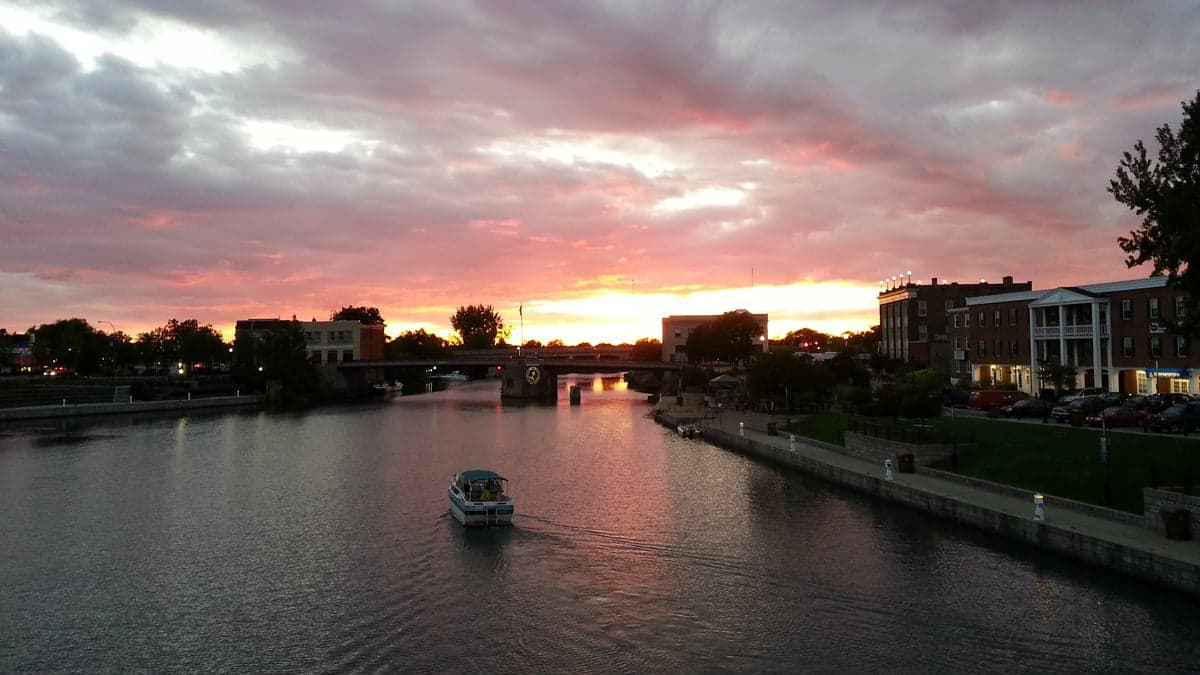
Photo: Wikipedia
Personal Sovereignty in North Tonawanda, NY
Moderate friction. Expect trade-offs in some aspect of personal liberty and independence.
What does Personal Sovereignty tell us?
Personal Sovereignty measures your capacity for self-reliance and independence with minimal government friction. Higher scores mean fewer barriers between you and the way you want to live... but it assumes you have the space you need and good neighbors.
What does this tell us?
Personal Sovereignty measures your capacity for self-reliance and independence with minimal government friction. Higher scores mean fewer barriers between you and the way you want to live... but it assumes you have the space you need and good neighbors.
State Policy
Energy independence: Importer (12% of energy produced in-state)
Personal Liberty
Homesteading

Personal Liberty Analysis
North Tonawanda, New York, presents a mixed picture for those prioritizing personal sovereignty. While the city itself offers a quieter, more community-oriented environment than its larger neighbor, Buffalo, it operates entirely under the thumb of New York State’s expansive regulatory and fiscal apparatus. For a survivalist or prepper, the core tension here is between the area’s tangible assets—affordable land, access to the Niagara River and Erie Canal, and a strong working-class ethos—and the state-level policies that can feel like a direct assault on self-reliance. The bottom line: you can carve out a degree of autonomy here, but you’ll be doing it within a legal framework that is actively hostile to many forms of personal preparedness and freedom.
Tax burden and regulatory posture in North Tonawanda
New York State’s tax burden is among the highest in the nation, and North Tonawanda is no exception. Property taxes are a major concern, with effective rates often exceeding 2.5% of a home’s assessed value. For a prepper looking to own a modest homestead, this is a recurring cost that never goes away and can feel like a permanent lease payment to the state. Income taxes are also steep, with a progressive state rate that can hit nearly 9% for higher earners, plus local taxes in Erie County. The regulatory environment is equally burdensome. New York’s building codes are among the strictest in the country, making any off-grid construction or major renovation a bureaucratic headache. Permits for things like rainwater collection systems, composting toilets, or alternative energy setups are not straightforward and often require costly engineering sign-offs. The state’s aggressive environmental conservation laws, while well-intentioned, can also restrict what you can do on your own land, especially near waterways or wetlands. For someone seeking to minimize government entanglement, the tax and regulatory posture here is a significant negative.
Self-defense and gun law specifics in New York
This is the most critical area of concern for anyone prioritizing personal sovereignty. New York’s gun laws are among the most restrictive in the United States, and North Tonawanda residents are fully subject to them. The SAFE Act, passed in 2013 and strengthened since, mandates universal background checks, a ban on so-called "assault weapons" (which includes many common semi-automatic rifles), and a strict 10-round magazine limit. The Concealed Carry Improvement Act (CCIA) of 2022 made it even harder to carry a firearm for self-defense. To get a permit, you must now demonstrate "good moral character," complete a 16-hour training course (plus 2 hours of live-fire), and provide a list of your social media accounts for review. Carrying a firearm in sensitive locations—which includes virtually any public place, from parks to restaurants—is heavily restricted. For a prepper, this means your ability to defend your home and family with a standard-issue rifle or a high-capacity handgun is legally crippled. The state’s "duty to retreat" law (as opposed to a "stand your ground" law) further complicates self-defense scenarios. While owning a bolt-action hunting rifle or a shotgun for home defense is still possible, the legal landscape is designed to make armed self-reliance difficult and expensive.
Self-reliance and homesteading viability in the Tonawandas
On the positive side, North Tonawanda offers some real potential for self-reliance, especially compared to more urbanized parts of the state. The city’s residential lots are often larger than in Buffalo, with many properties featuring decent-sized backyards suitable for substantial vegetable gardens, small orchards, or even a few chickens (check local zoning, but it’s generally allowed). The proximity to the Niagara River and Erie Canal provides excellent fishing and a potential water source for irrigation. The soil in the region is generally fertile, and the growing season, while short (roughly May to October), is productive for cold-hardy crops. However, going fully off-grid is a legal and practical nightmare. New York requires grid-tied electrical connections for most residential structures, and solar panels must be approved by the utility. Rainwater collection for potable use is heavily regulated due to health codes. Composting toilets are technically allowed but require a state-approved system and regular inspections. The cost of land in North Tonawanda is moderate, but property taxes on even a small homestead will eat into any savings. For a prepper, the area is viable for a "semi-self-reliant" lifestyle—growing food, raising some animals, and storing supplies—but true off-grid independence is nearly impossible without constant legal battles.
Personal liberties: parental rights, medical autonomy, speech, and property
New York State has a strong record of asserting government authority over individual and parental rights. Parental rights in education have been a flashpoint, with the state mandating curriculum content that many conservative families find intrusive, including comprehensive sex education and social-emotional learning standards that can override parental values. Medical autonomy is severely limited. New York has some of the strictest vaccine mandates in the country, including for school attendance, and during the COVID-19 pandemic, the state imposed sweeping mandates that affected everything from employment to public gatherings. For a prepper concerned about future public health emergencies, this signals a willingness to use state power to compel medical compliance. Free speech is constitutionally protected, but the state’s hate speech laws and social media monitoring (as seen in the CCIA) create a chilling effect for those expressing dissenting views on hot-button issues. Property rights are the weakest link. New York’s eminent domain laws are broad, and the state’s environmental regulations can effectively prevent you from using your land as you see fit. The state also has a history of aggressive code enforcement, particularly in older homes, which can lead to costly forced upgrades. In short, personal liberties in North Tonawanda are constantly subject to state-level override.
Overall, North Tonawanda offers a trade-off for the sovereignty-minded individual. You get a relatively affordable, low-crime community with decent land for gardening and a strong local culture of self-sufficiency. But you are living in a state that actively works against many core tenets of personal preparedness: gun ownership, medical choice, parental control, and property autonomy. Compared to states like Texas, Florida, or even Pennsylvania, the sovereignty picture here is bleak. For a prepper or survivalist, North Tonawanda is a place where you can build a resilient local life, but you must be prepared to constantly navigate and resist a state government that sees your autonomy as a threat. It’s a defensive posture, not an offensive one. If you are willing to fight for every inch of your freedom, it can work. If you want a place where freedom is the default, look elsewhere.

* Values derived from national, state, county, city and local statistics and may differ in a specific area. Last updated: 2026-05-01T07:59:41.000Z
Narrative content on this page is AI-generated and may contain mistakes. Verify any details that matter before acting on them.
ReloMaps may earn a commission from affiliate links at no extra cost to you.

