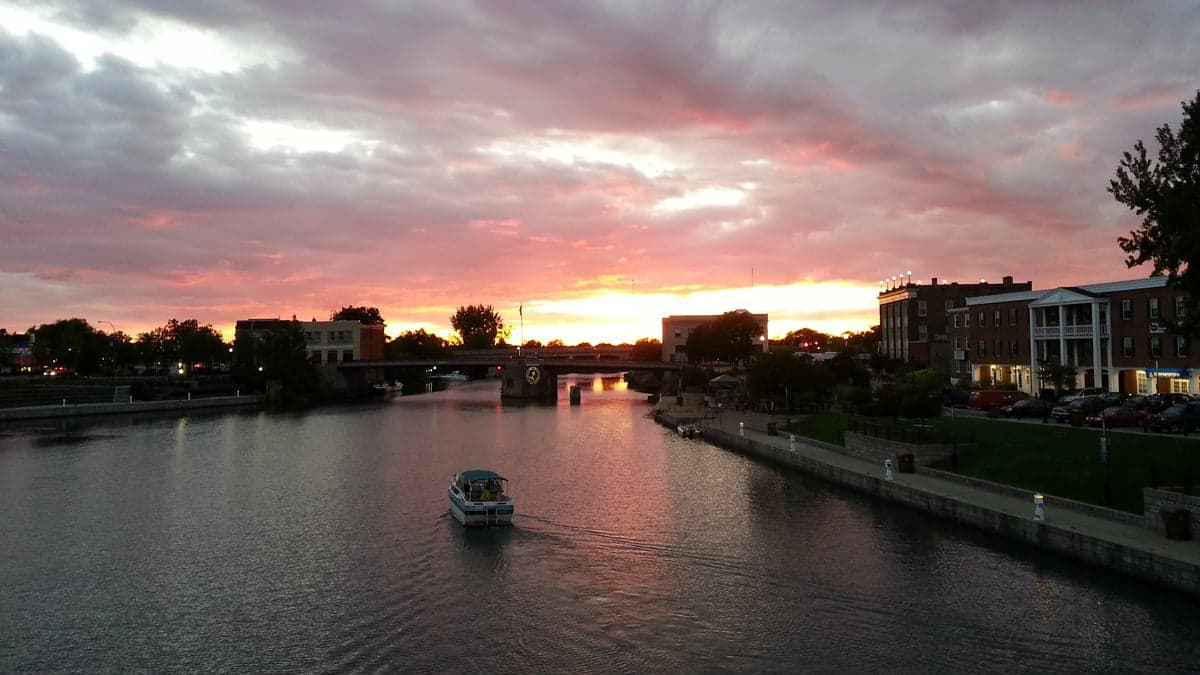
Photo: Wikipedia
Political ClimatePolitical Climate in North Tonawanda, NY
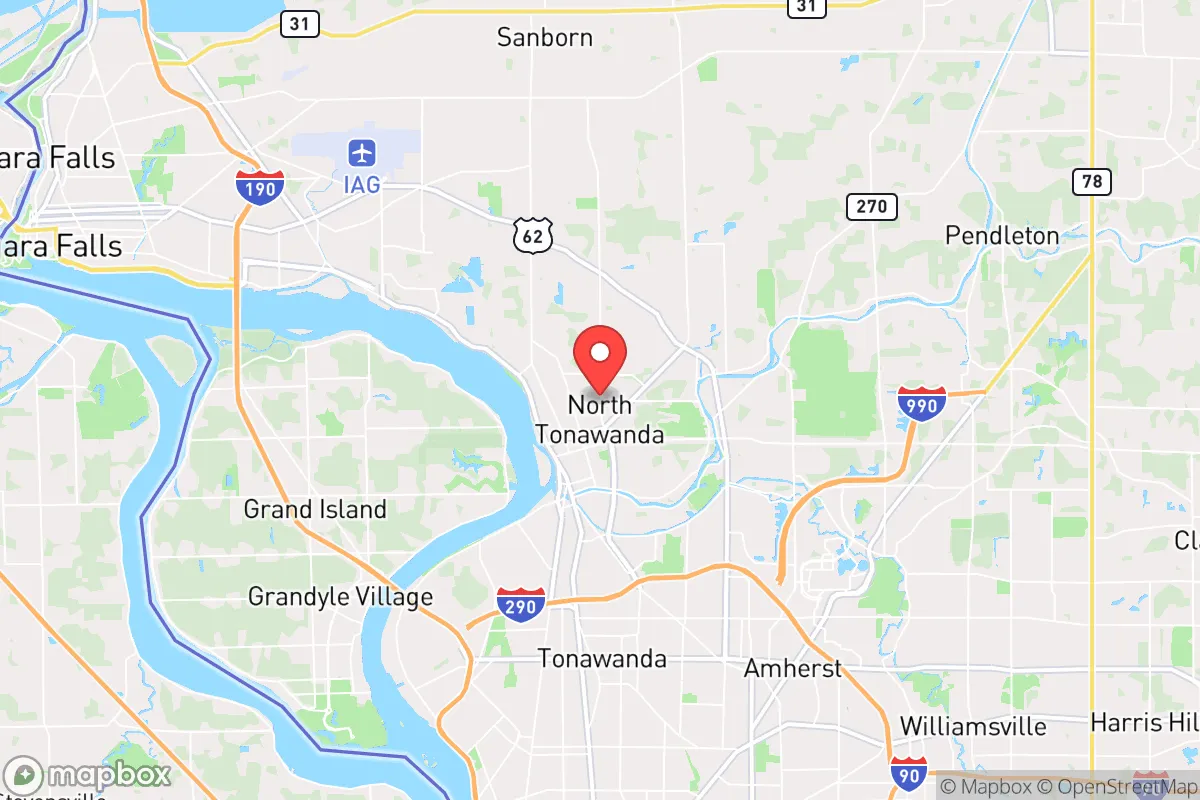
District shown is the primary district for this city’s centroid. Cities may span multiple districts.
Local Political AnalysisPolitical Analysis of North Tonawanda, NY
North Tonawanda, New York, has a Cook PVI of D+11, meaning it leans significantly more Democratic than the national average, but don't let that number fool you into thinking it's a progressive stronghold. This city, nestled along the Erie Canal and the Niagara River, has a long, proud history of blue-collar independence and a deep skepticism of government overreach. The political shift here over the last decade has been subtle but real, moving from a place where "live and let live" was the unwritten rule to one where you're starting to see more signs of progressive policy creep, especially in the school district and local zoning boards. It's not a radical change overnight, but it's a trajectory that has a lot of long-time residents, myself included, watching closely and feeling a bit uneasy about where we're headed.
How it compares
To understand North Tonawanda, you have to look at its neighbors. Just across the river, Tonawanda (the "City of Tonawanda") is even more Democratic, with a PVI around D+15, and you can feel it in the local politics—more vocal advocacy for bike lanes, higher-density housing mandates, and a general embrace of state-level progressive agendas. Head a few miles north to the Town of Wheatfield or Pendleton, and the political landscape flips hard: those areas are reliably Republican, with a strong "leave us alone" ethos and a focus on low taxes and property rights. North Tonawanda sits right in the middle, a kind of political buffer zone. We used to be a lot more like Wheatfield in spirit—independent, pro-business, suspicious of Albany's mandates. But lately, the city council and school board have been leaning into state grant programs that come with strings attached, like pushing for "equity" initiatives in the schools and adopting zoning changes that favor developers over existing homeowners. It's a slow drift, but it's noticeable when you compare us to our more conservative neighbors.
What this means for residents
For the average person living here, the most immediate impact of this political climate is on your wallet and your personal freedoms. Property taxes in Niagara County are already among the highest in the state, and when local government signs on to state-mandated programs—like the Climate Leadership and Community Protection Act's energy mandates or new affordable housing quotas—those costs don't disappear. They show up in your tax bill and in the erosion of local control. You see it in the school district, where curriculum decisions are increasingly influenced by Albany's directives rather than what parents want. And you see it in the permitting process: if you want to build a shed, start a small business from your home, or even put up a fence, you're dealing with more red tape than you would have ten years ago. The city's "livable community" plans sound nice, but they often mean more regulations on how you can use your own property. For a place that prides itself on being a family-friendly, affordable alternative to Buffalo, that's a concerning trend.
Looking ahead, the cultural and policy distinctions here are becoming sharper. North Tonawanda still has a strong sense of community—the Canal Fest, the local volunteer fire departments, and the mom-and-pop shops on Webster Street are the real heart of the city. But there's a growing divide between the old guard, who remember when the city was a manufacturing hub and valued self-reliance, and the newer residents moving in from Buffalo and other more liberal areas, who often bring a different set of priorities. The long-term concern is that if this progressive drift continues, North Tonawanda could lose what makes it special: the affordability, the freedom to live your life without a lot of government interference, and the sense that your voice actually matters in local decisions. It's not there yet, but the foundation is shifting, and it's worth keeping an eye on.

State Political ClimatePolitical Climate in New York
State Political AnalysisPolitical Environment in the State
New York State has been a reliably blue stronghold for decades, but its political landscape is far more complex than the national headlines suggest. The Democratic coalition dominates statewide races, with the party holding every statewide office and a supermajority in the legislature, but this is almost entirely driven by New York City and its immediate suburbs. Over the past 20 years, the state has shifted leftward on social and economic policy, but a growing conservative and libertarian backlash is visible in the rural upstate regions and even in some outer-ring suburbs. For a conservative-leaning individual or family, the key takeaway is that New York is a state of two starkly different political realities: the densely populated, progressive downstate corridor and the more independent, often red-leaning upstate expanse.
Urban vs. rural divide
The political map of New York is a textbook example of the urban-rural chasm. New York City’s five boroughs—Manhattan, Brooklyn, Queens, The Bronx, and Staten Island—cast roughly 40% of the state’s vote and deliver margins of 70-85% for Democratic candidates. The city’s influence is amplified by its population density and its role as a global media and financial hub, which shapes the state’s cultural and political narrative. The immediate suburbs of Long Island (Nassau and Suffolk counties) and the lower Hudson Valley (Westchester, Rockland, and Putnam counties) lean Democratic but are more competitive, with some towns like Smithtown on Long Island and Yorktown in Westchester showing strong Republican pockets. As you move north and west, the map flips dramatically. The Finger Lakes region, the Southern Tier, and the North Country are reliably Republican. Oneida County (Utica) and Steuben County (Corning) routinely vote +20 to +30 points Republican. The city of Buffalo and its Erie County suburbs are a microcosm of the state: Buffalo itself is heavily Democratic, but the surrounding towns like Clarence and Orchard Park are solidly red. Rochester and Syracuse follow a similar pattern—blue cities surrounded by red or purple suburbs. The rural counties of the Adirondacks and the Catskills, such as Hamilton County and Delaware County, are among the most Republican in the Northeast, often voting +30 to +40 points for GOP candidates. This divide means that a conservative moving to New York can find a politically like-minded community, but they will be living under a state government that is increasingly hostile to their values.
Policy environment
New York’s policy environment is a case study in progressive governance. The state has the highest combined state and local tax burden in the nation, with an income tax that tops out at 10.9% and property taxes that are among the highest in the country. The regulatory posture is aggressive, particularly in energy, housing, and business. The Climate Leadership and Community Protection Act (CLCPA) mandates a 70% renewable energy grid by 2030 and net-zero emissions by 2050, driving up energy costs and forcing the closure of natural gas plants. In education, the state has eliminated most charter school caps and expanded funding for public schools, but it also mandates the use of the "Culturally Responsive-Sustaining Education" framework, which many conservatives view as ideological indoctrination. Healthcare is dominated by the state’s Medicaid program, which covers roughly 40% of residents and is a major driver of the state budget. Election laws have been significantly liberalized: no-excuse absentee voting, early voting, and automatic voter registration are now law. The state also passed the John R. Lewis Voting Rights Act in 2022, which requires federal preclearance for any changes to voting procedures in counties with a history of discrimination—a move critics say is designed to suppress conservative-leaning jurisdictions. For a conservative, the policy environment is a constant headwind: high taxes, heavy regulation, and a public sector that prioritizes progressive social goals over economic freedom.
Trajectory & freedom
New York is becoming less free by almost any measure of personal liberty, and the trend has accelerated since 2019. On gun rights, the state passed the SAFE Act in 2013, which banned assault weapons and high-capacity magazines, and then the CCIA (Concealed Carry Improvement Act) in 2022, which effectively ended the ability to carry a concealed firearm in most public places by requiring "good moral character" and banning carry in a long list of "sensitive locations." The state’s parental rights landscape is also concerning: New York does not require parental notification for a minor to obtain an abortion, and the state’s "Gender Expression Non-Discrimination Act" (GENDA) allows students to use bathrooms and locker rooms matching their gender identity without parental consent. On medical autonomy, the state legalized recreational marijuana in 2021, but the rollout has been chaotic and the black market remains dominant. Property rights have been eroded by the state’s rent stabilization laws, which cap rent increases and make it nearly impossible for landlords to evict non-paying tenants. The most recent flashpoint is the "Good Cause Eviction" law, passed in 2024, which requires landlords to prove "good cause" (like non-payment or lease violation) to evict a tenant, effectively creating a statewide rent control regime. For a conservative, the trajectory is clear: the state is using its legislative supermajority to expand government control over housing, education, and personal conduct, with little regard for individual liberty.
Civil unrest & political movements
New York has been a focal point for both left-wing activism and conservative backlash. The 2020 George Floyd protests in New York City were among the largest and most destructive in the nation, with an estimated $1 billion in property damage and a sustained occupation of City Hall Park. The state’s response was to pass police reform legislation that limited qualified immunity and banned chokeholds, but also to cut the NYPD budget by $1 billion. The "Defund the Police" movement has since receded, but the political energy behind it remains strong in the city’s progressive wing. On the right, the "New York State Rifle & Pistol Association" has been the lead plaintiff in multiple Supreme Court cases that have struck down the state’s gun laws, including the landmark NYSRPA v. Bruen decision in 2022. The "Upstate New York" secession movement, while fringe, has gained some traction in rural counties like Lewis County and St. Lawrence County, where residents feel ignored by Albany. Immigration politics are a major flashpoint: New York City’s sanctuary city policy has led to a surge of asylum seekers, with over 100,000 arriving since 2022, straining the city’s shelter system and sparking backlash in working-class neighborhoods. Election integrity is a persistent concern, with the state’s no-excuse absentee voting and same-day registration making it vulnerable to fraud, though no major scandals have been proven. A new resident will notice that political activism is a constant presence, from street protests in Manhattan to town hall meetings in the Adirondacks.
Projection
Over the next 5-10 years, New York is likely to become more progressive and more expensive, but the pace of change may slow as the state’s fiscal problems mount. The demographic trends are working against conservatives: New York City continues to attract young, left-leaning immigrants and domestic migrants, while upstate counties are aging and losing population. The state’s budget deficit, projected to reach $20 billion by 2027, will force difficult choices, but the Democratic supermajority is unlikely to cut spending on social programs. Instead, expect higher taxes on the wealthy and new fees on businesses. The housing crisis will worsen, with the "Good Cause Eviction" law discouraging new construction and driving up rents. On the positive side for conservatives, the Supreme Court’s conservative majority may continue to strike down New York’s most egregious infringements on gun rights and free speech. The state’s energy policies will likely be moderated by the reality of grid reliability, but the overall regulatory burden will remain high. For someone moving in now, the expectation should be that the state will continue to be a hostile environment for conservative values, but that upstate communities will remain viable alternatives for those willing to accept the trade-offs of living under a progressive state government.
For a conservative individual or family considering a move to New York, the bottom line is this: you can find a politically like-minded community in upstate counties like Steuben, Oneida, or Hamilton, but you will be living under a state government that is actively working against your values on taxes, guns, education, and parental rights. The state’s high cost of living and heavy regulation make it a difficult place to start a business or raise a family on a single income. If you are willing to fight for your rights at the local level and can afford the financial burden, upstate New York offers beautiful landscapes and strong communities. But if you are looking for a state that respects your freedom and keeps taxes low, you would be better served looking at the South or the Mountain West. New York is a beautiful state, but it is not a free one.
* Values derived from national, state, county, city and local statistics and may differ in a specific area. Last updated: 2026-05-01T07:59:41.000Z
Narrative content on this page is AI-generated and may contain mistakes. Verify any details that matter before acting on them.
ReloMaps may earn a commission from affiliate links at no extra cost to you.

