 Popular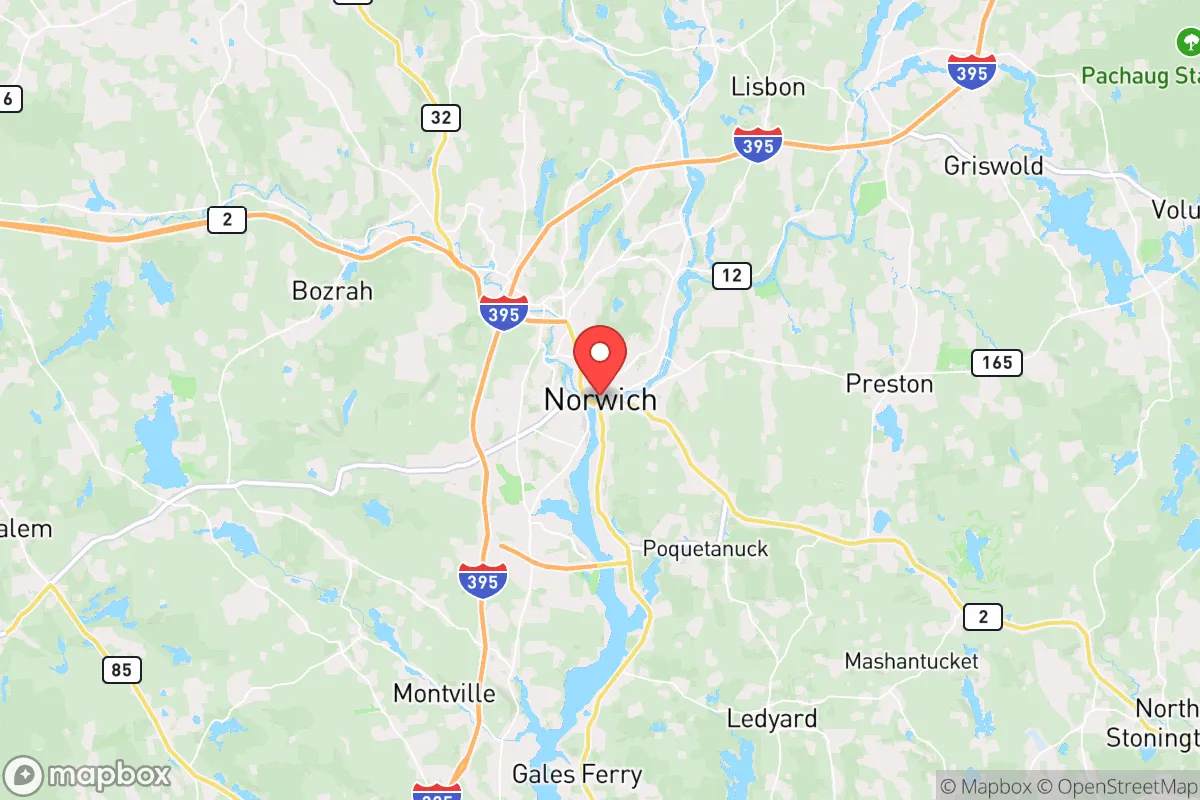
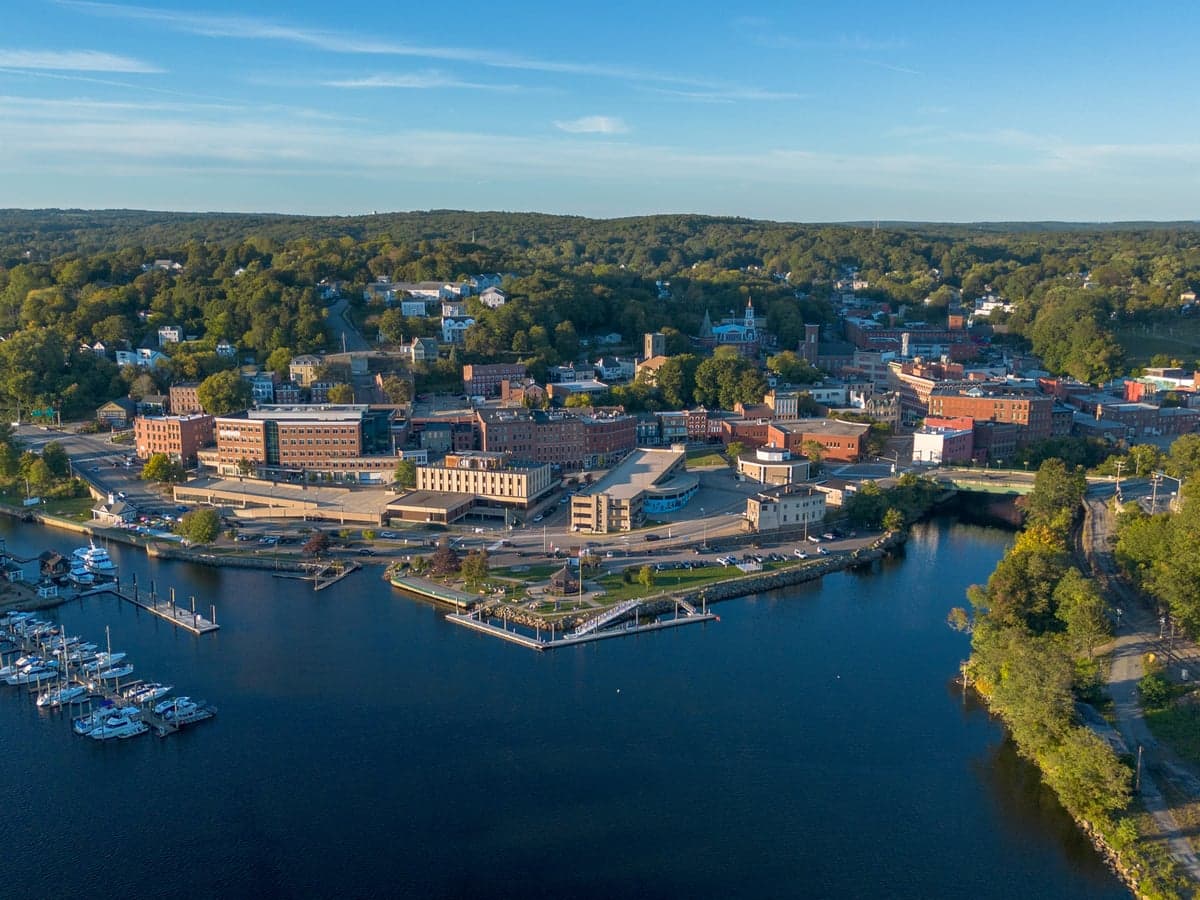
Photo: Wikipedia
Political ClimatePolitical Climate in Norwich, CT
District shown is the primary district for this city’s centroid. Cities may span multiple districts.
Local Political AnalysisPolitical Analysis of Norwich, CT
Norwich, Connecticut, has a Cook PVI of D+4, meaning it leans about four points more Democratic than the national average, but that number doesn't tell the whole story if you've lived here a while. This used to be a solid, working-class town where folks kept their heads down, went to work at the mills or the casino, and didn't expect the government to run their lives. Over the last decade or so, you've seen a real shift—not just in voting patterns, but in the whole attitude of the city government. It's gone from a place that mostly left you alone to one where progressive policies are creeping in, and that's got a lot of long-time residents worried about where things are headed.
How it compares
To really get the picture, you have to look at what's around Norwich. Drive ten minutes west to Bozrah or north to Lisbon, and you're in towns that still vote reliably red, with a "live and let live" vibe that Norwich used to have. Even Colchester, just a bit further out, feels like a different world—lower taxes, fewer regulations, and a school board that isn't pushing the latest social experiments. Meanwhile, Norwich is increasingly aligning with cities like New London and Hartford, where the focus is on expanding government programs, pushing diversity initiatives, and adopting zoning changes that make it harder for regular folks to own property or run a small business without a stack of permits. The contrast is stark: you can see the difference in property values and in the general sense of personal freedom as you cross the town line.
What this means for residents
For someone who values personal liberty, the trend in Norwich is a red flag. The city council has been pushing things like higher density zoning and inclusionary housing mandates, which sound nice on paper but often mean more government control over what you can do with your own land. There's also been a steady push for equity-based policies in local schools and city hiring, which can feel like the government picking winners and losers instead of just treating everyone the same under the law. Property taxes have crept up to fund these new programs, and you're seeing more local ordinances that tell business owners how they can operate, from mask mandates that lingered longer than in surrounding towns to restrictions on short-term rentals. For a family or a retiree on a fixed income, it's getting harder to just live your life without the city sticking its nose in.
Looking ahead, the trajectory isn't great unless there's a real course correction. The younger, more progressive crowd moving in from out of state tends to vote for more of the same, and the old guard—the guys who remember when Norwich was a place you could buy a house on a single income and not worry about the city council—are aging out. If you're thinking of moving here, you'd want to keep a close eye on the next few election cycles. The local Republican party is small but scrappy, and there are still plenty of folks who believe in limited government and personal responsibility. But right now, the momentum is with the other side, and that means more rules, more taxes, and less freedom to make your own choices. It's not a disaster yet, but it's a slow slide that's worth watching carefully if you value your rights.

State Political ClimatePolitical Climate in Connecticut
State Political AnalysisPolitical Environment in the State
Connecticut has shifted from a classic blue state to a deep blue stronghold over the past two decades, with Democrats now holding a supermajority in both legislative chambers and every statewide office. The state hasn't voted Republican for president since 1988, and in 2024, Joe Biden carried it by over 20 points. But beneath that top-line number, the political landscape is far more fractured than the coastal narrative suggests — and for a conservative-leaning family or individual, the real story is in the growing urban-rural chasm and a policy environment that increasingly feels like a one-party experiment.
Urban vs. rural divide
The political map of Connecticut is a tale of three zones. The southwestern corner — Fairfield County, anchored by Stamford, Greenwich, and Bridgeport — is the state's Democratic engine, fueled by New York City commuters and dense, diverse populations. These towns vote 65-75% Democratic and produce the lion's share of the party's votes. The second zone is the Hartford metro area, including the capital and its inner-ring suburbs like West Hartford, which are reliably blue but less extreme than Fairfield. The third zone is everything else: the eastern half of the state (the "Quiet Corner"), the northwestern hills (Litchfield County), and the central river valley towns like Middletown and New Britain. These areas are increasingly red or purple. In 2024, Litchfield County voted for Trump by a narrow margin, and towns like Torrington and Waterbury have become GOP-leaning. The divide isn't just urban vs. rural — it's coastal vs. inland, with the I-95 corridor dictating state policy while the interior feels ignored.
Policy environment
Connecticut's policy posture is aggressively progressive, and it shows in the numbers. The state has the highest tax burden in the nation according to WalletHub, with a progressive income tax that tops out at 6.99% and property taxes that average over 2% of home value — among the highest in the country. The regulatory climate is dense: the state has its own paid family leave program (CT Paid Leave), a $15 minimum wage that's indexed to inflation, and some of the strictest environmental regulations in the Northeast. On education, Connecticut spends more per pupil than almost any other state, but the results are deeply unequal — wealthy suburbs like Westport and Darien have top-tier schools, while Bridgeport and Hartford struggle with chronic underperformance. Election laws are among the most liberal: no-excuse absentee voting was expanded during COVID and never rolled back, and the state has same-day voter registration. For a conservative, the policy environment feels like a one-way ratchet toward higher taxes, more mandates, and less local control.
Trajectory & freedom
Over the last five years, Connecticut has moved decisively in the direction of expanded government authority. The 2023 passage of HB 6667 — the "safe storage" gun law — requires all firearms to be locked when not in use, even in a home, and imposes criminal penalties for violations. It's one of the strictest gun laws in the country, and it passed without a single Republican vote. On parental rights, the state's 2021 adoption of HB 6455 — which requires schools to affirm a student's chosen name and pronouns without notifying parents — has become a flashpoint. In 2024, the legislature considered a bill that would have allowed minors to receive gender-affirming care without parental consent, though it stalled. On medical freedom, Connecticut was one of the last states to lift its COVID-19 emergency orders, and vaccine mandates for healthcare workers remain in place. Property rights are constrained by a strong statewide zoning reform push — HB 6107 (2023) preempts local zoning to allow accessory dwelling units by right, a move supporters call housing affordability and critics call a loss of local control. The trajectory is clear: more state preemption, more mandates, less room for individual or local discretion.
Civil unrest & political movements
Connecticut hasn't seen the kind of large-scale civil unrest that hit Portland or Seattle, but it has its own flashpoints. The Black Lives Matter protests in 2020 were large and sustained in Hartford and New Haven, with some property damage and arrests. The state's sanctuary law — HB 6914 (2013) — prohibits local law enforcement from cooperating with federal immigration authorities, and it's been a persistent source of tension. In 2023, a proposal to extend sanctuary protections to undocumented immigrants in state courts drew fierce opposition from conservative groups. On the right, the Connecticut Citizens Defense League (CCDL) has become a visible force, organizing annual rallies at the state capitol that draw thousands of gun rights advocates. The 2023 safe storage law sparked a wave of local protests and a lawsuit that's still working through the courts. Election integrity is a live issue: the state's widespread use of drop boxes and no-excuse absentee voting has led to calls for reform, but Democrats have blocked every attempt to tighten rules. A new resident would notice the political activism mostly in the form of yard signs and local town hall meetings — it's a state where politics is fought at the municipal level, not the streets.
Projection
Looking ahead five to ten years, Connecticut's political trajectory is almost certainly toward deeper blue consolidation. The state's population is aging and shrinking — it lost a congressional seat after the 2020 census — and the people leaving are disproportionately conservative-leaning families and young professionals priced out by high taxes and housing costs. The in-migration is largely from New York and Massachusetts, bringing more progressive voters. The Democratic supermajority is unlikely to be broken anytime soon; the GOP hasn't won a statewide race since 2006. The most likely scenario is continued expansion of the welfare state — more paid leave, more subsidies, more mandates — paired with continued erosion of local control on zoning, education, and gun rights. For a conservative moving in now, the realistic expectation is that the state will be less free in 2035 than it is today, particularly on the issues that matter most: gun rights, parental authority, and tax burden. The only wild card is a potential economic downturn that could force a reckoning with the state's unsustainable pension liabilities — Connecticut has the highest unfunded pension liability per capita in the country.
For a conservative individual or family considering Connecticut, the bottom line is this: you'll find your people in the inland towns and rural corners, but you'll be fighting a losing battle at the state level. The schools are excellent in the wealthy suburbs, but the tax burden is crushing. The natural beauty is real — the Litchfield Hills, the shoreline, the fall foliage — but the political climate is increasingly hostile to the values that make a place worth staying. If you're moving here, come for a job or family, not for the politics. And be prepared to engage at the local level, because that's where the fight still matters.
* Values derived from national, state, county, city and local statistics and may differ in a specific area. Last updated: 2026-04-19T05:39:21.000Z
Narrative content on this page is AI-generated and may contain mistakes. Verify any details that matter before acting on them.
ReloMaps may earn a commission from affiliate links at no extra cost to you.

