 Popular
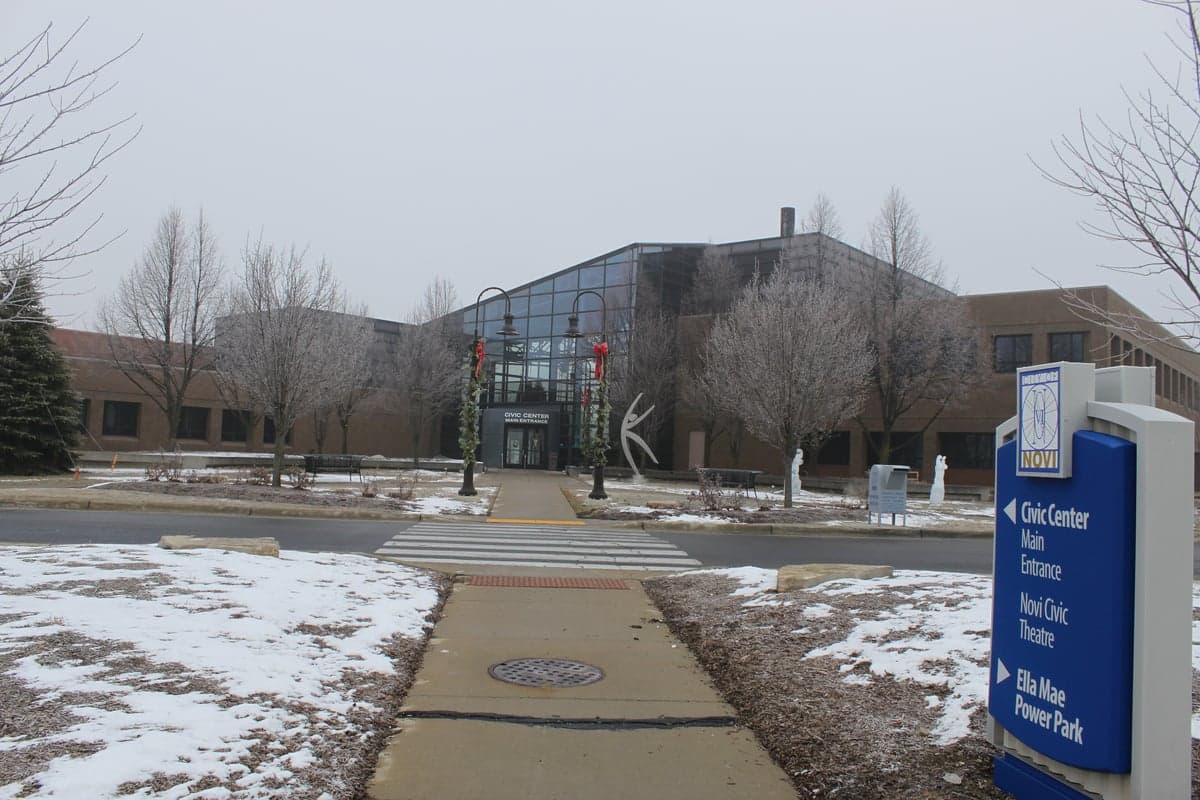
Photo: Wikipedia
Demographics of Novi, MI
Affluence Level in Novi, MI
An upper-middle-class area. Household wealth, education levels, and homeownership run ahead of national benchmarks.
People of Novi, MI
Novi, Michigan is a rapidly diversifying, upper-middle-income suburb of Detroit where over 60% of adults hold a bachelor's degree and the foreign-born population has reached 16.0%. The city's 66,224 residents form a patchwork of distinct ethnic enclaves rather than a single melting pot, with white residents making up 56.9% of the population, Indian-subcontinent residents 13.8%, East/Southeast Asian residents 11.7%, Black residents 8.3%, and Hispanic residents 4.9%. This is not a city of deep historical roots but of strategic relocation — a place where successive waves of professionals have arrived specifically for the schools, the tech and auto engineering jobs, and the safe, amenity-rich suburban environment.
How the city was settled and grew
Novi was originally a farming crossroads, incorporated as a village in 1869 and as a city only in 1969. Its name derives from the "No. VI" (Number Six) stagecoach stop on the Grand River Road. For its first century, the population was overwhelmingly white, Protestant, and of northern European descent — primarily English, German, and Irish settlers who farmed the flat, fertile land. The historic Old Town Novi district, centered on Grand River Avenue and Novi Road, retains a few 19th-century structures but was never a dense village; it was a rural service center. The first significant non-white population arrived not through immigration but through the Great Migration: Black families moved into the area in small numbers after World War II, drawn by auto plant jobs in nearby Wixom and Livonia, settling mostly in the southwest quadrant near the railroad corridor. By 1960, Novi's population was still under 6,000 and nearly entirely white.
Modern era (post-1965)
The city's demographic transformation began in earnest after the 1965 Hart-Cellar Act and accelerated with the completion of the I-96 and I-275 freeway interchanges in the 1970s. Novi became a bedroom community for Detroit's auto engineers and executives, and the opening of the Twelve Oaks Mall in 1977 turned the city into a regional retail hub. The first major Asian wave arrived in the 1980s and 1990s: Chinese and Korean engineers recruited by Ford, General Motors, and Chrysler settled in the Wooded Creek and Island Lake subdivisions, drawn by the highly ranked Novi Community School District. By 2000, the Asian population (then including Indian-subcontinent residents in census counts) had reached roughly 10%.
The 2000s and 2010s brought a second, larger wave: Indian-subcontinent professionals — primarily from Gujarat, Maharashtra, and Andhra Pradesh — recruited for IT, engineering, and medical roles at companies like Bosch, Nissan Technical Center, and Beaumont Hospital. They concentrated heavily in the West Oaks and Novi Woods neighborhoods, where large single-family homes on half-acre lots became the norm. Today, Indian-subcontinent residents (13.8%) outnumber East/Southeast Asian residents (11.7%), a reversal of the 1990s pattern. The Black population has grown more slowly, from roughly 4% in 2000 to 8.3% today, with families settling in the Fonda Lake area and the newer subdivisions near 10 Mile Road. The Hispanic population remains modest at 4.9%, concentrated in the south end near Grand River Avenue, where older, more affordable housing stock exists.
The future
Novi is not homogenizing; it is tribalizing into distinct, stable ethnic enclaves. The white population, while still a majority (56.9%), is aging and declining as a share — many empty-nesters sell to incoming Indian and Asian families. The Indian-subcontinent community is the fastest-growing segment, with new arrivals often buying directly from retiring white homeowners in West Oaks and Novi Woods, maintaining those neighborhoods as high-property-value, high-achievement enclaves. East/Southeast Asian families are plateauing, as second-generation children often leave for coastal cities. The Black population is growing slowly but steadily, drawn by the same school district and safety metrics. The foreign-born share (16.0%) is likely to rise toward 20-22% over the next decade, driven almost entirely by Indian-subcontinent and East/Southeast Asian professional immigration. There is little sign of assimilation into a single "Novi identity" — instead, the city functions as a collection of parallel communities that share schools, retail, and municipal services but maintain distinct social and religious institutions (Hindu temples, Chinese churches, Korean Presbyterian congregations, and multiple mosques in adjacent Farmington Hills).
For a conservative-leaning mover today, Novi offers a stable, high-amenity environment where property values have been supported by relentless demand from high-income immigrant professionals. The city is becoming more diverse, more educated, and more expensive — but it remains culturally traditional in its emphasis on family, school performance, and low crime. The trade-off is that "community" in Novi is increasingly found within one's own ethnic or professional network rather than in a shared civic life. New arrivals should expect a polite, functional, but segmented suburb where the schools and safety are excellent, and where their neighbors will likely share their income bracket but not necessarily their background.

* Values derived from national, state, county, city and local statistics and may differ in a specific area. Last updated: 2026-04-30T14:12:37.000Z
Narrative content on this page is AI-generated and may contain mistakes. Verify any details that matter before acting on them.
ReloMaps may earn a commission from affiliate links at no extra cost to you.

