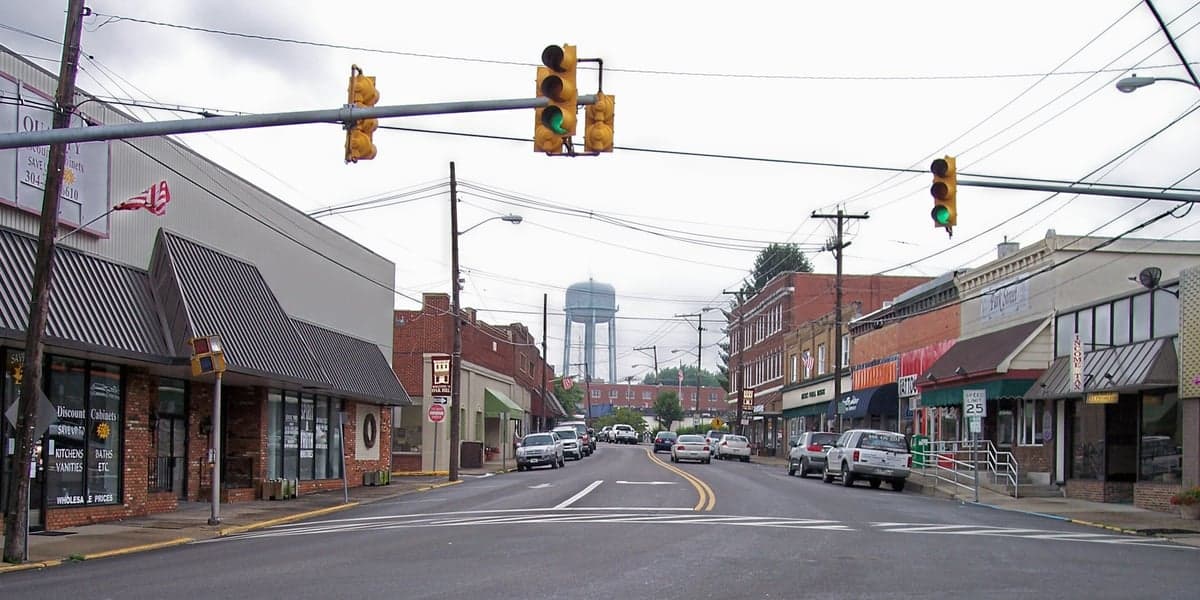
Photo: Wikipedia
Political ClimatePolitical Climate in Oak Hill, WV
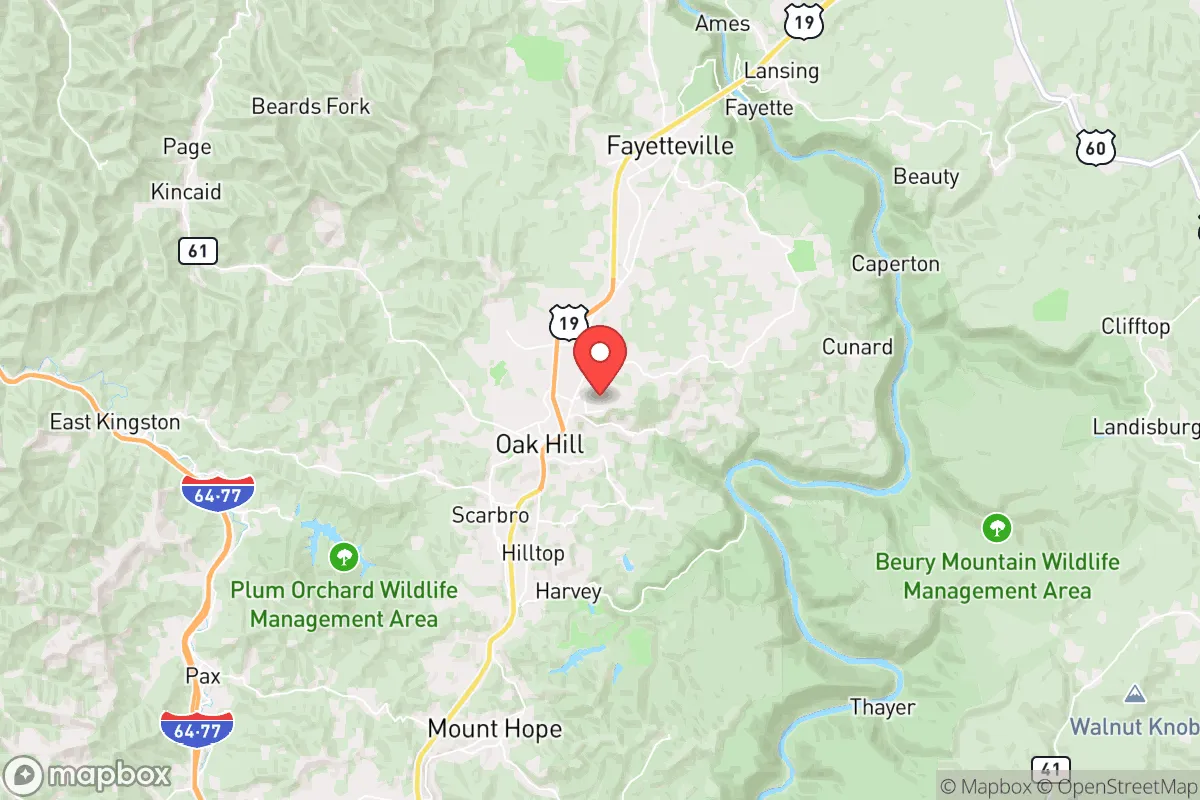
District shown is the primary district for this city’s centroid. Cities may span multiple districts.
Local Political AnalysisPolitical Analysis of Oak Hill, WV
Oak Hill, West Virginia, sits deep in solidly conservative territory, with a Cook PVI of R+22 that tells you most of what you need to know about the local political lean. This isn’t a place that’s flipped or wobbled in recent cycles—it’s been reliably red for decades, and the voting patterns reflect a community that values tradition, self-reliance, and a healthy skepticism of government overreach. If you’re looking at the broader Fayette County area, you’ll find that Oak Hill is actually one of the more moderate spots compared to some of the smaller, even more rural communities nearby, but the overall direction is unmistakably conservative. The real story here isn’t about dramatic swings—it’s about how the area has held steady while other parts of the country have shifted left, and whether that can last.
How it compares
When you stack Oak Hill up against other towns in southern West Virginia, it’s pretty typical for the region. Neighboring Beckley, about 20 miles south, leans conservative too but has a slightly more mixed political scene thanks to its larger population and the presence of colleges and medical centers. Up north, places like Charleston are a different animal entirely—much more progressive, with a political culture that feels like it belongs in a different state. Oak Hill, by contrast, is where you’ll find folks who still remember when the mines were the backbone of everything, and that history breeds a certain independence. The R+22 rating isn’t just a number; it means Republicans win here by margins that make local elections feel like formalities. That said, there’s been a quiet undercurrent of concern among long-time residents about outside influences creeping in—national trends, social media narratives, and the kind of progressive activism that’s taken hold in bigger cities. So far, Oak Hill has resisted that, but you can feel the tension when you talk to people at the hardware store or the diner.
What this means for residents
For the people who live here, the conservative lean translates into a few concrete realities. Taxes stay relatively low, and there’s a general hands-off approach from local government when it comes to things like business regulations or property rights. You won’t find the kind of zoning battles or permit hassles that plague more progressive areas. Gun rights are taken seriously, and the Second Amendment isn’t up for debate in polite company. Schools and community events tend to reflect traditional values, with less of the culture-war stuff that dominates headlines elsewhere. But there’s a growing worry among residents that the state government in Charleston—which has seen some shifts toward more moderate policies—might start pushing mandates or restrictions that feel like overreach. The biggest red flag for locals is any sign of progressive ideology gaining a foothold, whether it’s in school curriculum, local ordinances, or even just the tone of public discourse. People here are protective of their way of life, and they see any move toward bigger government as a threat to the personal freedoms they’ve always enjoyed.
Culturally, Oak Hill stands out for its strong sense of community and its resistance to being told how to live. There’s no HOA-style micromanagement, no push for bike lanes or public art projects that feel out of step with the area’s character. The biggest policy distinction you’ll notice is the emphasis on local control—decisions about land use, schools, and law enforcement are made by people who actually live here, not by distant bureaucrats. If you’re considering a move, understand that this is a place where your vote actually matters in local races, and where the political climate is stable but not immune to change. The long-term outlook depends on whether the area can keep its conservative identity intact as the state and country evolve. For now, Oak Hill remains a solid bet for anyone who values limited government and traditional freedoms, but keep an eye on those county commission meetings—that’s where the real battles are fought.

State Political ClimatePolitical Climate in West Virginia
State Political AnalysisPolitical Environment in the State
West Virginia has long been one of the most reliably Republican states in the nation, but that wasn’t always the case. As recently as the 1990s, it was a Democratic stronghold, voting for Bill Clinton twice. However, a dramatic realignment over the past two decades—driven by cultural shifts, union decline, and the national party’s leftward drift on energy and social issues—has flipped it deep red. In 2024, Donald Trump carried the state by nearly 40 points, and Republicans now hold every statewide office, both U.S. Senate seats, and supermajorities in the legislature. The dominant coalition is a mix of rural conservatives, working-class voters who feel abandoned by the national Democratic Party, and a growing number of out-of-state transplants seeking lower taxes and fewer regulations.
Urban vs. rural divide
The political map of West Virginia is starkly divided between a few small urban islands and a vast rural sea. The only real blue dots are in Morgantown, home to West Virginia University, and parts of Charleston, the state capital. Monongalia County (Morgantown) went for Joe Biden in 2020, driven by the academic and younger demographic. But even there, the margins are thin and shrinking. Meanwhile, the rest of the state is overwhelmingly red. Huntington, once a Democratic stronghold, has shifted hard right as the coal and manufacturing base eroded. The southern coalfields—places like Logan, Mingo, and McDowell counties—are now among the most Republican in the nation, voting 80%+ for Trump. The eastern panhandle, including Martinsburg and Berkeley Springs, has seen an influx of former Washington D.C. area residents, many of whom are fiscally conservative but socially moderate. That’s created a subtle suburban-libertarian streak in those counties, though they still vote solidly red. The rural-urban divide here isn’t about competing ideologies so much as a near-total absence of progressive infrastructure outside of Morgantown and a sliver of Charleston.
Policy environment
West Virginia’s policy environment is aggressively conservative, with a focus on reducing taxes, limiting regulation, and expanding school choice. The state has no personal income tax on Social Security benefits, and in 2023, lawmakers passed a phased 21% reduction in the personal income tax, with a goal of full elimination. Property taxes are among the lowest in the nation, capped by the state constitution. The regulatory posture is business-friendly, especially for energy extraction, manufacturing, and data centers. On education, the state passed a universal school choice law in 2021, allowing any family to use public funds for private school tuition, homeschooling, or tutoring. The Hope Scholarship program has been a flashpoint, with teachers’ unions fighting it in court, but it remains in place. Healthcare is a mixed bag: the state expanded Medicaid under the Affordable Care Act, but there’s a strong push for market-based reforms and deregulation of telehealth. Election laws are strict: voter ID is required, early voting is limited to 10 days, and no-excuse absentee voting was rolled back after 2020. The state also passed a law banning private funding of election administration, a direct response to the Zuckerberg-funded grants in 2020.
Trajectory & freedom
West Virginia is moving decisively toward greater personal freedom, particularly on gun rights, parental rights, and economic liberty. In 2023, the legislature passed a permitless carry law, allowing any adult who can legally possess a firearm to carry it concealed without a permit. The state also passed a Parental Bill of Rights, requiring schools to notify parents of any medical or mental health services offered to their child and to obtain consent before any gender-related counseling. On medical autonomy, the state banned nearly all abortions in 2022, with no exceptions for rape or incest, and has resisted federal pressure to allow gender transition procedures for minors. Property rights were strengthened with a 2021 law limiting the ability of local governments to impose zoning restrictions that devalue land. The tax trajectory is toward elimination of the income tax entirely, which would make West Virginia one of a handful of truly low-tax states. However, there are concerns about government overreach in the form of vaccine mandates for healthcare workers and school employees, which were imposed during the pandemic and have only partially been rolled back. The state also has a history of heavy-handed environmental regulation from the federal level, but the state government has pushed back aggressively, suing the EPA multiple times.
Civil unrest & political movements
West Virginia has a long history of labor activism, but in recent years, political movements have shifted to cultural and election integrity issues. The 2018 teachers’ strike, which shut down schools across the state, was a rare moment of left-leaning civil unrest, but it was driven by pay and benefits, not progressive ideology. Since then, the dominant grassroots energy has been on the right. The West Virginia Patriot movement is active, with regular rallies at the state capitol in Charleston, focused on election integrity, Second Amendment rights, and opposition to federal overreach. There have been no major sanctuary city policies—in fact, the state passed a law in 2020 requiring all law enforcement to cooperate with federal immigration authorities. Immigration politics are a non-issue for most residents, as the foreign-born population is less than 2%. Election integrity controversies flared after 2020, with the state’s Republican secretary of state, Mac Warner, conducting a forensic audit of the 2020 election results, which found no evidence of widespread fraud but led to tighter laws. The most visible flashpoint for a new resident would be the constant tension between the state and the federal government over energy policy, particularly the war on coal. That’s not a protest you see in the streets—it’s a quiet, grinding resentment that fuels the state’s political identity.
Projection
Over the next 5-10 years, West Virginia is likely to become even more conservative, but with a twist. The in-migration from the D.C. suburbs into the eastern panhandle will bring a more libertarian, less socially traditional strain of conservatism. That could create friction with the deeply religious, culturally conservative voters in the south and central parts of the state. The income tax elimination, if completed, will accelerate in-migration from high-tax states like New York and California, but those newcomers will be wealthier and more educated, potentially shifting the political center of gravity toward a more suburban, less populist conservatism. The coal industry will continue to decline, but the state is positioning itself as a hub for data centers, manufacturing, and natural gas. The political trajectory is toward even lower taxes, fewer regulations, and a continued resistance to federal mandates. However, the aging population—West Virginia has one of the oldest median ages in the country—means that the state’s political energy will increasingly be defined by generational battles over healthcare, Social Security, and the future of the economy. A new resident moving in now should expect a state that is fiercely independent, suspicious of federal power, and committed to a conservative vision of personal liberty, but also one that is grappling with economic transition and demographic stagnation.
For someone considering a move to West Virginia, the bottom line is this: you’ll find a state that respects your right to live as you see fit, with low taxes, strong gun rights, and a government that generally stays out of your personal business. The trade-off is limited economic opportunity in many areas, a struggling healthcare system in rural regions, and a political culture that can feel insular and resistant to change. If you’re looking for a place where your vote actually counts and where the government isn’t constantly trying to micromanage your life, West Virginia is one of the last bastions of that kind of freedom in the eastern United States. Just be prepared for the winters and the fact that you’ll have to drive an hour or more for a decent grocery store in many parts of the state.
* Values derived from national, state, county, city and local statistics and may differ in a specific area. Last updated: 2026-04-21T15:26:48.000Z
Narrative content on this page is AI-generated and may contain mistakes. Verify any details that matter before acting on them.
ReloMaps may earn a commission from affiliate links at no extra cost to you.

