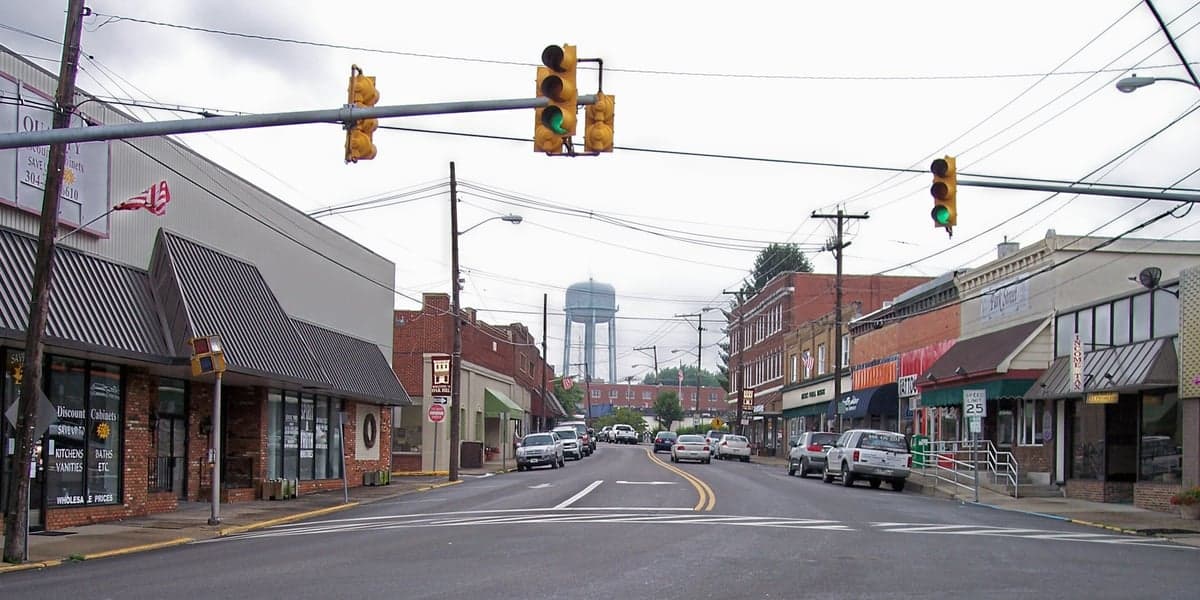
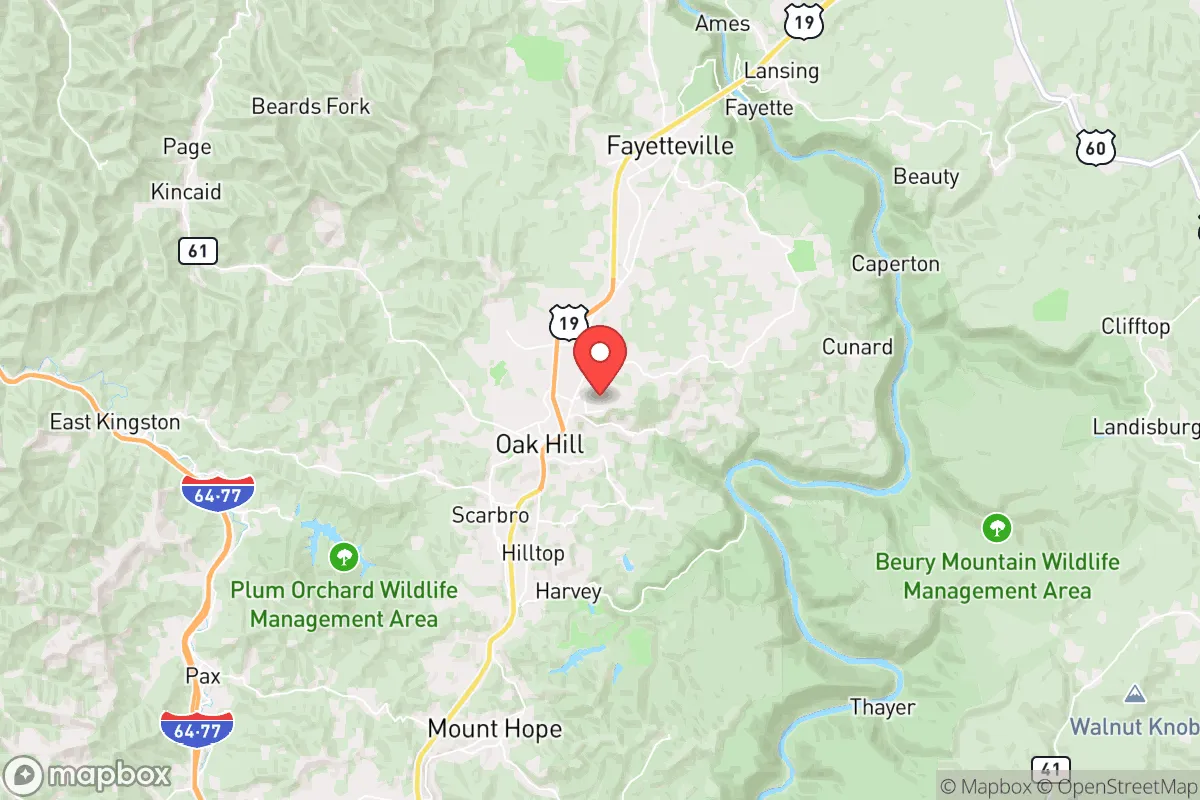
Photo: Wikipedia
Strategic Assessment of Oak Hill, WV
Meaningful friction. Expect exposure to either population pressure, blast zones, or natural disaster risk. Consider buying a retreat property.
What does the Strategic Assessment tell us?
Our Strategic Assessment grades tactical survivability of an area. Major population centers, military targets, fallout zones, natural disasters, and border exposure all drive risk — lower exposure means a more defensible position in a crisis.
This is heavily inspired by Joel Skousen's Strategic Relocation book. Highly recommended you checkout the book ($)What does this tell us?
Our Strategic Assessment grades tactical survivability of an area. Major population centers, military targets, fallout zones, natural disasters, and border exposure all drive risk — lower exposure means a more defensible position in a crisis.
This is heavily inspired by Joel Skousen's Strategic Relocation book. Highly recommended you checkout the book ($)Strategic Pillars

Key Distances
Regional Safe Places
Below is our recommended "safe zones" in West Virginia and the surrounding area based on our strategic heuristics. For most people, it's unrealistic to live in a “safe zone” full-time due to work, family or other personal reasons. They tend to be more rural. However, many of these areas are perfect for second homes and retreat properties that double as a vacation home or even a short-term rental.
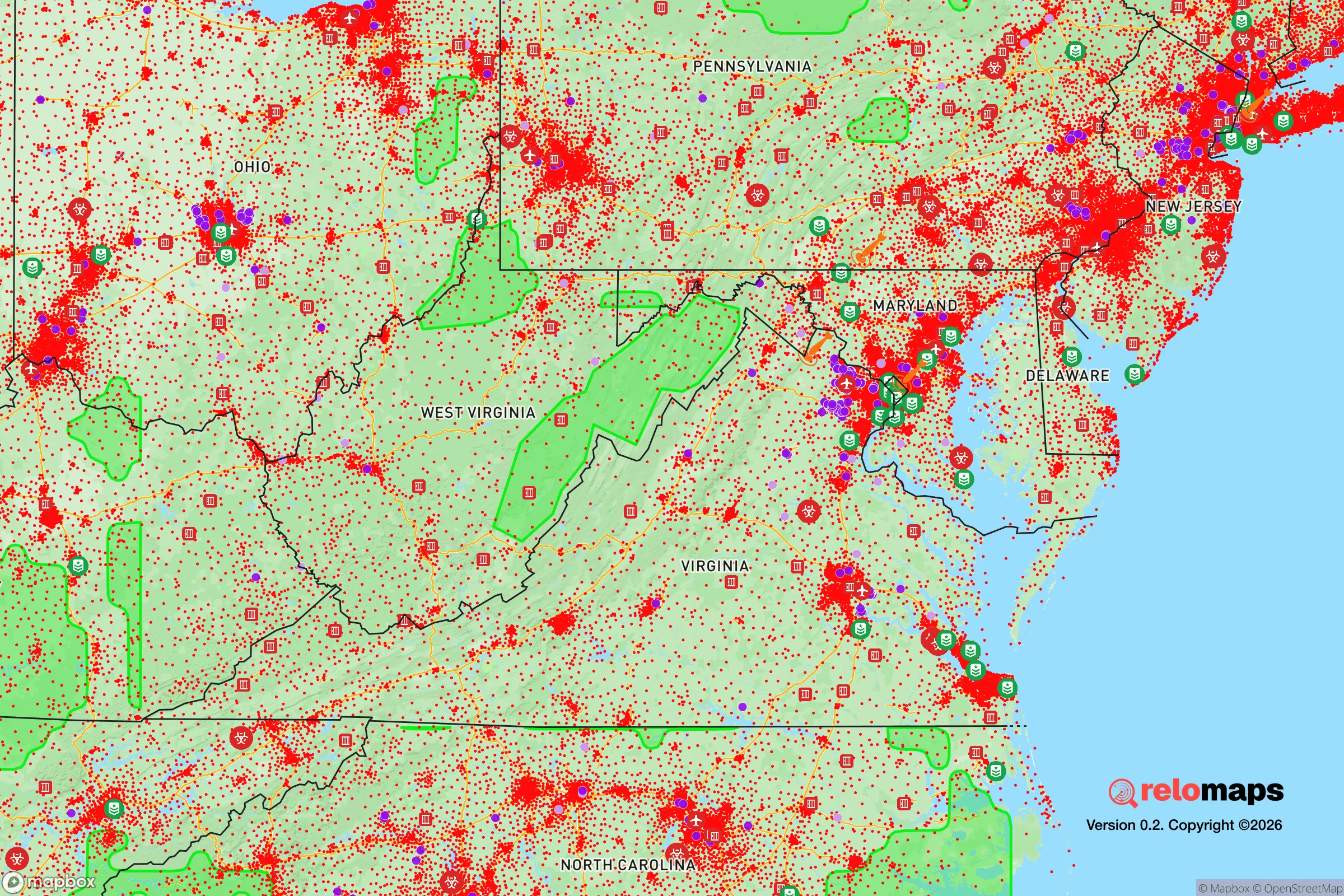
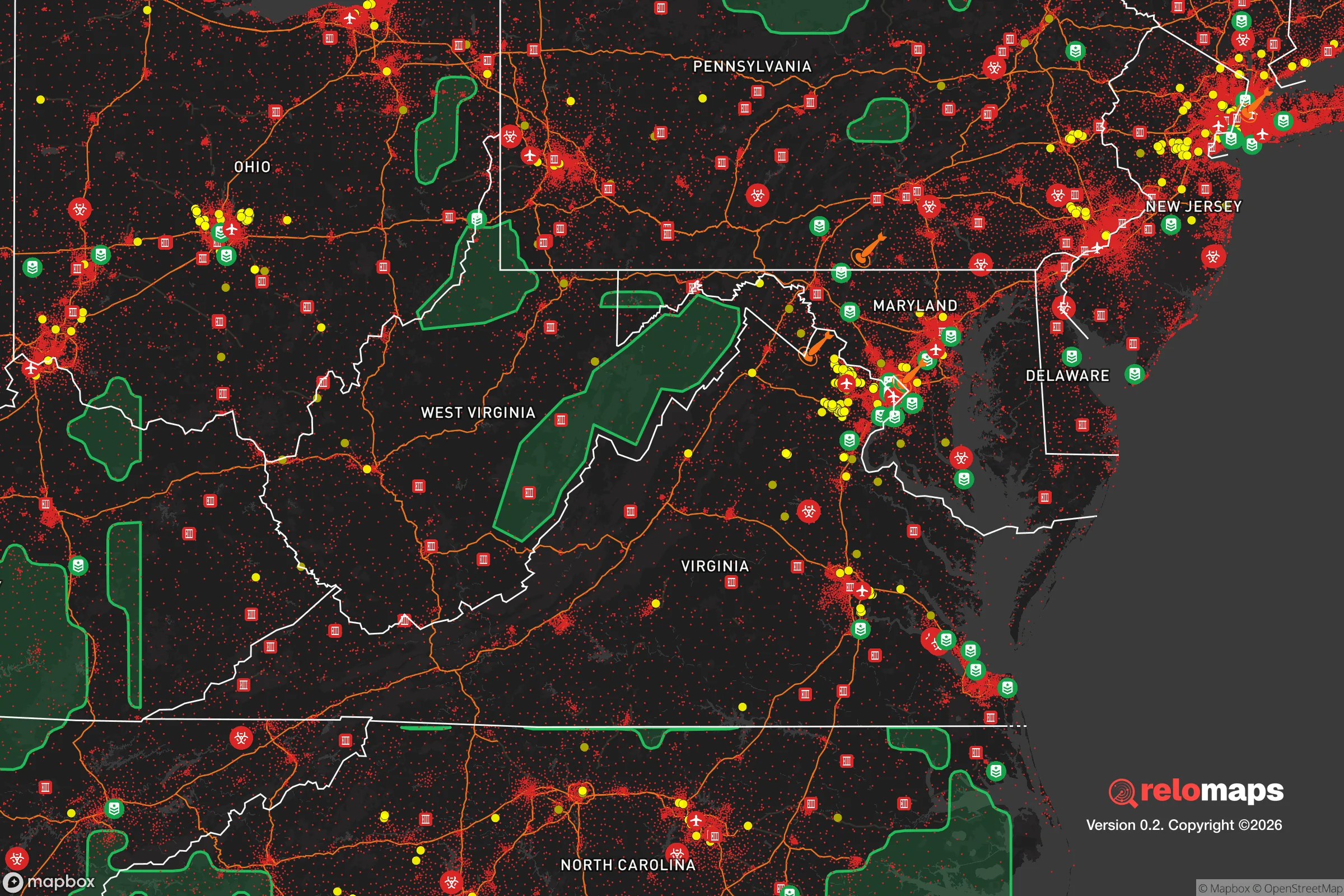


Important Note: For informational purposes only. This does not mean nothing bad ever happens in the green zones. Please use common sense. This is based on public data and modeled with AI. We tried to take a conservative approach but mistakes happen. We update this regularly as new information becomes available.
Solar Generator Recommendations
Backup power matters more here than in safer locations. We've picked three solar generators across budgets and capacity tiers — start with the budget unit if you only need a few essentials, or step up if you want to run a fridge and HVAC for days at a time.

Jackery Portable Power Station Explorer 300
Budget OptionPower on the Go: Weighing only 11 lbs, it's convenient to set up and store with book-sized foldable solar panels

BLUETTI Portable Power Station AC180
Designed for both indoor and outdoor scenarios, AC180 is highly capable as it has a robost capacity and continuous output power.

EF ECOFLOW DELTA Pro Ultra Power Station
Upgraded PickEcoFlow DELTA Pro Ultra is a whole-home energy system designed to grow with your family. Integrated with the Smart Home Panel 2, it scales to meet your evolving energy needs — keeping your home powered, intelligent, and secure through every stage of life.
We earn a commission, at no additional cost to you.
Strategic Assessment Analysis
Oak Hill, West Virginia, sits in a geographic sweet spot that offers genuine resilience advantages for those thinking long-term about security and self-sufficiency. Tucked into the New River Gorge region of Fayette County, this town of roughly 4,000 people is far enough from major population centers to avoid the worst of cascading collapse scenarios, yet close enough to essential infrastructure to make daily life practical. For a relocator with a prepper mindset, Oak Hill’s position—about 45 miles southeast of Charleston and 30 miles north of Beckley—places it in a zone where the Appalachian spine provides natural barriers, while the local economy and culture still retain a self-reliant, rural character that’s increasingly rare east of the Mississippi.
Geographic position and natural advantages for long-term security
Oak Hill’s location is its strongest card. The town sits on the Allegheny Plateau, with the New River Gorge National Park and Preserve just to the east—a rugged, forested expanse that offers both natural resources and a buffer against outside disruption. The surrounding terrain is steep, heavily wooded, and crisscrossed by hollows and ridges that make large-scale movement difficult for anyone unfamiliar with the area. This topography is a built-in defensive asset: chokepoints are abundant, line-of-sight is limited, and the road network is sparse enough that a handful of determined locals could effectively monitor or control access routes. The area’s elevation, around 2,000 feet, also means cooler summers and a lower risk of the extreme heat events that plague lower-lying regions. For a relocator, this translates to a more manageable climate for off-grid living, with reliable rainfall averaging around 40 inches per year—enough to support rain catchment and small-scale agriculture without the drought risks seen in the West. The New River itself, along with its tributaries like the Gauley and Meadow River, provides a perennial water source that is both a resource and a natural barrier. In a grid-down scenario, Oak Hill’s position offers a rare combination of defensible terrain, accessible water, and a climate that doesn’t fight you.
Risks, exposures, and proximity to fallout-relevant landmarks
No location is without vulnerabilities, and Oak Hill has a few that a serious prepper must weigh. The most immediate concern is the region’s heavy reliance on coal and natural gas extraction. Fayette County has a long mining history, and while many operations have scaled back, there are still active mines and processing facilities nearby. A major industrial accident—a mine collapse, a gas leak, or a chemical spill at a processing plant—could contaminate local water or air, especially in the narrow valleys where pollutants can concentrate. The county also sits within the broader Appalachian seismic zone, though earthquake risk is low; the bigger worry is the potential for landslides on steep slopes after heavy rain, which can cut off roads for days. On the fallout front, Oak Hill is roughly 200 miles from Washington, D.C., and about 150 miles from the Oak Ridge National Laboratory in Tennessee—both plausible targets in a major conflict. While 150-200 miles provides a significant buffer, prevailing winds from the west or southwest could carry fallout into the region depending on the event. The Savannah River Site in South Carolina is farther, around 300 miles, but still within a concerning radius. More immediately, the nearby John Amos Power Plant (a coal-fired facility on the Kanawha River) and the Mount Storm Power Station (a coal plant in Grant County) are potential targets for sabotage or accident. For a relocator, the key takeaway is that Oak Hill is not in a zero-risk zone, but its distance from primary targets and the shielding effect of the Appalachian ridges—which can block or deflect airborne contaminants—make it a far better bet than most locations within 300 miles of the Eastern Seaboard. A well-stocked shelter with proper filtration and a plan for monitoring local conditions would mitigate most of these risks.
Practical resilience for a relocator: food, water, energy, and defensibility
For someone serious about self-sufficiency, Oak Hill offers a foundation that’s hard to beat in the eastern U.S. Water is abundant: the New River and its tributaries are year-round sources, and the region’s high water table means shallow wells are feasible in many areas. Rainwater collection is straightforward given the consistent precipitation. The growing season runs from late April to early October, long enough for staple crops like potatoes, beans, squash, and corn, and the surrounding forests are rich with deer, turkey, and small game. Foraging is viable—ramps, morels, blackberries, and pawpaws are common—but a relocator should plan to supplement with stored provisions and a garden. Energy is a mixed bag. The grid is aging and prone to outages during winter storms, but solar potential is decent: the area gets about 200 sunny days per year, and the open ridgetops offer good exposure for panels. Wood heating is the default for many locals, and the national forest and state parks provide ample fuel if harvested legally. Defensibility is where Oak Hill shines. The town itself is compact, with a few main roads—U.S. Route 19, State Route 16, and State Route 61—that are easy to monitor. The surrounding hollows offer numerous retreat properties with limited access, often down gravel roads that become impassable to outsiders without local knowledge. The local culture is still rooted in hunting, fishing, and firearms ownership; Fayette County has a strong tradition of self-reliance, and neighbors are more likely to help than to be a threat. For a relocator, the practical steps are clear: secure a property with a reliable water source, invest in solar and wood heat, build a root cellar or pantry for long-term storage, and establish relationships with local homesteaders and hunters. The area’s low population density—about 40 people per square mile in the county—means fewer mouths to compete with for resources in a crisis.
The overall strategic picture for Oak Hill is one of calculated trade-offs. It’s not a remote mountain fortress—it’s a working-class Appalachian town with real infrastructure, real neighbors, and real risks tied to the energy industry and proximity to national targets. But for a relocator who wants a balance of accessibility and resilience, it’s a strong candidate. The terrain provides natural security, the water and climate support off-grid living, and the local culture aligns with the values of preparedness and mutual aid. The downsides—industrial hazards, potential fallout pathways, and a modest local economy—are manageable with planning. For someone looking to get out of the suburban sprawl or the urban corridor, Oak Hill offers a place where you can dig in, build a network, and ride out whatever comes, without having to disappear into the deep wilderness. It’s a realistic option for the long haul, not a fantasy.

* Values derived from national, state, county, city and local statistics and may differ in a specific area. Last updated: 2026-04-21T15:26:48.000Z
Narrative content on this page is AI-generated and may contain mistakes. Verify any details that matter before acting on them.
ReloMaps may earn a commission from affiliate links at no extra cost to you.

