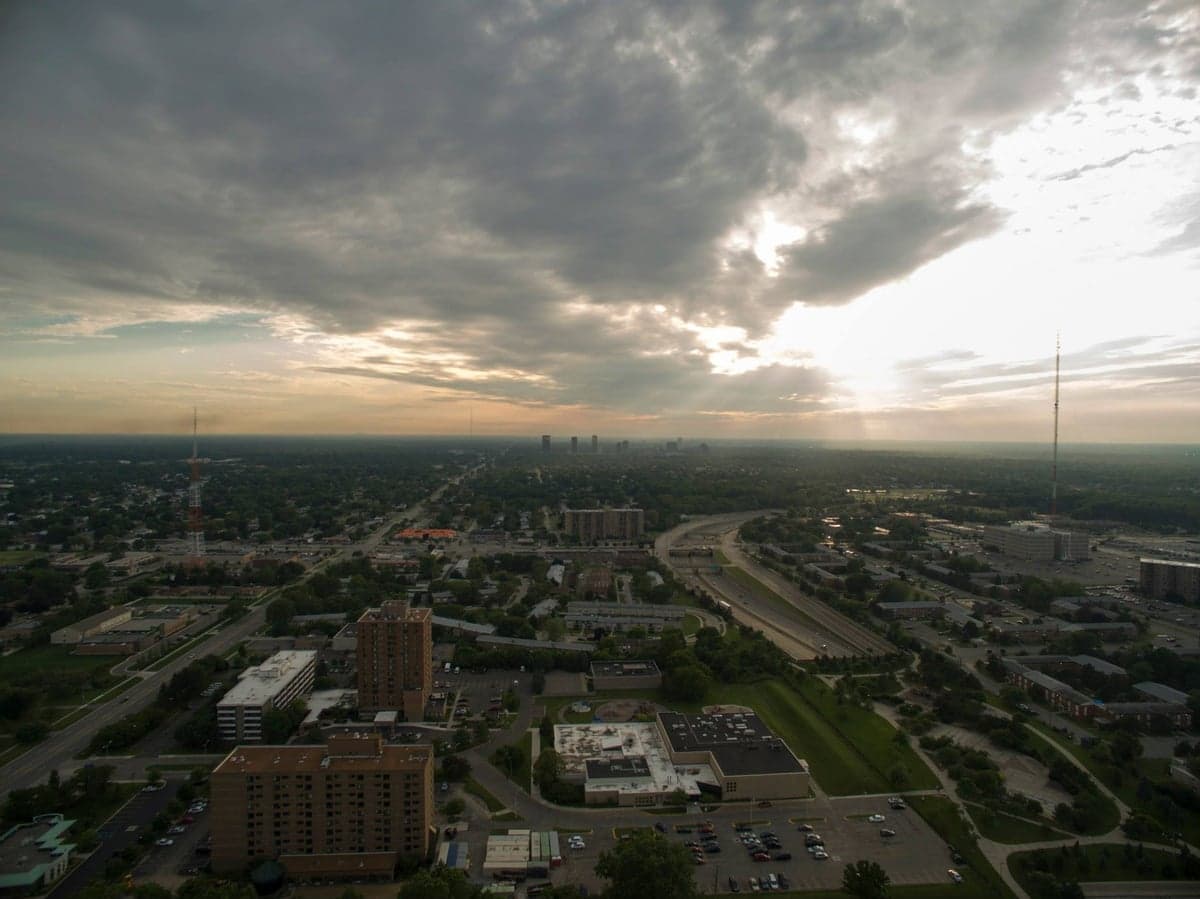
Photo: Wikipedia
Political ClimatePolitical Climate in Oak Park, MI
District shown is the primary district for this city’s centroid. Cities may span multiple districts.
Local Political AnalysisPolitical Analysis of Oak Park, MI
Oak Park, Michigan, leans heavily Democratic, with a Cook PVI of D+9, meaning the area votes about nine points more Democratic than the national average. This isn't a recent shift—it's been a solid blue stronghold for decades, but the character of that blue vote has changed. Back in the 90s and early 2000s, you had a mix of moderate Democrats and union households who valued fiscal responsibility and local control. Today, the political energy here is increasingly driven by progressive activism, which raises real concerns about government overreach into personal freedoms, from property rights to school choice and local business regulations.
How it compares
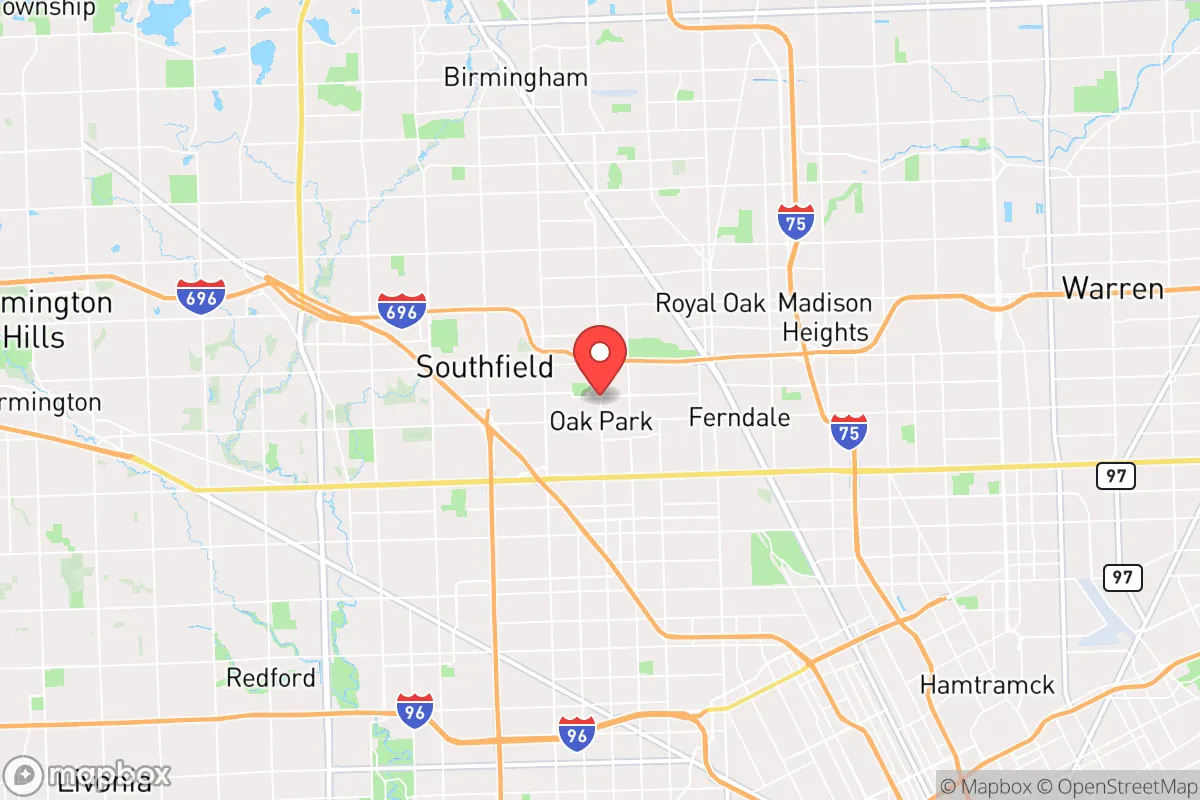
To understand Oak Park's politics, you have to look at the surrounding towns. Head north a few miles to Royal Oak, and you'll find a more moderate, younger demographic that leans left but still has a strong independent streak—people there are more likely to push back on zoning overreach or high taxes. Go west to Southfield, and you're in a similar D+ environment, but with a heavier focus on county-level bureaucracy and public-sector unions. The real contrast is east to Warren or south to Hazel Park, where you still see a working-class, more conservative-leaning electorate that values personal liberty and is skeptical of the progressive agenda. Oak Park sits in the middle of this patchwork, but its D+9 rating puts it squarely in the camp where progressive policies—like strict rental ordinances, mask mandates that lingered longer than necessary, and pushback against charter schools—tend to get a foothold without much opposition.
What this means for residents
For a long-time resident, the biggest concern is how this political climate affects daily life. The local government has a track record of supporting higher property taxes and expansive public spending, which can feel like a squeeze on homeowners who just want to keep what they earn. There's also a noticeable push toward density-focused development and multi-family housing mandates, which some see as a loss of neighborhood character and a threat to property values. If you value the right to run a small business without layers of red tape, or if you want your kids to have school choice without bureaucratic hurdles, Oak Park's political direction can feel like a slow drift away from those freedoms. The local school board and city council elections are where these battles play out, and they're often decided by a small, motivated progressive base.
On the cultural side, Oak Park has a strong sense of community and diversity, which is a genuine positive. But the political leadership tends to embrace symbolic resolutions and social justice initiatives that can feel performative rather than practical. You'll see city council spend time on statements about national issues while local potholes go unfilled. The long-term trajectory, if current trends hold, is more of the same: a comfortable Democratic majority that becomes less tolerant of dissenting views, more willing to use zoning and tax policy to shape behavior, and less responsive to residents who just want to be left alone. For someone who values personal freedom and limited government, Oak Park is a place to keep a close eye on—and maybe to get involved in local politics before the pendulum swings too far.

State Political ClimatePolitical Climate in Michigan
State Political AnalysisPolitical Environment in the State
Michigan has shifted from a reliably purple battleground to a state with a clear Democratic lean at the statewide level, but the picture is far more complicated on the ground. Over the last 20 years, the state has moved from a toss-up that went for George W. Bush in 2004 to a state that has voted for Democrats in every presidential election since 2008, with margins growing from 9 points for Obama to nearly 3 points for Biden in 2020. However, this blue tint masks a deep and widening urban-rural chasm, with the state’s political future being decided by a shrinking number of swing voters in a handful of suburban counties, while the rest of the state grows increasingly red.
Urban vs. rural divide
The political map of Michigan is a tale of two states. The Democratic stronghold is the southeast corner, anchored by Wayne County (Detroit), Oakland County (the affluent northern suburbs), and Washtenaw County (Ann Arbor). These three counties alone delivered over 70% of Biden’s statewide margin in 2020. On the other side, the western and northern Lower Peninsula, along with the entire Upper Peninsula, are deeply Republican. Counties like Ottawa (Holland), Kent (Grand Rapids), and Livingston (Brighton) are now reliably red, with Grand Rapids itself becoming a conservative bastion in a state that often ignores it. The real battleground has shrunk to a handful of suburban counties: Macomb (north of Detroit), Kent (the Grand Rapids suburbs), and to a lesser extent, Saginaw and Bay counties. Macomb County, once the iconic “Reagan Democrat” stronghold, has been trending Republican but remains competitive, while Kent County is slowly shifting left as Grand Rapids grows more diverse and educated. The Upper Peninsula, once a Democratic stronghold due to union mining and logging, has flipped hard red over the last decade, voting for Trump by double digits in 2020.
Policy environment
Michigan’s policy environment has taken a sharp progressive turn since Democrats won full control of state government in 2022. The state now has a progressive income tax structure with a flat rate of 4.25%, but the real story is the explosion of new spending and regulations. In 2023, the legislature passed a repeal of the state’s right-to-work law, which had been in place since 2012, making Michigan the first state in decades to reverse such a law. This was paired with a restoration of prevailing wage requirements on state construction projects. On education, the state has expanded school choice through charter schools and the universal school voucher-like “Michigan Achievement Scholarship,” but the Detroit Public Schools Community District remains a chronic failure, with the state still in control of the district. Healthcare policy has seen the expansion of Medicaid under the Affordable Care Act, and the state has a robust individual mandate for health insurance. Election laws have been loosened significantly: Proposal 2 in 2022 enshrined nine days of early voting, automatic voter registration, and no-excuse absentee voting into the state constitution. This has made Michigan one of the easiest states to vote in, but also a focal point for election integrity concerns, particularly in Wayne County where ballot processing has been a flashpoint.
Trajectory & freedom
Michigan’s trajectory on personal freedom is a mixed bag, but the trend line is concerning for conservatives. On the positive side, the state has a strong tradition of gun rights: Michigan is a “shall issue” state for concealed carry, and in 2023, the legislature passed a “stand your ground” law, though it was vetoed by Governor Gretchen Whitmer. However, the same session saw the passage of universal background checks and a red flag law, which conservatives view as a significant erosion of Second Amendment rights. On parental rights, the state has moved in the wrong direction: the 2023 “LGBTQ+ inclusive curriculum” law mandates that schools teach about the contributions of LGBTQ+ individuals, and the state has banned conversion therapy for minors. Medical freedom has been curtailed by the state’s aggressive COVID-19 mandates, including a now-expired emergency order that gave the governor broad powers to shut down businesses and schools. Property rights have been under pressure from the state’s aggressive environmental regulations, particularly around the Great Lakes, where shoreline property owners face increasing restrictions. Taxation is a bright spot: the state’s flat income tax rate was actually reduced from 4.25% to 4.05% in 2023 due to a trigger law, though this is temporary. Overall, the state is becoming less free in the areas that matter most to conservatives: gun rights, parental control over education, and resistance to government overreach.
Civil unrest & political movements
Michigan has been a hotbed of political activism on both sides. The most visible flashpoint was the 2020 “Operation Gridlock” protest at the state capitol in Lansing, where thousands of armed protesters, including members of the “Wolverine Watchmen” militia, demonstrated against Governor Whitmer’s COVID-19 lockdowns. This led to the foiled plot to kidnap the governor, which remains a defining moment of political extremism in the state. On the left, the “Michigan Democratic Party” has been energized by the rise of the “Squad” style progressives, with Representative Rashida Tlaib (Detroit) becoming a national figure. Immigration politics are less volatile than in border states, but the city of Detroit has declared itself a “sanctuary city,” and the state has resisted cooperation with federal immigration enforcement. Election integrity remains a major issue: the 2020 election saw widespread allegations of irregularities in Wayne County, including the infamous “ballot harvesting” controversy and the late-night ballot counting that flipped the state for Biden. The 2022 midterms saw a massive turnout operation by both parties, with the state’s new early voting laws leading to record turnout. The “Michigan Conservative Coalition” and “Moms for Liberty” chapters are active in suburban school board races, particularly in Macomb and Oakland counties, where curriculum battles over critical race theory and LGBTQ+ content have been fierce.
Projection
Over the next 5-10 years, Michigan is likely to continue its slow drift leftward at the statewide level, driven by demographic shifts in the southeast. The Detroit suburbs are becoming more diverse and educated, while the rural areas are aging and shrinking. The state’s in-migration patterns are a mixed bag: people are moving to the Grand Rapids area for jobs and lower cost of living, but the state as a whole is losing population to the Sun Belt. The key swing counties—Macomb, Kent, and Saginaw—will determine whether the state remains competitive or becomes solidly blue. The 2024 election will be a critical test: if Trump can flip Macomb and hold Kent, the state is in play; if not, it will become a safe Democratic seat. The state’s policy environment will likely continue to shift left, with potential for a progressive income tax, further gun control, and expanded government healthcare. However, the state’s strong union base and manufacturing economy may act as a brake on the most extreme policies. For a conservative moving in now, the expectation should be that the state will become more difficult for conservative values to thrive, particularly in the southeast, but the western and northern parts of the state will remain conservative havens.
For a new resident, the bottom line is that Michigan offers a mixed bag. If you’re moving to the Grand Rapids area or the Upper Peninsula, you’ll find a conservative-friendly environment with strong communities and lower taxes. If you’re moving to the Detroit suburbs or Ann Arbor, you’ll be in a progressive bubble with high taxes and a government that is increasingly hostile to conservative values. The state’s political future is uncertain, but the trend is clear: the areas that are growing are becoming more liberal, while the areas that are shrinking are becoming more conservative. If you value personal freedom, low taxes, and a government that stays out of your life, you’ll want to look closely at the western and northern parts of the state, and be prepared to fight for your values in the local school board and county commission races. Michigan is still a place where your vote matters, but it’s a state that is increasingly divided, and the divide is only getting deeper.
* Values derived from national, state, county, city and local statistics and may differ in a specific area. Last updated: 2026-04-29T23:47:53.000Z
Narrative content on this page is AI-generated and may contain mistakes. Verify any details that matter before acting on them.
ReloMaps may earn a commission from affiliate links at no extra cost to you.

