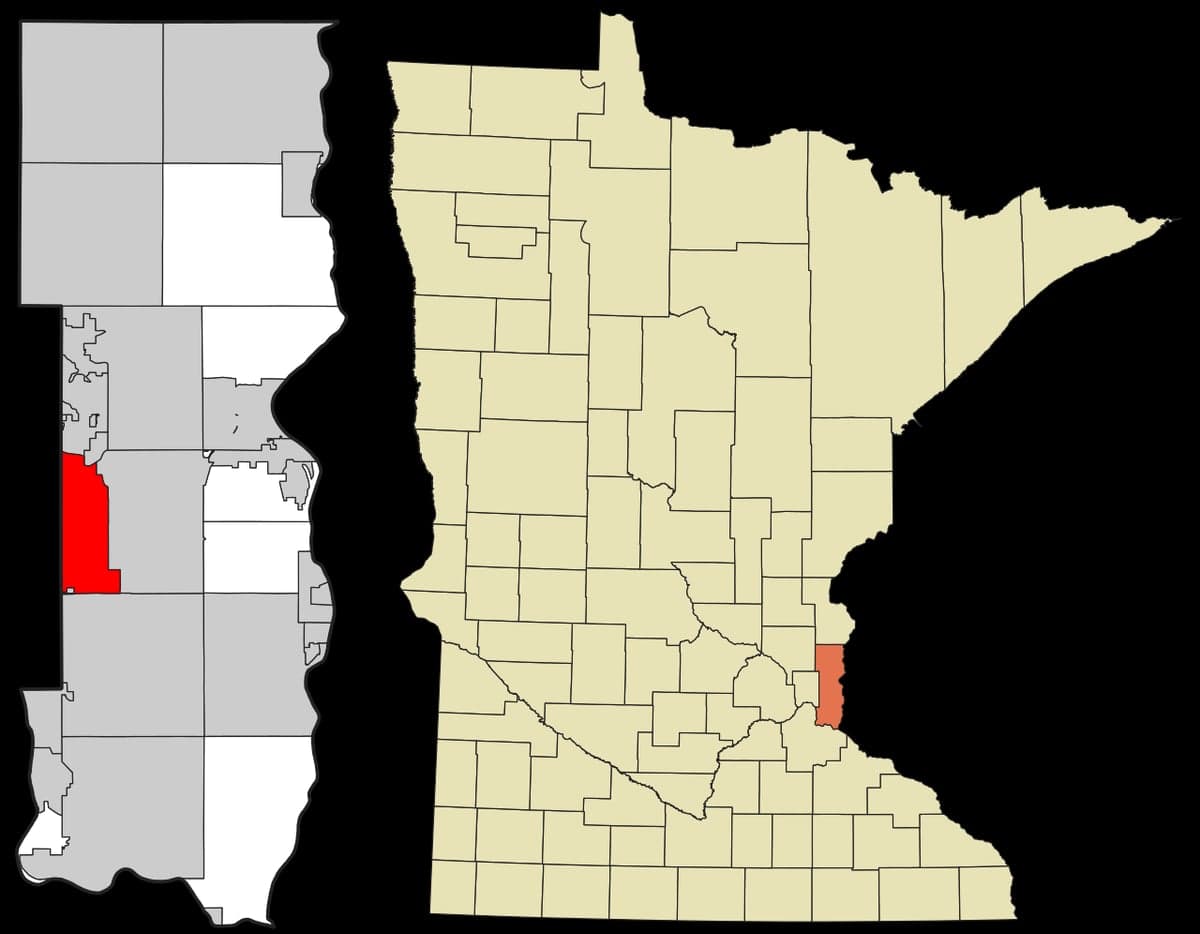
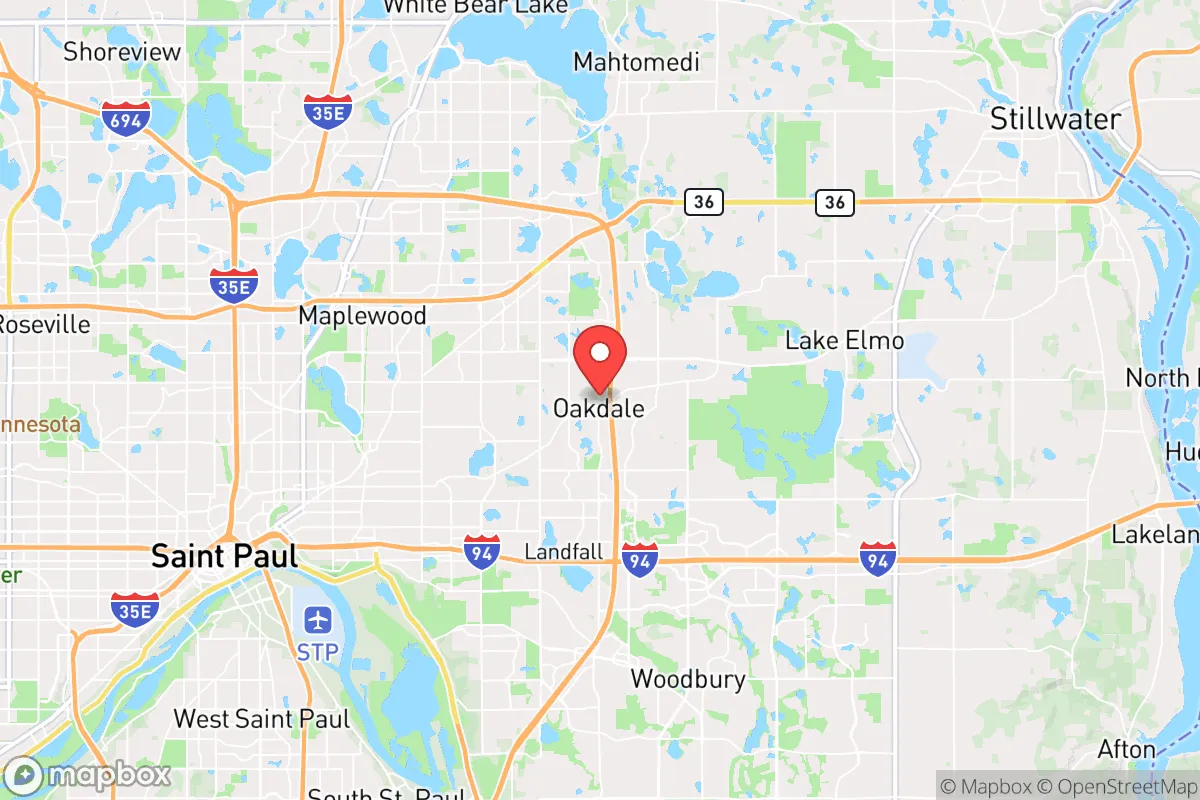
Photo: Wikipedia
Personal Sovereignty in Oakdale, MN
Viable for self-reliance. Generally workable, though some barriers may limit total independence.
What does Personal Sovereignty tell us?
Personal Sovereignty measures your capacity for self-reliance and independence with minimal government friction. Higher scores mean fewer barriers between you and the way you want to live... but it assumes you have the space you need and good neighbors.
What does this tell us?
Personal Sovereignty measures your capacity for self-reliance and independence with minimal government friction. Higher scores mean fewer barriers between you and the way you want to live... but it assumes you have the space you need and good neighbors.
State Policy
Energy independence: Importer (20% of energy produced in-state)
Personal Liberty
Homesteading

Personal Liberty Analysis
For a conservative-leaning individual or family evaluating relocation through a survivalist and prepper lens, Oakdale, Minnesota presents a mixed picture of personal sovereignty. While the city itself is a relatively quiet, middle-class suburb of St. Paul, its autonomy environment is heavily shaped by the broader legal and regulatory framework of Washington County and the State of Minnesota. The state’s recent legislative trends—particularly the 2023 trifecta of Democratic control—have introduced significant constraints on personal freedoms, from firearm regulations to parental rights in education, making Oakdale a location where strategic adaptation, rather than outright liberty, is the operative reality. The core question for the sovereignty-minded is whether the area’s practical advantages in self-reliance and community can offset the growing reach of state-level government overreach.
Tax burden and regulatory posture for self-reliant households
Minnesota’s tax burden is among the highest in the nation, and Oakdale residents feel this acutely. The state levies a progressive income tax with a top marginal rate of 9.85%, which directly impacts the disposable income needed for prepping supplies, land improvements, or alternative energy investments. Property taxes in Washington County are also above the national average, typically ranging from 1.1% to 1.3% of assessed home value annually. For a family seeking to build a self-sufficient homestead, this means a significant portion of earnings is diverted to state coffers before you can allocate funds to food storage, water filtration, or solar panels. The regulatory posture is similarly restrictive. Minnesota’s environmental and building codes are stringent, and the state’s energy code is one of the most aggressive in the Midwest, mandating specific insulation, window, and HVAC standards that can complicate off-grid or unconventional construction. While Oakdale itself has a relatively business-friendly zoning code for a first-ring suburb, the state-level regulatory environment creates a persistent drag on the kind of autonomous living that preppers prioritize. The bottom line: you will pay more in taxes and face more bureaucratic hurdles here than in states like Texas or South Dakota, which directly reduces the capital available for self-reliance projects.
Self-defense rights and Minnesota’s evolving gun laws
This is the most contentious area for the sovereignty-minded in Oakdale. Minnesota is a "shall-issue" state for concealed carry permits, meaning that if you meet the statutory requirements—including a training course and background check—the county sheriff must issue a permit. Washington County has historically been reasonable in processing these permits, and Oakdale residents can legally carry a firearm for self-defense in most public spaces. However, the state’s legal landscape has shifted dramatically. In 2023, Minnesota passed a "red flag" law (Extreme Risk Protection Order), which allows law enforcement or family members to petition a court to temporarily seize firearms from an individual deemed a risk to themselves or others. For the prepper, this represents a direct threat to the right to keep and bear arms, as the law relies on subjective assessments and can be weaponized by bad actors. Additionally, the state bans private firearm transfers without a background check (universal background check law), which complicates the informal transfer of weapons within a preparedness network. Magazine capacity is currently unrestricted for rifles and handguns, but there is persistent legislative pressure to impose limits. The state also has a preemption law that prevents cities like Oakdale from enacting their own stricter gun ordinances, which is a small but important safeguard. For the self-defense-minded individual, Oakdale is a place where you can still legally own and carry firearms, but you must be vigilant about the political climate and prepared for further erosion of those rights.
Self-reliance and homesteading viability: lot sizes, zoning, and off-grid feasibility
Oakdale is a fully developed suburb with a population density of roughly 2,500 people per square mile. This immediately limits the scope of self-reliant homesteading. The typical residential lot is a quarter-acre or smaller, with standard suburban zoning that prohibits livestock, large-scale gardening for commercial sale, and most outbuildings without permits. Raising chickens is permitted in Oakdale, but with strict limits on the number of hens (typically 4-6) and a complete ban on roosters. Beekeeping is allowed with registration. For a family seeking true self-sufficiency—think a large vegetable garden, fruit trees, rainwater catchment, and a workshop for tool repair—Oakdale’s lot sizes are simply inadequate. Off-grid living is effectively impossible within city limits. The city requires connection to municipal water and sewer, and building codes mandate grid-tied electrical systems for new construction. Solar panels are allowed, but net metering policies are controlled by Xcel Energy, the dominant utility, and the bureaucratic process for interconnection can be cumbersome. For the serious prepper, Oakdale is a place to live while you build a retreat elsewhere, not a location for a primary homestead. The practical reality is that you will be dependent on municipal infrastructure and supply chains, which is a vulnerability in a crisis scenario. The best you can do is maximize a small urban lot with intensive gardening, food storage, and a well-stocked pantry, but you will not achieve true self-reliance here.
Personal liberties: parental rights, medical autonomy, speech, and property
This is where the state-level overreach is most pronounced and most concerning for conservative families. In 2023, Minnesota passed a law codifying "gender-affirming care" as a protected right, including for minors, and the state has become a "sanctuary" for those seeking such care from states where it is restricted. For parents who believe they should have the final say in their children’s medical decisions, this represents a direct assault on parental authority. The state also passed a law requiring school districts to adopt policies that affirm a student’s "gender identity" without parental notification, which many conservative families view as a violation of fundamental rights. On medical autonomy more broadly, Minnesota has not enacted broad vaccine mandates for adults, but it has maintained strict COVID-era mandates for healthcare workers and long-term care facilities, and the state’s public health apparatus retains significant emergency powers. Free speech is protected under the First Amendment, but the state has a "bias-motivated crime" law that can be applied to speech deemed harassing or intimidating, which some critics argue chills political expression. Property rights are relatively strong in Washington County, with no county-level rent control or overly aggressive eminent domain practices. However, the state’s environmental regulations can limit what you do with your land, particularly near wetlands or waterways. The overall picture for personal liberties in Oakdale is one of increasing state control, particularly in the realms of family and medical decisions, which is a major red flag for those prioritizing parental sovereignty and medical freedom.
In the final analysis, Oakdale offers a baseline of personal sovereignty that is acceptable for a suburban lifestyle but falls short for the serious survivalist or prepper. The tax burden and regulatory environment are heavy, the gun laws are under active assault, and the lot sizes preclude true homesteading. The state’s aggressive stance on parental rights and medical autonomy is a significant liability for conservative families. Compared to a state like Idaho or Montana, Oakdale is a place of managed freedom, not robust liberty. For the strategic relocator, Oakdale could serve as a temporary base—a place with decent jobs, good schools, and a relatively safe community—while you acquire land in a more liberty-friendly jurisdiction. But if your primary goal is to maximize personal sovereignty, self-defense rights, and the ability to live independently of government and corporate systems, you will find Oakdale increasingly constrained by the political winds blowing from St. Paul. It is a location for those who can navigate and adapt, not for those seeking a final redoubt.

* Values derived from national, state, county, city and local statistics and may differ in a specific area. Last updated: 2026-04-24T15:57:05.000Z
Narrative content on this page is AI-generated and may contain mistakes. Verify any details that matter before acting on them.
ReloMaps may earn a commission from affiliate links at no extra cost to you.

