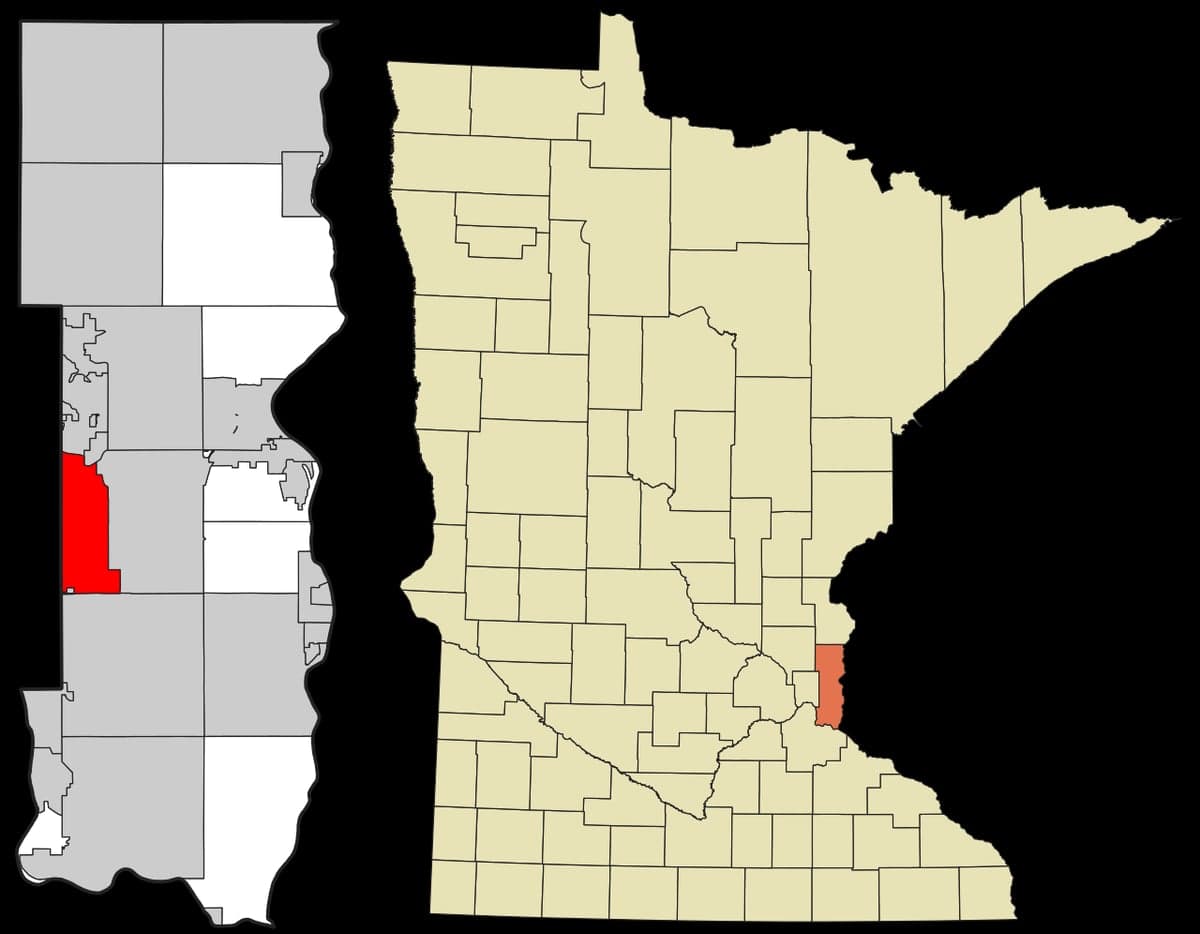
Photo: Wikipedia
Political ClimatePolitical Climate in Oakdale, MN
District shown is the primary district for this city’s centroid. Cities may span multiple districts.
Local Political AnalysisPolitical Analysis of Oakdale, MN
Oakdale, Minnesota, leans heavily Democratic, with a Cook PVI of D+18, meaning the area votes about 18 points more Democratic than the national average. This wasn't always the case; I remember when this town was a lot more middle-of-the-road, a place where folks kept their politics to themselves and the government stayed out of your business. Over the last decade, though, the shift has been dramatic, driven largely by an influx of younger, more progressive residents from Minneapolis and St. Paul, and the local politics have followed suit. It's not just about voting blue anymore; it's about a whole new set of priorities that feel increasingly disconnected from the traditional values a lot of us grew up with here.
How it compares
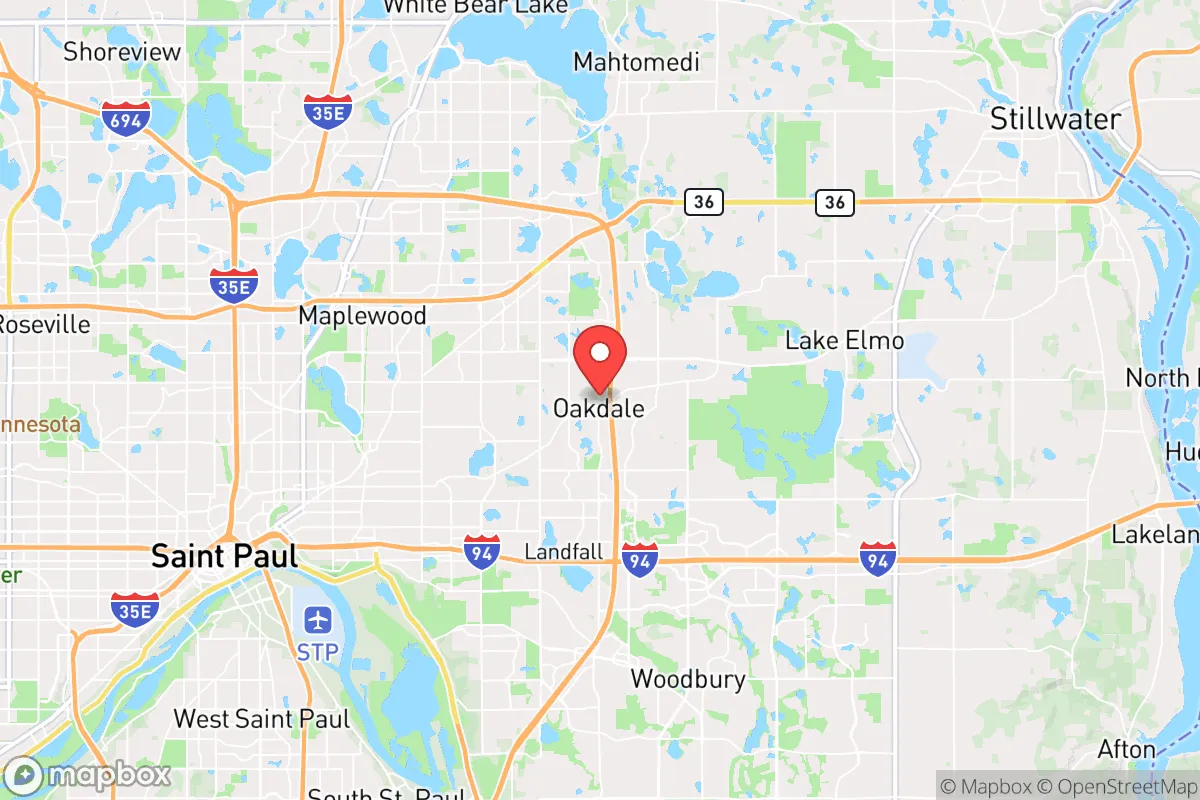
To really understand Oakdale's political climate, you have to look at what's around it. Head just a few miles north to Stillwater or east to Hudson, Wisconsin, and you'll find communities that still lean conservative or are at least competitive. Those towns have a different feel—lower taxes, fewer regulations, and a general sense that local government is there to serve, not to manage. Oakdale, on the other hand, is increasingly mirroring the politics of its larger neighbors, Maplewood and Woodbury, which are also solidly blue. The contrast is stark: you can drive 15 minutes and feel like you've crossed into a different state, one where personal freedoms aren't assumed but have to be defended. The D+18 rating isn't just a number; it's a reflection of how the local political machine has consolidated power, making it tough for any dissenting voices to get a hearing.
What this means for residents
For those of us who value limited government and personal responsibility, the trend is concerning. You see it in the local school board decisions, where curriculum choices seem to prioritize ideological goals over academic fundamentals. You see it in the city council, where there's a growing appetite for new ordinances—things like stricter rental regulations, noise bylaws, and even discussions about "climate action plans" that could lead to higher energy costs for families. The practical effect is that your property taxes keep climbing while you get less say in how your own life is run. If you're a small business owner or someone who just wants to be left alone, the political climate here feels increasingly adversarial. The long-term trajectory suggests more of the same: more government programs, more oversight, and a continued drift away from the live-and-let-live ethos that once defined this part of Minnesota.
Culturally, Oakdale is becoming a place where certain viewpoints are simply not welcome in public discourse. I've seen neighbors hesitate to put up yard signs for candidates who aren't the party line, for fear of backlash. The local paper and community boards tend to amplify progressive voices while sidelining conservative ones. There's a palpable sense that if you value traditional family structures, fiscal restraint, or Second Amendment rights, you're better off keeping your head down or planning a move to a more welcoming community like Lake Elmo or Scandia. It's a shame, because Oakdale used to be a great place to raise a family without all the political noise. Now, it feels like the government is creeping into every corner of daily life, and that's a red flag that's hard to ignore.

State Political ClimatePolitical Climate in Minnesota
State Political AnalysisPolitical Environment in the State
Minnesota has shifted from a classic purple battleground to a reliably blue state over the past two decades, with Democrats (DFL) now holding all statewide offices and both legislative chambers. The state voted for Hillary Clinton by 1.5 points in 2016, Joe Biden by 7 points in 2020, and Kamala Harris by roughly 4 points in 2024 — a clear leftward drift, though not as extreme as Illinois or New York. The dominant coalition is the Twin Cities metro, which now supplies roughly 60% of the statewide vote, while greater Minnesota has become increasingly Republican but lacks the population to counterbalance it.
Urban vs. rural divide
The political map is a stark urban-rural split. The Twin Cities metro — Hennepin, Ramsey, and Washington counties — vote DFL by margins of 20-40 points, powered by Minneapolis, St. Paul, and inner-ring suburbs like Edina and Richfield. Outstate, the Iron Range (St. Louis County) has flipped from reliably DFL to competitive, with Hibbing and Virginia now voting Republican in presidential races. The southwestern farm counties (Rock, Nobles, Pipestone) are deep red, often voting +30-40 points Republican. The most politically distinct suburb is Lakeville (Dakota County), which has trended rightward even as the county overall shifts left — a microcosm of the broader suburban realignment. Rochester, home to Mayo Clinic, remains a DFL-leaning island in a sea of red southeastern Minnesota.
Policy environment
Minnesota’s policy climate has moved aggressively left since the DFL took full control in 2023. The state now has a progressive income tax with a top rate of 9.85% on income over $200,000 (single) — among the highest in the nation. Property taxes are locally set but average about 1.05% of home value, moderate by national standards. The regulatory posture is heavy: Minnesota has a state-level environmental review board that can block pipelines and mining projects, and the 2023 "Clean Energy Standard" mandates 100% carbon-free electricity by 2040. Education policy is a flashpoint: the state eliminated the "opt-out" provision for comprehensive sex education in 2023, and parental notification for library materials was struck down by the courts. Election laws are among the most liberal nationally: no-excuse absentee voting, same-day registration, and automatic voter registration via DMV. The 2023 "Driver’s Licenses for All" law allows undocumented immigrants to obtain licenses, a major shift from the previous policy.
Trajectory & freedom
On personal liberty, Minnesota is clearly trending toward less freedom by conservative metrics. The 2023 "Red Flag" law (Extreme Risk Protection Order) allows courts to temporarily seize firearms from individuals deemed a threat, without a criminal conviction — a direct expansion of government power over gun rights. The same year, the legislature passed a "safe storage" law requiring firearms to be locked up, with criminal penalties for violations. Parental rights took a hit with the 2023 "Trans Refuge" law, which shields gender-affirming care for minors from out-of-state legal challenges, effectively overriding parental consent laws from other states. Medical autonomy narrowed with the 2023 "Reproductive Freedom" law, which codified abortion access up to viability and removed most restrictions. Property rights are under pressure from the "Climate Smart" building code, which mandates electric heat pumps in new construction starting 2027. On the plus side for conservatives, the state has no right-to-work law, but union membership has declined to about 14% of workers, down from 20% a decade ago.
Civil unrest & political movements
The George Floyd protests in 2020 were a watershed: Minneapolis saw three nights of arson and looting, with the 3rd Precinct police station burned to the ground. The aftermath included a failed ballot measure to replace the police department (2021), and ongoing debates about public safety. The "Defund the Police" movement has faded, but Minneapolis police staffing remains 30% below pre-2020 levels. On the right, the "Minnesota Freedom Fund" and "Bikers for Trump" chapters are active, but the most organized conservative movement is the "Minnesota Gun Owners Caucus," which has successfully blocked some gun control bills. Immigration politics are heated: Minnesota is a "sanctuary state" under the 2023 "Driver’s Licenses for All" law, and the city of Minneapolis has a "Welcoming City" ordinance limiting cooperation with ICE. Election integrity remains a sore point: the 2020 election saw a 7-point Biden win, but rural counties like Otter Tail and Stearns passed resolutions questioning the results. The "Minnesota Election Integrity Project" continues to push for voter ID laws, which the DFL majority has blocked.
Projection
Over the next 5-10 years, Minnesota will likely become more Democratic as the Twin Cities metro continues to grow and outstate population stagnates or declines. The 2020 census showed the metro gaining 12% population while greater Minnesota lost 2%. In-migration from blue states like California and Illinois is accelerating this trend — the state gained 30,000 new residents from California between 2020-2024, most settling in the metro. The Iron Range is a wildcard: if copper-nickel mining projects like Twin Metals get approved, it could boost the regional economy and slow the leftward shift. But the DFL’s regulatory hostility to mining makes that unlikely. The state’s tax burden and regulatory climate will continue to push high-income earners toward Florida and Texas, but the state’s strong economy (low unemployment, Fortune 500 headquarters) will keep the population stable. A new resident moving in now should expect a state where the DFL holds power for the foreseeable future, with continued expansion of government programs and restrictions on gun rights, parental choice, and energy freedom.
For a conservative-leaning individual or family, Minnesota offers a mixed bag: excellent schools and natural beauty, but a political climate that is actively hostile to many core conservative values. The practical takeaway is that you’ll be swimming against the current politically, but you’ll find like-minded communities in the exurbs (Lakeville, St. Michael) and rural areas (Alexandria, Detroit Lakes). If you value low taxes, gun rights, and parental control, Minnesota is not trending your way — but if you’re willing to fight for your values in local school boards and city councils, there are still pockets of freedom worth defending.
* Values derived from national, state, county, city and local statistics and may differ in a specific area. Last updated: 2026-04-24T15:57:05.000Z
Narrative content on this page is AI-generated and may contain mistakes. Verify any details that matter before acting on them.
ReloMaps may earn a commission from affiliate links at no extra cost to you.

