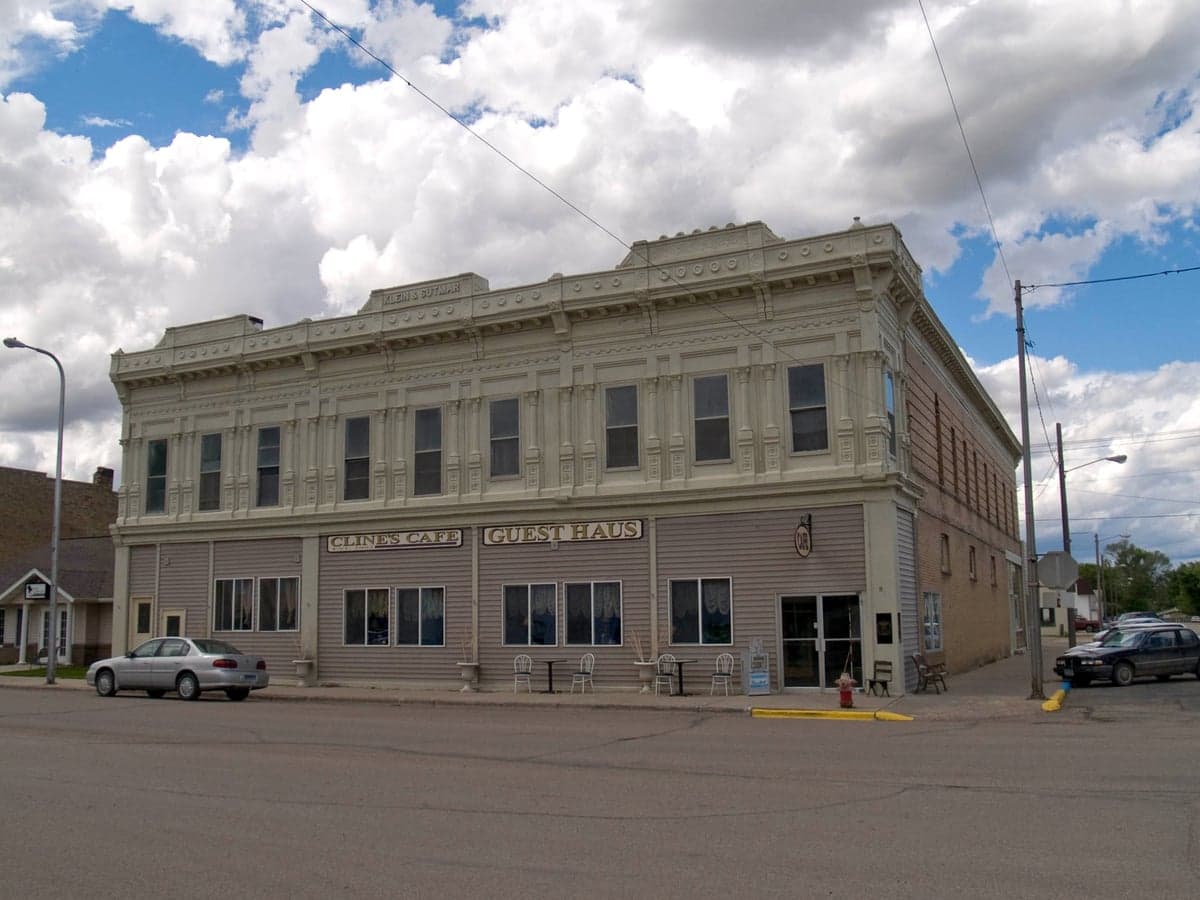
Photo: Wikipedia
Strategic Assessment of Oakes, ND
Strong survivability profile. Good buffer from population centers, with manageable environmental and tactical risks.
What does the Strategic Assessment tell us?
Our Strategic Assessment grades tactical survivability of an area. Major population centers, military targets, fallout zones, natural disasters, and border exposure all drive risk — lower exposure means a more defensible position in a crisis.
This is heavily inspired by Joel Skousen's Strategic Relocation book. Highly recommended you checkout the book ($)What does this tell us?
Our Strategic Assessment grades tactical survivability of an area. Major population centers, military targets, fallout zones, natural disasters, and border exposure all drive risk — lower exposure means a more defensible position in a crisis.
This is heavily inspired by Joel Skousen's Strategic Relocation book. Highly recommended you checkout the book ($)Strategic Pillars

Key Distances
Regional Safe Places
Below is our recommended "safe zones" in North Dakota and the surrounding area based on our strategic heuristics. For most people, it's unrealistic to live in a “safe zone” full-time due to work, family or other personal reasons. They tend to be more rural. However, many of these areas are perfect for second homes and retreat properties that double as a vacation home or even a short-term rental.
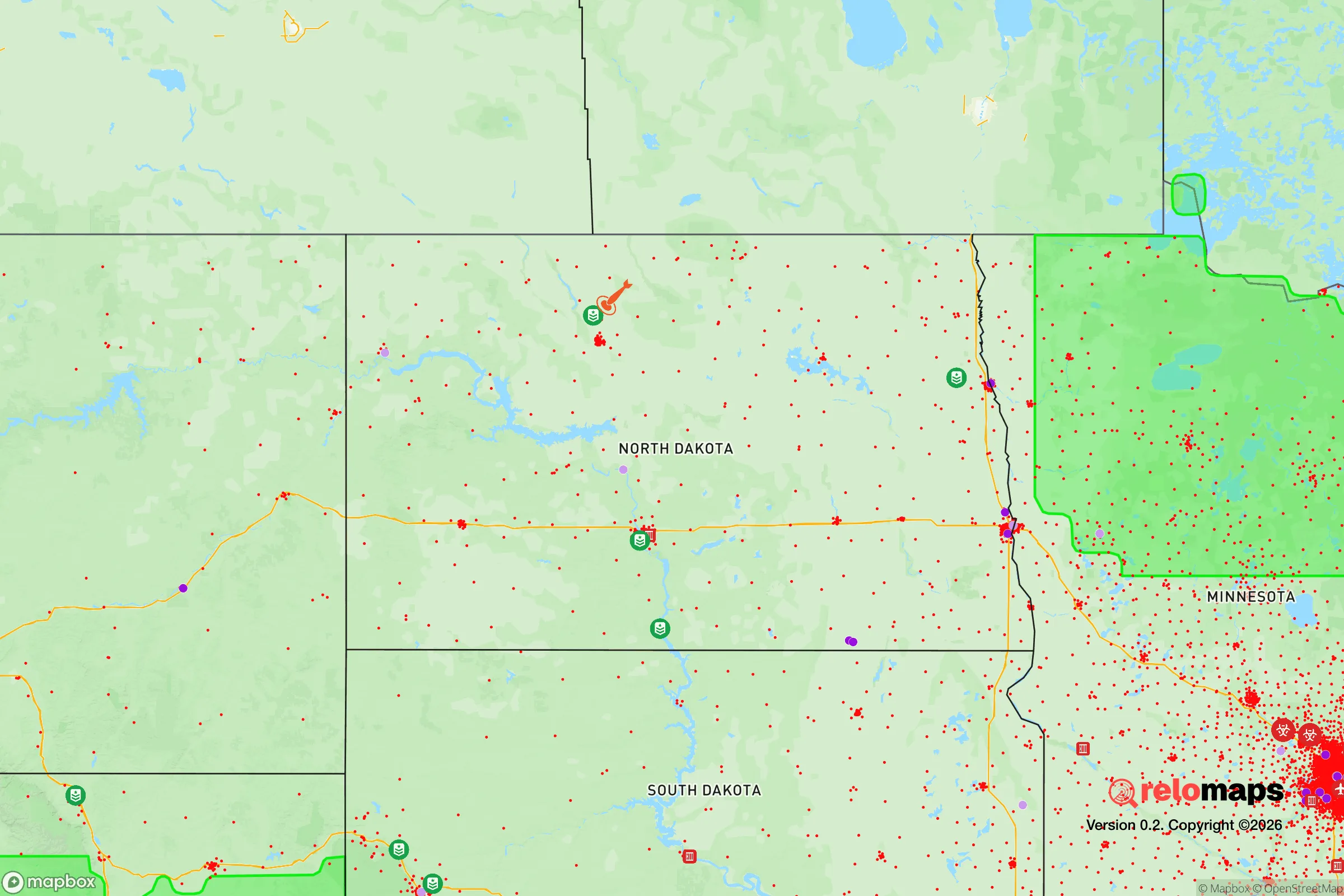
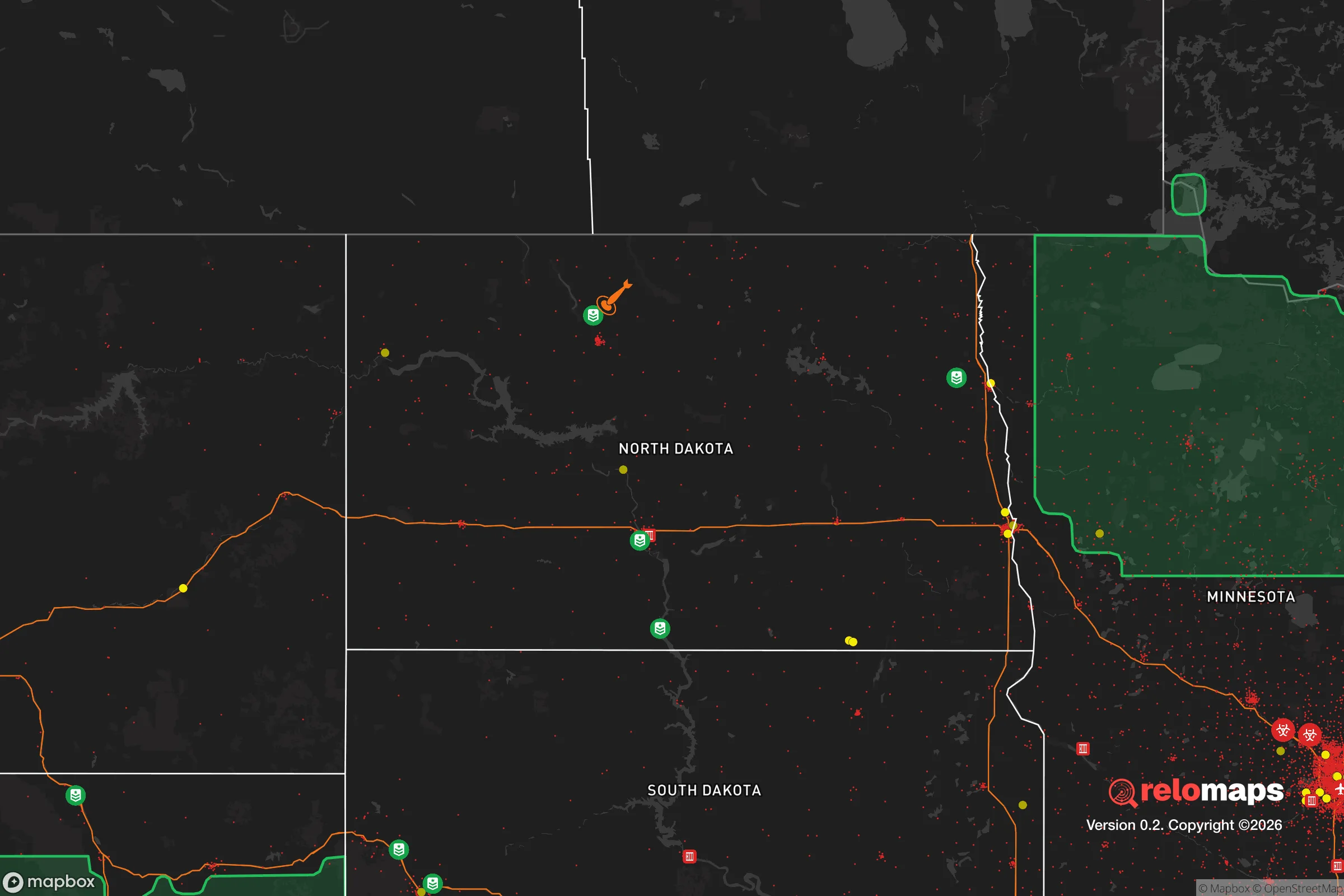


Important Note: For informational purposes only. This does not mean nothing bad ever happens in the green zones. Please use common sense. This is based on public data and modeled with AI. We tried to take a conservative approach but mistakes happen. We update this regularly as new information becomes available.
Solar Generator Recommendations
Backup power matters more here than in safer locations. We've picked three solar generators across budgets and capacity tiers — start with the budget unit if you only need a few essentials, or step up if you want to run a fridge and HVAC for days at a time.

Jackery Portable Power Station Explorer 300
Budget OptionPower on the Go: Weighing only 11 lbs, it's convenient to set up and store with book-sized foldable solar panels

BLUETTI Portable Power Station AC180
Designed for both indoor and outdoor scenarios, AC180 is highly capable as it has a robost capacity and continuous output power.

EF ECOFLOW DELTA Pro Ultra Power Station
Upgraded PickEcoFlow DELTA Pro Ultra is a whole-home energy system designed to grow with your family. Integrated with the Smart Home Panel 2, it scales to meet your evolving energy needs — keeping your home powered, intelligent, and secure through every stage of life.
We earn a commission, at no additional cost to you.
Strategic Assessment Analysis
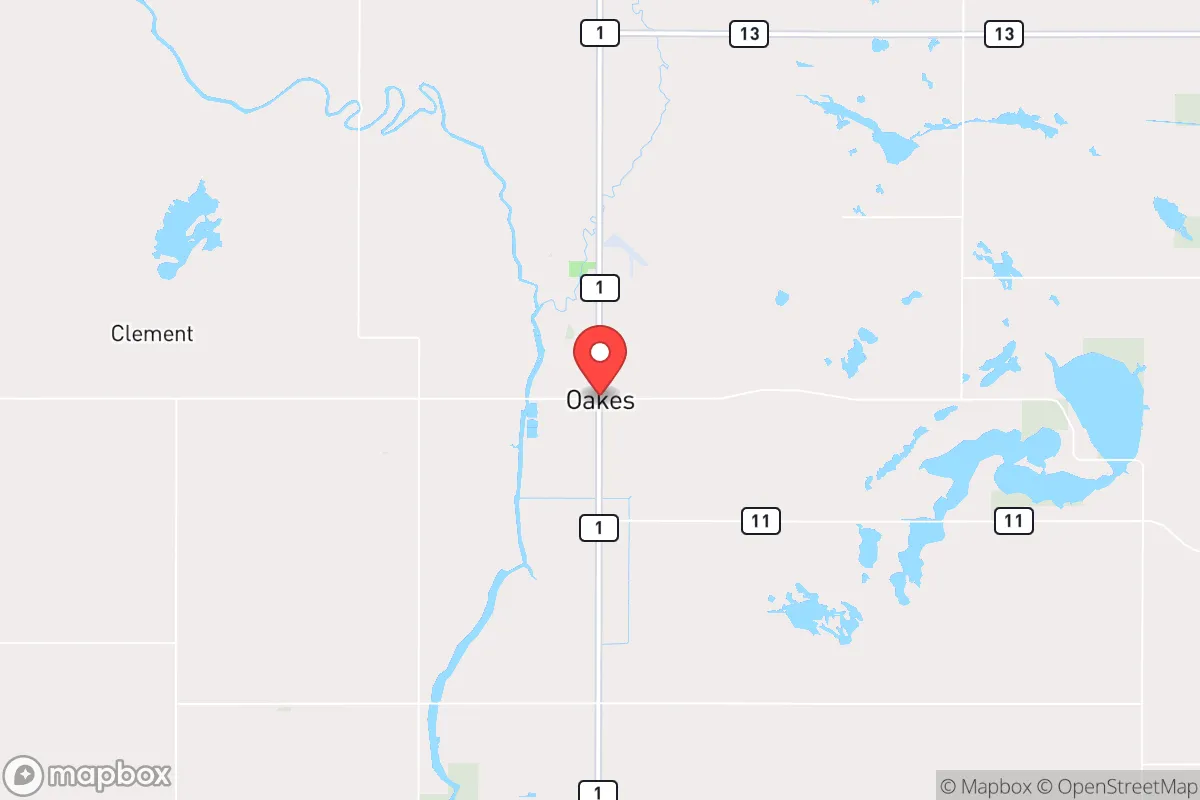
Oakes, North Dakota, sits in a sweet spot that few relocators fully appreciate: it offers genuine geographic buffer without the crushing isolation of the far northern tier. This small town of roughly 1,800 people, located in Dickey County about 50 miles south of Jamestown and 90 miles southwest of Fargo, benefits from being off the major interstate corridors while still having practical road and rail access. For someone thinking in terms of long-term resilience—civic unrest, supply chain disruptions, or larger-scale national instability—Oakes provides a low-profile, high-viability base that doesn't scream "prepper compound" but quietly checks most of the boxes that matter.
Geographic position and natural advantages for long-term security
Oakes sits in the James River Valley, a flat but fertile stretch of the Great Plains that has historically been a breadbasket. The immediate advantage here is agricultural self-sufficiency: the surrounding county is dominated by family-scale farms producing wheat, corn, soybeans, and sunflowers, plus cattle operations. For a relocator, that means local food production isn't a theoretical concept—it's the actual economy. The James River runs through town, providing a surface water source that, while not pristine, is treatable with basic filtration. The Ogallala Aquifer's eastern edge reaches into this region, so groundwater is accessible at reasonable depths for private wells. Winters are harsh—average January highs around 18°F, lows near 0°F—but that cold itself is a defensive asset. It discourages casual transient traffic and limits the viability of vector-borne diseases. The growing season is short (roughly 130 days), but for a prepared household with a greenhouse or cold frames, that's manageable. The area's low population density—Dickey County has about 5 people per square mile—means you're not competing with neighbors for resources in a crunch. The nearest city of any real size is Fargo, and that's a solid 90-minute drive, which puts Oakes well outside the typical "commuter shed" that would see suburban flight in a crisis.
Risks, exposures, and proximity to fallout-relevant landmarks
No location is risk-free, and Oakes has its own set of exposures that a strategic relocator needs to weigh. The most obvious is proximity to the Fargo-Moorhead metro area (about 200,000 people). In a major civil unrest scenario, Fargo would likely see the kind of urban chaos that drives people outward. Oakes is far enough away that you won't be in the initial wave of evacuees, but it's close enough that you'd see secondary effects—fuel shortages, supply chain hiccups, and possibly transient traffic on Highway 1 and Highway 11. The other significant concern is the rail lines running through town. Oakes sits on a BNSF main line that carries both freight and, critically, crude oil from the Bakken fields to the east. A derailment or intentional sabotage of a crude oil train could create a fire hazard or toxic plume that would affect the immediate area. That's a low-probability but high-consequence risk. On the plus side, there are no nuclear power plants within 200 miles (the nearest is Prairie Island in Minnesota, about 250 miles east), no major military installations nearby, and no obvious high-value terrorist targets. The closest "fallout-relevant" landmark is probably the Grand Forks Air Force Base (about 130 miles north), which hosts drone operations—a potential target in a conflict scenario, but far enough away that fallout would be negligible. Tornado risk is real but manageable with a basement or storm shelter; the area averages about 10 tornadoes per year across the entire region, and Oakes itself hasn't seen a direct hit in decades. Flooding from the James River is the more frequent natural hazard, but the town's levee system has held since the 1990s, and newer developments are on higher ground.
Practical resilience for a relocator: food, water, energy, and defensibility
For someone serious about self-reliance, Oakes offers a surprisingly complete package. Food security is the strongest pillar: you can buy directly from local farmers at the Oakes Farmers Market (seasonal), and the surrounding area has enough agricultural output that barter economies would function even if grocery stores emptied. The local co-op and feed stores carry seeds, tools, and livestock supplies. For water, the James River is a reliable surface source, but the smarter play is drilling a private well—depths of 100-200 feet typically yield good-quality water, and the local geology doesn't have the fracking contamination issues seen in the western part of the state. Rainwater catchment is viable, though you'll need to account for the dry winters. Energy is where Oakes really shines: North Dakota is the second-largest oil-producing state in the country, and while you won't have a well in your backyard, the state's energy infrastructure means grid power is relatively stable. For off-grid capability, solar works here—the area gets about 200 sunny days per year—but you'll need battery storage for the long winter nights. Wind is abundant; a small residential turbine can supplement solar effectively. Defensibility is the trickiest factor. Oakes is flat, open country—there's no terrain to hide behind. But that same openness gives you exceptional visibility. A rural property with a clear line of sight in all directions, combined with a good fence and a dog, provides more practical security than a mountain cabin that can be approached unseen. The local law enforcement presence is small (Dickey County Sheriff's Office has about 6 deputies), so you can't rely on rapid response. The community itself is tight-knit and conservative—the kind of place where neighbors know each other's vehicles and notice strangers. That social fabric is a resilience asset that's hard to quantify but matters more than any piece of gear.
The overall strategic picture for Oakes is one of quiet viability. It's not a bug-out location for a weekend warrior; it's a place you'd actually want to live year-round, build relationships, and establish a real presence. The trade-offs are real: harsh winters, limited medical infrastructure (the nearest hospital with a full ER is in Jamestown, 50 miles north), and a cultural environment that can feel insular to outsiders. But for a conservative-leaning relocator who values community self-reliance, low visibility, and agricultural sustainability, Oakes offers a foundation that most of the trendy "prepper towns" in the Rockies or Appalachia can't match—namely, actual productive land and a population that already knows how to work it. If the country sees the kind of disruptions many are preparing for, Oakes won't be a fortress. It will be a functioning small town that can feed itself, heat itself, and keep its head down. That's a better bet than most.

* Values derived from national, state, county, city and local statistics and may differ in a specific area. Last updated: 2026-04-19T08:16:41.000Z
Narrative content on this page is AI-generated and may contain mistakes. Verify any details that matter before acting on them.
ReloMaps may earn a commission from affiliate links at no extra cost to you.

