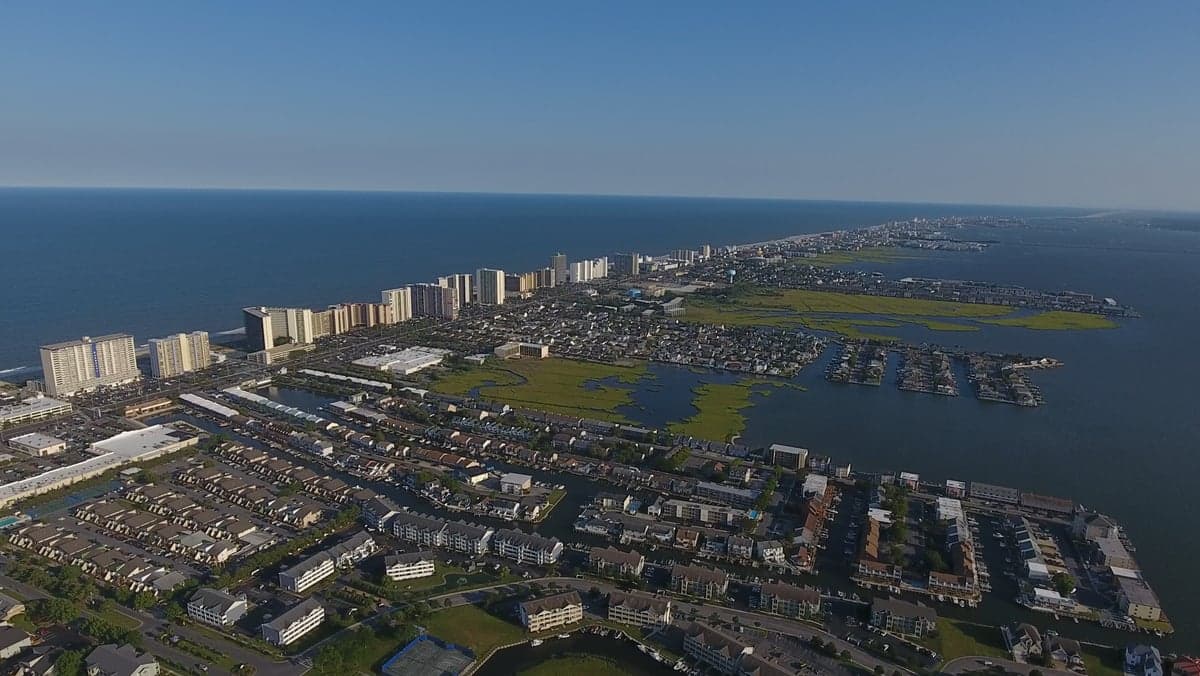
Photo: Wikipedia
Strategic Assessment of Ocean City, MD
Multiple tactical vulnerabilities. Population density, target proximity, or disaster risk are likely compounding. A retreat property and exit planning is required.
What does the Strategic Assessment tell us?
Our Strategic Assessment grades tactical survivability of an area. Major population centers, military targets, fallout zones, natural disasters, and border exposure all drive risk — lower exposure means a more defensible position in a crisis.
This is heavily inspired by Joel Skousen's Strategic Relocation book. Highly recommended you checkout the book ($)What does this tell us?
Our Strategic Assessment grades tactical survivability of an area. Major population centers, military targets, fallout zones, natural disasters, and border exposure all drive risk — lower exposure means a more defensible position in a crisis.
This is heavily inspired by Joel Skousen's Strategic Relocation book. Highly recommended you checkout the book ($)Strategic Pillars

Key Distances
Regional Safe Places
Below is our recommended "safe zones" in Maryland and the surrounding area based on our strategic heuristics. For most people, it's unrealistic to live in a “safe zone” full-time due to work, family or other personal reasons. They tend to be more rural. However, many of these areas are perfect for second homes and retreat properties that double as a vacation home or even a short-term rental.
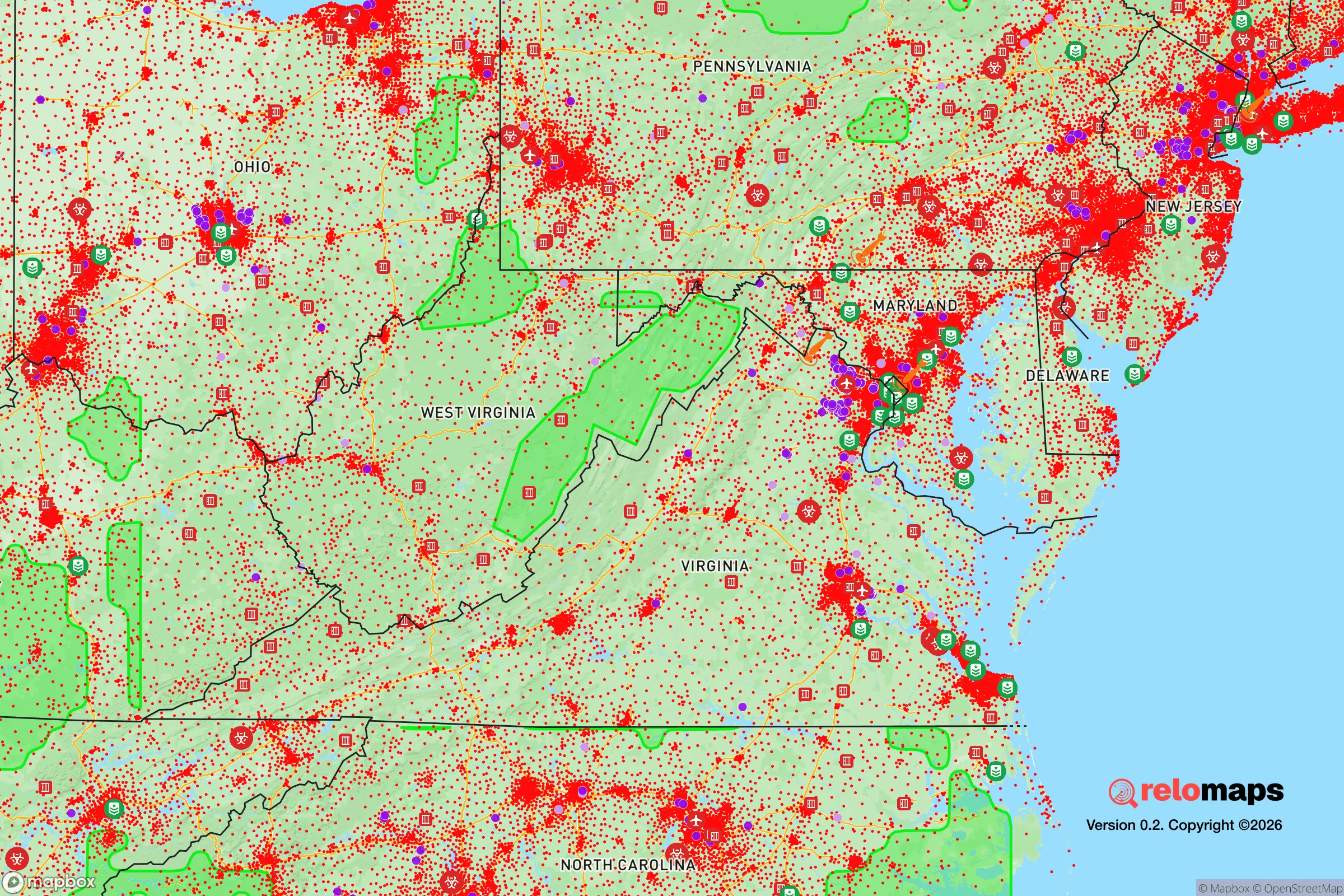
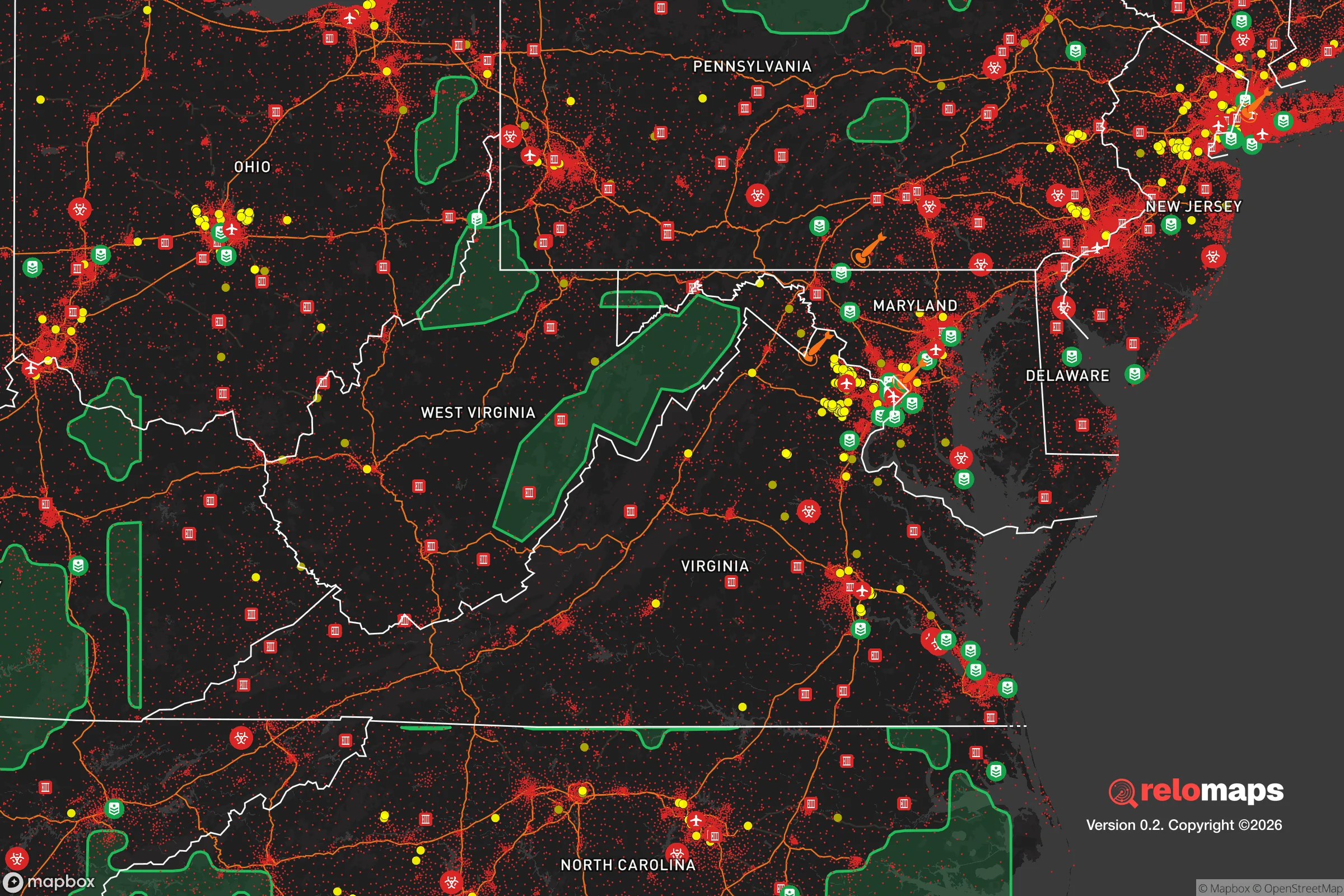


Important Note: For informational purposes only. This does not mean nothing bad ever happens in the green zones. Please use common sense. This is based on public data and modeled with AI. We tried to take a conservative approach but mistakes happen. We update this regularly as new information becomes available.
Solar Generator Recommendations
Backup power matters more here than in safer locations. We've picked three solar generators across budgets and capacity tiers — start with the budget unit if you only need a few essentials, or step up if you want to run a fridge and HVAC for days at a time.

Jackery Portable Power Station Explorer 300
Budget OptionPower on the Go: Weighing only 11 lbs, it's convenient to set up and store with book-sized foldable solar panels

BLUETTI Portable Power Station AC180
Designed for both indoor and outdoor scenarios, AC180 is highly capable as it has a robost capacity and continuous output power.

EF ECOFLOW DELTA Pro Ultra Power Station
Upgraded PickEcoFlow DELTA Pro Ultra is a whole-home energy system designed to grow with your family. Integrated with the Smart Home Panel 2, it scales to meet your evolving energy needs — keeping your home powered, intelligent, and secure through every stage of life.
We earn a commission, at no additional cost to you.
Strategic Assessment Analysis
Ocean City, Maryland, occupies a narrow barrier island that offers a distinct set of strategic advantages for those prioritizing resilience and self-sufficiency, but it also carries significant exposure risks that demand careful consideration. Its position as a coastal resort town, roughly 30 miles from the Delaware border and 130 miles from Washington, D.C., creates a paradox: it is isolated enough to avoid the immediate crush of a major urban collapse, yet close enough to be affected by the fallout from those same population centers. For a relocator with a prepper mindset, the key question is whether the area’s natural buffers and local resources outweigh its vulnerability to storms, mass tourism, and proximity to high-value targets.
Geographic position and natural buffers for long-term survival
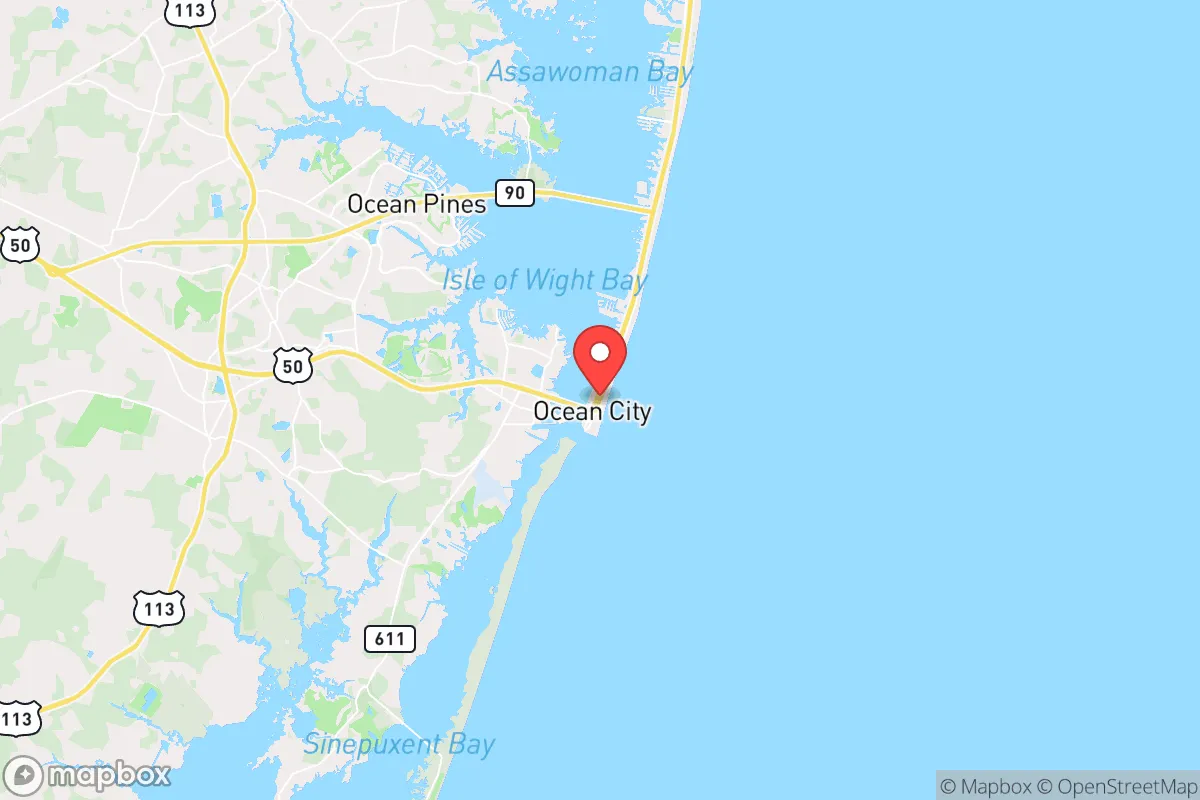
Ocean City’s location on a 10-mile-long barrier island provides a natural moat—access is limited to a single north-south road (Coastal Highway, Route 528) and the Route 50 bridge from the mainland. This chokepoint is a double-edged sword: it makes the area inherently defensible in a grid-down scenario, but it also means evacuation or resupply routes are fragile. The surrounding geography includes the Atlantic Ocean to the east, the Assawoman Bay and Isle of Wight Bay to the west, and the Sinepuxent Bay to the south, creating a water-rich environment that could support fishing, crabbing, and water collection—critical for long-term food security. The mainland side, particularly Worcester County, is sparsely populated with farmland, pine forests, and wetlands, offering potential retreat zones if the island becomes untenable. The area’s elevation is low—averaging just 10 feet above sea level—which is a concern for storm surge but also means groundwater is shallow and accessible with basic hand pumps. For a conservative-leaning relocator, the isolation from major interstate corridors (I-95 is 40 miles west) reduces the risk of refugee flows from Baltimore or Washington, D.C., during a crisis, as the primary access routes are easily monitored and controlled.
Risks, exposures, and proximity to fallout-relevant landmarks
The most glaring vulnerability is Ocean City’s proximity to high-value targets along the Eastern Seaboard. Washington, D.C., is roughly a 2.5-hour drive under normal conditions, but as the crow flies, it’s only about 100 miles—well within the fallout radius of a nuclear detonation or a major EMP event. The same applies to the Philadelphia metro area (120 miles north) and the Norfolk naval base (130 miles south), both of which are prime strategic targets. In a mass casualty event or civil unrest scenario, Ocean City’s tourist-dependent economy would collapse overnight, and the seasonal population of 300,000+ during summer months would create a logistical nightmare for food, water, and medical supplies. The area is also in the direct path of Atlantic hurricane seasons, with storm surge risks that have historically flooded the island (e.g., Hurricane Sandy in 2012 caused significant damage). Additionally, the single evacuation route—Route 50 west to Salisbury—is a two-lane road that bottlenecks at the bridge, making a rapid exit impossible during a disaster. For a prepper, this means you must plan to shelter in place for at least 72 hours, and ideally have a secondary escape route via boat across the bay to the mainland. The presence of large hotels and condos along the boardwalk also creates a concentration of transient populations that could become hostile in a resource-scarce scenario.
Practical resilience for a relocator: food, water, energy, and defensibility
On the positive side, Ocean City’s marine environment offers a reliable, year-round food source if you have the skills to exploit it. The Atlantic and bay waters are rich in bluefish, flounder, striped bass, crabs, and clams, and the area has a strong local fishing culture with public piers and boat ramps. Freshwater is the critical weak point: the island relies entirely on the mainland for municipal water, and private wells are rare due to saltwater intrusion. A relocator would need to invest in rainwater catchment systems (average annual rainfall is 45 inches) or have a plan to haul water from the mainland using a boat or vehicle. Energy resilience is moderate—solar panels are viable given the coastal sun exposure, but the island’s power grid is vulnerable to storms and EMPs. A backup generator with a secure fuel cache (gasoline or propane) is essential, as is a manual water pump for shallow wells on the mainland side. Defensibility is a mixed bag: the island’s narrow layout means you can monitor all approaches from a single vantage point, but the dense tourist infrastructure (hotels, restaurants, boardwalk) provides too many hiding spots for potential threats. A better strategy is to establish a primary residence on the mainland in Worcester County (e.g., near Berlin or Snow Hill) and use Ocean City as a secondary resource hub for fishing and coastal access. The local population is predominantly conservative-leaning and self-reliant, with a strong hunting and fishing tradition, which aligns well with a prepper mindset. However, the seasonal influx of tourists from urban areas means you must be prepared for a sudden population surge that could strain resources and increase the risk of civil unrest.
The overall strategic picture for Ocean City is one of calculated trade-offs. It offers genuine advantages in terms of natural food sources, water access, and geographic isolation from major urban centers, but these are offset by significant exposure to storm risks, a fragile supply chain, and proximity to high-value targets that could generate fallout or refugee flows. For a single individual or family with a conservative, self-reliant outlook, the area is best viewed as a coastal outpost rather than a primary survival location—a place to harvest marine resources and maintain a low profile, but not a fortress. The smartest approach is to treat Ocean City as a seasonal or secondary base, with a more defensible mainland property as the primary residence. If you can secure a property with a private well, solar power, and a boat for bay crossings, the area becomes a viable option for weathering short-term disruptions. But for long-term resilience against a national-scale collapse, the risks of being on a barrier island—especially one with a single road and a history of hurricane damage—likely outweigh the benefits. The bottom line: Ocean City works as a strategic asset in a diversified plan, but it should never be your only line of defense.

* Values derived from national, state, county, city and local statistics and may differ in a specific area. Last updated: 2026-04-19T07:46:47.000Z
Narrative content on this page is AI-generated and may contain mistakes. Verify any details that matter before acting on them.
ReloMaps may earn a commission from affiliate links at no extra cost to you.

