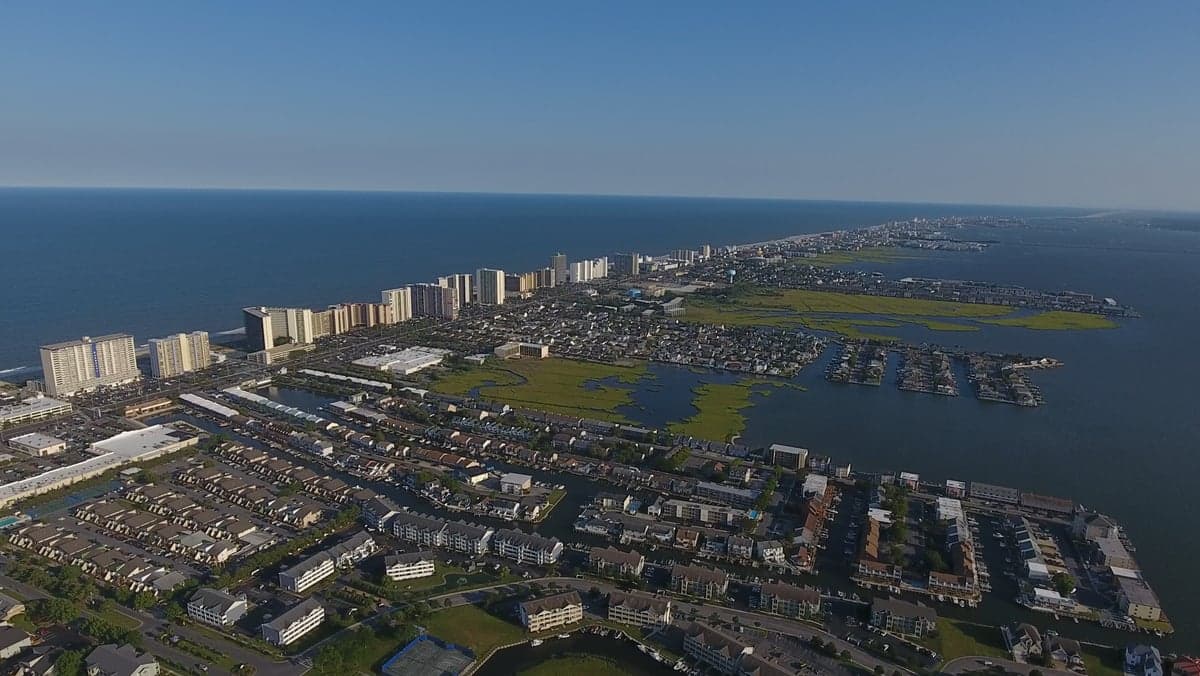
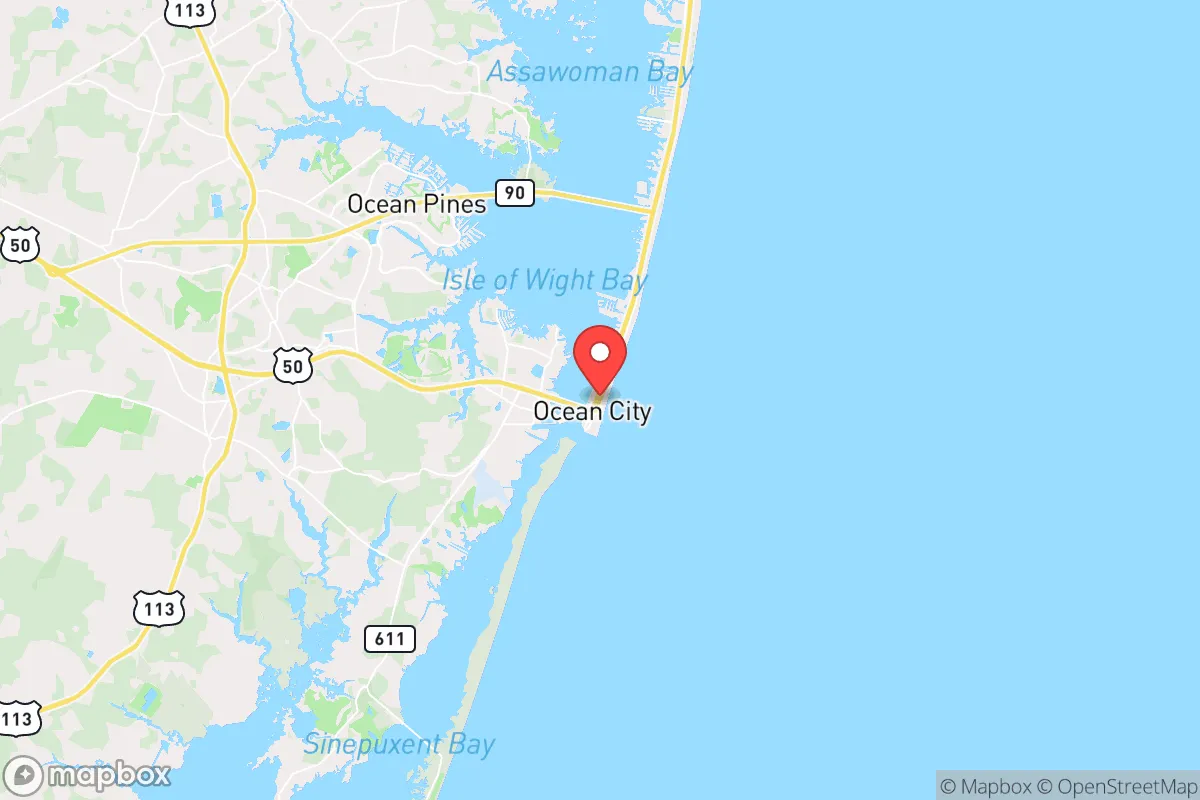
Photo: Wikipedia
Political ClimatePolitical Climate in Ocean City, MD
District shown is the primary district for this city’s centroid. Cities may span multiple districts.
Local Political AnalysisPolitical Analysis of Ocean City, MD
Ocean City, Maryland, has long been a reliably conservative stronghold, and that hasn't changed much despite the national winds shifting. The Cook Partisan Voting Index (PVI) for the area sits at R+8, meaning it votes about eight points more Republican than the country as a whole. That’s not just a number on a map; it reflects a deep-seated local preference for limited government, lower taxes, and a "live and let live" attitude that’s been the backbone of this beach town for decades. You’ll see it in local elections, in the way folks talk about property rights, and in the general skepticism toward any new regulations that feel like they’re coming from Annapolis or Washington, D.C.
How it compares
If you drive just a few miles west, you hit Salisbury, which leans more moderate and has a noticeable progressive streak, especially around the university. That’s where you start hearing talk about zoning overhauls and "equity" initiatives that would make most Ocean City locals roll their eyes. Head north to places like Berlin or Snow Hill, and you’re back in solidly red territory—small towns where the biggest political fights are about keeping the county commissioners from raising taxes or imposing new building codes. The contrast is sharp: Ocean City’s politics are shaped by tourism and second-home owners who value predictability and low interference, while Salisbury’s are driven by a younger, more transient population that’s comfortable with bigger government. That R+8 rating feels like a bulwark against the kind of overreach you see in places like Baltimore or even parts of the Eastern Shore that are starting to drift left.
What this means for residents
For the people who actually live here year-round, the conservative tilt means a few concrete things. First, property taxes stay relatively low compared to other Maryland beach towns, and there’s a strong resistance to new fees or mandates—like the push a few years back to impose stricter rental registration rules that felt more like a money grab than a safety measure. Second, local law enforcement is generally trusted and well-funded, with a focus on keeping the boardwalk safe without turning it into a surveillance state. Third, and this is the big one for a lot of folks, there’s a cultural resistance to the kind of progressive social engineering you see in bigger cities. You won’t find a lot of enthusiasm for things like defunding the police or imposing mask mandates on businesses long after the health data says they’re unnecessary. The prevailing attitude is: let people run their own lives and their own businesses, and keep the government out of the way.
That said, there are some cultural and policy distinctions worth noting. Ocean City has always been a bit of a libertarian-leaning conservative town—more about personal freedom than social conservatism. You’ll see plenty of Trump flags in the summer, but you’ll also see a lot of folks who just want to be left alone to fish, run a t-shirt shop, or enjoy a cold beer on the beach. The real red flags come when you see outside groups trying to push things like "equity audits" for local government or mandatory diversity training for small businesses. Those efforts have been beaten back so far, but the concern is real: as more people move in from D.C. and Baltimore, the political balance could shift. For now, though, Ocean City remains a place where common sense and personal responsibility still carry the day, and that’s something worth holding onto.

State Political ClimatePolitical Climate in Maryland
State Political AnalysisPolitical Environment in the State
Maryland has long been a deep blue state, but its politics are far more complicated than a simple Democratic label suggests. The state hasn't voted for a Republican presidential candidate since George H.W. Bush in 1988, and Democrats hold a supermajority in the General Assembly. However, this dominance masks a stark internal divide: the heavily populated, progressive Washington, D.C. suburbs and Baltimore City drive the statewide results, while the rest of the state—from the Eastern Shore to Western Maryland—votes reliably Republican. Over the last 10-20 years, the state has shifted further left on social and economic policy, driven by rapid suburbanization and an influx of federal workers, but a growing conservative counter-movement is visible in rural counties and some exurban pockets.
Urban vs. rural divide
The political map of Maryland is essentially a tale of two states. The Democratic stronghold is anchored by Montgomery County and Prince George's County, which together cast hundreds of thousands of votes for Democratic candidates. Baltimore City is another deep-blue bastion, though its population has declined. On the other side, the rural and exurban counties—Garrett, Allegany, Washington, Carroll, Harford, and the Eastern Shore counties like Worcester and Queen Anne's—vote heavily Republican. The key battlegrounds are the "collar counties" around D.C. and Baltimore: Howard County and Anne Arundel County have trended blue in recent cycles, while Frederick County has become a true swing county, flipping from red to purple and now leaning blue as D.C. commuters push in. Harford County remains a conservative stronghold, but even there, the southern end near Baltimore is seeing demographic shifts.
Policy environment
Maryland's policy environment is decidedly progressive, with a high tax burden and heavy regulation. The state has a progressive income tax structure with rates up to 5.75%, plus a county piggyback tax that can push the top rate over 8%. Property taxes are high, especially in the D.C. suburbs. The state has a strict gun control regime, including a ban on "assault weapons," a handgun qualification license requirement, and a magazine capacity limit of 10 rounds. Education policy is dominated by the powerful teachers' unions, and the state has adopted the Blueprint for Maryland's Future, a massive funding plan that increases education spending by billions but has been criticized for lacking accountability measures. Healthcare is heavily regulated, with a state-based insurance exchange and Medicaid expansion. Election laws are among the most liberal in the country, with no-excuse mail-in voting, same-day registration, and automatic voter registration. The state also has a sanctuary policy that limits cooperation with federal immigration enforcement.
Trajectory & freedom
Over the past decade, Maryland has become less free by most measures, particularly for gun owners, taxpayers, and parents. The Firearm Safety Act of 2013 was a major expansion of gun control, and subsequent bills have tightened the licensing process. In 2023, the General Assembly passed a bill banning the carrying of firearms in certain "sensitive" locations, including businesses unless they post a sign allowing it—a direct response to the Supreme Court's Bruen decision. On parental rights, the state has moved in the opposite direction of many red states: it passed a law requiring school districts to adopt policies that affirm LGBTQ+ students' gender identity, and it has not passed any parental notification requirements for school-based health services. The state also legalized recreational marijuana in 2023, but with heavy regulation and high taxes. Property rights have been eroded by a series of land-use and environmental regulations, particularly in the Chesapeake Bay watershed. The state's tax burden remains among the highest in the nation, and there is no serious movement toward tax reform.
Civil unrest & political movements
Maryland has seen significant civil unrest, most notably the 2015 Baltimore riots following the death of Freddie Gray, which exposed deep racial and economic divides. The state is home to a vibrant progressive activist scene, particularly around the D.C. suburbs, where groups like the Maryland Progressive Democrats and Indivisible chapters are active. On the right, conservative activism is strongest in the rural counties and the Eastern Shore, with groups like the Maryland Republican Party and local Tea Party-style organizations. Immigration politics are a flashpoint: the state's sanctuary policies have led to tensions between local law enforcement and ICE, and some counties—like Harford and Carroll—have passed resolutions opposing the state's sanctuary status. Election integrity has been a major issue since 2020, with Republican activists raising concerns about mail-in ballot procedures and the state's automatic voter registration system. There have been no serious secession movements, but there is a persistent "Western Maryland secession" sentiment, with some residents in Garrett County and Allegany County feeling culturally and politically disconnected from the rest of the state.
Projection
Looking ahead 5-10 years, Maryland is likely to become even more Democratic at the state level, driven by continued in-migration of federal workers and professionals into the D.C. suburbs. The rural counties will continue to lose population and political influence, while the exurban swing counties like Frederick and Anne Arundel will likely shift further left. However, there are countervailing forces: the high cost of living and tax burden are driving some families to relocate to lower-tax states like Florida, Texas, and Tennessee, which could slow the leftward shift. The state's Republican Party is increasingly focused on the rural and exurban base, but it has struggled to win statewide office. A new resident moving in now should expect to live in a state where the political culture is dominated by the D.C. suburbs, with high taxes, strict gun laws, and a progressive social agenda. The best opportunities for conservative-leaning residents are in the rural counties and the Eastern Shore, where local governments are more aligned with their values, but they will have little influence over state-level policy.
For a new resident, the bottom line is this: Maryland offers a high quality of life in many respects—good schools, strong job market, and beautiful natural areas—but it comes with a heavy price tag in taxes and a political environment that is increasingly hostile to conservative values. If you value low taxes, gun rights, and local control, you will find yourself swimming against the current in Annapolis. The rural counties and the Eastern Shore offer a more welcoming environment, but you'll still be subject to state laws that you likely disagree with. If you're moving here for a job in the D.C. area, be prepared for a political culture that is overwhelmingly progressive, and consider living in a county like Frederick or Harford where you might find more political balance. Otherwise, you may find yourself planning your exit strategy sooner rather than later.
* Values derived from national, state, county, city and local statistics and may differ in a specific area. Last updated: 2026-04-19T07:46:47.000Z
Narrative content on this page is AI-generated and may contain mistakes. Verify any details that matter before acting on them.
ReloMaps may earn a commission from affiliate links at no extra cost to you.

