Photo: Wikipedia
Political ClimatePolitical Climate in Ofallon, MO
District shown is the primary district for this city’s centroid. Cities may span multiple districts.
Local Political AnalysisPolitical Analysis of Ofallon, MO
O'Fallon, Missouri, leans solidly conservative, with a Cook PVI of R+4 that reflects a community that has historically valued limited government and personal responsibility. For decades, this St. Charles County suburb was a reliable stronghold for traditional values, where folks expected the government to stay out of their lives and their wallets. However, like many growing suburbs in the St. Louis metro, O'Fallon has seen a slow but noticeable shift in recent years, with some newer residents bringing more progressive ideas that raise eyebrows among those who remember when the area was a quieter, more predictable place.
How it compares
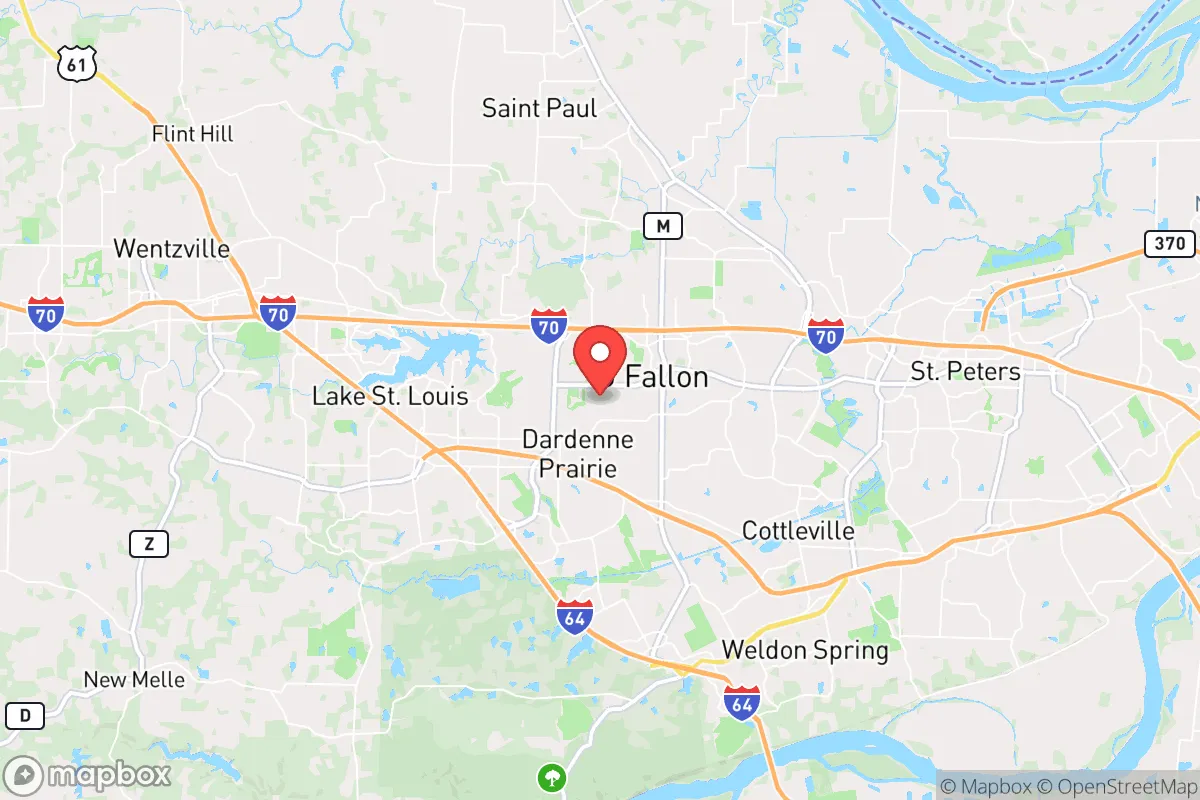
Compared to the deep-blue city of St. Louis just 30 miles east, O'Fallon is a different world entirely. While St. Louis County and the city proper have trended sharply left, St. Charles County—and O'Fallon in particular—has remained a conservative bulwark. Neighboring towns like Lake St. Louis and Wentzville share a similar political DNA, but O'Fallon's size and proximity to the metro area make it a bellwether for suburban political trends. The contrast is stark: drive east across the Missouri River, and you'll hit places like St. Peters or Cottleville, which are still reliably red, but you'll also see the creeping influence of St. Louis County's progressive policies, like higher taxes and more restrictive zoning. O'Fallon has largely resisted that, but the pressure is mounting as the population grows and newcomers from more liberal areas arrive.
What this means for residents
For longtime residents, the biggest concern is that O'Fallon's conservative character is being tested by the same forces that have reshaped other suburbs across the country. The city council and school board have seen more contested races in recent years, with candidates pushing for things like diversity, equity, and inclusion initiatives in schools or more aggressive climate policies—ideas that many locals see as government overreach into personal freedoms. Property taxes remain relatively low compared to St. Louis County, but there's a constant battle to keep them that way, especially as the city expands infrastructure to handle growth. The Second Amendment is still widely respected here, and most folks expect their local government to focus on core services like roads and public safety, not social engineering. If you value a community where your rights aren't second-guessed by bureaucrats, O'Fallon still delivers, but you'll need to stay engaged to keep it that way.
Culturally, O'Fallon has a few distinctions that set it apart from its more progressive neighbors. The city has a strong tradition of supporting local law enforcement, and you won't see the kind of defund-the-police rhetoric that's common in St. Louis. The school district, Fort Zumwalt, has generally avoided the most divisive curriculum battles, but parents are increasingly vigilant about what's being taught. On the policy front, O'Fallon has resisted adopting the kind of inclusionary zoning or affordable housing mandates that have become common in blue areas, keeping the focus on property rights and market-driven development. The long-term outlook depends on whether the community can hold the line against the progressive tide that's washing over much of the region. For now, it's still a place where a handshake means something and the government knows its place—but you'd better keep an eye on the local elections.

State Political ClimatePolitical Climate in Missouri
State Political AnalysisPolitical Environment in the State
Missouri has long been considered a bellwether state, but over the past 20 years it has shifted decisively from a purple swing state to a solidly red one, with Republicans now holding supermajorities in both legislative chambers and every statewide office except the governorship (which flipped back to red in 2024). The state voted for Donald Trump by roughly 18 points in 2024, a stark contrast from 2008 when it was one of the closest states in the nation. This rightward march is driven by a combination of rural exodus from Democratic roots, suburban realignment, and a steady influx of conservative-leaning transplants from Illinois and California seeking lower taxes and fewer regulations.
Urban vs. rural divide
The political map of Missouri is a textbook study in the urban-rural chasm. The two major Democratic strongholds are St. Louis City and Kansas City, which together produce nearly all of the state’s blue votes. St. Louis County, once a swing area, has gone deep blue as the inner-ring suburbs have diversified and become more progressive. Meanwhile, the fast-growing exurbs like St. Charles and Wentzville have become reliably red, absorbing conservative families fleeing the city. Springfield in the southwest is a conservative anchor, home to the headquarters of the Assemblies of God and a deeply Republican voting record. The rural counties along the Mississippi River, like Cape Girardeau and Perry County, are rock-ribbed red, while the Bootheel region—historically Democratic—has flipped hard red over the last decade. The only real blue outlier in rural Missouri is Columbia, home to the University of Missouri, which votes like a mini-Austin but is surrounded by deep red countryside. The Lake of the Ozarks region has become a conservative retirement and second-home magnet, further solidifying the rural advantage.
Policy environment
Missouri’s policy environment is among the most conservative in the Midwest. The state has a flat income tax rate of 4.8% (down from 5.4% in 2022, with further cuts triggered by revenue triggers), and there is no estate or inheritance tax. Property taxes are low by national standards, averaging around 0.9% of home value. The state is a right-to-work state (though the law was repealed by ballot initiative in 2018, the legislature has since passed a new version that survived court challenges). Education policy is a mixed bag: Missouri has a robust charter school law in St. Louis and Kansas City, and a growing school choice movement has led to the creation of a tax-credit scholarship program for low-income students. However, the state’s public school funding formula remains a perennial political battleground. On healthcare, Missouri did not expand Medicaid until 2021, when voters approved it via ballot initiative—a rare progressive victory that the Republican legislature has since tried to undermine with work requirements. Election laws have tightened: voter ID is required, and the state passed a 2022 law banning private funding of election administration and limiting drop boxes. Gun laws are among the most permissive in the nation: permitless carry was signed into law in 2016, and the state has a “Second Amendment Preservation Act” that purports to nullify federal gun laws—a law that has sparked federal litigation but remains popular with conservatives.
Trajectory & freedom
On the freedom front, Missouri has been moving in a decidedly pro-liberty direction over the past decade, particularly on gun rights and parental rights. The Second Amendment Preservation Act (SAPA) of 2021 was a landmark—it declares any federal law infringing on the right to keep and bear arms null and void in Missouri, and prohibits state and local law enforcement from enforcing such laws. This has led to a standoff with the DOJ, but it signals the state’s willingness to push back against federal overreach. In 2023, the legislature passed the Missouri Parental Bill of Rights, which requires schools to obtain parental consent before teaching about sexual orientation or gender identity, and gives parents the right to review instructional materials. This was a direct response to progressive school board activism in districts like Clayton and Parkway. On taxes, the 2022 income tax cut package was the largest in state history, and further cuts are triggered automatically if revenue grows. However, there are concerning signs: the state’s Medicaid expansion, while popular, has ballooned the budget, and some conservatives worry about long-term fiscal sustainability. Medical freedom took a hit during COVID—Missouri had mask mandates in some cities and a state of emergency that lasted longer than many red states—but the legislature has since passed laws banning vaccine passports and prohibiting discrimination based on vaccination status.
Civil unrest & political movements
Missouri has been a flashpoint for civil unrest, most notably in Ferguson in 2014, which sparked the Black Lives Matter movement nationally. That event still echoes in local politics, with St. Louis County experiencing ongoing tensions over policing and municipal court reform. More recently, the 2020 protests in Kansas City and St. Louis saw property damage and clashes with police, but the state’s conservative legislature responded by passing a law increasing penalties for rioting and blocking efforts to defund the police. On the right, the “Patriot” movement is strong in rural areas, with groups like the Missouri State Militia and various Oath Keeper chapters active, though they have been quieter since January 6th. Immigration politics are less heated than in border states, but the legislature has passed laws banning sanctuary cities and requiring law enforcement to cooperate with ICE. The state’s election integrity debate has been intense: after the 2020 election, the GOP-led legislature passed a sweeping election reform bill that tightened voter ID, banned ballot harvesting, and limited absentee ballot drop boxes. There is no evidence of widespread fraud in Missouri, but the issue remains a rallying cry for the conservative base. A new resident would notice that political yard signs and bumper stickers are common, and conversations about politics are more open than in coastal states—people here are not shy about their views.
Projection
Over the next 5-10 years, Missouri is likely to become even more conservative, driven by two demographic trends. First, the continued exodus from St. Louis and Kansas City to the exurbs and rural areas will dilute Democratic voting power. Second, in-migration from blue states—particularly Illinois, California, and Colorado—is accelerating, and these newcomers tend to be conservative-leaning, attracted by low taxes, gun rights, and a slower pace of life. The Branson and Lake of the Ozarks areas are seeing significant development, and Springfield is growing as a regional hub for logistics and healthcare. The biggest wild card is the state’s abortion policy: after the 2022 Dobbs decision, Missouri became the first state to effectively ban abortion, with no exceptions for rape or incest. This has energized progressive activists, and a 2024 ballot initiative to restore abortion access is likely to pass, which could shift the political landscape by mobilizing suburban women. However, even if that passes, the legislature will likely try to restrict it further. The Republican supermajority is secure for the foreseeable future, and the state’s trajectory is toward lower taxes, more school choice, and continued resistance to federal mandates. A new resident moving in now should expect to find a state that is increasingly aligned with conservative values, but with a persistent urban-rural cultural war that will continue to produce legislative fireworks.
Bottom line for a new resident: If you are looking for a state where your gun rights are protected, your taxes are low, and your kids’ schools are not teaching controversial gender ideology without your consent, Missouri is a strong bet. The political climate is stable and red, but you will need to accept that the major cities are progressive islands—avoid them if you want a truly conservative environment, or live in the exurbs like St. Charles or Lee’s Summit where you get the economic benefits of the city without the politics. The state is not perfect—the Medicaid expansion and potential abortion amendment are concerning—but the overall direction is toward greater personal freedom and smaller government. Just be prepared for hot summers, cold winters, and neighbors who will happily talk your ear off about politics over a barbecue.
* Values derived from national, state, county, city and local statistics and may differ in a specific area. Last updated: 2026-04-29T23:38:53.000Z
Narrative content on this page is AI-generated and may contain mistakes. Verify any details that matter before acting on them.
ReloMaps may earn a commission from affiliate links at no extra cost to you.

