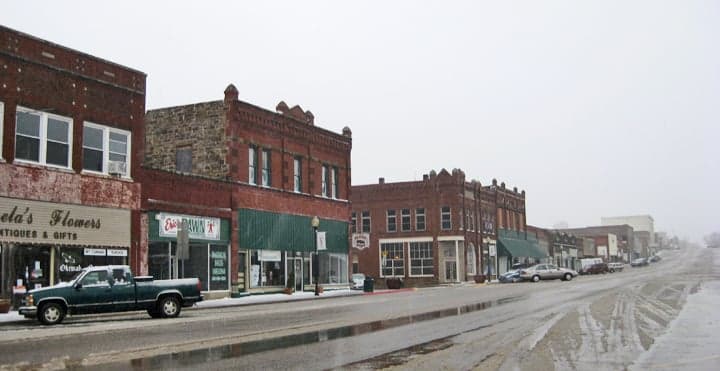
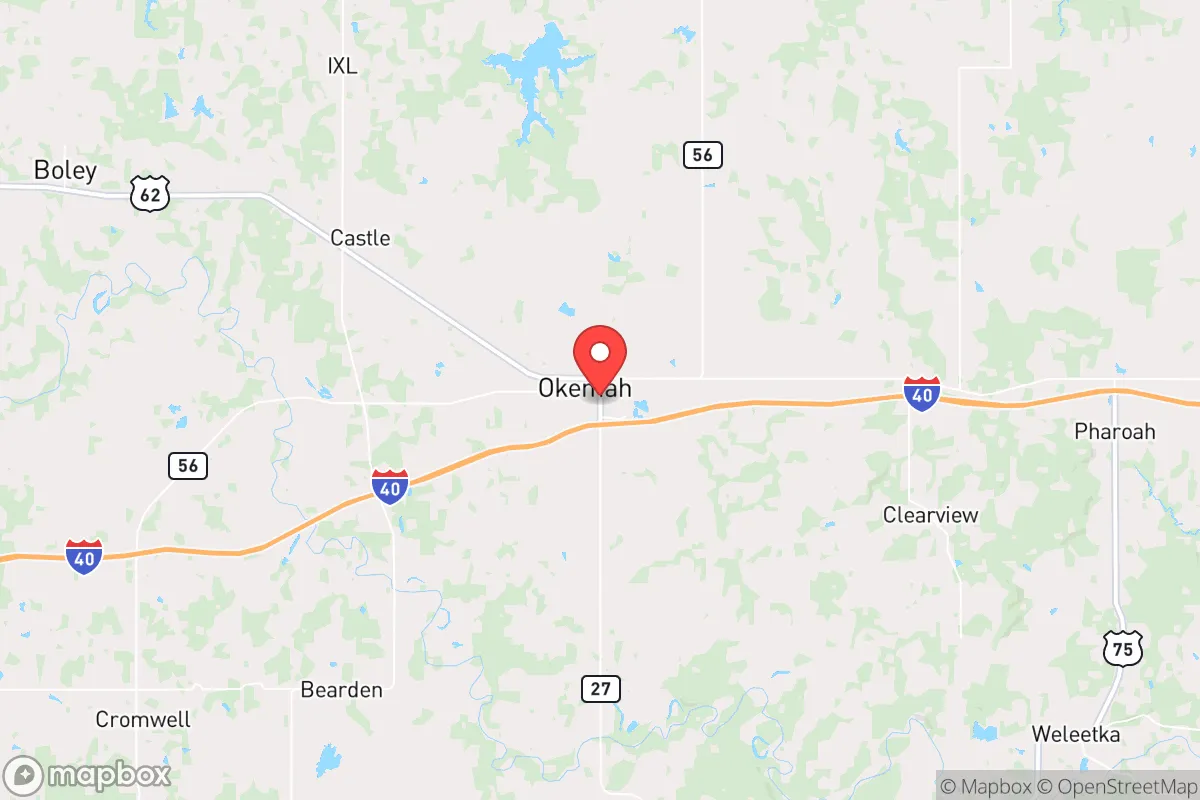
Photo: Wikipedia
Quality of Life in Okemah, OK
A livable area that tracks near national norms for affordability, walkability, and neighborhood health.
What does Quality of Life tell us?
Quality of Life blends cost of living, nearby amenities, socioeconomic signals, and neighborhood character. City-level scores represent the whole municipality; individual neighborhoods can differ.
What does this tell us?
Quality of Life blends cost of living, nearby amenities, socioeconomic signals, and neighborhood character. City-level scores represent the whole municipality; individual neighborhoods can differ.
Cost of Living
23% below national average
The Real Cost of Living in Okemah, OK for 2026
| Tier | Individual | Family (4) |
|---|---|---|
| Survival | $28k | $52k |
| Comfortable | $26k | $38k |
| Luxury | $58k+ | $90k+ |
86%
Hobbies
Explore the areaGroceries
0 within 10 miles
Gas
0 within 10 miles
Hospital
0 within 20 miles
Airport
DFW — Dallas/Fort Worth International
Post Office
Critical Amenities
Quality-of-Life Analysis
Okemah, Oklahoma, presents a notably affordable quality of life that attracts a mix of retirees, remote workers, and families seeking a low-cost, rural lifestyle. With a cost of living index of 77—well below the U.S. average of 100—the town offers a financial cushion that is rare in many parts of the country. The population is predominantly working-class and older, with a median age around 40, and the community is known for its strong ties to folk music and local history, particularly as the birthplace of Woody Guthrie.
Cost of living and housing affordability compared to nearby towns
Housing in Okemah is exceptionally affordable, with a median home value of just $65,000 and a median rent of $694 per month. These figures are dramatically lower than the national medians of roughly $350,000 and $1,200, respectively, and also undercut nearby cities like Shawnee (median home value ~$120,000) and Okmulgee (~$75,000). The average commute time of 22.4 minutes is slightly shorter than the national average of 26 minutes, making daily travel to work in Okfuskee County or into larger employment hubs like Tulsa (about 60 miles north) manageable. Utility costs and grocery prices also track below national averages, reinforcing the town’s appeal for budget-conscious households. However, the trade-off is a limited housing stock—most homes are older, built before 1980, and inventory can be sparse, so buyers may need to act quickly or consider renovations.
Local amenities, schools, and the daily rhythm of life
Daily life in Okemah centers on a compact downtown with a few locally owned restaurants, a grocery store, and the annual Woody Guthrie Folk Festival, which draws visitors each July. For everyday needs, residents often drive 20–30 minutes to Shawnee or Seminole for larger retailers and medical services. The Okemah Public Schools district serves about 900 students, with an average student-teacher ratio of 15:1, though test scores trail state averages—a common pattern in rural Oklahoma districts. Outdoor recreation is limited but includes the nearby Okemah Lake and sports fields at the city park. The pace is slow and neighborly; most errands can be done in under 15 minutes, and community events like the weekly farmers market (May–October) foster a close-knit atmosphere. Internet access is adequate for remote work, with cable and DSL options available, though fiber is not yet widespread.
Okemah is best suited for those who prioritize low costs and a quiet, small-town rhythm over urban amenities or high-end services. Retirees on fixed incomes, first-time homebuyers, and remote workers who can tolerate a 60-mile drive to Tulsa for major shopping or healthcare will find the affordability compelling. Families should weigh the school performance data carefully, while anyone seeking nightlife, diverse dining, or robust public transit will likely feel constrained. For the right resident—someone who values history, community, and financial breathing room—Okemah offers a genuinely low-stress, grounded lifestyle.

Crime in Okemah, OK
Generally safer than 66% of comparable U.S. locations.
Violent CrimeViolent Crime Analysis
Property CrimeProperty Crime Analysis
Crime Analysis
Okemah, Oklahoma, presents a mixed safety profile that demands careful attention from potential residents. The town's violent crime rate of 260.8 per 100,000 residents sits below the national average, but its property crime rate of 2,380.2 per 100,000 is significantly elevated—roughly 1.5 times the national figure. This combination means that while violent confrontations are less common than in many U.S. communities, the risk of theft, burglary, and vehicle break-ins is a real, day-to-day concern.
Crime in context
Okemah's violent crime rate is notably lower than both the Oklahoma state average (approximately 480 per 100,000) and the national average (about 380 per 100,000). However, the property crime rate tells a different story: at 2,380.2 per 100,000, it exceeds the state average by roughly 20% and the national average by about 50%. This disparity is common in small towns that serve as regional hubs—Okemah's location along I-40 and its role as the county seat of Okfuskee County bring transient traffic that can contribute to property crime. The town's law enforcement resources are limited, with the Okemah Police Department operating a small force, which can affect response times and proactive patrols.
What residents experience
For those living in Okemah, the most tangible safety issue is property crime. Residents frequently report thefts from vehicles, shed and garage break-ins, and occasional burglaries of unoccupied homes. Violent crime is rare but not absent; incidents typically involve individuals known to one another rather than random attacks on strangers. The town's justice system operates under Oklahoma's generally conservative legal framework, which tends to emphasize incarceration over rehabilitation. This approach, while aligned with public safety concerns, does not eliminate the underlying economic and social factors—such as poverty and limited employment opportunities—that drive property crime. Residents often rely on neighborhood watch groups and personal security measures like outdoor lighting and surveillance cameras to supplement police efforts.
Neighborhood-level variation in Okemah is modest but noticeable. The area around the downtown square and older residential streets east of Main Street tend to see slightly higher property crime rates, likely due to higher foot traffic and older housing stock with less security. Newer subdivisions on the town's western edge, near the high school and hospital, generally report fewer incidents. The rural outskirts and lake-area properties around Okemah Lake experience very low crime, though their isolation can mean slower emergency response. Overall, Okemah is a place where awareness and basic precautions—locking doors, securing valuables, and getting to know neighbors—go a long way toward maintaining personal safety.
* Values derived from national, state, county, city and local statistics and may differ in a specific area. Last updated: 2026-04-11T19:47:19.000Z
Narrative content on this page is AI-generated and may contain mistakes. Verify any details that matter before acting on them.
ReloMaps may earn a commission from affiliate links at no extra cost to you.

