Photo: Wikipedia
Demographics of Okemah, OK
Affluence Level in Okemah, OK
A below-average socioeconomic profile. Incomes, home values, and educational attainment trail the U.S., with higher poverty and unemployment.
People of Okemah, OK
Today, Okemah, Oklahoma is a small, predominantly white community of 3,058 residents, marked by a strong sense of local heritage and a notably low rate of population turnover. The city’s identity is deeply tied to its role as the birthplace of folk legend Woody Guthrie and as the seat of Okfuskee County, yet its demographic character is one of homogeneity: the foreign-born population stands at 0.0%, and the share of college-educated adults is just 11.3%. For a conservative-leaning individual or family considering relocation, Okemah represents a stable, culturally rooted environment where the population has remained largely unchanged for decades, with little recent in-migration from outside the region.
How the city was settled and grew
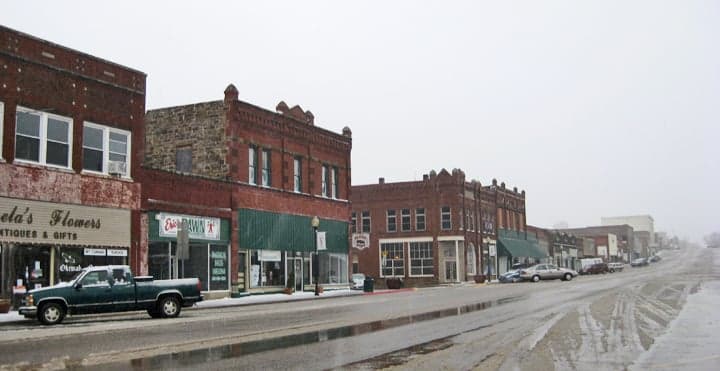
Okemah was founded in 1902 as a railroad town on the Fort Smith and Western Railway, carved out of the former Creek Nation after allotment. The original settlers were overwhelmingly white homesteaders and merchants drawn by the promise of land and the economic opportunity of the new rail line. The town’s early growth was fueled by agriculture—primarily cotton and cattle—and by its designation as the county seat in 1908, which brought government jobs and commerce. The first wave of residents built homes in what is now the Historic Downtown District, centered around Broadway Avenue, where many of the original brick storefronts still stand. A second wave of working-class families, many of them tenant farmers displaced by the Dust Bowl, arrived in the 1930s and 1940s, settling in the South Side neighborhood near the railroad tracks. By mid-century, Okemah’s population peaked at around 3,500, with a small Black community concentrated in the East End area, near the former segregated school site. The city’s growth stalled after the 1950s as agricultural mechanization reduced farm labor demand and younger residents began leaving for larger cities.
Modern era (post-1965)
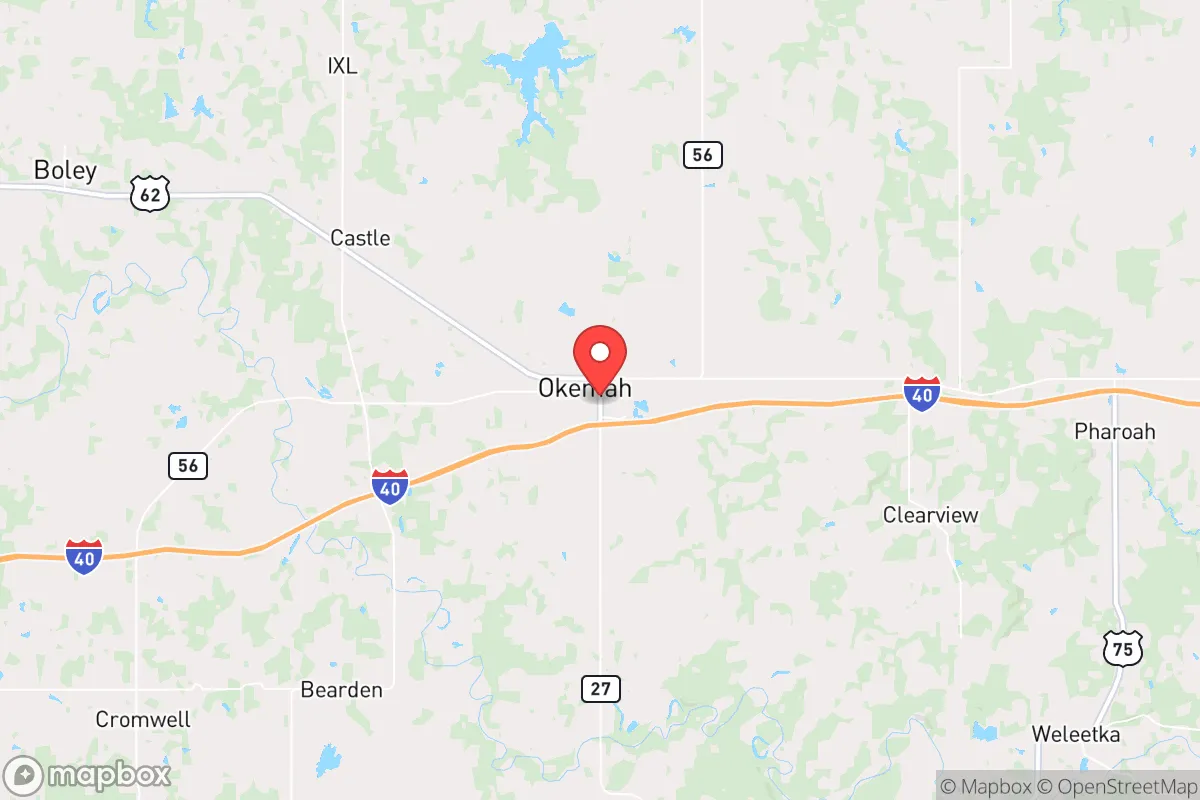
Since the 1965 Hart-Cellar Act, Okemah has experienced virtually no foreign immigration. The city’s demographic story in the modern era is one of domestic out-migration and aging. The 0.0% foreign-born figure reflects the absence of the immigrant waves that reshaped many other Oklahoma towns. Instead, the population has slowly declined from its mid-century peak, with many young adults leaving for college or jobs in Oklahoma City (about 70 miles west) or Tulsa (about 60 miles north). The white share of the population has remained high—59.5%—while the Hispanic share (3.9%) and Black share (2.2%) are small and stable. The Westwood Addition, a subdivision built in the 1970s, became the primary destination for the few new families moving in from within the state, typically white Oklahomans seeking affordable housing. The Northside neighborhood, near the high school, has seen some new construction but remains overwhelmingly white. The historic East End Black community has shrunk further, with many descendants moving to larger cities; today, the area is a mix of older residents and a few new white homeowners attracted by low property prices.
The future
Okemah’s population is likely to continue its slow decline, with the 2020 census showing 3,058 residents—down from 3,223 in 2010. The city is homogenizing rather than diversifying: the 0.0% foreign-born rate and minimal Hispanic growth (3.9%) suggest no significant new ethnic enclaves are forming. The Lake Okemah area, a small residential development near the municipal lake, has attracted a handful of retirees and second-home buyers from within Oklahoma, but this has not reversed the overall trend. The next 10-20 years will likely see an older, whiter population, with the college-educated share remaining low (11.3%) as educated young adults continue to leave. For a conservative-leaning family or individual, this means a stable, low-crime environment with strong community ties, but limited economic dynamism and few opportunities for newcomers from outside the region.
Okemah is becoming a quieter, more insular version of itself—a place where the population is aging in place rather than being refreshed by new arrivals. For someone moving in now, the city offers a deeply rooted, traditional small-town experience with a clear sense of history, but little demographic change or growth on the horizon.

* Values derived from national, state, county, city and local statistics and may differ in a specific area. Last updated: 2026-04-11T19:47:19.000Z
Narrative content on this page is AI-generated and may contain mistakes. Verify any details that matter before acting on them.
ReloMaps may earn a commission from affiliate links at no extra cost to you.

